
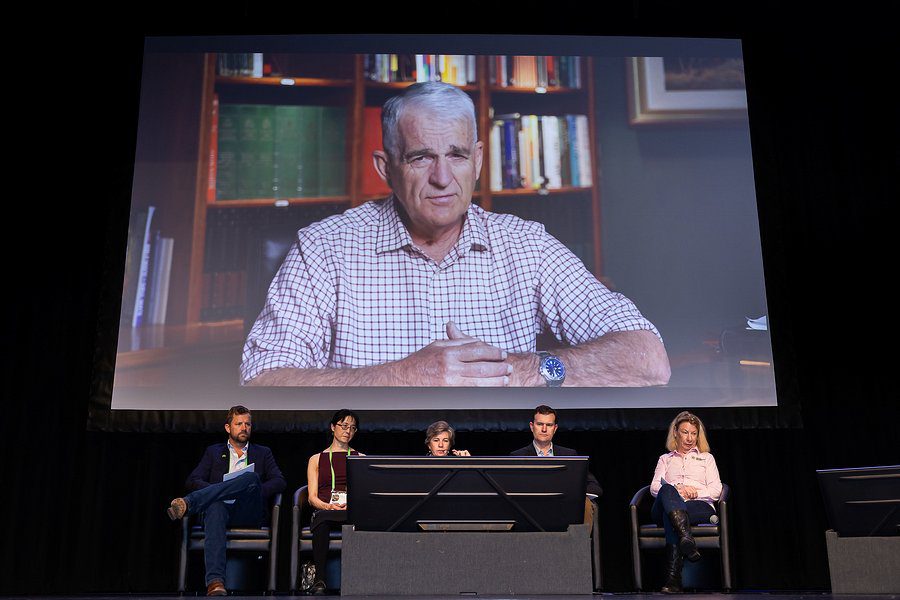
Former deputy PM John Anderson participated remotely in the conference, with fellow speakers including CA’s deputy chair Adam Coffey and MLA’s MD Mick Crowley on stage
SITTING through the presentations at this week’s National Carbon Farming conference in Albury, it was clear to see the soil carbon industry is advancing.
Research continues to show that agricultural practices can drive more carbon into the soil and at least 36 producers have started to generate returns for their investment through the issuance of Australian Carbon Credit Units.
Sitting underneath this advancement is a carefully balanced political situation, with debate raging over “net zero” targets across the world and a current Government that has appeared unwilling to give certainty to producers participating in the carbon market.
The Labor Government promised a lot to the carbon industry when it came into power. It announced more ambitious climate targets and beefed up the “safeguard mechanism”, which is set to drive up demand for credits by the end of the decade.
But there was a sense of frustration among the delegates this week, with the soil carbon methodology still tied up in a review that was due to be finished earlier this year, the Government happy to cancel other methodologies and new methodologies taking a long time in development.
On the other side of politics, the National Party has withdrawn support for net zero. Some delegates told Beef Central they were worried the National Party had entered “burn it down” mode and could damage the soil carbon industry in its fight against renewable energy.
The National Party says it still supports a carbon market and it had a soil carbon methodology in place, before the net zero target was set.
Former National Party leader and deputy PM John Anderson has two projects signed up and has previously touted the soil carbon market as one that could bring together climate activists and climate sceptics alike.
In opening this week’s conference, Mr Anderson said while the food system was emissions intensive, it had the potential to recycle and draw down a lot of carbon.
“(Climate change) Sceptics and activists alike ought to be onside here, but it does seem that a lot of activists are just so intent on a narrow view, an ideologically driven view, of closing down industries and moving to renewable power,” he said.
“Rather than engaging in the real opportunities that carbon sequestration can actually make.”
Farmers controlling what they can
The conference heard from a handful of farmers who had signed up to projects, with some of them recently receiving soil carbon credits.
While their reasons for signing up were varied, they were all using the soil carbon project as an incentive to upgrade their management practices.
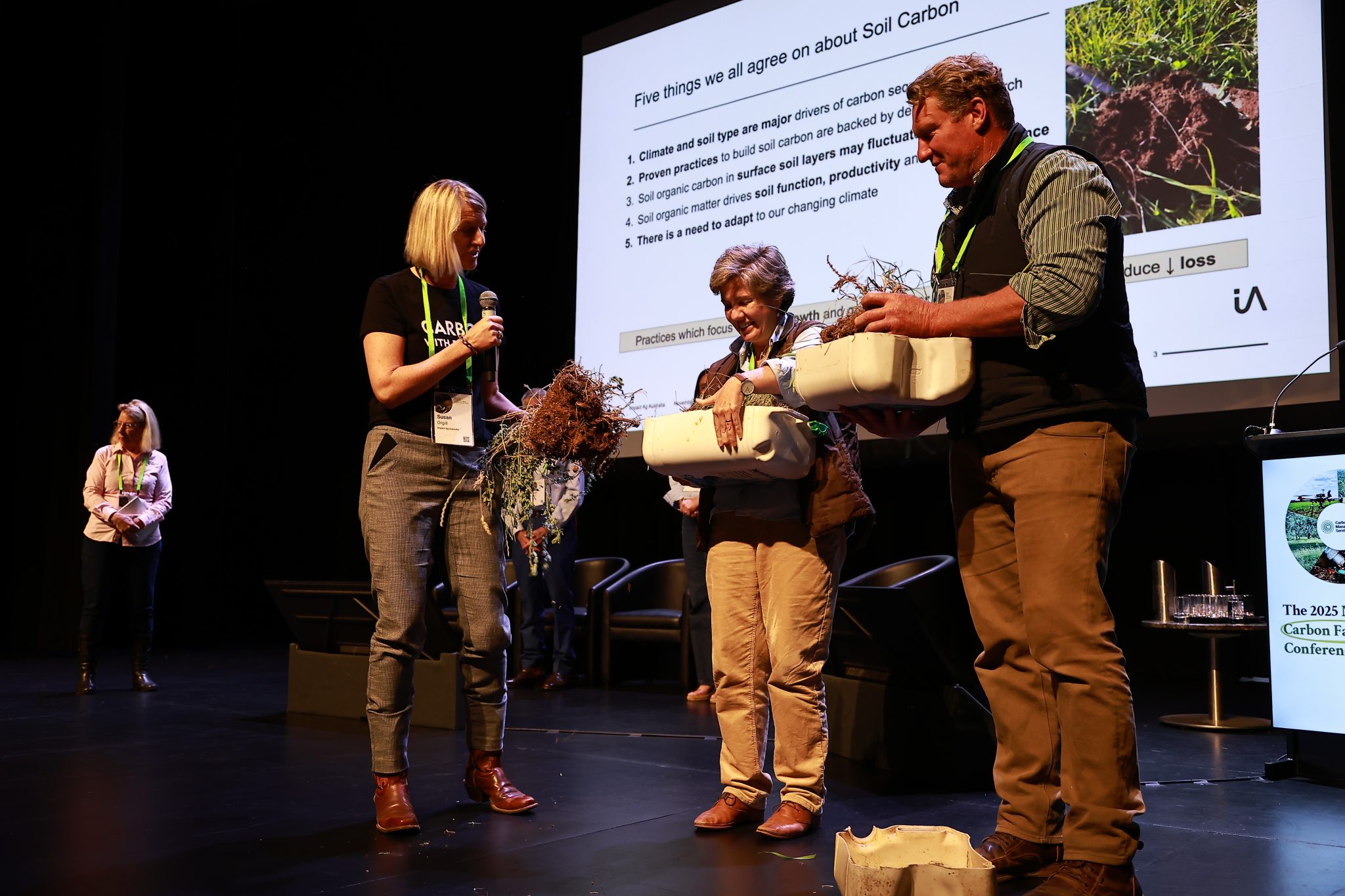
Dr Susan Orgill from Impact Ag Australia with Karen Hussey from Emissions Reduction Assurance Committee and Riverina-based producer Michael Gooden on stage during the carbon conference.
Runs on the board starting to accumulate
Despite the uncertain political environment, the soil carbon industry and scientific communities are continuing to grow the body of evidence to underpin the soil carbon market.
At least 36 projects have now received ACCUs, with one of them being based entirely on cropping. He was recognised by the soil carbon industry group for this achievement.
Australia’s largest generator of ACCUs, Carbon Link, gave an insight into its round of tests. Its Cheyenne project in Northern NSW, which has already received 12,000 ACCUs, is showing an increase in carbon on its second test.
The Qld University of Technology is working through the publication of some research that has demonstrated that “time controlled grazing” practices can increase carbon levels in the soil.
- Beef Central will have more from the conference in the coming weeks