
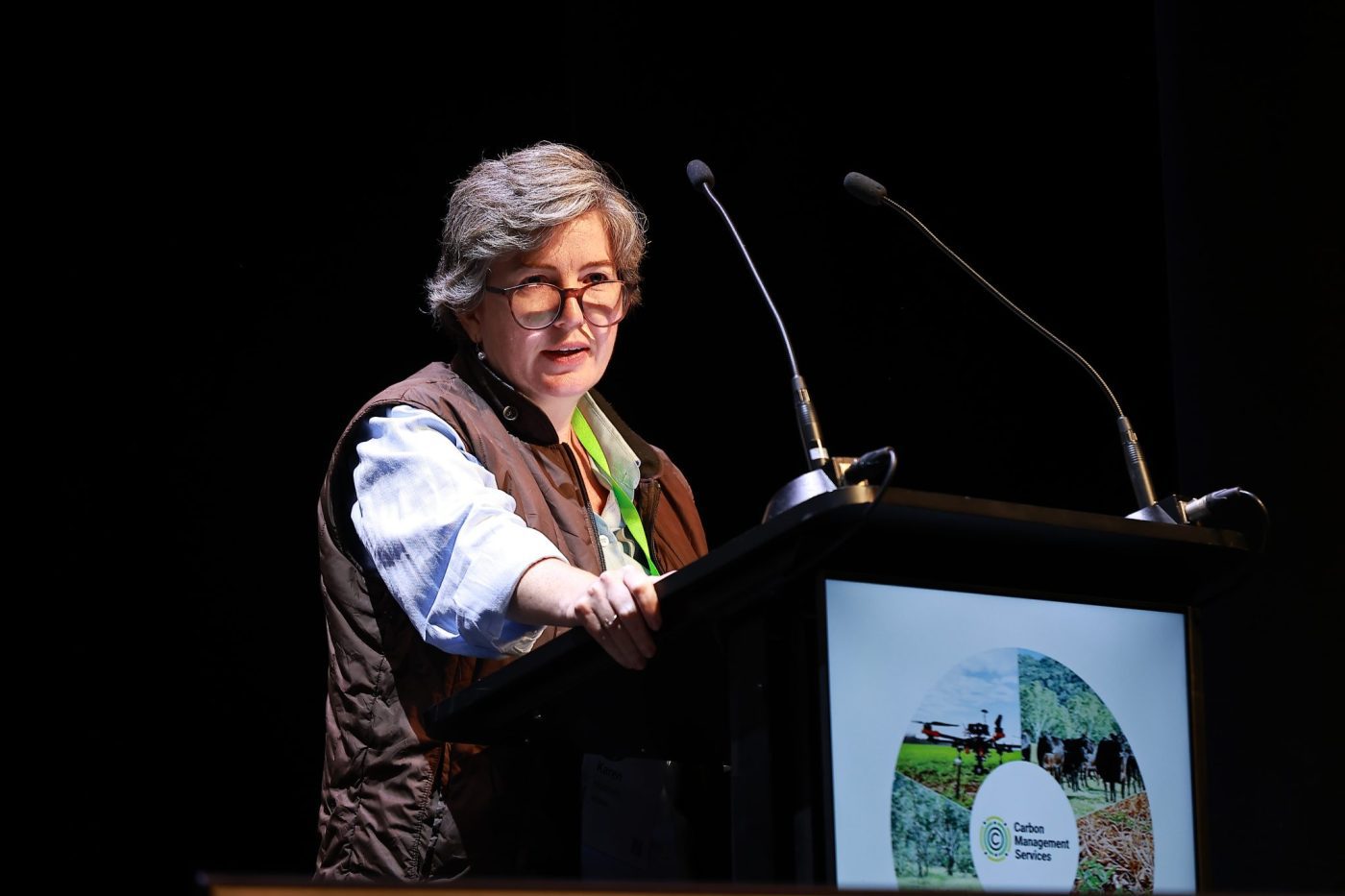
Prof Karen Hussey talking to the National Carbon Farming Conference in Albury.
AN independent review of Australia’s soil carbon scheme is expected to be handed down by the end of this year, with a recent carbon conference told that the “broad scope” of the review was holding it up.
The Emissions Reduction Assurance Committee (ERAC), which provides recommendations to the climate change minister (Chris Bowen), started consultation on its review in February – with many expecting it to be handed down in the middle of the year.
As Beef Central highlighted earlier this year, the review has shown a division between the soil carbon industry and scientific community. The uncertainty created by the prolonged review has been a source of frustration in the industry, with some attributing it to the low attendance at this year’s National Carbon Farming Conference in Albury.
The periodic review of soil carbon is the third review of the system since the Labor Government came into power. The two previous reviews found that the scheme was essentially sound.
Speaking to this week’s National Carbon Farming Conference in Albury, ERAC chair Karen Hussey said the broad scope of the review was holding it up.
“I was incredibly confident that I would be in a position to speak to the outcomes of ERAC’s review of the soil organic carbon method,” Prof Hussey said.
“But regrettably, I’m not because it’s ongoing and I must respect the confidentiality of the committee’s deliberations. So, we’ll come to a point before the end of the year where we will submit our advice to the minister and I will be able to speak to it.”
Lack of resourcing in the Environment Department
While the Federal Government has ramped up its climate targets and been happy to review carbon schemes, Prof Hussey said the resources dedicated to the reviews were scarce.
“For many months there was one person in the department dedicated to the review working with me. We now have several others working on it too because some of the competing priorities have been delivered – but we are not talking about a well-resourced secretariat,” Prof Hussey said.
“We received 42 submissions that were very comprehensive, with some data provided, we have 34 offsets reports to look at. So the scope is big, the complexity is real and the resourcing is scarce.”
Decision changes shattering confidence
Prof Hussey pointed out that setting policy is the job of the Minister’s office and not the job of ERAC, which is an advisory group.
However, a recent decision to end a methodology called “Beef Herd Management” has shown that the Government is prepared to act swiftly on ERAC’s recommendations. ERAC’s review of the methodology found it did not meet integrity standards and it was subsequently suspended by the Government.
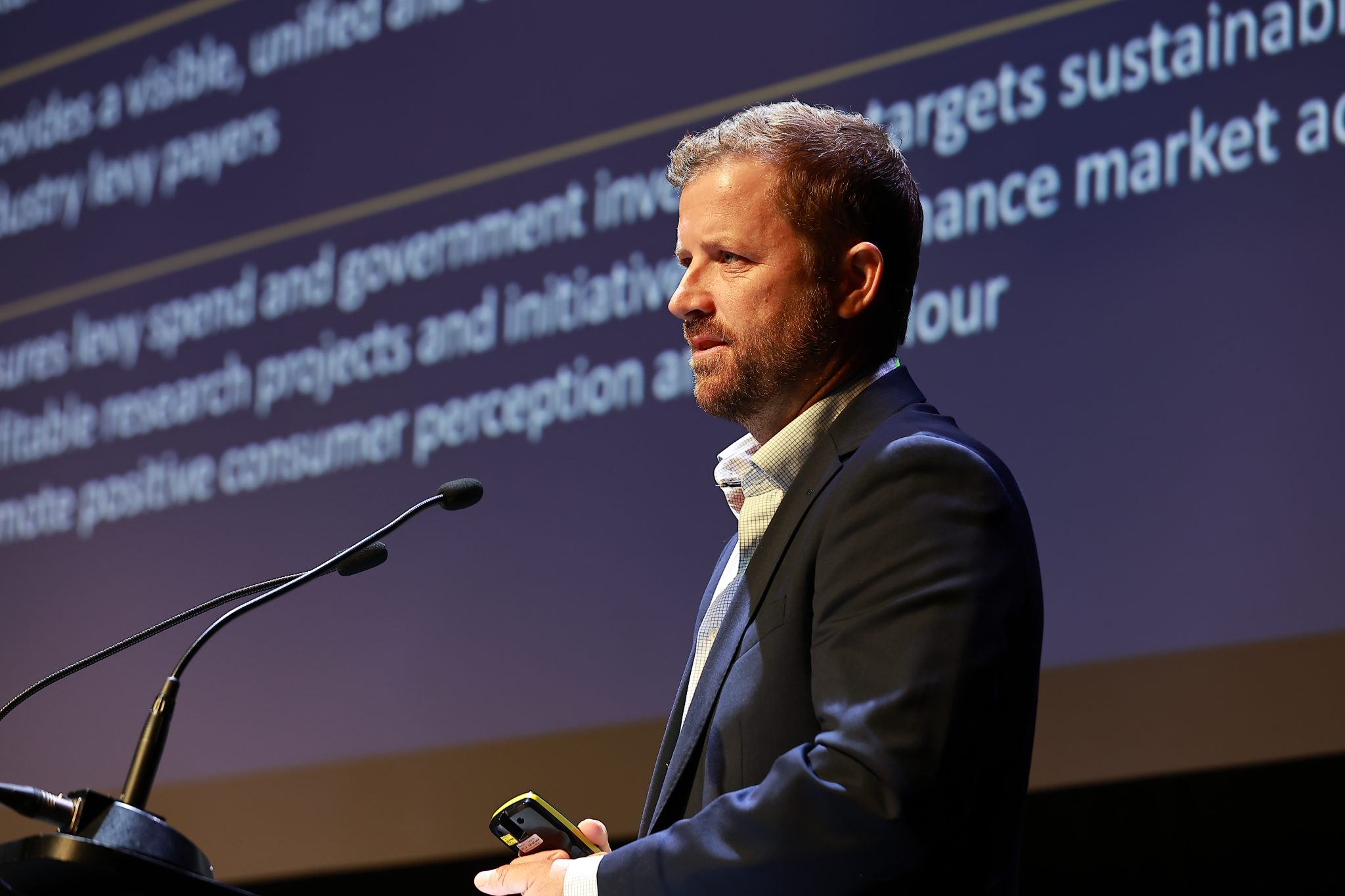
Cattle Australia deputy chair Adam Coffey.
Cattle Australia deputy chair Adam Coffey, who has a soil carbon project signed up, said decisions like the cancellation of beef herd had a ripple effect on the development of the carbon market.
“When it comes to new ideas and new incentives it can be a little hard as a producer to stick your head above the parapet and try something different. You have people looking over the fence wondering what you are doing and it can be an anxious place,” Mr Coffey said.
“Then when you engage a third party like an aggregator, you have to put a lot of trust in them. When we see what happened with the beef herd method, that can shatter confidence across the methodologies.
“My phone rang hot in the days and weeks after that decision from producers saying ‘I heard they cancelled soil carbon, or woody carbon.
“It is incumbent on all of us to think carefully on how we manage these methods, how they evolve and once the fundamentals are there we should move on.
“There will always be need for review, but if we are going to be seen in any way shape of form to be pulling the rug out from under these methods when people have really stuck their necks out to lead the way, that is fraught with risks”
Mr Coffey said some of the pioneers of the methodology like Matthew Warnken from AgriProve, Terry McCosker from CarbonLink and Nick Kemp from Agrimix needed to be recognised.
“This method is a good example of a ‘ground up’ method. You have producers and aggregators working to develop methods, it is a very solid example,” he said.
“Sometimes when you have the top-down guidance from regulators and researchers, down to producers, you can get some unintended consequences.”