
THE flesh-eating New World Screwworm fly has crossed the border between Mexico and the United States, the US Department of Agriculture has confirmed overnight.
A suspected detection yesterday in a newborn calf in Southern Texas was confirmed as positive by USDA’s Animal and Plant Health Inspection Service this morning,
Just last week, New World Screwworm fly (NWS) was detected within 31 miles of the US border, elevating concerns to another level that a US incursion might happen. The parasite has been steadily approaching the Mexican/US border for the past two years.
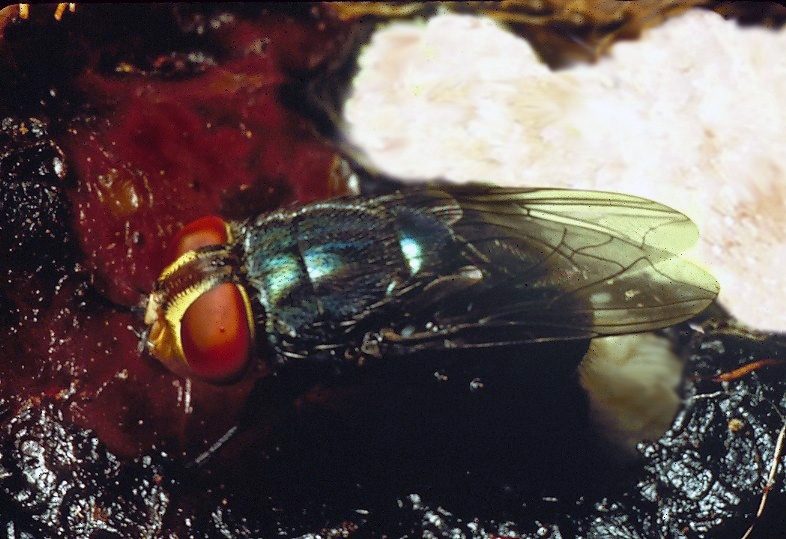 NWS is a serious pest that affects livestock, pets, wildlife, and less commonly, humans. NWS larvae (maggots) burrow into the flesh of living animals, causing serious damage to livestock and economic losses.
The insect pest can cause serious, often deadly damage to animals and people in areas where it spreads. While NWS is present in parts of South America—where infections in animals and people continue to occur—it was eradicated from the United States after a previous outbreak in 2017.
In recent years, NWS has moved northward rapidly through Central America and Mexico.
To date, there have been no further US detections beyond the single three-week-old calf described above.
In 2024, the US closed its borders to Mexican live cattle imports over fears of the spread of NWS.
To this point there has been no information provided about any impact on US beef exports, or biosecurity concerns raised among importing countries.
However a USDA statement issued this morning says the following:
“USDA will continue to work with state departments of agriculture, animal health officials, industry, and producers to mitigate economic impacts of restrictions as much as possible, including negotiating with our trading partners to regionalise any trade restrictions on live animals, limiting them to defined geographic areas.
The statement said all models had forecast that NWS would enter the US out of Mexico some time in 2025. “However, thanks to the hard work across the entire industry, federal state and local partners, we were able to buy time for this moment,” the statement said.
“Protecting our livestock industry is a national security issue of the utmost importance, and USDA is wasting no time in taking action,” Under Secretary for Marketing and Regulatory Programs Dudley Hoskins said.
“USDA invested heavily in the tools needed to eliminate NWS ever since cases started increasing in Central America and Mexico. The US has defeated this pest before, and we will do it again.”
USDA and Texas officials are taking immediate action to contain and eradicate NWS from the US, following strategies and actions outlined in the industry’s NWS Response Playbook, he said.
This includes:
- Forming a unified Incident Command Team with the Texas Animal Health Commission and deploying response personnel to the area;
- Establishing a 20km infested zone around the detection and implementing quarantines, movement controls, and surveillance in this area;
- Expediting targeted release of sterile NWS flies by immediately deploying ground release chambers in the area, in addition to the 4 million sterile flies per week already being released aerially in the area;
- Increasing trapping for NWS flies along the border and just outside of the dispersal area;
- Implementing NWS surveillance and management strategies in wildlife; and
- Conducting targeted outreach in the local area.
The USDA statement stressed that the NWS detection presented no risk whatsoever to food safety.
“The US food supply is safe. Screwworms do not infest meat, fruits, vegetables, or other food sources. USDA’s Food Safety and Inspection Service ensures that the nation’s commercial supply of meat, poultry, and egg products is safe and properly labeled. Under the Federal Meat Inspection Act (FMIA), FSIS inspection personnel must inspect all eligible animal species unless they are exempt or covered by a state inspection program.”
Any evidence of screwworm infestation in an animal would be identified during these inspections, USDA said, and any contaminated product from an affected animal would not be allowed to enter the food supply.
For more than a year, USDA has led a concerted response to the threat of NWS.
“USDA has deployed advanced surveillance systems and supported robust cross-border response efforts in Mexico and Central America to combat the pest and push NWS away from the US. These efforts have bought time for USDA to increase domestic preparedness efforts,” it said.
Earlier eradication
An eradication program to remove an earlier screwworm outbreak from the US was started in 1957, using a biological control technique (sterilisation of flies) developed by USDA’s Agricultural Research Service. The approach worked, eradicating screwworm from the US in 1966. In October 2016, another outbreak occurred in the Florida Keys, also successfully eradicated a year later using this same method.
Beef Central published this earlier article in March, flagging a US$140 million project to establish an enormous sterile NWS fly breeding facility in southern Texas. At that time NWS was still 110km from the US border. The US Army was recruited to build the fly breeding facility, in record time.
“If we all work together and follow the animal treatment protocols and movement restriction guidance, there is no reason to believe that this incursion will result in an establishment of the pest in our country,” USDA Secretary Brooke Rollins said this morning.
While the current threat to human health in the US was extremely low, there was “no doubt that this is a very, very serious threat to our livestock,” Sec Rollins said.
The US, along with other Central and South American countries, maintained a permanent sterile fly barrier between Panama and Colombia to prevent the re-establishment of screwworms, however the insect broke out and spread rapidly across Mexico over the past two years. The fly is now endemic across most of South America and the Caribbean, and has more recently re-emerged across Central America, arriving in Mexico in 2024.
Myths Vs facts
A USDA fact sheet provides a number of ‘myths and facts’ responses to NWS
MYTH: NWS could enter the US food supply and infest people. FACT: The US food supply is safe. NWS is not a food safety issue. It spreads only when an NWS fly lays eggs in a wound, not through meat, poultry, or dairy products.
MYTH: Infested animals must be destroyed and cannot enter the food supply. FACT: Animals that have recovered from NWS myiasis can enter the food supply if they meet all regulatory requirements, including release from on-farm quarantine and absence of residues, and they pass USDA’s Food Safety and Inspection Service inspection, which ensures humane handling of animals and food safety requirements are met. FSIS inspection before and after slaughter will determine whether the entire carcase, or only unaffected parts, are passed for human food. Severely infested animals will not be allowed into food production.