Two of the world’s leading minds on beef genetics and sustainability came to the same conclusion at the recent C-Lock Symposium: selecting for profitability builds a better herd, raises the breeding and marketing value of every animal in it, and the equipment to do it is already in the field. The takeaway for Australian producers is simpler than most expect.
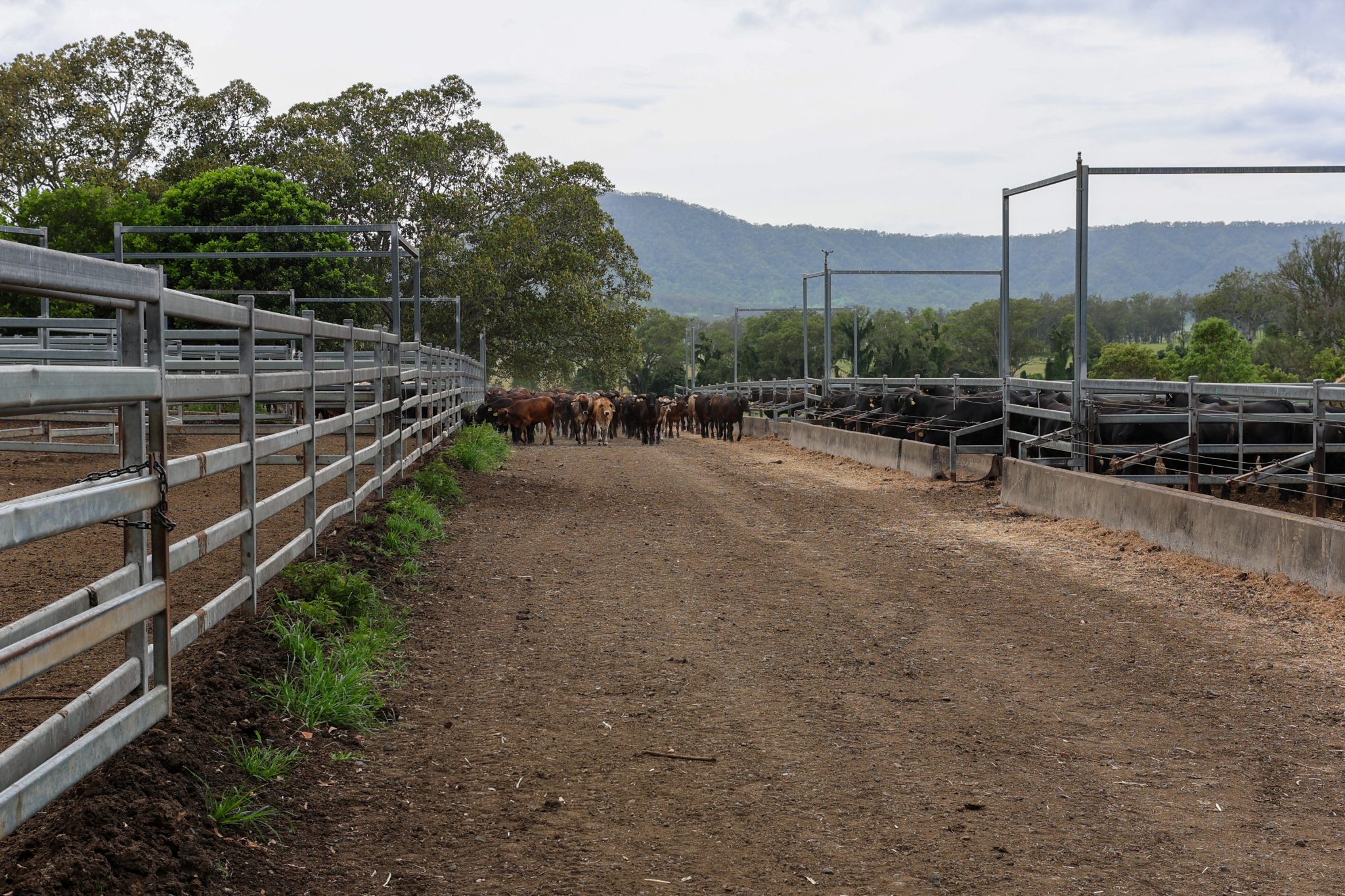
Selecting for profitability is what builds a better herd. Better feed conversion. Fewer days on feed. Stronger genetics. Animals that put more weight on for every kilogram of feed they eat. That is what pays at the saleyard, at the bull sale, and at closeout – and once a producer can prove it on an individual animal basis, they determine the value of every animal in the mob. The buyer who has been burned by averages is the buyer most receptive to verified individual performance, and the seedstock operator who can document it has a marketing tool no competitor can match.
And here is the bonus: those same efficient animals are also the lowest-emission animals in the mob. The sustainability story writes itself when you focus on the right thing first. The job of our equipment is to make those individual-animal decisions visible.
That principle was the through-line at the recent C-Lock Symposium, an event we hosted in the United States to bring leading industry voices together with the producers, geneticists and supply chain stakeholders working at the front of efficiency research. Two of the speakers we hosted made the case more clearly than any marketing piece could.
What two of the world’s leading voices found
Matthew Cleveland, who leads sustainability for ABS Global’s beef and dairy business worldwide, gave the symposium a blunt summary of where the industry sits: “Sustainability requires profitability.” In most markets today, methane on its own carries no economic value. Producers are not, and should not be, asked to chase an emissions trait that the market is not paying for.
What does pay, in every market, is productivity and feed efficiency. ABS has spent twelve years selecting hard for those traits in its beef-on-dairy programme, and when they built a full lifecycle assessment to ask what happened to emissions along the way, the numbers were clear. The answer was a reduction of 4.6 to 8.8 per cent in emissions intensity per kilogram of hot carcase weight. That reduction came entirely as a by-product. They were not selecting for emissions. They were selecting for profit and emissions followed.
In other words, the producers selecting hard for the traits that already make them money are, as a by-product, doing the sustainability work the supply chain is asking for. The challenge is that almost none of them can prove it on an individual-animal basis. That is the gap our equipment is built to close.
The same day Cleveland presented, Dr Francisco Peñagaricano from the University of Wisconsin–Madison shared results from a research programme that has now collected emissions data on nearly 4000 cows across twelve farms using our GreenFeed system. The Wisconsin team’s findings, drawn from a completely different production system, told essentially the same story.
In one pen of 64 cows – same barn, same diet, same management – the research group measured a more than two-fold spread in daily methane output between the top and bottom performers. That variation was not noise. It was heritable at roughly 30 per cent, and strongly genetically correlated with feed efficiency. The lower-emitting animals were the more efficient ones.
The spread between your best and worst animals is bigger than you think, and it is costing you money every day you don’t know which is which. Two of the world’s leading voices on cattle genetics and sustainability landed at exactly that conclusion from opposite directions at our symposium which is the kind of validation we built the event to surface.
What this means for Australian producers
The maths on an Australian feedlot is no secret. Feed sits at roughly 55 to 60 per cent of total cost of production. A closeout that hides a 20 or 30 per cent spread in cost of gain between the best and worst animals is leaving real money on the table. The same is true at the seedstock level – two bulls that look identical on the rail can have meaningfully different efficiency phenotypes, and those differences pass to their progeny.
The problem has always been measurement. Group-pen feed intake gives you a pen average. Crush weights give you an endpoint. Neither tells you which animal in the mob is profitable and which is being carried.
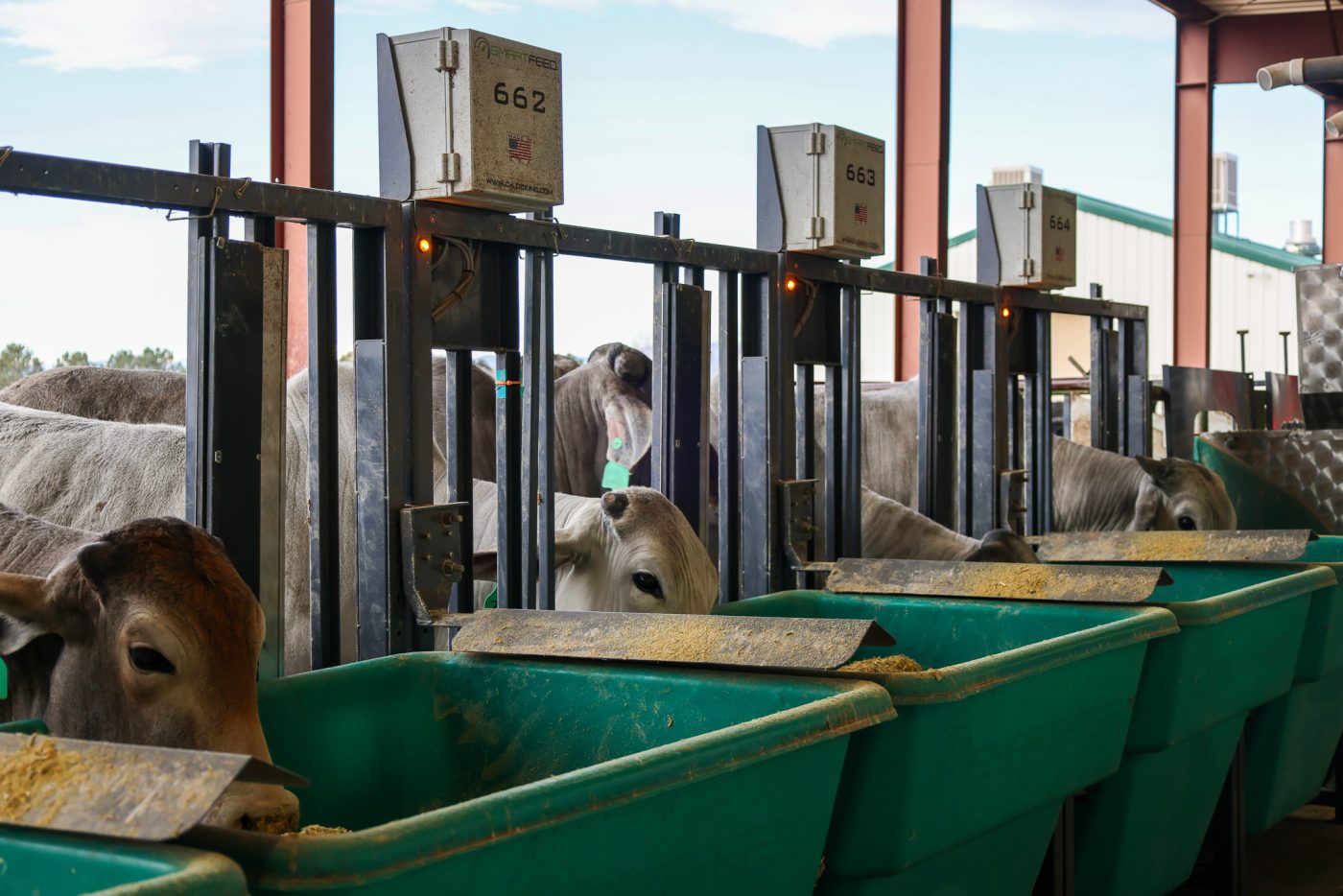
That is exactly what C-Lock’s livestock monitoring equipment was built to solve. Our SmartFeed units log individual feed intake by RFID – every visit, every animal, every kilogram. SmartScale captures individual liveweight as cattle step on it at their water source, without adding labour to the operation. Used together, the two units produce average daily gain, average daily intake, and a per-head feed-to-gain ratio across an entire mob, running automatically in the background of a normal commercial system.
That data underpins what we call a Cost of Gain Index – a ranked, per-animal scorecard of what each head in the mob actually cost to put weight on. From there, the decisions stack up quickly:
- Identifying genuine genetic merit. Seedstock operators can document and market individual efficiency data, not just sire averages.
- Smarter culling. The bottom quartile on cost of gain is dragging herd profitability. Culling becomes evidence-based, not gut feel.
- Better breeding decisions. The most efficient animals are also the lowest-emission animals. Select for one and you capture the other.
- A documented sustainability story. Verified low-emissions data is a credential the supply chain is increasingly asking for.
For the dairy side of an Australian operation, our GreenFeed units extend the same individual-animal philosophy to lactating cows – measuring emissions and gas exchange in a way that lets producers rank cows on efficiency in their own herd, in their own conditions. It is the same equipment Peñagaricano used to generate his 4000-cow dataset, and the same equipment ABS uses in its UK commercial finishing trials.
The hidden margin is already in your herd
Every operation already has their profitable animals. The question is whether you know which ones they are. Without individual data, you are managing on the average – and the average is being held up by your top performers and dragged down by your bottom ones in exactly the same breath. The producers who can see the difference are the ones making smarter culling calls, smarter breeding decisions, and stronger bull sales. The producers who cannot are leaving real money in their own paddocks.
Bringing C-Lock equipment onto your operation is how you find that hidden margin. SmartFeed, SmartScale and GreenFeed do the measuring for you in the background of a normal commercial system, and the data they generate gives you the per-head visibility you need to act on. It is extra income that is already in your herd — you just have to be able to see it.
The producers and researchers represented at the C-Lock Symposium are already proving what is possible when individual-animal data gets put to work. The same approach is ready for Australian operations now.
To find out how SmartFeed, SmartScale and GreenFeed can be applied to your herd, visit c-lockinc.com or get in touch with our team. The margin is already there. We will help you find it.