
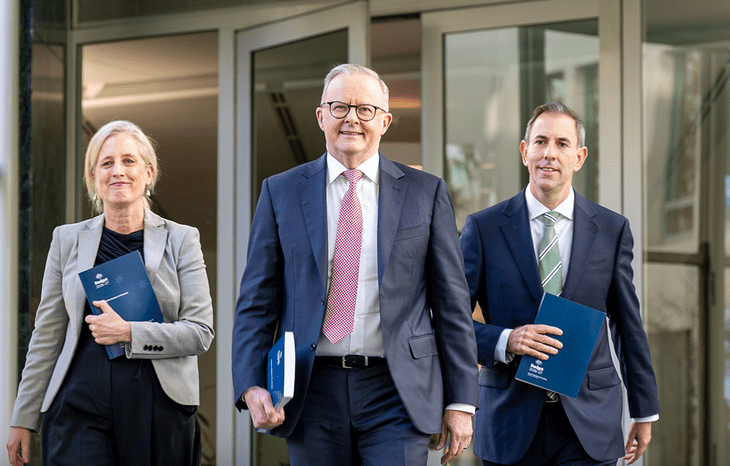
Finance minister Katy Gallagher, with Prime Minister Anthony Albanese and treasurer Jim Chalmers.
AGRICULTURE groups have cautiously welcomed the Federal Government’s budget after concerns that changing capital gains tax concessions might stall investment in the sector.
The Government made it clear before delivering the budget that it was going to break an election promise by taking away capital gains tax concessions and negative gearing for residential housing.
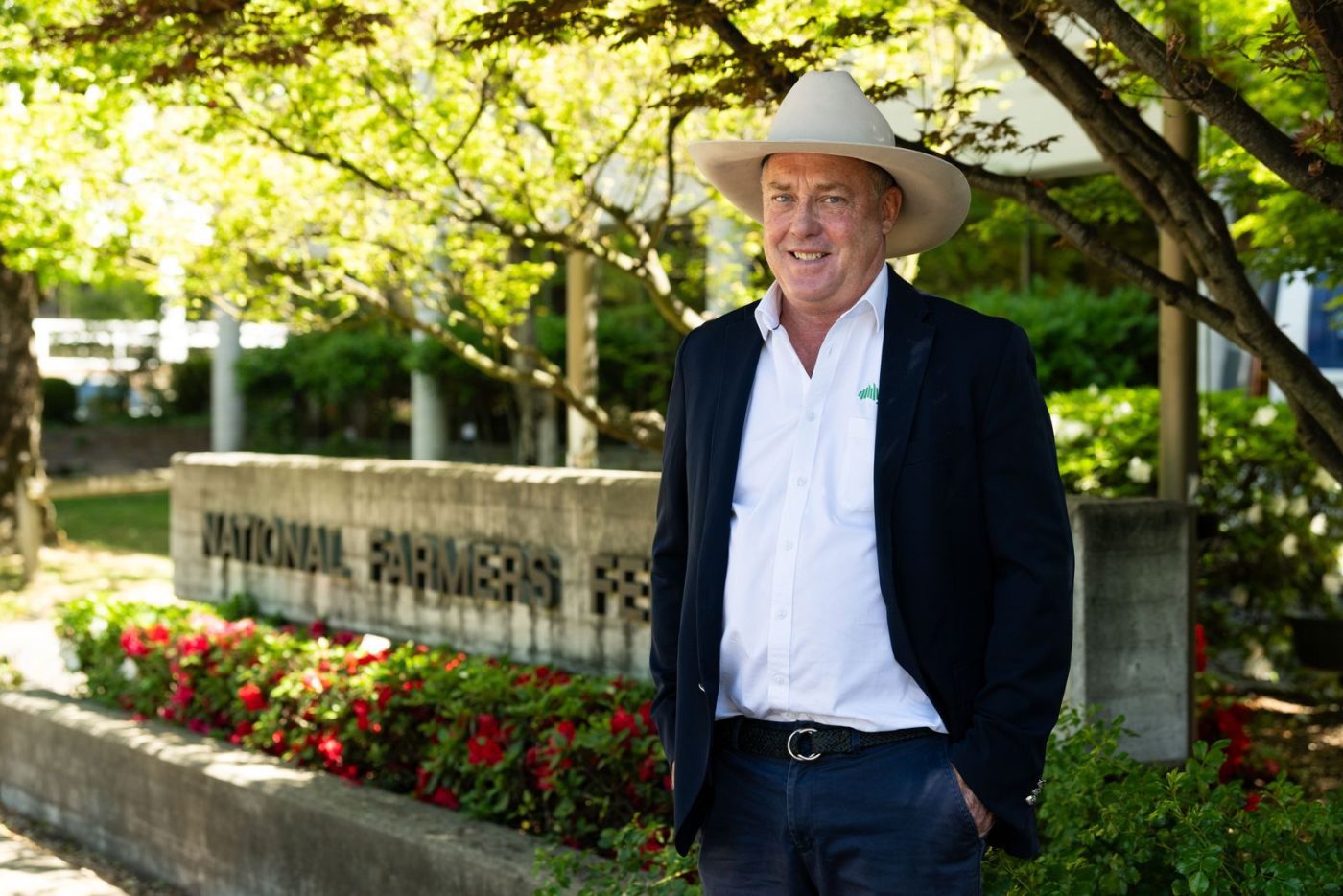
Hamish McIntyre
While the changes were carried through for new investments into residential housing (a key off farm investment), agricultural businesses have been largely carved out of the reforms – with no changes to small business capital gains tax concessions and exemptions from a 30 percent trust tax.
“There are around 40,000 trusts used in agriculture so these are significant wins for family farm businesses and reflect the case we have consistently put to the Treasurer about how these changes would impacted succession,” NFF president Hamish McIntyre said.
“Family farms are generational businesses built over decades and often represent a family’s life savings and retirement plan.
“We are pleased the government has listened.”
However, organisations have raised concerns about cuts to regional infrastructure, particularly Inland Rail, connectivity programs, and the Department of Agriculture, Fisheries and Forestry.
Fuel security measures welcomed
Treasurer Jim Chalmers last night confirmed the Government’s $10bn fuel security package, which is says well extend the nation’s strategic supply of petrol, diesel and jet fuel to 50 days – up from the current 30 days.

Shane McCarthy
“This Budget reinforces that food production, fuel security and national resilience are becoming increasingly interconnected priorities for Australia,” GPA chair and Western Australian grower Barry Large said.
“For grain growers, that recognition matters because a strong grains industry underpins regional communities, export earnings and the nation’s long-term food security.”
AgForce president Shane McCarthy said while he welcomed the fuel security announcements and the carve out of tax reforms, more needed to be done to assist in the current crisis.
“While it is encouraging to see the Government respond to producer concerns about family trust and taxation arrangements, many Queensland farming businesses will still be asking where the direct farm-gate support is,” he said.
“Queensland producers are facing a perfect storm of rising costs, supply pressures and increasing uncertainty. This Budget fails to recognise that agriculture is not operating under normal conditions,” Mr McCarthy said.
NSW Farmers calls for 90 days of fuel
NSW Farmers president Xavier Martin has urged the Government to take the fuel commitments a step further.
“We strongly urge the government to commit to a clear pathway to the 90 days of stockpiles we have agreed to under the International Energy Agency framework, and ensure agriculture is explicitly prioritised if supplies run short,” he said.

NSW Farmers president Xavier Martin.
“NSW Farmers has been sounding the alarm on fuel security for a decade, and this crisis has brought the issue of agricultural supply chains and food security to the fore.
“We must never let Australia get into this mess again.”
While the Budget contained some positive items – such as the Instant Asset Write Off being made permanent – there were also big questions about agricultural workforces, tax settings and where funding from productive investments such as Inland Rail have actually gone.
“These papers are very fresh and very dense, so the detail on capital gains and trusts needs to be worked through,” Mr Martin said.
“But the government must remember farm businesses operate on razor thin margins, so we need an iron-clad guarantee that farming businesses and the critical issue of succession planning – the next generation of farmers – are also recognised.”
Concerns over cuts
The NFF has raised concerns about sweeping cuts across key areas impacting agriculture.
This includes DAFF, pests and weeds, Inland Rail Project and regional connectivity including the Regional Tech Hub.
 “There could not be a worse time to pull back investment in supply chains and regional connectivity.
“The Inland Rail was designed to strengthen supply chains, ease pressure on our highways and reduce the cost of moving produce from farm gate to consumers.
“The Regional Tech Hub helped more than 75 regional people each day in 2025 alone.
“Without continued support for this service, regional Australians may lose a trusted service that has helped thousands navigate major technology changes and stay connected.
“This Budget contains some hard-won wins for agriculture, and we welcome them. We’ve had the opportunity to be at the centre of some of the most important discussions of this generation, around fuel and fertiliser supply and capability.
“But if Australia is serious about building a stronger, more productive economy, this must be the starting point, not the finish line.”
Measures welcomed by the NFF
The permanent extension of the instant asset write-off was also welcomed, providing certainty for farm businesses looking to invest in equipment and technology.
“We advocated hard for this to become a permanent feature of our tax system. It’s a simple and effective measure that helps farmers reduce costs and increase their productivity.”
The NFF also welcomed additional resourcing for implementing EPBC reforms with a focus on establishing new entities (National Environmental Protection Agency and Environmental Information Australia) and improving assessment timeframes.
However, Mr McIntyre said the NFF still required clarity on how this funding will support the difficult transition agriculture is experiencing under changes to continuous use provisions for agriculture.
“Farmers need clarity and consistency, particularly around changes to continuing use provisions.
“We’ll continue working closely with the Government to ensure these reforms deliver environmental outcomes without creating uncertainty or unnecessary compliance burdens for producers.”
What else was in the budget?
There was also a welcome additional investment in the Australian Pesticides and Veterinary Medicines Authority of $8.7 million and a $387M boost to CSIRO and the Australian Centre for Disease Preparedness.
However, organisations have raised concerns about cuts to regional infrastructure, particularly Inland Rail, connectivity programs, and the Department of Agriculture, Fisheries and Forestry.
Budget documents show total resourcing for the DAFF will rise to $1.77 billion in 2026-27, more than $70M above 2025-26 levels.
Annual appropriations are also set to increase to $1.02B from $953.14M.
Staffing at the DAFF is expected to increase in 2026-27, with employee numbers forecast to rise to 6654 from an estimated 6373 in 2025-26.
Despite the overall increase in funding, several programs that received support in the previous financial year appear to have been omitted from the latest budget.
These include:
- Agriculture 2030 biosecurity program, which received $5.77M last year for feral animal, pest and weed management;
- Improved Access to Agricultural and Veterinary Chemicals program, funded at $3.5M;
- Cultivating Australia’s Traceability – Promoting and Protecting Australian Premium Agriculture, which received $6.65M; and,
- Modernising Agricultural Trade – Protecting Australia’s Clean, Green Brand, funded at $2M.
The AGCAREERSTART and AgConnections programs also did not receive further appropriations after receiving $411,000 and $500,000 respectively last year.
The Government has also touted just under $200M in savings to DAFF spending over five years from 2025-26, driven by a range of measures including:
- $104.6M from reducing uncommitted funding in a number of grant programs, including the Pest and Disease Preparedness and Response, Wine Tourism and Cellar Door, Agriculture and Land Sectors – low emissions future, Accelerated Adoption of Wood Processing Innovation, Support for Regional Trade Events, Empowering Australia – developing Australia’s seaweed farming and other trade‑related grant programs
- $52M over four years from 2026–27 (and $13M per year ongoing) by reducing uncommitted funding for the Future Drought Fund
- $35M over two years from 2028–29 (and $17.5M per year ongoing) by reducing funding for the agriculture stream of the Natural Heritage Trust.
As we inch closer to full succession distribution of our land and Ag businesses I’m disappointed that the objective simplicity of the 50% discount of capital gain has been replaced with the subjective complex and selective CPI indexation.
And my real amazement is the deafening lack of criticism of the government making pre-85 assets taxable. Only Pauline’s outrage matches mine on this betrayal.