
For some people, buying a 50 hectare block of land on a steep incline with no internal fencing or water points might seem like a left-field move. For Jess Collyer, it represented an opportunity.
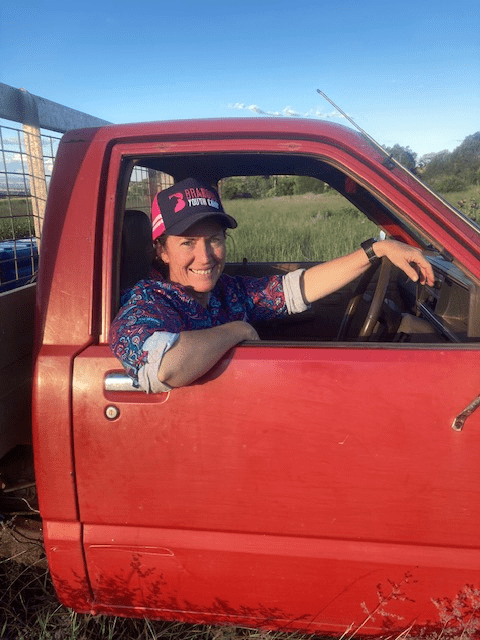 Jess and her husband Bruce bought their property at Cushnie, near Kingaroy in Queensland’s South Burnett Region, in August 2025. They’d been searching for land in the area for years, so when the block came up just fifty minutes from where Jess was born, and where her family still live, it felt like a good fit.
With his roots in the Hughenden district, Jess met Bruce when she was working for Landmark nearby at Richmond in 2011. Over a nearly ten-year period, and now with two sons (Eli & Theo) in tow, Jess and Bruce slowly moved south working across cattle properties with the aim of one day owning one for themselves.
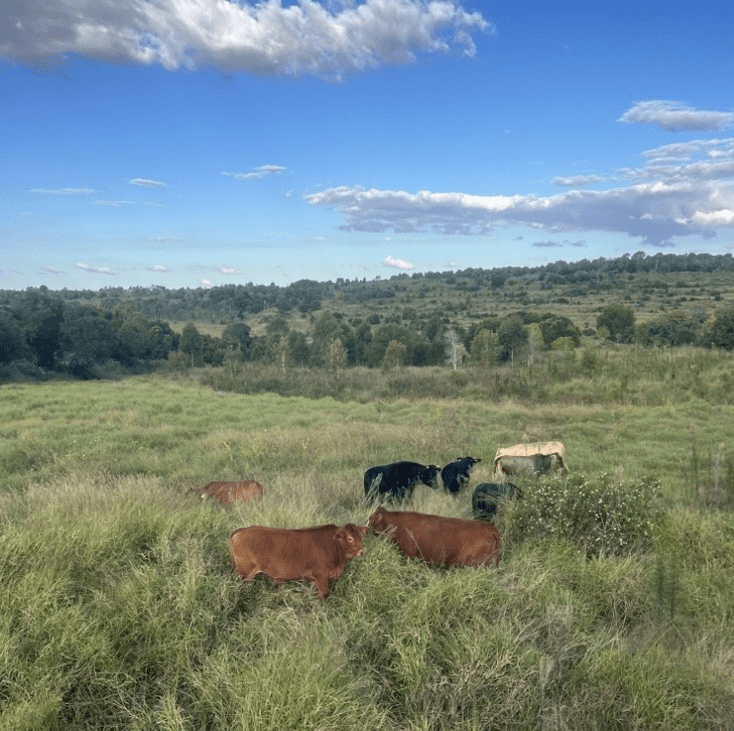
In the meantime, the Collyers ran a mixed, but predominantly Brahman-derived herd at her grandparents’ 32 hectare property at Nanango.
With the addition of the Cushnie block, the Collyers are ultimately hoping to finish cattle across both properties to supply into the local market in partnership with other producers in their area.
While they’re currently having a great season, the underdeveloped nature of the Cushnie block means the Collyers can only run a handful of cattle there at the moment.
“We’ve prioritised bringing the PTIC heifers over with us from Nanango, so we can calve them down here. Beyond that, our immediate focus is getting the new block up and running,” Jess said.
Key to achieving this will be fencing and water points that allow them to effectively graze the land, and Jess is finding Atlas Grazing an invaluable tool for streamlining scenario planning with a property that is essentially a blank canvas.
From the team behind MaiaGrazing, Atlas Grazing is a new livestock and grazing management tool designed to give users a reliable way to track livestock, paddocks and daily tasks in one clear view.
Built on the data models trusted by MaiaGrazing users, Atlas Grazing now delivers them through a faster, more capable platform. It’s helping producers focus on the most important parts of their business – whether that’s simply livestock numbers and locations, or complex scenario planning drawing in pasture availability and the reproductive status of animals at a particular time.
“When we bought it, the farm was one big paddock,” Jess said.
“Fencing and water are big investments, and we want to know we’re putting them in the right place.”
“The Atlas mapping features help us play around in an accurate way, asking where we want fence lines to be, where we’d put the water points and then ground truthing those theories in the actual countryside,” Jess said.
“The block is predominantly red soil, and on a very steep incline with a 60 metre drop from top to bottom and a big section of softwood scrub in the middle. So we have a fair bit of terrain to work around and being able to use the Atlas software for this has really sped everything up and given us confidence in our decision making.”
A turning point
Both with backgrounds in more conventional agriculture, experiences of drought over many years shaped the way the Collyers wanted to raise cattle.
Completion of a sustainable grazing course in 2021 then flicked a switch for Jess and Bruce, and they started on a journey of discovery about the tools and tactics available to help manage land more productively and profitably.
It was at this point that the Collyers started experimenting with grazing software, using MaiaGrazing to plan fencelines and grazing moves at Nanango.
Before buying their block at Cushnie, Jess and Bruce worked with Kate and Justin Boshammer at JK Cattle Company on their Dulacca properties, ‘Aberfeldy’ and ‘Warrema’ from 2023 to 2025.
Justin and Kate run about 500 registered Angus, Brangus, Ultrablack and Wagyu cows across owned and leased country in the Condamine and Dulacca districts.
Jess says managing the Angus and Brangus stud cows with the JK team was a great learning experience, and demonstrated how versatile grazing software can be across different operations.
“We used MaiaGrazing with Justin and Kate, and it was just as useful on that broader, more intensive operation as it was for us with our small herd.”
With both Jess and Bruce being away for many years, Jess’ mother helped manage the cattle at Nanango, with Jess explaining that temperament was a key selection criteria for them.
“We’d only get back to Nanango a couple of times a year to check on things, so temperament was the number one thing for any cattle we were buying in,” Jess said.
“We aim for as much red and Brahman content in there as we can, but this is probably why we have a bit of a liquorice all-sorts today, because we apply strong selection pressure on criteria like temperament.
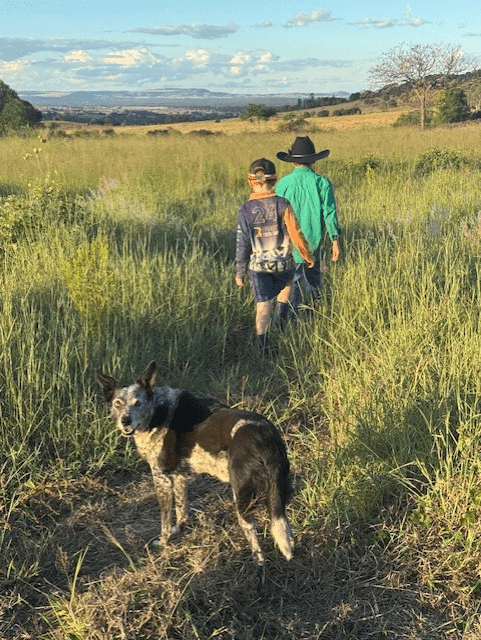
“This is still the case today because our boys help us, and no one’s having a good time if the cattle have a bad temperament.”
Merging lived experience and powerful technology
Combining years of grazing experience and powerful modern technology, Atlas Grazing brings important records together online or offline, from computer or mobile, so decisions are clearer and surprises are fewer.
For Jess, the principles that underpin how they run their cattle and manage their land are not negotiable, and have been made much easier to implement and execute with technology like Atlas Grazing.
“Doing a course like Grazing for Profit is great, as it teaches you strong principles and foundations, and how to do grazing charts and planning. That’s all so important, but it’s so much quicker to do it now with Atlas,” she said.
“At the touch of a finger, you can get feedback on what animals have taken out of the paddock, how much rest time you have, and what’s actually out there in the paddock without having to come back into the office and do it with a paper trail.
“Everything is now also in real time. You can be in the paddock and make observations, and straight away you can see your graze metrics.
“For example, I had slowed our rotation right down recently, but when we had a great rain event of 300mm I used the graze planner in Atlas and could see there was an opportunity to speed things up and get in another quick lap before the end of the growing season.
“Grazing insights like that are rock solid and take the guess work out of it.”
Something for everyone
Atlas Grazing is a tool for all producers, whether they simply want to spend more time in the paddock and less in the office, or use its advanced grazing insights for scenario planning and to make early moves with confidence.
The ability to use Atlas Grazing on desktop and mobile is also key for Jess, who finds herself using different features in different contexts.
“My phone is old and small, so I find I use the computer for bigger picture things like scenario planning fence lines or developments, and playing around with the map. I then use the mobile for day-to-day things, like mob moves and looking at grass availability,” she said.
With deeper paddock statistics and inventory tools to better understand and protect pasture performance, Atlas Grazing helps connect tasks, observations and livestock movements in one place with shared visibility and seasonal planning.
To learn more or get started for free, visit atlasag.com