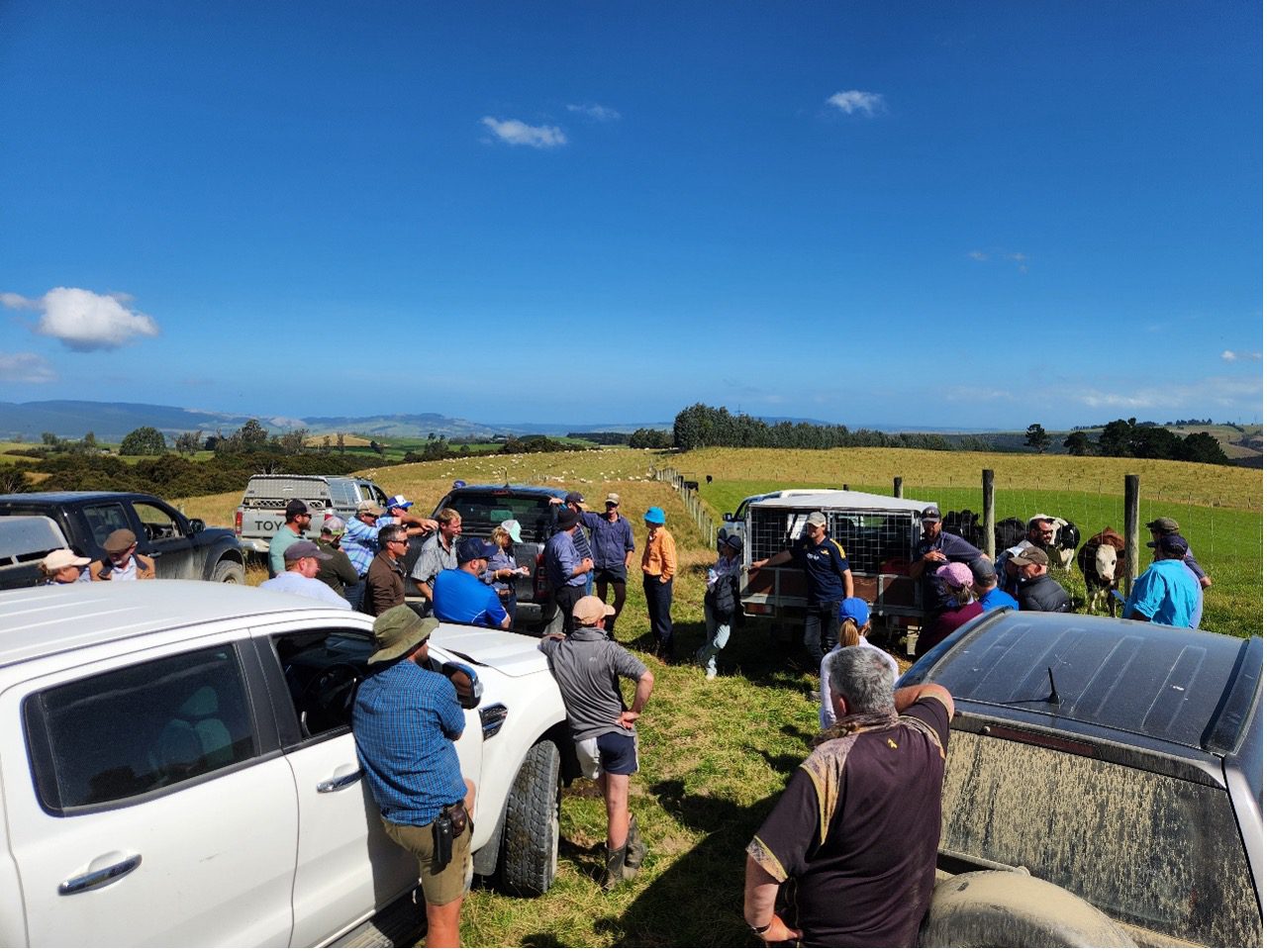
Farm tour with a group of Kiwi farmers.
Last week two producer groups from southern and central Queensland travelled with Toowoomba-based Bush AgriBusiness on a tour of the South Island of New Zealand. Despite the differences in landscape, climate and production systems, there were many valuable lessons to be learned, Bush AgriBusiness principal Ian McLean told Beef Central upon their return this week.
Why take a group of Aussie farmers to New Zealand?
“Our philosophy is that producers everywhere are managing landscapes, livestock, people, capital and risk,” Mr McLean said.
“While there are obvious differences across regions and production systems, there is a wealth of knowledge others have accumulated in the management of their businesses over time. We think it is invaluable to identify and tap into that knowledge. There is a lot to be said for getting out of your own dunghill and meeting other business managers to gain insights to apply back to your own businesses.”
 The group of 23 travelled by bus on a loop around the south of the South Island, starting and finishing in Queenstown, visiting deer, fat lamb, commercial beef, seedstock beef, dairy and wool producers and also meeting with representatives from Beef & Lamb NZ (NZ equivalent of MLA) and a farm app developer.
Mr McLean said they were grateful for the generosity of time and hospitality the group received from their hosts and also from Abacus Bio, a global consulting firm established in New Zealand that Bush AgriBusiness has a professional relationship with, and Tim Emery, through his work with the Zanda McDonald Award, which helped to arrange the tour itinary.
Common themes in terms of the key messages producers gained from the trip included the importance of attitude in both business and dealing with people, and the importance of being on top of your numbers and being able to use them to confidently make decisions in your business.
Mr McLean also outlined a few of his own key learnings:
- “I was surprised by how regulated farmers there were compared to Australia, particularly in around changing enterprises, land management and the timing and treatments for animal husbandry. We are fortunate not to have to deal with the majority of these regulations, although aspects of their land condition monitoring could be of long-term benefit to us.
- “Grass management. The higher stocking rates, improved pastures, parasite load, use of fertiliser and having rain and pasture growth spread across more of the year means the NZ farmers are very much on top of their grass management. They know what the dry matter response will be from fertilising and what the cost per additional stock unit run will be. They also manage feed quality quite well through managing pasture length. Their preferred maximum pasture height is close to our minimum!
- “Use of Collars. A dairy farm we visited was effectively using electronic collars for virtual fencing, grazing management, monitoring animal health and detecting oestrus, all from their mobile phone. We didn’t see it being used on beef farms and am unsure of economics for commercial beef farms, but the dairy farm was effectively using them.”
The tour was organised by Bush AgriBusiness and funded by the producers that attended with support from the Australian Government’s Future Drought Fund via the SQNNSW Innovation Hub.
As a memento of the visit, and to give their NZ hosts a taste of the Australian Beef Industry, each business that was visited received a copy of Beef Central’s Cattle Baron board game. Mr McLean said the group is also looking forward to hosting the Kiwis on a reciprocal trip to Australia next year.
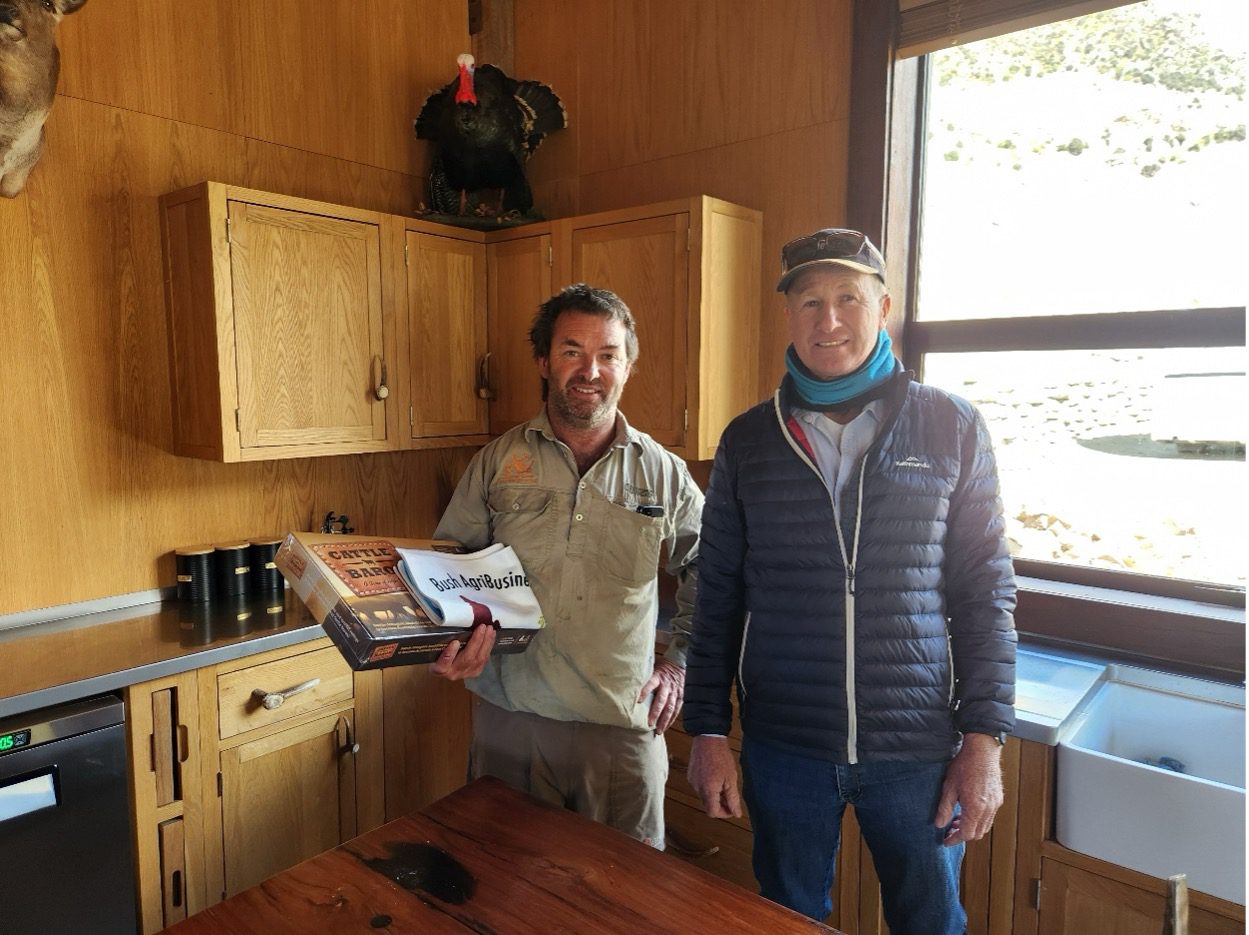
Angus McGilvray of Womblebank Mitchell presenting John Falconer of Clachanburn Deer with a Cattle Baron board game and Bush Agirbusiness tea towel.
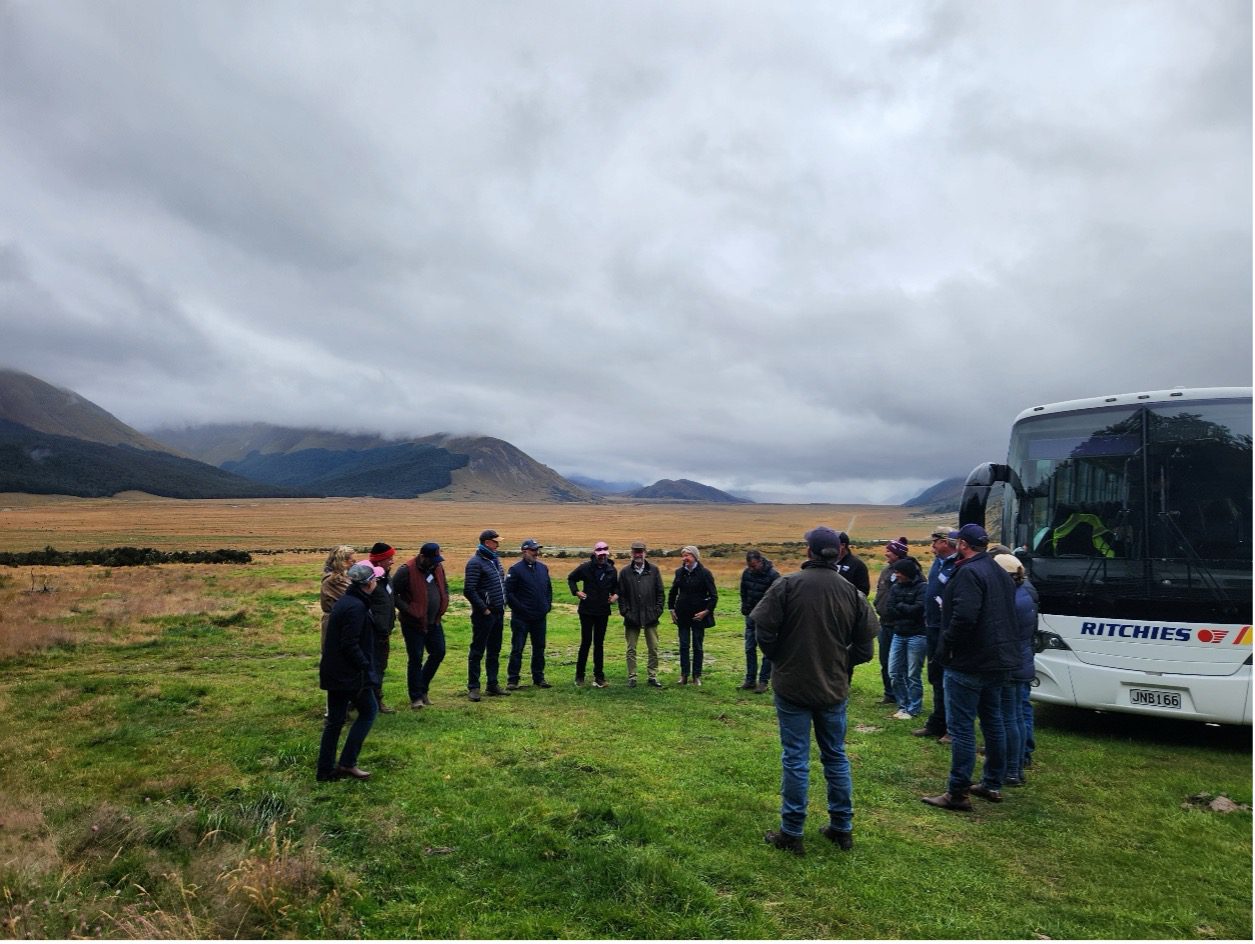
Some of the picturesque scenery along the way.