
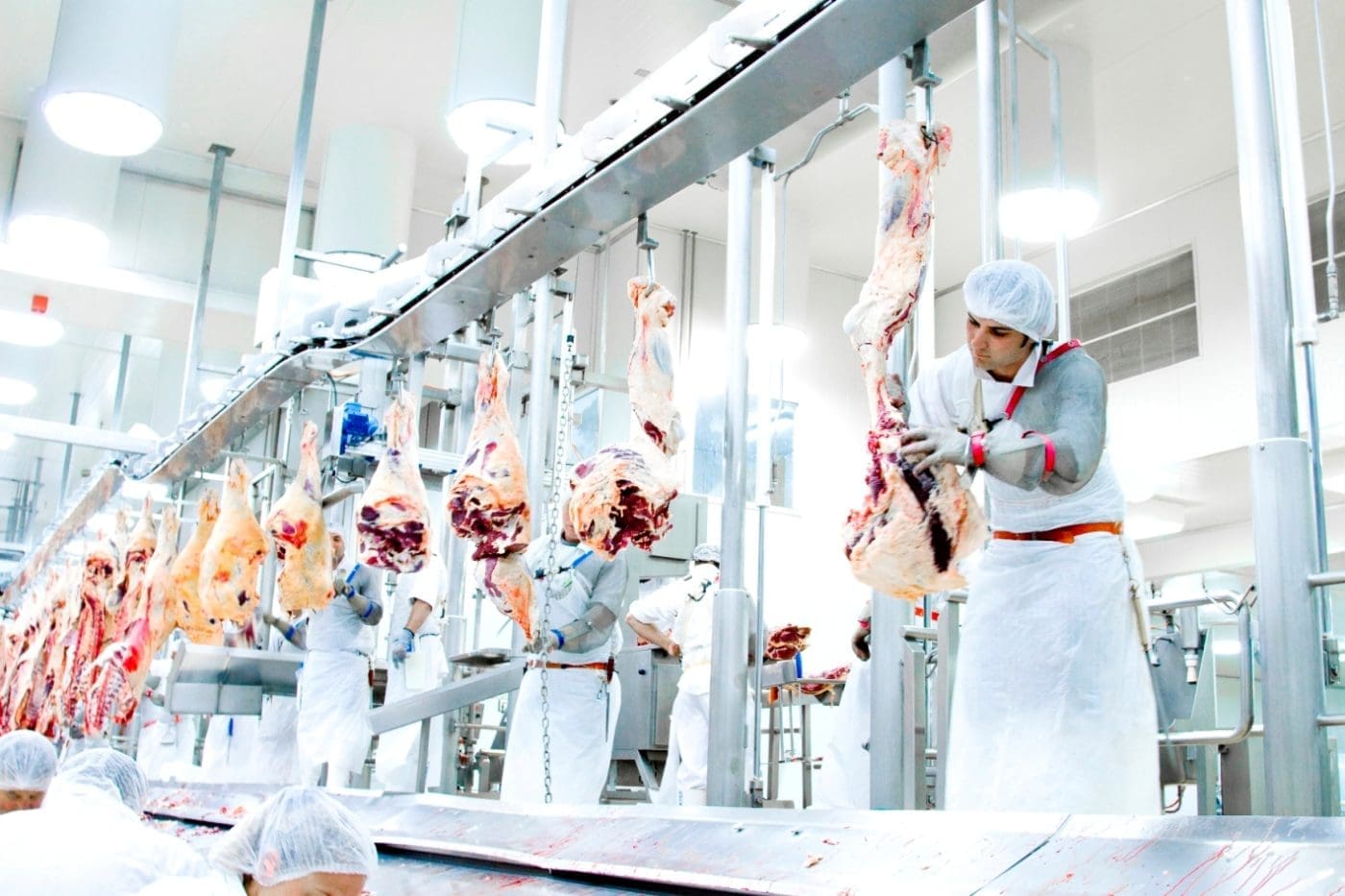
LAST week’s national adult beef kill surged to numbers not seen consistently since the drought turnoff period in 2015.
The weekly NLRS national slaughter report for the seven days ended Friday shows a figure of 158,528 head – particularly unusual this early in the production year and exceeded only once in 2025 during a high turnoff period in June.
There were a couple of weeks during 2019 when adult cattle kills crept into the low 160’s, but its not been since the 2015 drought turnoff period that national slaughter numbers this high have been seen consistently.
All states last week showed substantial growth, with Queensland hitting 81,678 head for the week, up 16pc on the same week last year. Add the small number of Queensland processors who choose not to contribute data to the weekly statistics (NLRS reporting is voluntary, but captures 85-90pc of all cattle killed nationwide), and Queensland’s total kill last week was estimated at well above 84,000 head.
NSW also surged to a season-high of 37,104 head last week, up 6pc on the same week last year while Victoria was +13pc at 19,030 head. Nationally, last week’s tally reported by NLRS was 13pc higher, year-on-year.
Meat & Livestock Australia’s most recent Industry Projections Update issued in September forecast a national adult cattle slaughter tally this year of 8.72 million head, down 3.3pc from last year.
But given the rapid start to national processing that’s been seen during January and February, its likely that MLA will now amend that figure upwards, likely closer to last year’s kill of 9.02 million head, when the full 2026 Projections are presented in coming weeks.
Official ABS data on 2025 production to be released on Friday will provide some guidance on that, with some suspecting that total official slaughter numbers for 2025 will go close to the 2015 record.
While the week before last was shortened by a lost working day due to the Australia Day holiday, meaning last week included a few catch-up kills, there are clearly other factors in play in the current high rate of national slaughter:
Black ink:
Clearly, beef processor margins are healthy in the early stages of 2026, with one contact suggesting current profits of $200/head or better on some better quality grainfed cattle, and $50-$60 a head on cows. That is incentivising processors to maintain shifts as large as possible, especially at this early stage of the production cycle.
And Queensland is yet to start its major cow culls for the year, with northern pastoral zones not due to start first round musters until around Easter. That could delivering greater slaughter cattle cow supply, while further pressuring northern cow prices in the months ahead.
China quota distortions:
With Australia limited to 205,000t of tariff-free quota into China this year, the race is on among exporters to secure an adequate share, under the first-in, first-served approach.
At this point at least, there are no clear signs of a quota management scheme emerging for Australia’s exports to China this year, designed to limit monthly shipments to a point where the tariff is not filled. Some stakeholders have already told Beef Central ‘the horse has bolted’ on a management scheme for 2026 shipments, and 2027 is now a more realistic target.
Should a self-managed quota process be developed and launched for trade next year, 2027 quota share would be determined in part by 2026 shipments, further incentivising exporters to maximise their China tonnage in coming months. Sources have suggested that our 2026 China quota is already 29pc filled, and shipments to ‘Other Asia’ (including China) for the first nine days of February are already at 22,000 tonnes. That suggest the remainder will fill quickly in coming months.
Conversations with grainfed processors this week suggest that forward contract offers for HGP-free grainfed cattle for May delivery are now “more or less impossible to find.” That’s a direct consequence of expectations that Australia will be doing little or no business into the (HGP-free) China market after that date. For interest, the HGP-free premium is normally around 30c/kg.
US demand:
Strong demand continues into 2026 out of the United States, where the local cattle herd is now at 75-year lows. Imported frozen lean grinding beef prices have eased a little in the past fortnight as the A$ value has shot past US71c, however last week’s quote for 90CL cow beef from Australia was still above A$11.50/kg – levels unseen before October last year.
January beef exports to US East and West Coast ports were close to record high for the month, at 23,700t – and that came after many export plants were closed for a fortnight over the holiday period.
Dry weather:
While there are prospects emerging of some good rain across the northern half of Australia over the next week, hot, dry conditions over late January have pushed slaughter cattle to market, as producers start thinking about pasture volume and condition heading towards aurtumn.
Widespread rain later this week would turn that around rapidly, with those fortunate enough tro receive some moisture likely to delay turnoff until after Easter to maximise weight.
“While there’s some good areas in regions like Central Queensland, a lot of producers are still waiting for significant rain, and some are lightening off numbers early, aware that there could be an El Nino event later in the year,” one analyst said.
“Some are trying to get ahead, before a flush of cattle hits the market, but next week’s rain could still change all that.”
Labour resourcing:
Last year showed signs of gradual, if modest lift in labour access among beef processors as the year progressed. However some have struggled to maintain numbers adequate to fill a second shift, such as JBS Dinmore. There appears to have been no attempt to restore a second shift yet at other large northern plants like JBS Townsville, NH Foods Borthwicks Mackay or Teys Lakes Creek.
Southern processors back in the north
As has become commonplace in the past two years, Victorian, southern NSW and SA processors are already supplementing their 2026 kill rosters with cattle procured out of areas further north.
That’s helping supplement early-season slaughter numbers in southern states, in the absence of local numbers after drought.
Large volumes of cattle are evidently being shifted early out of the Alice Springs area, but buyers are yet to make their presence felt in Queensland saleyards.
Drought turnoff congestion risk
With current kills already approaching ten-year highs, the question remains: how does the industry cope with even larger supply-side pressure, should paddock conditions turn really dry?
Congestion in available killing space could become a serious issue if there is no widespread, soaking rain in the next couple of months.
“Labour is still challenging for the processing industry, but some additional capacity has come on line in the past year or two,” one contact said.