
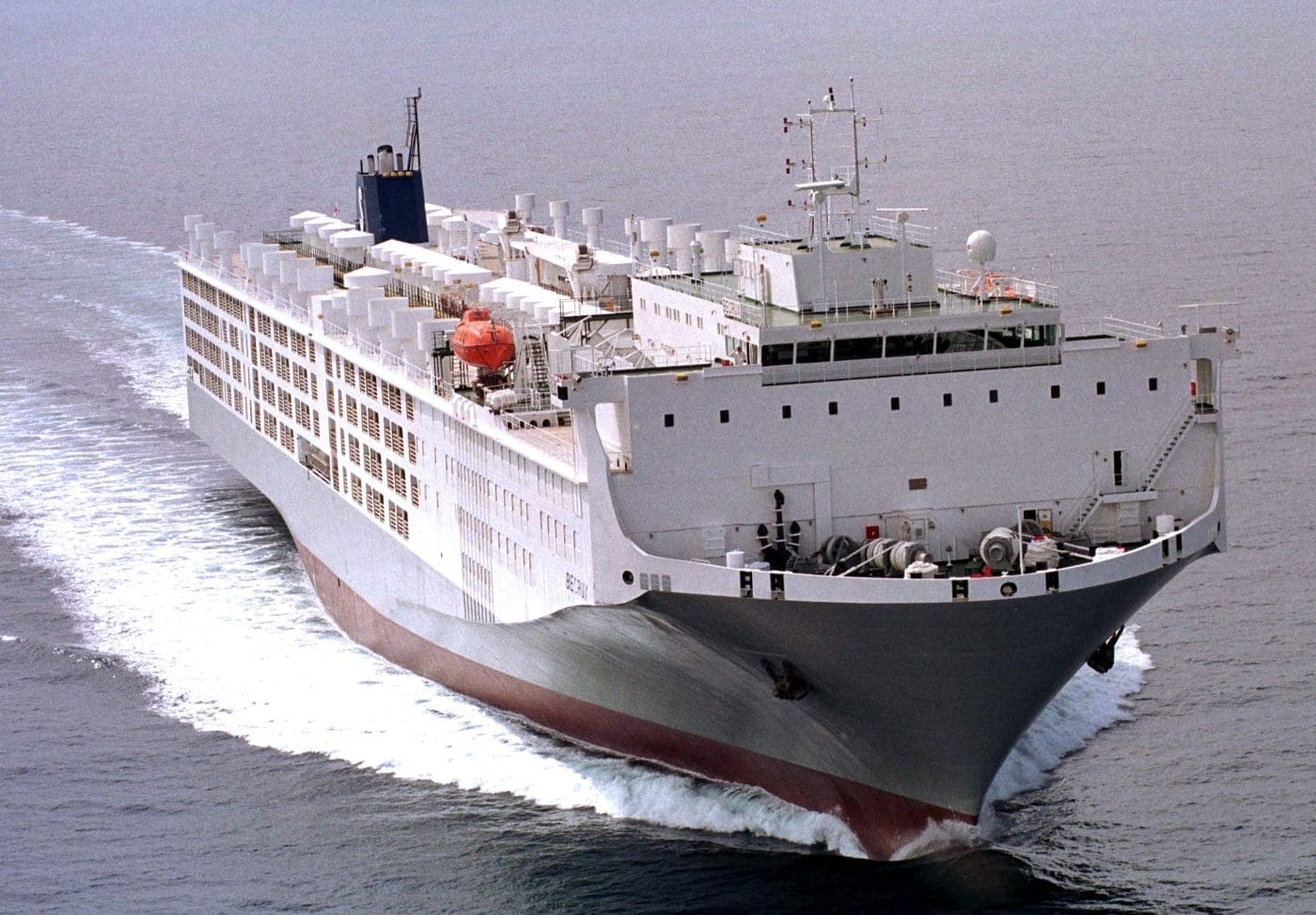
MV Ocean Drover
Editor’s note: ALEC has confirmed that its comments below in no way refer to James Nason’s article published on Beef Central on Thursday, which ALEC described as “really well written, well balanced and raising very valid points.”
IN recent months, renewed commentary about livestock shipping has once again brought Australia’s live export trade into the public spotlight.
Scrutiny is expected in a sector where animal welfare does, and should, always come first.

Mark Harvey-Sutton
It also offers an opportunity however to refocus the conversation onto a topic that, arguably, doesn’t receive enough public recognition – Australia’s reputation as a global leader in live export animal preparation and regulatory oversight of the supply chain.
It’s no secret that this reputation relies on ships servicing the trade being safe, reliable and efficient. Australian livestock exporters are uncompromising on these requirements given the inextricable link to animal welfare outcomes.
Disappointingly, there’s been an element of public commentary that distils what is a complex, intricately managed and highly regulated process into a narrow discussion about ship age.
The idea that a newer ship automatically guarantees a successful voyage is misleading. Livestock exports are not container shipping. Animal welfare outcomes depend just as heavily on livestock preparation, supply chain management, loading practices, stocking densities, ventilation management, crew expertise and onboard procedures.
Only animals that meet strict fit-to-load requirements are permitted to travel, and this decision is overseen by veterinarians and accredited professionals operating within a tightly regulated framework.
The Federal Government’s Australian Standards for the Export of Livestock (ASEL) program is considered the international gold standard. ASEL governs everything from stocking densities and ventilation to feed, water and bedding provisions on board vessels. They are enforced through routine inspections, audits and regulatory oversight, creating a culture of compliance that continues to lift standards year after year.
Equally important is the expertise embedded throughout the system. Exporters, stockpersons, veterinarians and ship crews are highly trained in livestock handling, environmental management and welfare monitoring.
These operational factors have a far greater influence on animal welfare outcomes than the year a ship was built.
The reality is that ships servicing Australia’s live export trade are, by global standards, relatively young, exceptionally well regulated and subject to some of the most stringent operational and welfare oversight in international shipping.
Every livestock carrier servicing the Australian trade must comply with Australian Maritime Safety Authority requirements, international maritime conventions, classification society rules, and Australia’s own livestock export regulations, including ASEL.
These standards go far beyond those applied in most other exporting nations. Ships are inspected and audited routinely. If it doesn’t meet requirements, it doesn’t sail regardless of its age.
Speaking at the recent LIVEXchange conference in Perth, Vroon Chartering and Operations Managing Director, Lennart Ephraim said the company strongly supported Australia’s regulatory framework and was committed to servicing the trade for the long term – see video of presentation at this link.
This is not to say renewal is unnecessary. It goes without saying that the fleet must evolve over time and investment in new ships should be encouraged. But renewal must be framed as a strategic progression not a crisis narrative.
Herein lies the real risk. Public commentary that portrays the age and availability of the fleet being ‘on borrowed time’ and a threat to the trade’s future does not accelerate investment; it discourages it. Building a modern livestock carrier requires enormous capital and long-term confidence. Shipowners and financiers need certainty that the trade will endure and regulatory settings will remain stable.
They also need certainty that there will be a concerted effort to address inefficiencies within our port systems, particularly around inspection processes, pilot fatigue management plans, berth congestion and industrial relations.
A more balanced discussion is therefore essential. Yes, fleet renewal matters but so does getting our investment, policy and regulatory settings right and recognising what Australia already does exceptionally well: rigorous regulation, superior livestock preparation, operational and logistical expertise and a culture of compliance that continues to lift standards.
While ship age and availability is part of the discussion, it’s far from the whole story.
Related articles:
Shrinking fleet raises red flags for Australia’s live export shipping capacity 6 Feb 2026
The other livestock capacity issue no-one is talking about 12 Feb 2025
Opinion: Live sheep ban, through a different lens 26 June 2024