
GLOBAL capital descended on Brisbane last week for the inaugural Global AgInvesting Australia conference.
The event is held annually in London and New York, but found its way to Brisbane for the first time last week.
There was wide expectation among the Australian contingent in the room that the Queensland Government – which heavily sponsored the event – would use the occasion to make a major policy announcement about the controversial foreign land tax.
The Queensland Land Tax Foreign Surcharge is an additional three percent tax applied to the taxable value of freehold land owned by foreign companies, trustees of foreign trusts and absentee individuals. Many in the industry had hoped that with the change of government in October 2024, that major reforms would have occurred by now.
Rural property marketer LAWD’s chief executive officer Enda Foley posted on the topic on social media after the event:
Given the location of the conference and the high degree of focus on international investment into the State, the vast majority of the room were anticipating (hoping) for an announcement from the Premier around a change to the highly punitive QLD foreign ownership land tax.
Disappointingly, despite being the perfect opportunity, nothing was forthcoming. Leaving the proverbial elephant to continue to tromp loudly around the room for the remainder of the conference.
A direct quote from the Queensland Minister for Primary Industries, Tony Perret: “The Global AgInvesting conference will put Queensland in front of key investors and decision-makers from around the world and highlight why our state is a smart and stable place to invest.”
Assuming there is a next time, as the Premier indicated he anticipated there will be, just a suggestion – read the room.
While there was a strong showing of local investment and property personnel in the room last week, Beef Central has received mixed reports about the showing of foreign capital and fund managers. Media was not permitted to attend.
In this week’s property review, two of the Australian delegates who attended unpack the key takeaways.
Tim McKinnon, LAWD
Tim McKinnon is a founding partner and the national director of LAWD’s valuations team.
He said one of the biggest ironies of hosting last week’s event in Brisbane was the foreign investor tax imposed by the Queensland Government.
Mr McKinnon said the surcharge remained a major issue for many investors.
“There is no doubt this tax is driving investors away from Queensland and into other states, in particular New South Wales, Victoria and Western Australia.”
“The Queensland Government needs to rethink the tax otherwise it is wasting its time and taxpayers’ money by sponsoring the event and encouraging investors to come,” he said.
In recent years, several groups have exited Queensland, with frustration over the impact of the foreign land tax raised as a reason for the sales:
- In August 2024, Australian agricultural investment fund Laguna Bay listed the 13740ha Carpendale Portfolio in the Border Rivers region of southern Queensland. The following year, the 1948ha Tingan and 2167ha Nomby were sold, with the 7049ha remainder rebranded as the Goondiwindi Grain Hub. The hub comprises three adjoining holdings (1186ha Mayfair, the 2525ha Manus and the 3338ha Carpendale) which are still available for purchase.
- In May last year, seedstock and commercial beef producer Palgrove, backed by NZ Superannuation Fund, placed two of its Queensland turnkey grazing properties on the market. The 2566ha Palgrove near Dalveen on the NSW border and the 1651ha Killaloo near Drillham on the Darling Downs changed hands in November.
- In March, expressions of interest were sought for Gina Rinehart’s substantial grazing and dryland cropping portfolio in the Maranoa region of southern Queensland. Spanning 22666ha, the Rockybank Aggregation comprises three holdings near Tingun, 25km south of Roma.
Mr McKinnon said data showed investors were selling freehold land in Queensland, where they pay a foreign investor tax, and buying elsewhere.
Carbon and natural capital
He noted that there was significant discussion during the conference around natural capital and carbon.
“It is an emerging segment of the market and still needs good, solid data. Anything in the carbon space comes down to integrity, such as third-party reports and a history of production of ACUs. That is where value is created, rather than in potential.”
He said many assets had potential but had not necessarily achieved it yet.
“There are certain milestones in a carbon project that needs to be achieved – year one followed by year five, then a history of production. Interest will come once projects are audited and have robust data.”
Mr McKinnon said some investors had also found development upside through capital growth opportunities.
“Taking land that is non-arable, making it arable and getting an uplift in valuation. It is not just the cash returns, but also the capital growth story. Some investors and large families have made good money by doing that, allowing them to scale up.”
Livestock assets
Mr McKinnon said historically, investors and pension funds had shied away from livestock assets because they can be more challenging than row cropping.
 “Typically, corporates and institutions invest in cropping because it is a simpler model to understand, easier to report on and easier to explain to their investors. However, an increasing number of investors at the conference were showing interest in livestock assets, because protein and red meat are having a very good run.”
He said some were becoming joint venture partners, investing successfully alongside strong family businesses with a track record of producing results.
In late 2023, New Agriculture, the investment and management arm of global nature-based real asset manager New Forests, and its Canadian institutional investor partner, the Alberta Investment Management Corporation, acquired the Kimberley Cattle Portfolio, which includes Yougawalla Pastoral Co and Argyle Cattle Co.
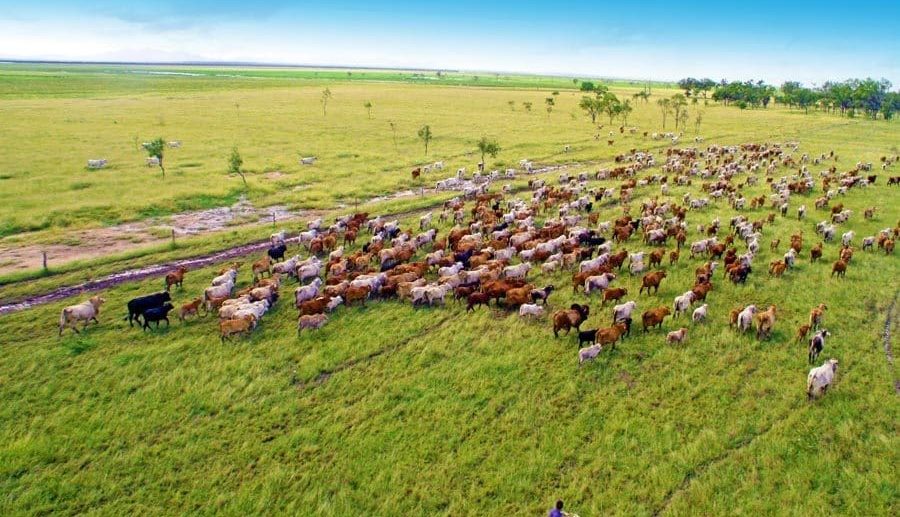
Today, Yougawalla Pastoral operations manage an estimated 50000 head of cattle and span around 3 million hectares across the East and West Kimberley regions of Western Australia.
Mr McKinnon said the company has developed the assets by investing capital in water points and fencing to increase carrying capacity and employ more people, which in turn had increased property valuations.
Mark Barber, Elders
Mark Barber is general manager of Farmland Agency and Agribusiness Investments at Elders, one of the event’s sponsors.
There was a lot of investor interest in the Australian agriculture sector at present, he said.
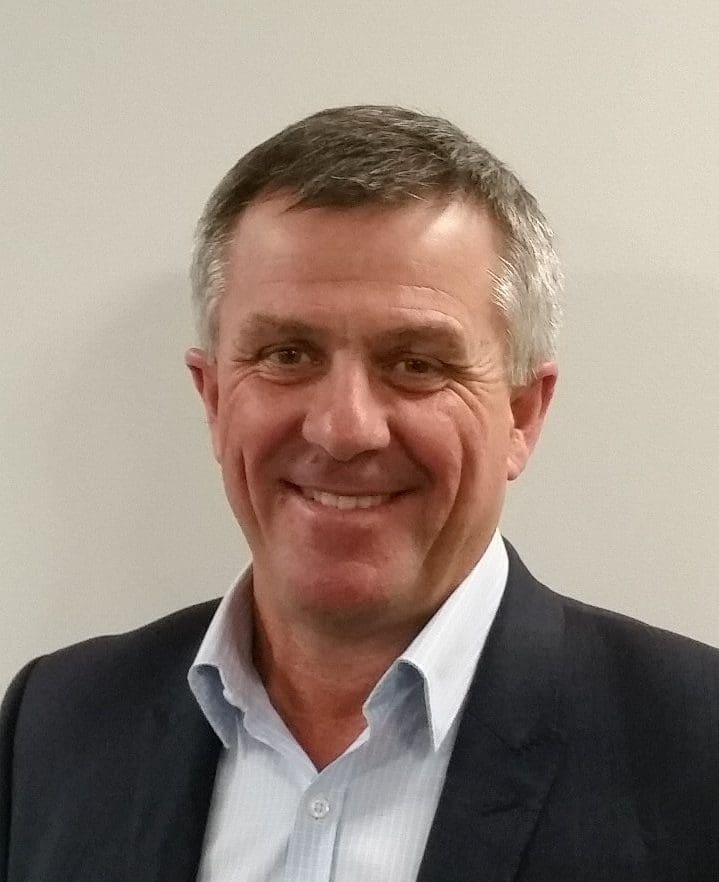
Mark Barber
“It is an investable asset class and very mature when you look at the number and quality of managers and service providers.”
Mr Barber said the conference attracted a strong Japanese contingent, building on the momentum from an earlier Tokyo event.
“There was also genuine interest from other offshore parties, particularly North America and Europe, with several highly qualified investors making the trip.”
Qld land tax
He said the Queensland government needed to think more carefully about its foreign investment surcharge.
“That was one of the key messages. People view Queensland as a great opportunity to invest, but one of the constraints is the state Land Tax Foreign Surcharge. The government needs to rethink that policy if it wants to take full advantage of the investment interest.”
Mr Barber said if the Queensland government did not understand the impact of the land tax after the conference, it never would.
“It was clearly stated that there is an investment community with a large appetite who recognise the opportunities, but are constrained by the land tax provisions.”
“Investors who have a large amount of money to deploy are attracted to Queensland because it offers scale, in addition to good quality, ready-to-go assets, however that is potentially being lost to other states.” Mr Barber said.
Valuing agricultural investment opportunities
Mr Barber, along with LAWD’s Tim McKinnon, participated in a panel session on Valuing Investment Opportunities and Assets in Australia, which gave investors evaluating opportunities in the ag sector an understanding of what drives value across different regions and production systems.
The panel explored the key factors influencing agricultural asset values, how valuation methodologies have evolved and the trends expected to shape future appreciation across Australian farmland and related agricultural investments.
Mr Barber said Australia was benefiting from solid commodity prices for milk and livestock, however the grains industry had been languishing because of higher operating costs.
“After a solid run in land values, returns are currently under some pressure and farmers are looking carefully at alternative, additional or stacked revenue streams such as biodiversity and carbon.”
“Australia is still exploring how to fully commercialise or monetise the benefits of those landscape-type services, but there is good preparation work being done,” he said.
Protein story
Mr Barber said another key selling point was the protein story.
“There is increasing demand for high-quality protein and Australia is extremely well placed to produce it. As a result, there is increased interest in livestock assets from institutional markets.”
“Australia has a demonstrable competitive advantage in producing red meat protein and is currently offering some high-quality scaled assets to the market,” he said.
Australia had also managed animal welfare risks extremely well, and those efforts were paying off.
“While overseas investors aren’t rushing to purchase livestock assets, there is certainly an increasing awareness of it. Some of the smart offshore investors are seeing this as a sector where they can gain a competitive advantage.”
Mr Barber said PSP and AIMCo had made significant investments in the Australian livestock sector, providing a strong endorsement of the industry.
PSP is the Public Sector Pension Investment Board, one of Canada’s largest pension investment managers, while AIMCo, the Alberta Investment Management Corporation, is one of Canada’s largest institutional investment managers.
Mr Barber said the opportunity now was for Australian asset and fund managers to continue building that competitive advantage by running strong businesses, clearly communicating their story and educating global investors about the scale and quality of available assets.