AUSTRALIA’S grassfed cattle transaction levy could rise from $5 to $6 a head by July 2028 under a resolution to be put to levy payers at next month’s Meat & Livestock Australia annual general meeting in Townsville.
The wording of the resolution which follows a months long Cattle Transaction Levy Review consultation process across Australia has been released by the Cattle Transaction Levy Review Committee this morning.
The proposed $1/head increase would fund a suite of changes recommended by the Cattle Transaction Levy Review Committee, including greater investment in industry representation, strategic biosecurity, the National Residue Survey and industry integrity systems.
But the resolution also makes the levy rise from 2028 conditional on a series of reforms being introduced in full by July 2027:
WORDING OF RESOLUTION
-
- Resolution to be voted on by grassfed cattle transaction levy payers at the MLA AGM in Townsville on Tuesday, 24 November 2026:
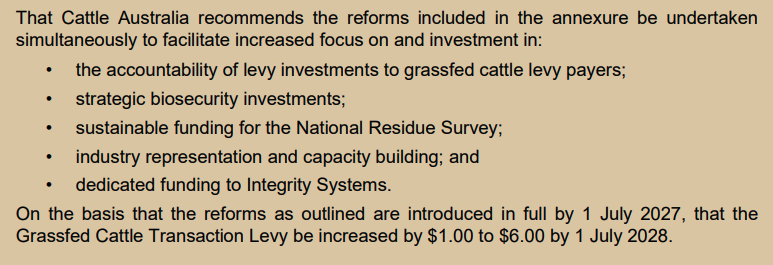
The resolution recommends increasing the grassfed cattle transaction levy by $1/head to $6/head by 1 July 2028, provided the recommended reforms are introduced in full by 1 July 2027.
The proposed increase would be used in part on activities that defend the industry’s reputation and promote its credentials through funding enhancements to industry representation capabilities, school educational programs, and community promotion and awareness programs of industry production systems.
The resolution also recommends increased spending on ensuring accountability of levy investments to grassfed levy payers and more funding for the National Residue Survey and strategic biosecurity investments.
 The resolution also recommends that the Integrity Systems Company be established as a stand-alone entity, separate from MLA, with a majority independent board, and to be funded by a dedicated funding stream. This levy stream, which would also include strategic pre-emptive biosecurity support, would be “not less than $0.84 of the grassfed cattle transaction levy (from both R&D and Non-R&D levy funds).”
The recommendations would also see Cattle Australia granted greater flexibility to approve the movement of funds between levy streams, following consultation with Levy Recipient Bodies to ensure critical activities remain funded.
The report further recommends that the timing of future levy reviews move to a full review at the start of every 10-year red meat industry planning cycle (the next to start in 2030), with a mid-cycle report on levy investment and any need to reallocate funds every five years.
Recommendations include increasing the allocation to the major expenditure area of marketing to a fixed minimum portion of $4.35 per transaction, up from the current level of $3.66, and lifting funding for research and development to a fixed minimum portion of $1.12, up from 92c.
It also recommends increasing National Residue Survey (NRS) funding from 29c to a fixed minimum portion of 40c from every $5/head levy paid, which would create an additional $1.2 million per annum in direct funding for the NRS.
Funding for Animal Health Australia would remain fixed at 13c from every transaction.
The report states that AHA performs important national and multi-commodity functions and “should continue to do so”.
“However, consultation identified a broader range of biosecurity investments that grassfed levy payers consider important, including on-property preparedness, extension and adoption, traceability and industry-level preparedness.
“Meat and Livestock Australia today invests in several program areas that come under the heading of ‘biosecurity’, evidencing the expansion of need outside of the functions housed within AHA.
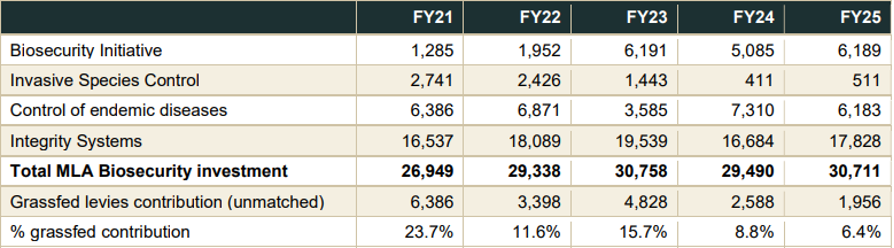
MLA Group biosecurity investment, FY21–FY25 ($000) – Strategic Plan 2021–2025 actuals. Source: CA Cattle Transaction Levy review final report and recommendations
“… It is therefore the view of the Committee that additional grassfed levy investment should be targeted toward functions where the benefit to grassfed producers can be clearly identified and measured, while continuing to operate within a shared industry and government biosecurity framework.”
Resourcing for national industry representation
The report also outlines an area of modern market failure in which Prescribed Industry Bodies such as Cattle Australia in the grassfed cattle industry are required to provide industry strategy and guidance but are not funded to do so, while the majority of levy payers consulted mistakenly assumed that a portion of the levy was used to fund representative activities undertaken on behalf of the industry, it noted.
“The responsibilities bestowed to these industry bodies have operated as a form of unfunded mandate – requiring them to operate in an environment where their tasking outstrips their resourcing capacity to undertake it.”
CA’s current level of funding is about $2.5 million, part of which comes through service arrangements for levy-funded activities connected to MLA, which the report describes as inadequate for an industry worth over $22 billion and more than 50,000 businesses located across Australia.
Of those producers who were aware there was no formal allocation for industry representation under the levy, “the majority supported correcting this situation”.
It also sought to make a clear distinction between industry representation activities which could appropriately be funded with levies and agripolitical activities which were not.
“It is the view of the Committee that these activities need to be clearly defined, transparently reported and provided for on a fixed rate/percentage of levy revenue basis to allow for consistent capacity development to occur to help protect the industry in areas that could result in material economic loss or detrimental impact to the cattle industry.
“The consultation with producers was direct on this point. Producers want the body that speaks for them on the levy to be appropriately resourced to do so, to participate in the decision making and implementation of industry decisions through this body, which is governed so they can see how the levy money is used.”
The report recommends that to ensure appropriate industry representation and engagement activities are undertaken consistently in future, a fixed minimum portion “of not less than $0.60” of the levy from both R&D and non-R&D levy funds is allocated to the following activities:
- Building and supporting capability and capacity to improve industry representation.
- Assisting in developing improved primary and tertiary educational programs.
- Promotion and awareness of industry production systems.
- Resourcing the development and maintenance of functions that allow for ongoing promotion and defence of industry’s reputation and credentials.
- Extension and Adoption activities as they relate to the operations of the levy system and program expenditure on behalf of grassfed levy payers.
Another issue raised during the levy review process involved the levy collection mechanism, with questions surrounding whether the existing flat-rate per head levy structure remains fit for purpose or whether a change to percentage based or ad valorem levy based on an animal’s value at any given point in time should be considered.
On that question the committee has not taken a position at this point but included it in a list of issues that it suggest should be considered as part of a comprehensive structural review of the architecture of the levy system as a whole in 2030.
Feedback reveals ‘consistent, clear’ trends
Cattle Australia said the levy review consultation process that began in July, and which has included 34 face-to-face meetings with producers and a national online survey, has resulted in the perspectives of more than 1000 grassfed levy payers across all states and territories being gathered.
The national producer feedback revealed “consistent, clear and fundamental trends”, with greater accountability and transparency of levy investment identified as a major priority area.
“Overwhelmingly, levy payers expressed a desire to see a more accountable, more transparent levy system that consistently and clearly articulates the value returned from levy investments made on their behalf,” the report said.
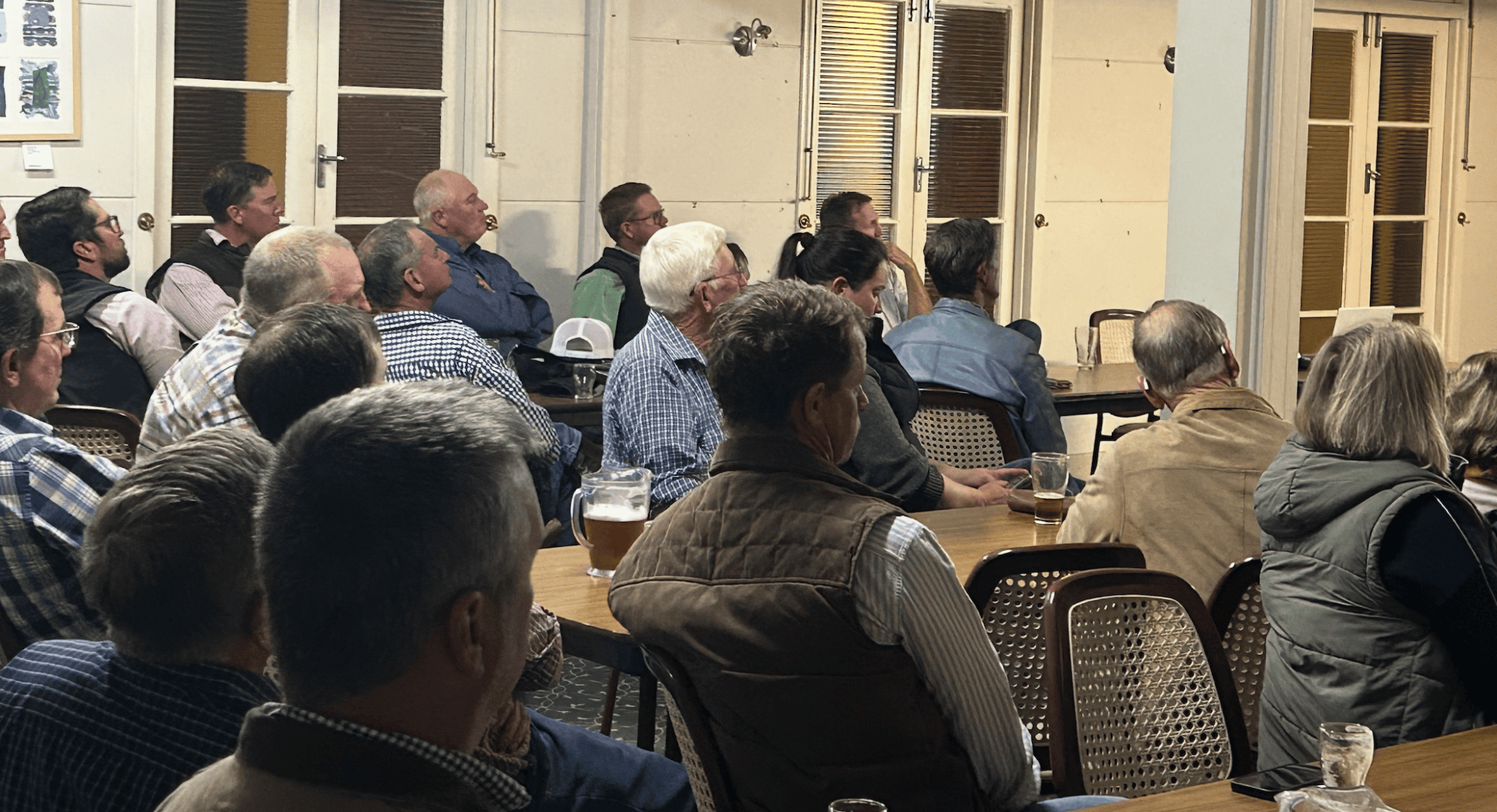
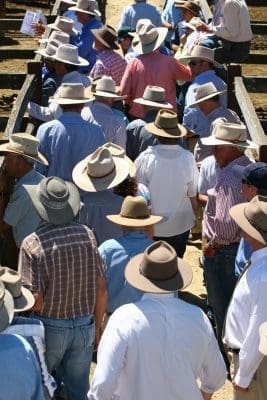
Cattle producers attending a Cattle Transaction Levy Review committee meeting at Theodore in Central Queensland in July.
Being able to clearly delineate between the benefits produced by the levy itself separately from external factors and commercial investment “must become better embedded in investment decisions”, it stated.
There are contrasting views among producers from those who believe a significant levy increase is needed to restore the buying power of the flat-rate levy to 2006 levels, to those who question the value of the levy and support a reduction.
The report notes that the real value of the $5 rate has fallen by around 42 percent since it was set in 2006 due to inflationary pressures, but also the view that there remains existing value that can be unlocked within the current levy system.
As reported further below, the committee considered the case for an inflation adjustment by proposing increasing the levy by a higher amount, but the case was rejected on the grounds that it was difficult to establish a clear benefit to levy payers.
Instead the $1/head increase from 2028 was selected to fund identified for program areas deemed to have clear value to levy payers.
While a “reprioritisation of funds” and shifting investments between program areas could enable some expansion in services called for by levy payers, it says the cost of continuing to provide core-level services has increased and will continue to increase under current economic conditions with purchasing power declines.
Assessments of levy effectiveness assessment
The report said the committee assessed the effectiveness of levy investments in three ways – undertaking historical assessments of the benefit-cost ratios of various program areas over the past 20 years; identifying physical program areas producers interact with and expressed support for that have confirmable industry value (NLRS and NLIS were examples provided); and a comparative analysis of industry performance in 2009 versus today, for which levy investment has been a contributory factor.
“This analysis of past investments, grounded in consultation with levy payers revealed that, while there have been areas of frustration in some marquee investment areas, overall the levy has delivered value for levy payers,” the report states.
While it was recognised that efficiencies within some large program areas can be achieved, the consistently expressed desire from levy payers participating in the review process was that “these functions should continue”.
Report “direct response” to producer feedback
Cattle Australia CEO Will Evans said the report and recommendations respond directly to what levy payers communicated throughout consultation – “they want to see exactly how their levy dollars are being spent, they want investment to keep pace with the risks and priorities the industry faces today, and they want a levy system that works harder for them,” he said.
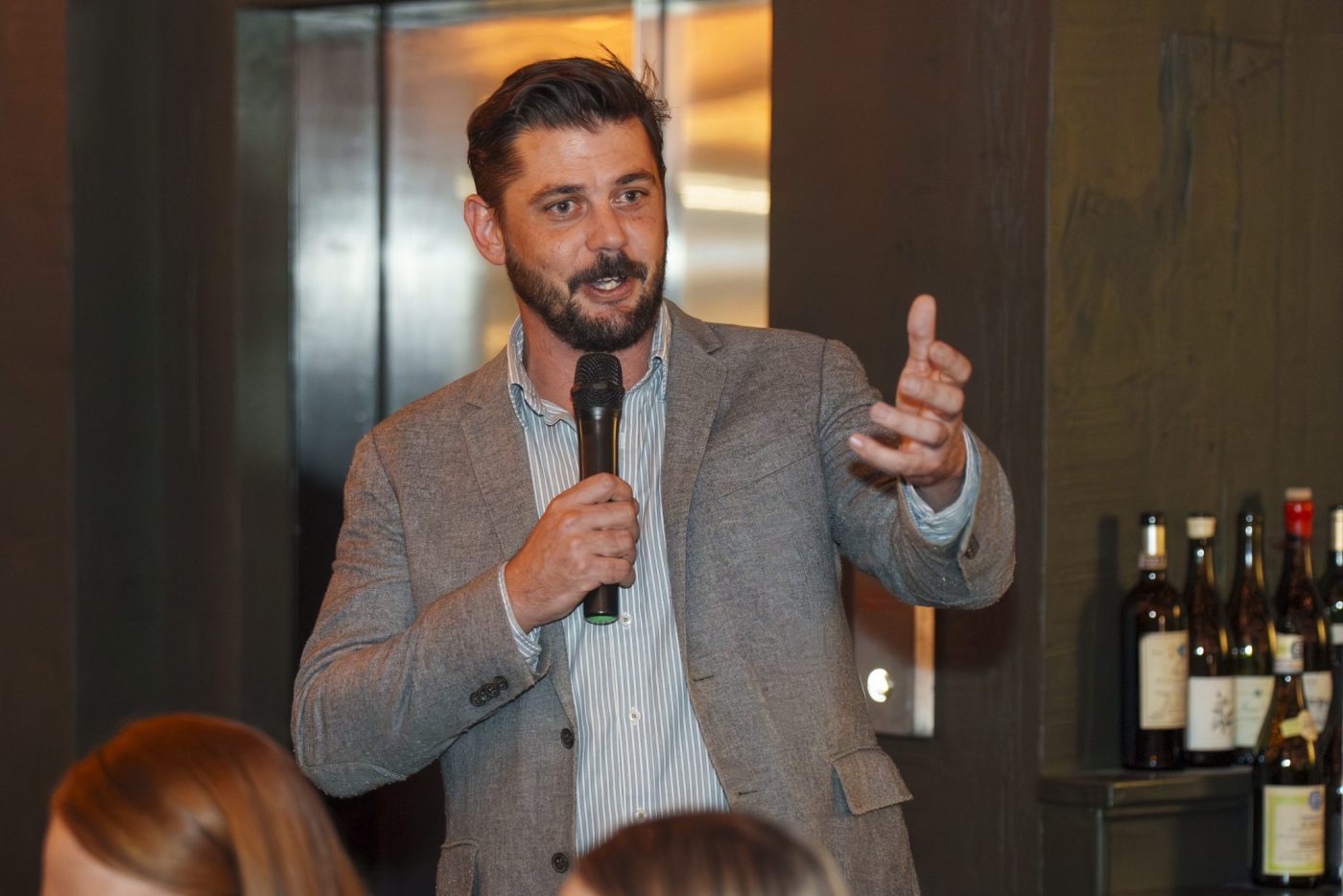
Will Evans, CA CEO
“Levy payers expressed a clear desire to get more from the levy. There is a case for an increase, but accountability has to come first.
“Producers want the levy to do more, with greater accountability and transparency, and there is a case for change: to increase the levy to deliver greater benefit, but only after accountability is demonstrated. That includes appropriate funding for industry representation and greater investment in pre-emptive biosecurity research and measures.
“That is exactly the sequence this resolution follows.”
Larger levy increase considered but rejected
The case for, and also the producer appetite for, increasing the levy to a dollar amount that would in real terms match the buying power of the $5/head levy when first introduced in 2006 was also considered.
One of several scenarios suggested would have involved increasing the current levy by $3.50/head to $8.50/head in order to “restore the real value of the levy”.
“These were rejected on the basis that a clear discernible benefit to levy payers was not evident,” the report said.
The analysis also revealed that there are functions producers have a need for, or expressed strong support for, that do not have dedicated funding streams.
These included communications programs that support engagement with the community and industry, integrity systems functions such as the LPA and NLIS, and capacity-building programs which provide pathways for producers to participate in the levy system.
These programs currently draw down approximately $0.87 of the levy today.
“This was a clear area in which increased investment could be substantiated, and one for which levy payers expressed consistent support.
“Accordingly, the Committee and the Cattle Australia Board are recommending a continuum of events over the coming 18 months that, if supported and subsequently delivered, will ultimately result in a rate increase of $1 per transaction by 1 July 2028.”
Will a $1/head increase bring meaningful change?
Based on the number of cattle transactions now said to occur annually, a $1/head increase will increase the industry’s levy-funding war chest each year by $13 million.
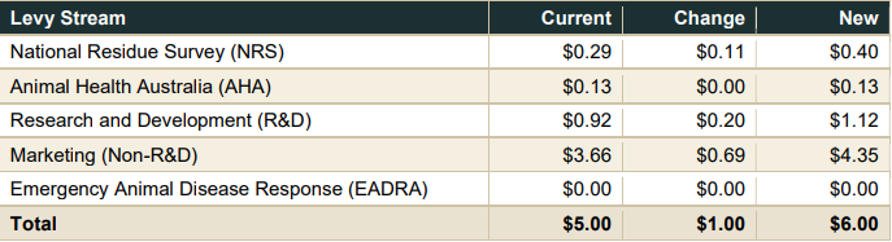
Source: CA Cattle Transaction Levy review final report and recommendations
The report says the full implementation of its recommendations would create reforms which “will increase accountability and producer oversight for strategic priorities, have more flexibility in the system to mitigate against risk to industry, increase funding to critical services and improve useability, take a leading posture against disease and pest outbreaks and improve communications and engagement with the broader community on the benefits of grassfed beef production.”
What happens now?
Levy payers will have the opportunity to vote on the resolution at the Meat & Livestock Australia annual general meeting in Townsville on November 24.
Under the process outlined in the report, Cattle Australia will provide Federal Minister for Agriculture Julie Collins and her department with a full briefing on the results of the review and seek support for the implementation of recommendations.
It will also engage with each Levy Recipient Body on the findings and recommendations from the review, with each body also tasked to undertake a full assessment of all programs and report to Cattle Australia before the approval of each body’s respective budget for 2027/28.
The members of the Cattle Transaction Levy Review Committee are Southern Producer Representatives Hugh Nivison and Harry Youngman; Northern Producer Representatives Julie McDonald and Rob Atkinson; Western Producer Representative Dean Ryan; CA Board Representatives Elke Cleverdon, Garry Edwards and Bryce Camm (Review Committee Chair); Independent Member – Research Development Corporation Specialist Jason Strong and Independent Member – Government Specialist Colin Hunter.
Voting for the resolution will be via a separate ballot at the MLA AGM. All levy payers will be provided with the full resolution text, explanatory notes, ballot papers and voting instructions ahead of the AGM, along with opportunities to ask questions through webinars and regional briefings in the lead-up to the vote.
To view the full report – 2026 Cattle Transaction Levy Review Final Report and Recommendations – click here
By the numbers
(Below statistics drawn from the 2026 Cattle Transaction Levy Review Final Report and Recommendations)
- Each grassfed animal is transacted on average 2.2 times in its lifetime.
- That incurs an average lifetime charge of $11 per animal.
- Historically, has averaged $61.9 million collected each year from the grassfed cattle levy since FY08 and is forecast to average about $63.4 m over the next five years.
- That compares to $18 million from the grainfed levy; $23 million from the processing levy; and $3.1 million from the live export levy.
- Grassfed transactions have averaged about 12.3 million a year since 2007/08.
- Grainfed transactions have grown since 2007/08, now forecast to average 3.6m a year.
- The grainfed share of total CTL revenue has risen from about 12pc to 24pc.
- Total livestock levies across the red meat sector average about $116m a year.
- Grassfed CTL now represents about 50pc of total livestock levy revenue, as sheep and grainfed levies have grown.
- MLA receives 89pc of livestock levy revenue (67pc marketing, 22pc research).
- MLA’s total revenue has grown about 30pc since 2011/12.
- Its five-year expenditure forecast to 2029-30 is $1813 million, up 24 percent on the previous five years.
- Marketing accounted for the greatest share of grassfed cattle transaction levy expenditure from FY21-FY25 at 49pc, followed by research, development and adoption 21pc, corporate and overheads 10pc, integrity systems 8pc, communications 7pc, capability building 3pc, National Residue Survey 2pc and AHA 1pc.
- In practical terms, the purchasing power of $5 in 2006 is equivalent to $8.68 in today’s dollars.
- Since 2009, the gross value of cattle production has increased by 136pc from $7.5 billion to $17.7 billion.
- The EYCI in 2024/25, averaging 665c, was 101pc higher than 2008/09, when it averaged 330c.
- The Australian beef cattle herd has increased by 11pc from 25.3 million head in 2008/09 to 28.2 million head in 2024/25.
- Australian beef production has increased by 30pc from 2.15 million tonnes carcase weight in 2008/09 to 2.79 million tonnes carcase weight in 2024/25.
- Average carcase weights in Australia have increased by 11pc from 272kg in 2008/09 to 302kg in 2024/25.
- The rise of significant investment of private funds through the MLA Donor Company has been the most substantive trend to emerge over the past 20 years.
Related Articles:
Feedback from cattle levy review consultation meetings released 27 Sept 2026
Flat-rate levy vs percentage-based: Which producers would pay more? 17 Sept 2026
SFOs say business case needed before cattle levy overhaul 10 Sept 2026
Opinion: Increase in the cattle levy should be tied with reform 7 Sept 2026
‘Power always sits with the levy payer’: Littleproud 26 August 2026
Cattle levy review: History offers lessons for what comes next 19 August 2026
$5 cattle levy could face major shake-up 12 August 2026
Cattle Australia CEO pinpoints issue that dominated first year in role 6 August 2026
Should cattle producers be able to redirect levy spending? 23 July 2026
Cattle levy review aims to “leave no money on table” 22 July 2026
Producer questions zero-in on cattle levy as review consultations begin 15 July 2026
HAVE YOUR SAY