Review of the Grassfed Cattle Transaction Levy
The principles and scope outlined by Cattle Australia for the Review of the Cattle transaction levy are quite broad. So let’s ask two basic questions.
1/ Do cattle producers feel they have ownership of our service provider MLA.
2/ Do cattle producers feel they are getting the full value of their levies.
Fundamentally many levy payers struggle to agree with these two basic propositions. There is no point in being critical of MLA, they have some dedicated staff, a CEO and board committed to the red meat industry.
 The $5 levy collected by DAF, goes primarily $4.58 or (91%) to MLA for Research and marketing. National Residue Survey collects 29 cents or 6 %, and Animal Health Australia collects 13 cents or 3%.
MLA as a Research and Development Corporation RDC attracts matching Government investment on a dollar-for-dollar basis. This is a unique situation to get something back from the Federal Government for the tax we all pay. It makes sense to increase our levy investment in priority areas so that that matching Federal funds are fully utilized according to the beef industries cap on GVP Gross value of production.
Our $5 transaction levy on an animal worth say $500 to $3000 each is probably not a lot when one considers many businesses may spend up to 20 or 30% of their annual budget or marketing or R & D. The difference lies in that they are in total control of the expenditure.
Therefore it is worth considering some of the industry structure under which MLA operates.
OVERSIGHT
When the Memorandum of Understanding was put in place in 1998 by Minister Anderson to create MLA from the former Meat and Livestock Corporation AMLC. The document only gave Peak Councils CONSULTATION with their new service provider MLA. Anyone who has been involved with Peak Councils over the years would understand how weak the word consultation can be. In the past consultation has been we may or may not listen to what the Peak Councils have to say.
In the last decade there have been many multi million dollar spends announced by MLA that have left producer Peak Councils red faced with no prior knowledge. Carbon Neutral 2030, 150 million Dexa automation, Drought, bushfire funding and free NVD books are a few that come to mind.
Peak Councils should have oversight of major Research and marketing expenditure. They do not need oversight of the internal running of MLA which is very much a board responsibility.
Transparency and voting
The more transparent an organization is the more confidence its members have in the way the organization is run and the work they undertake.
 We know there are at least 40,000 members on the MLA database. So how many producers take the time to vote and who does vote. A fairly reasonable question some would say.
There is no doubt that the current voting structure is fair, based on the number of cattle, sheep or goats sold. But it does result in the vast majority of levy payers believing that their vote is not worth lodging and only favors the big corporates and processors that make the top ten levy payers.
It also means the MLA is more focused on the views of the top levy payers rather than the smaller family enterprises which are the backbone of the pastoral industry.
An MLA dedicated to producers
When the MOU and MLA were established in 1998 it was not envisaged that the feedlot sector would grow to the size it has today. So by default the two largest processors under the 60 day rule are the largest levy payers with voting entitlements.
The processors have previously stated their preference is to direct their levies back to their own service provider the Australian Meat and Processing Corporation AMPC. It has also been the recommendation of a previous Senate inquiry.
MLA is certainly still able via the donor company able to conduct projects for the processing sector that attract the matching contributions from the Commonwealth. MLA would have greater respect and buy in from farmers if it was a service provider dedicated to the production sector. Just as AMPC is dedicated to processor needs and Livecorp is dedicated to Live Exporter needs.
Long term service agreements
When the former AMLC was wound up in 1998 it had 80 million in assets. Approximately 40 million was lost in redundancies when the new MLA was created. Leaving around 40 million to create the Red Meat Advisory Council Reserve fund. The Peak Councils would then be funded by the interest and dividends from the fund managed by RMAC directors that come from the peak councils.
The fund today is well managed by external fund managers but has struggled to grow to meet the needs of the peak Councils in real terms. Global financial events as well as overspending by previous RMAC boards has resulted in the grassfed peak Councils such as cattle, sheep being very much dependent on service agreements with MLA for their financial survival and to employ the critical staff needed for policy and advocacy.
It is hardly an ideal situation when Peak Councils have to depend on their service provider to carry out their roles. It can compromise their function and is made worse when the service agreement is used as a bargaining chip on a yearly basis. The service agreement for Cattle Council of Australia in the past reduced from a $1.2 million contract to $700,ooo. These sorts of financial fluctuations and uncertainty make keeping critical staff challenging. It also impacts other organisations such as NFF which depend on commodity member subscriptions to survive.
Long term service agreements for the term of the MLA five-year-plan or 10-year MISP would give stability and allow producer organizations to carry out their policy functions.
In short we have a grassfed levy tied to an out of date industry structure or MOU that needs reform. This prevents levy payers from realizing the true value or ownership of their investment.
Priorities for levy investment
Adoption
Since MLA was established in 1998 there has been some excellent project research and development done by staff. In that time producers have seen the budgets for agricultural research and extension services by State agriculture departments decline to where they are almost non existent and constrained by public service conditions restricting their ability to travel to producers.
Today more than ever we are dependent on MLA to provide the research our industry continues to need. Adoption is reputedly between 3-6 % and is obviously the greatest challenge for the organization. All the great work done in R&D amounts to nothing if we cant get a decent percentage of industry to adopt it.
The decline in state extension services mean that our levy investment should consider how to fill the gaps and how to build a better dialogue with producers, possibly through State Farm Organizations and their networks.
Biosecurity
Biosecurity threats are without a doubt the biggest risk to our production sector. This also then flows on to our feedlot and processing sector. The risk of exotic disease outbreak is increasing not decreasing. The close proximity of several exotic diseases such as LSD, FMD, African Swine Fever, Rabies, Screw Worm fly etc across the Indonesian archipelago is a huge wake up call to be prepared for disease incursion.
There has long been a sound case for a dedicated portion or increase in the levy to fund more work in Biosecurity. The Disease Contingency Fund has only 16 million in it. This will go absolutely nowhere when we have a major disease outbreak. It would be a sound proposition to increase the CTL by at least $2 for Biosecurity. The best way to support this proposition is to ensure that levy payers have control or oversight where these funds are invested.
Exotic disease, feral animal control, Reserve funds, AHA, exotic weeds are all Biosecurity issues important to the beef industry to put on the table.
Industry systems
Cattle producers should reflect on the meat substitution and residue scandals during the nineteen seventies and eighties. Australia had very limited export market access. The entry of the UK into the European Union and a decline in exports to the US saw the devastating beef depression from 1974 to 1980. Our visionary beef leaders of the time put in place integrity systems that allowed Australia to access the higher value markets like Japan , Korea and China where food safety is a priority.
With nearly 80 percent of our beef production snow destined to over 30 export markets. Industry systems and product integrity continue to be the important tools for market access and consumer confidence. Further investment and improvement are essential.
Peak Councils have been aware that there are both governance and compliance benefits if Industry Systems, currently housed within MLA, were to become a stand-alone entity over time.
A business case would need to established if ISC was progressively able to generate its own operating capital or if a dedicated portion of the levy is required. Alternatively should these industry compliance functions be merged with established streams like NRS National Residue Survey? And our investment increased.
Our ability to trace forward and back with NLIS is an important tool in disease control and the rapid return to disease free status after an incursion.
Fixed reviews
It would be appropriate to align the review of the Cattle Transaction levy every ten years with the Meat Industry Strategic Plan as this involves our service provider, Peak Councils, and State Farm Organizations in the review process.
Research focus
MLA would be well served to continue to focus on key profit drivers that put money and value into producers pockets.
A lot of good animal husbandry is not rocket science. In a beef business the key profit drivers are weaning rate % and mortality in the herd.
Cattle industry representation
The best way for Cattle Australia to properly represent all levy paying beef producers is to adopt the previously agreed Industry Restructure position where every levy payer is allowed to be a member and entitled to a vote. (Similar to the way most producers are members of MLA by their decision to tick a box. Which is different to the current CA constitution in which a membership requires board approval and up to date financial subscriptions. The board may even choose to discipline the member.)
The proposed pathway to sustainably fund Cattle Australia was clearly articulated recently by the former agriculture minister David Littleproud in Beef Central on 26/8/26 “Power always sits with the Levypayer”. David was instrumental in proposing an opt in or out clause on the levy notice with a portion of the levy, this was on the table in 2022 at the time to help fund the new organization.
It will be an opportunity once again missed if while doing the levy review Cattle Australia fail to amend their constitution to allow all grassfed levy payers as members.
I do thank Cattle Australia for initiating this important review of the Cattle Transaction Levy and promoting this discussion with levypayers. There should be robust debate of our levy investments and their future direction.
Yes we do need to increase our levy investment, but it needs to be attached with industry reform and oversight if cattle producers are to realise its full value.
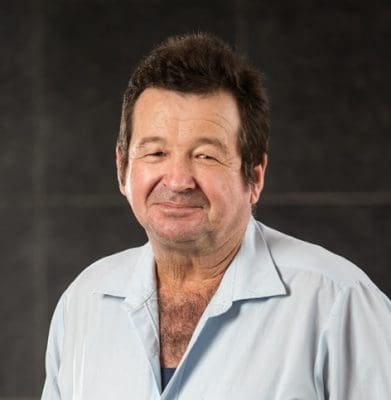
Markus Rathsmann
Mt Ringwood Station NT
Markus Rathsmann is a cattle producer from the Northern Territory and former president of the Cattle Council of Australia
How or are you going to deal with meat contamination from decaying renewable electricity infrastructures ?
If you think a federal government of any persuasion is going to leave a pool of money raised through the transaction levy, untouched, then you haven’t been paying attention. Just look at the “full cost recovery” for the live export market, this labor government and any left leaning government of the future is not going to “top up” a fund that is mooted to be increased through increased producer levy, they will raid the fund for “cost recoveries”. All federal fee’s will increase to justify any recovery. The “Grass-fed” producer is currently outnumbered/outvoted by the Lotfed industry, so any increase in levy would not necessarily go into the Grass-fed sector. Producers are currently taxed to extinction now, but if there is a model out there that increases the returns for producers by increasing the levy, by all means produce the literature and be transparent about it.