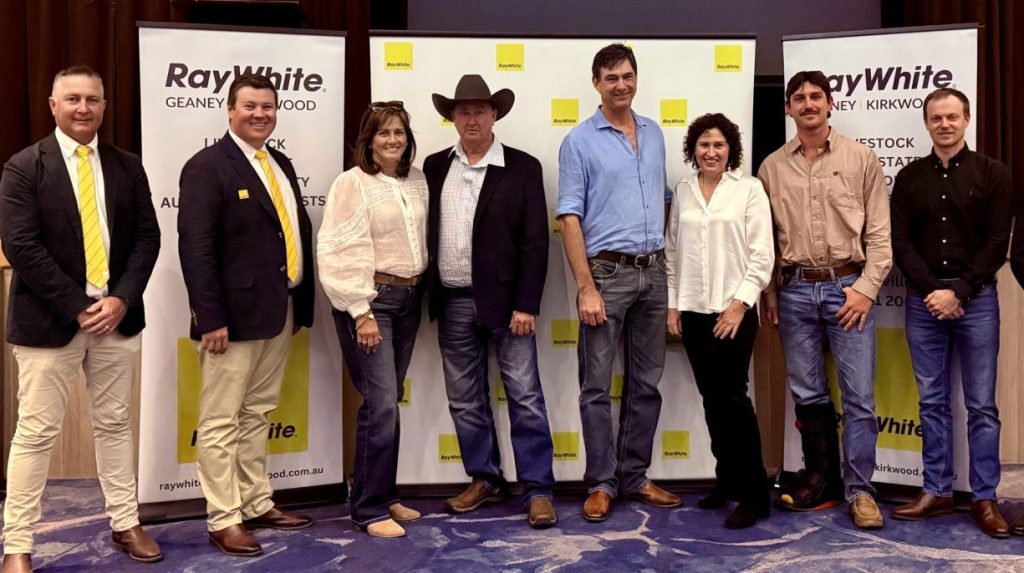
Matthew Geaney and Liam Kirkwood from Ray White Rural, vendors Delinda and Patrick Sheahan and buyers Peter and Chelley Howe and family of Rock Ridge Cattle Co
IN a strong endorsement of the strength of the Northern Australian cattle property market, the Howe family’s Rock Ridge Cattle Co has paid $30 million for North Queensland’s Valley of Lagoons Station, offered with more than 4000 Brahman breeders.
On auction day in Townsville on Thursday, a packed room of around 50 attendees watched five registered bidders, three of whom were active (all locals), compete for the property..
The winning bid went to the Atherton Tablelands-based Howe family – large scale avocado and banana farmers who operate across multiple locations from Yungaburra to Dimbulah.
There were around ten inspections prior to Thursday’s auction, drawing interest from a wide area, as far south as drought hit-producers around Narrabri in NSW.
On a bare basis, the sale represented a value of about $5000/adult equivalent – comparable with much smaller nearby holdings sold earlier.
Located north of Greenvale, the 39,229ha Valley of Lagoons (plus a 12,600ha occupational lease) is a Brahman breeding, backgrounding and finishing operation.
Believed to be North Queensland’s first settled cattle station, established in 1862, Valley of Lagoons formed part of a larger 86,000ha aggregation subdivided and sold by Patrick and Delinda Sheahan after 40 years of ownership. They bought Valley of Lagoons from long-term owners, Alan Atkinson and family about 20 years ago.
Adjacent properties, Reedybrook and Hopewell Stations, were sold by the Sheahans in July last year for around $20 million.
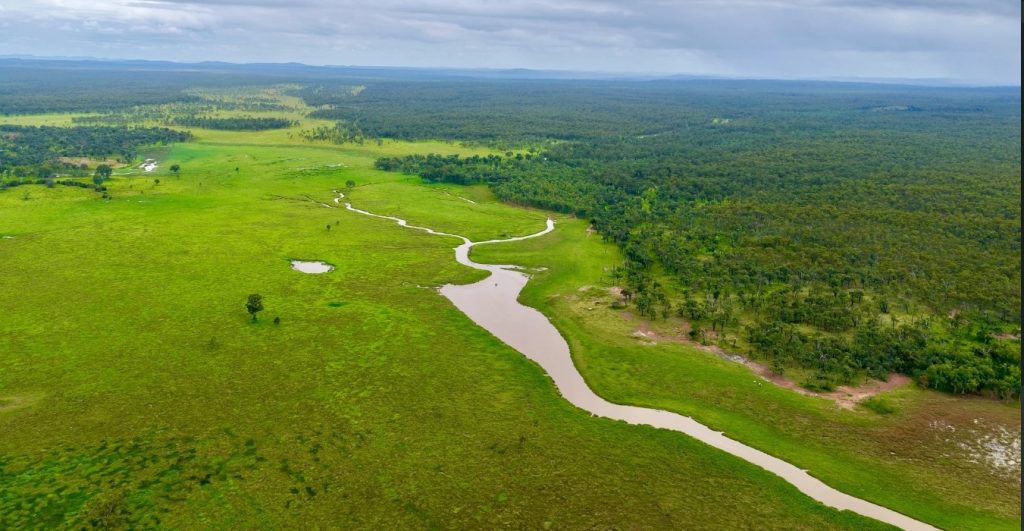
Open country on Valley of Lagoons
After spending 18 months on the market under an earlier expressions of interest campaign through another agent, it was the decision to switch to auction that generated the competitive tension that underpinned Thursday’s strong result, marketing agent Liam Kirkwood from Ray White Rural told Beef Central.
“There was a fair bit of uncertainty around, with the recent Federal budget, fuel prices and interest rates, and the Middle East conflict – but it was a very, very pleasing result,” he said.
“Through our network we had a lot of inquiry from people in the south whose country was dry, looking for good northern country. To get the message across to the market that the vendor was serious about achieving a sale, our advice was to go to auction,” Mr Kirkwood said.
“When previously listed under EOI 18 months ago, there was a lot of properties coming onto the market in the north. And our buyer feedback is that they do not like the EOI process at all. We’re finding that while there are definitely prospective buyers out there with money, at the moment – people who want to expand their operations – due to the rapid growth in property values in the past three or four years, they are very unsure about the values.
“Going to auction gives bidders some assurance that they are paying what would be considered fair market value – others are pushing them along, and they know it is genuine. With an EOI campaign, they don’t know where they are, and become confused about whether they are offering too much, or not enough. They do all this due diligence, and may not get a result.”
Mr Kirkwood sold nearby Glencoe for $35.5 million last year, a comparable sale, perhaps a little more centrally located with more productive basalt country. The sale went to a neighbouring substantial cattle producer.
“That was probably the only thing Valley of Lagoons lacked – a strong neighbour looking to expand
He described Valley of Lagoons as an efficient, low input, large-scale grazing operation providing immediate operational capability and significant potential for future development. As it turned out, the auction date was well timed, after a terrific wet season.
Taking its name from the expansive freshwater lagoons and waterways forming the upper reaches of the Burdekin River, the station benefits from 25km of Burdekin River and Lucy Creek silted river frontage supporting couch grass – valuable feed during the drier months.
Situated in a 750mm rainfall belt, Valley of Lagoons is also watered by lakes, creeks, lagoons, swamps, springs, waterholes, as well as dams and an equipped bore.
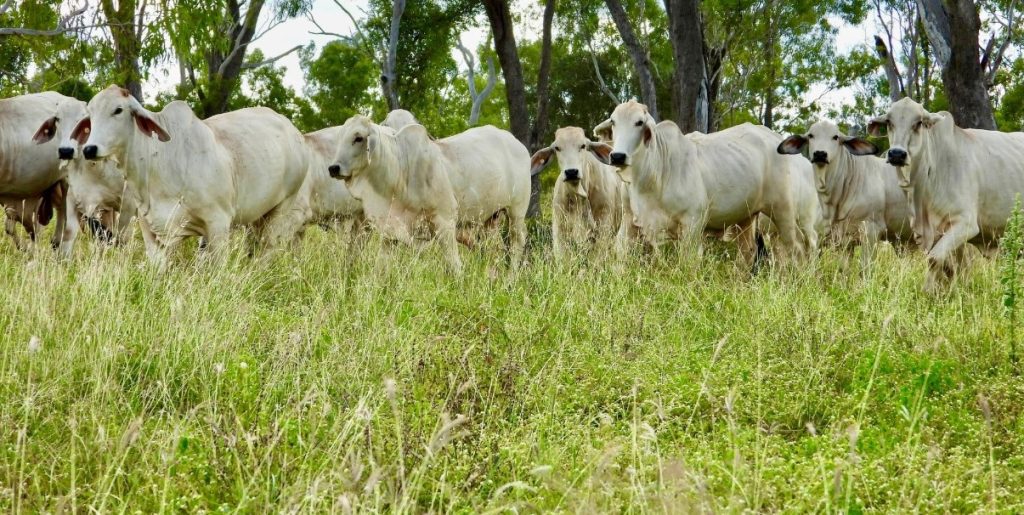
The property has the capacity to run 4000 breeders or 6000 Adult Equivalents and was sold with 4000 breeders and followers and 50 bulls.
It offers spectacular scenery encompassing waterfalls, picturesque escarpments and an extensive network of lagoons, swamps, lakes, springs and waterholes.
The landscape ranges from protected valleys, extensive fertile black soil floodplains, rich, loamy creek frontages, heavily grassed river flats and grassy swamps.
Beyond these lie deep red soil tablelands that rise into gravelly ridges lightly timbered with ironbark and box.
Infrastructure is described as exceptional and includes an eight-bedroom home with views over a permanent lake fed by the Burdekin River, a three-bedroom home, staff quarters and accommodation, numerous sheds and two cattle yards.
History
In 1845, during an expedition from Moreton Bay to Port Essington (now Darwin), explorer Ludwig Leichhardt wrote,
“… we discovered an extensive valley with large lagoons and lakes, and a most luxuriant vegetation, bounded by blue distant ranges, and forming the most picturesque landscape we had yet met with. A chain of lagoons connected by a reedy brook followed the outlines of the table land, along the foot of its steep slopes. … Water, grass, hills, mountains, plains, forest land; all the elements of a fine pasturing country, were here united.”
Based on Leichhardt’s favourable livestock rearing reports, a partnership between Walter Jervoise Scott, his brother Arthur, George Elphinstone Dalrymple and the then Queensland premier Robert Herbert (Scott Bros, Dalrymple & Co) established Valley of Lagoons in 1862.
Originally spanning around 260,000ha, the property was stocked with 25,000 sheep and cattle.
In the early 20th Century, Valley of Lagoons was used as a bullock depot for J.S. Love Estates and fattening steers from the Gulf breeding property Dunbar. It was later owned and operated for many years by Alan Atkinson, son of Droughtmaster breed founder Monty.