
This report follows our earlier property values summary that focussed on North and Northwest Queensland…
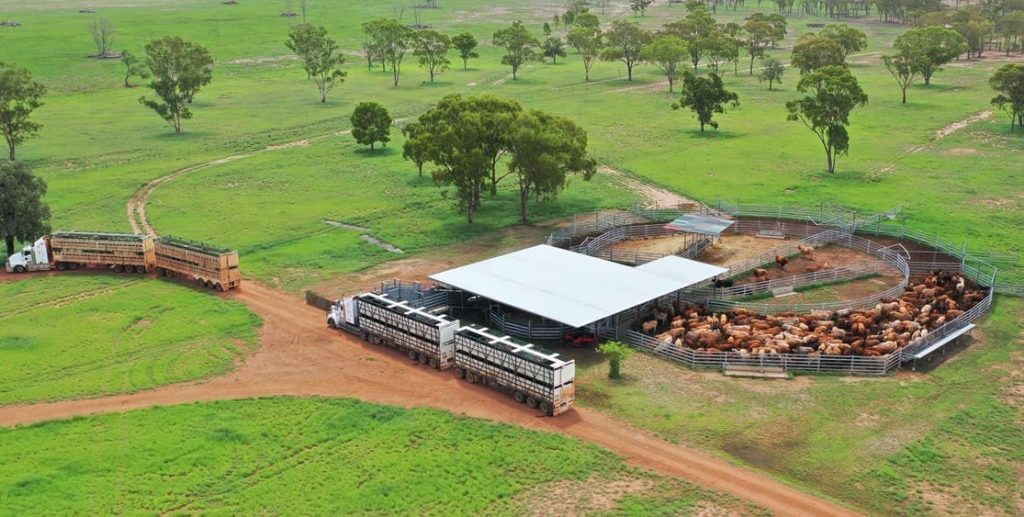
THE spring rural property market in Central and Southern Queensland is steady, selective and quietly recalibrating.
Valuers report a season that’s dry but typical, cattle prices that remain strong and buyers who are still active – just more discerning.
From premium grazing country to blue‑ribbon dryland farms, the rural property market is holding its ground even as interest rates and rising costs begin to reshape decision‑making.
 Earlier this year, Will McLay joined Valcore Advisory. Founded in 2014, the company began as a small independent valuation and advisory business servicing regional Queensland.
Today Valcore operates across Queensland and northern New South Wales, delivering independent advice across rural, agribusiness, commercial, industrial and specialised property assets.
Mr McLay’s colleague at Valcore, Tim Bartholomew, features in a separate property item published tonight, focussing on the feedlot sector.
Mr McLay said taking everything into account, seasonal conditions in Central Queensland were broadly in line with expectations for this time of year.
“Dry conditions at the beginning of October are not unusual. Even so, storms over the past week have delivered falls of 20-50mm to parts of Central Queensland,” he said.

Will McLay
“While many districts have still missed out and remain dry, overall the season appears fairly typical for this point in the year,” he said.
As a result, the flow-on effect for the property market has been relatively benign.
“Cattle prices remain strong, while the EYCI is at its highest October level in three years. On balance, the current outlook is more positive than negative.”
Mr McLay said market conditions across the region were balanced and sales activity remained steady through winter.
“Although transaction volumes were not high, the properties brought to market attracted a corresponding level of demand. In most cases, they sold at values consistent with, or slightly above, those recorded over the past 24 months.”
Mr McLay said premium properties, in particular, have continued to sell well.
“Generally, they are spending little time on the market. Second and third-tier assets are taking longer to sell, and a few of these are yet to sell.”
Mr McLay said buyer interest was evident.
“The challenge is aligning that demand with vendor expectations. That observation applies mainly to second and third-tier holdings, as premium assets remain highly sought-after.”
From Mr McLay’s perspective, three key market pillars remain influential:
- Although conditions are dry in places, there is still an above average amount of feed available
- Cattle prices remain strong
- Interest rates are an emerging concern for the remainder of the year.
He said the rising interest rate environment was weighing on prospective sellers and may influence whether some owners bring properties to market in the short term.
“Its significance will depend largely on each owner’s debt position and the feasibility of carrying higher borrowing costs.”
High cost of debt
He said the higher cost of debt was already affecting bottom-line performance.
“For owners weighing up whether to sell or remain in the market, this is becoming an important consideration. Nevertheless, seasonal conditions are sound overall and cattle prices remain well above average.”
Mr McLay said fuel prices stabilised briefly but have begun to rise again.
Most business owners recognised that these fluctuations were difficult to control and must be absorbed as part of operating a cattle asset.
“If beef prices were weaker, fuel costs would be a much greater concern. At present, however, this not the case and interest rates are presenting the more significant pressure,” he said.
Operational ‘fit’
Mr McLay said buyers were currently focusing on properties that offer a clear operational fit, particularly adjoining holdings.
“Potential buyers would be more cautious about operating properties a significant distance from an existing base, as wages, transport and other expenses erode profit margins. By contrast, nearby properties, and especially neighbouring ones, remain attractive.”
Mr McLay said the cheapest property to operate was often the one next door, which is reflected when neighbours compete to acquire an adjoining holding.
“Buyers may therefore be willing to pay a modest premium for a property that complements their existing operation.”
“Even so, there is no sense of urgency that buyers must secure a property now or risk missing out altogether. At this point, the equilibrium between buyers and sellers is about as balanced as it is likely to be,” he observed.
Southern Queensland
Fellow Valcore valuer Tim Cavanagh, based in Toowoomba, has noticed southern Queensland buyers becoming discerning in the current market.
“Market confidence has softened amid drier seasonal conditions in southern Queensland and as a result, some buyers are taking longer to make decisions.”

Tim Cavanagh
“In areas such as Taroom and Wandoan, there have still been isolated stronger sales to adjoining or nearby landowners,” he said.
In markets where longer selling periods are evident, Mr Cavanagh said some vendors remain anchored to higher expectations and are reluctant to adjust pricing.
He said the water market remains strong.
“Recent sales continue to exceed historical levels, particularly in the Great Artesian Basin.”
Despite the dry conditions, Mr Cavanagh said the dryland farming market was also performing strongly.
“Tightly-held areas, including the Inner and Central Downs and parts of the Western Downs, continue to trade well, as evidenced by the recent acquisition of the Coondarra Aggregation near Jimbour and Burradoo west of Moonie.”
“The irrigation market is not as strong as the dryland sector, but values are holding steady,” he said.
Blue-ribbon assets continued to trade well, while second and third-tier properties were taking longer to sell.
“Rain is forecast this week. If the season turns, market sentiment will improve. If it doesn’t, the market is likely to continue trading at current levels,” Mr Cavanagh said.
“If dry conditions persist, properties with good grass cover are likely to attract a premium again. Older operators generally stocked their country conservatively, leaving them better positioned in a dry season,” he said.
Mr Cavanagh identified interest rates as also influencing the property market, noting their impact may become more apparent over the Christmas period compared to last year.
HAVE YOUR SAY