
THE Queensland Government has announced changes to the state’s cattle tick management system for the first time in 10 years, following a review into an outbreak in the state’s tick-free zone earlier this year.
In January, an outbreak of cattle ticks in the Taroom district highlighted cattle producers’ frustration with the way cattle ticks are managed since a overhaul of the system in 2016.
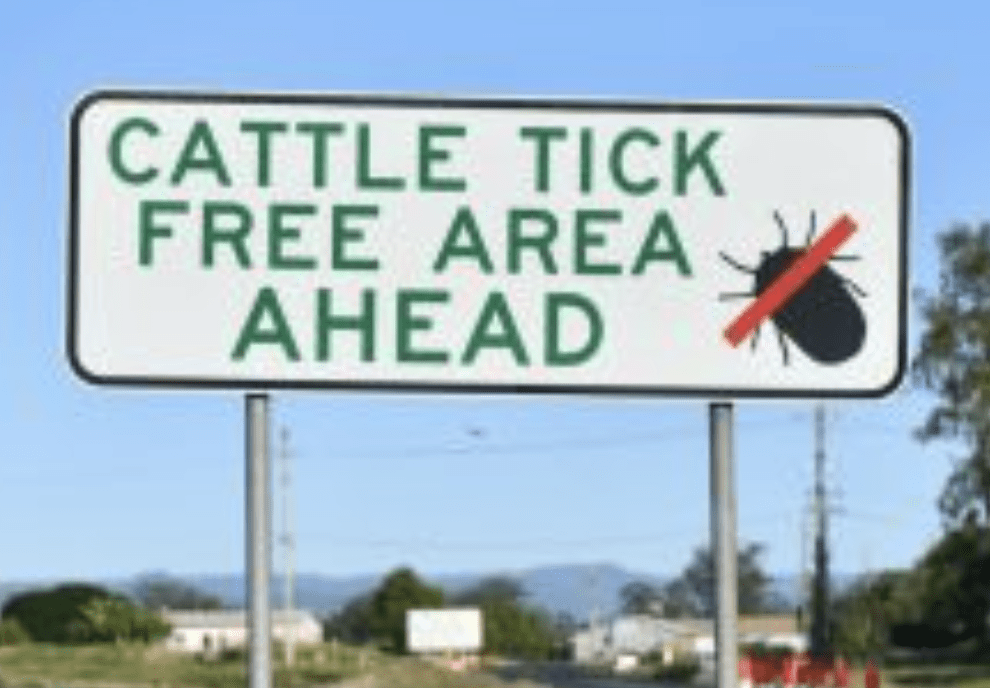
Qld’s Minister for Primary Industries, Tony Perrett called an internal review of the cattle tick management system as a result of the Taroom outbreak.
Today in State Government Budget Estimates, Minister Perrett announced he would accept the report’s recommendations.
“We are rolling out more frontline biosecurity staff, increased support for producers and stronger compliance among other measures to better protect one of Queensland’s most important primary industries,” Minister Perrett said.
“The review found Qld’s cattle tick management framework is operationally effective, but it also identified practical opportunities to strengthen surveillance, compliance, communication and governance.
“As Minister for Prime Ministries, I have accepted the recommendations, and we are getting on with delivering them.
“The integrity of the tick line must be maintained which is why I have moved to strengthen it.
“We are delivering practical reform – more boots on the ground, greater transparency, better surveillance, and more to strengthen and protect Qld’s cattle industry.”
The recommendations include:
Strengthen the DPI
- Three new Biosecurity Inspectors dedicated to cattle tick management to be established based in elevated risk areas of Kingaroy, Dalby and Central Queensland.
- Strengthen DPI capability with dedicated cattle tick training and update the standard operating procedure.
- Delivering stronger compliance by finalising a dedicated tick management compliance strategy, clearly setting out the enforcement actions, with an increased focus on high-risk livestock movements, greater surveillance, increased presence at saleyards and the use of the full suite of enforcement powers available if producers fail to meet their obligations.
- Develop digital and potentially mobile reporting tools for DPI staff to improve intelligence gathering in the field.
- Increase the number DPI sites that producers can drop cattle tick dip samples from two to the following: Boonah, Bundaberg, Charters Towers, Cloncurry, Dalby, Emerald, Gayndah, Gympie, Kingaroy, Mackay, Mareeba, Rockhampton, Roma, Toowoomba, Townsville, Warwick.
One of the biggest criticisms of the state’s cattle tick management system has been the decline in DPI staff on the ground to help manage outbreaks in the tick-free zone, so this announcement of three dedicated cattle tick Biosecurity Inspectors has been welcomed.
As an election commitment the Crisafulli Government promised to hire 100 new Biosecurity Officers over four years, but this week Minister Perrett announced 50 of those roles had been filled.
The new officers have taken up positions in Bamaga, Biloela, Rockhampton, Emerald, Gayndah, Cairns, Charters Towers, Townsville, Bowen, Mareeba, South Johnston, Boogan, Garbutt, Toowoomba, Charleville, Kingaroy, Gatton, Nambour, Dalby and Roma regions.
Changes to accredited certifier model
- Changes to the Accredited Certifier model to improve effectiveness, consistency and integrity including appropriate management of potential conflicts of interest.
- Develop and deliver additional compulsory regular training for Accredited Certifiers.
Improve transparency of outbreaks
- Improve access to the Restricted Place Register to increase transparency and provide graziers with vital information to manage local risk while protecting the privacy of individuals.
One of the major changes producers in the tick-free zone had called for is transparency around outbreaks so neighbouring properties could manage their risk.
“We can only strengthen our own biosecurity if we know where ticks are,” Taroom cattle producer Olivia Martin told Beef Central last month.
Former DPI stock inspector Doug Stuart told Beef Central for a previous story, prior to tick management changes in 2016 all neighbouring properties were informed of an outbreak and required to have their cattle inspected ‘clean’.
“Those properties were called ‘first removed’ and had the same movement restrictions for store cattle as the infected property,” Mr Stuart said.
This is the level of transparency and oversight producers in the Taroom district called for at a community meeting in February.
Beef Central is waiting to see the detail on the Government’s changes to the Restricted Place Register.
“We will improve access to vital information on the restricted places register, so graziers have better information to understand and manage local cattle tick risks while continuing to protect the privacy of individuals,” Minister Perrett said.
“Better information means producers are better equipped to make informed decisions about livestock movements and biosecurity on their properties.”
Increase in support for outbreaks in the tick-free zone
- The 10 per cent subsidy producers in the cattle tick-free zone can access for approved pour-on and injectable products will be increased to 25pc.
Investment in chemical resistance research
- Produce and publish seasonal tick outlook report and information about chemical resistance trends.
- Continued investment in research, innovation and new technology to improve cattle tick control to speed up diagnostic testing for chemical resistance, develop new diagnostic tools and invest in more vaccine research.
AgForce welcomes action on cattle ticks
AgForce has welcomed the Government’s cattle tick reforms as a significant step towards addressing industry concerns.
Initiated by an outbreak near Taroom earlier this year, months of sustained advocacy has resulted in recommendations covering system effectiveness, livestock movement controls, education and awareness, privacy protection and surveillance.
AgForce General President Shane McCarthy said the announcement reflected genuine engagement between the Minister and industry.
 “We appreciate the Minister and his department undertaking this review of cattle tick policy,” he said.
“It’s great to see three new biosecurity officers focused on cattle tick for Dalby, Kingaroy, and Central Queensland as well as additional cattle dip testing locations.”
At the Primary Industries and Resources Committee Estimates hearing the government also announced an immediate increase to the treatment subsidy for restricted properties in the tick-free zone and updates to the Accredited Certifier model, with greater regional field presence at high-risk locations like saleyards.
“We are pleased that the Minister listened to industry concerns and we will continue to work with the Department on the implementation of these recommendations,” Mr McCarthy said.
AgForce Cattle Board President Lloyd Hick said the organisation championed producers’ interests on cattle tick management through direct engagement with Minister Perrett and DPI’s Internal Reviewer.
A detailed submission was also provided to the sunset review of the Biosecurity Regulation 2016.
“We’re happy with the way the Department approached this review,” Mr Hick said.
“This isn’t about major changes but tweaks that strengthen the system we already have.
“If these recommendations are implemented in a timely manner, it will make a real difference for industry.
“AgForce will continue to work closely with the Department as these measures are implemented and will seek ongoing collaboration on matters directly affecting producers.”
Progress on cattle tick vaccine:
https://www.facebook.com/share/p/1BvubPcXVh/?mibextid=wwXIfr
While I appreciate some of the initiatives mentioned here I have a few concerns:
I recently raised with the Department the unfair and unwarranted fee producers are expected to pay to have their property removed from the infected list….this comes after often spending thousands of dollars on chemicals to become clean again…the fee is part of the legislation so while the above changes are occurring maybe this fee can be removed from the legislation
Secondly….having a property on the clean side of the line and actually on the line…we treat our property as though it is ticky….given the increase in the chemical subsidy for infected properties…should this also apply to properties that are actually on the line to support producers to “defend” the line?