
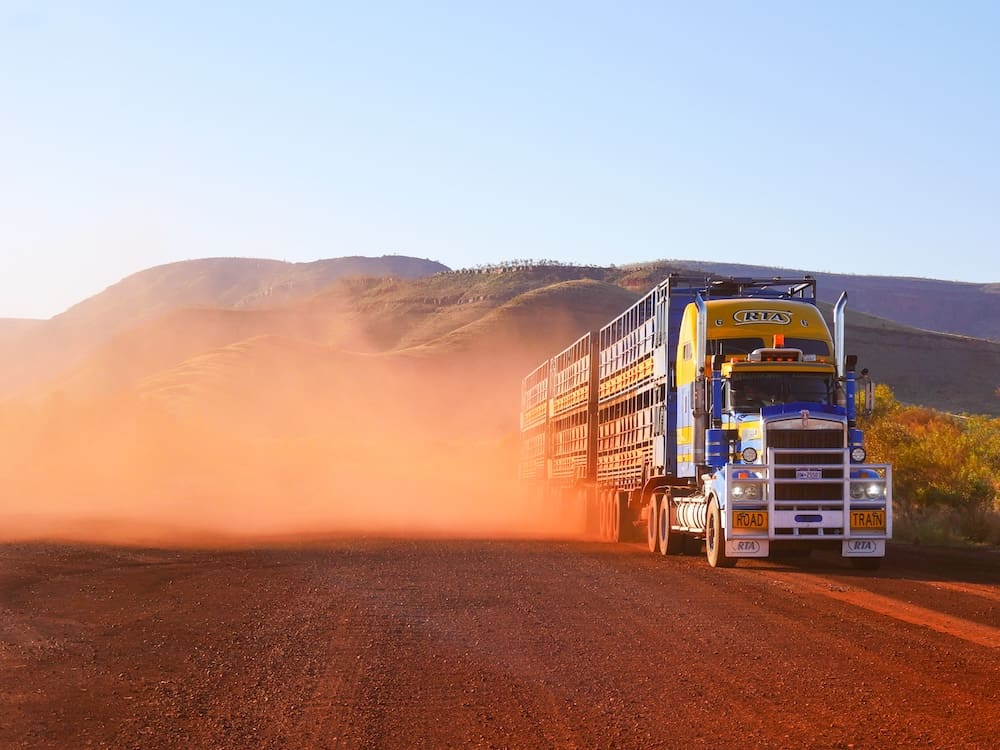
 A NEW transport pathway for Meat Standards Australia (MSA) will now allow more grassfed cattle to access the world-leading grading system, with eligible cattle still MSA-compliant after journeys of up to five days.
The MSA Beef long-duration road and/or rail transport pathway is the result of extensive research funded by Meat & Livestock Australia (MLA) and found cattle can be transported for up to 120 hours from property dispatch to slaughter without compromising consumer eating quality.
Teys was involved with the research which saw 920 cattle transported via road and rail, before more than 4,000 beef samples were assessed by over 6,000 consumers.
“For a long time there’s been a group of producers unable to access MSA grading simply because of where they live,” Ethan Mooney from Teys Australia told The Week in Beef.
“Producers in the north, in the west, in Central Australia, that have been doing everything right, whether that’s good genetics, good nutrition, cattle are finished properly, but distance itself was the disqualifier, not so much the animal.
“So, this research tested that assumption properly, rather than just relaxing the rules around distance.”
Mr Mooney said while the pathway opens opportunities for producers in remote areas to now access premiums, it also provides them with feedback on how their cattle are performing.
“MSA data is really how producers find out whether the decisions they made two or three years ago on either genetics, or finishing programs have actually worked,” he said.
“And if producers have never been able to get their cattle graded, they’ve essentially been flying a bit blind. So this now closes that feedback loop.”
Management is key to ensuring MSA compliance
The research found that neither distance nor the method of the transport impacted eating quality, providing the cattle were managed properly throughout that journey.

Ethan Mooney, Group Livestock Operations with Teys Australia.
The new pathway applies to cattle that are more than 48 hours from property to slaughter, but the journey must not exceed 120 hours (five days).
“The pathway sets out the actual time on a truck or on rail can’t exceed 84 hours,” Mr Mooney said.
“You can’t have more than three load/unload events, and that includes cross-loading of trailers. And every stop longer than two hours, cattle need to have access to good quality hay or dry feed as well as water.
“Very importantly that it does include before the journey, it’s not just on route.
“The second part to it is the spelling at our end, what we call lairage. Cattle are required to have one water at all times in lairage.
“Once they’ve been there for more than four hours, they have to have feed. So that’s on us as a processor.”
Mr Mooney explained the research showed duration didn’t hurt eating quality, provided the cattle were managed properly before and throughout the journey.
“The preparation side is just as specific as the travel side,” he said.
“Producers still need to be hitting the MSA guidelines – cattle should be on a rising plane of nutrition for the 30 days prior to slaughter, cattle should be managed as a single mob for a minimum of 14 days prior to dispatch, cattle should have good temperament and so on.
“No matter how well the trip itself went, the journey is only ever half of the equation when it comes to MSA.”
Opens up opportunities for grassfed cattle
Mr Mooney explained the new transport pathway does not change any of the MSA eligibility requirements, only how far and how long cattle can travel.
The MSA requirements remain as:
- Producers are required to be registered with MSA prior to cattle leaving property of dispatch to be eligible to supply cattle for grading.
- MSA vendor declarations must be delivered with cattle.
- All cattle must reside on the property of dispatch for a minimum of 30 days prior to dispatch.
- No entire males or animals showing secondary sexual characteristics are eligible for MSA grading.
- Where cattle are transported including the use of third-party transport companies, cattle are not to be mixed during transport.
“If the animal didn’t qualify for MSA based on its animal traits, opening up of distance doesn’t change that,” Mr Mooney said.
“Really this is about finding finished young cattle that meet brand specification. Where it genuinely opens things up is grassfed cattle.
“So cattle from Central Australia as well North or Western Queensland or further afield – cattle that are finished, that would have graded well but were previously ruled out just on travel time alone, that is what this is built for, is identifying those particular cattle.”
HAVE YOUR SAY