
RECORD export volumes and carcase weights are masking a growing concern in the Australian beef industry, according to one of the country’s most respected meat scientists.
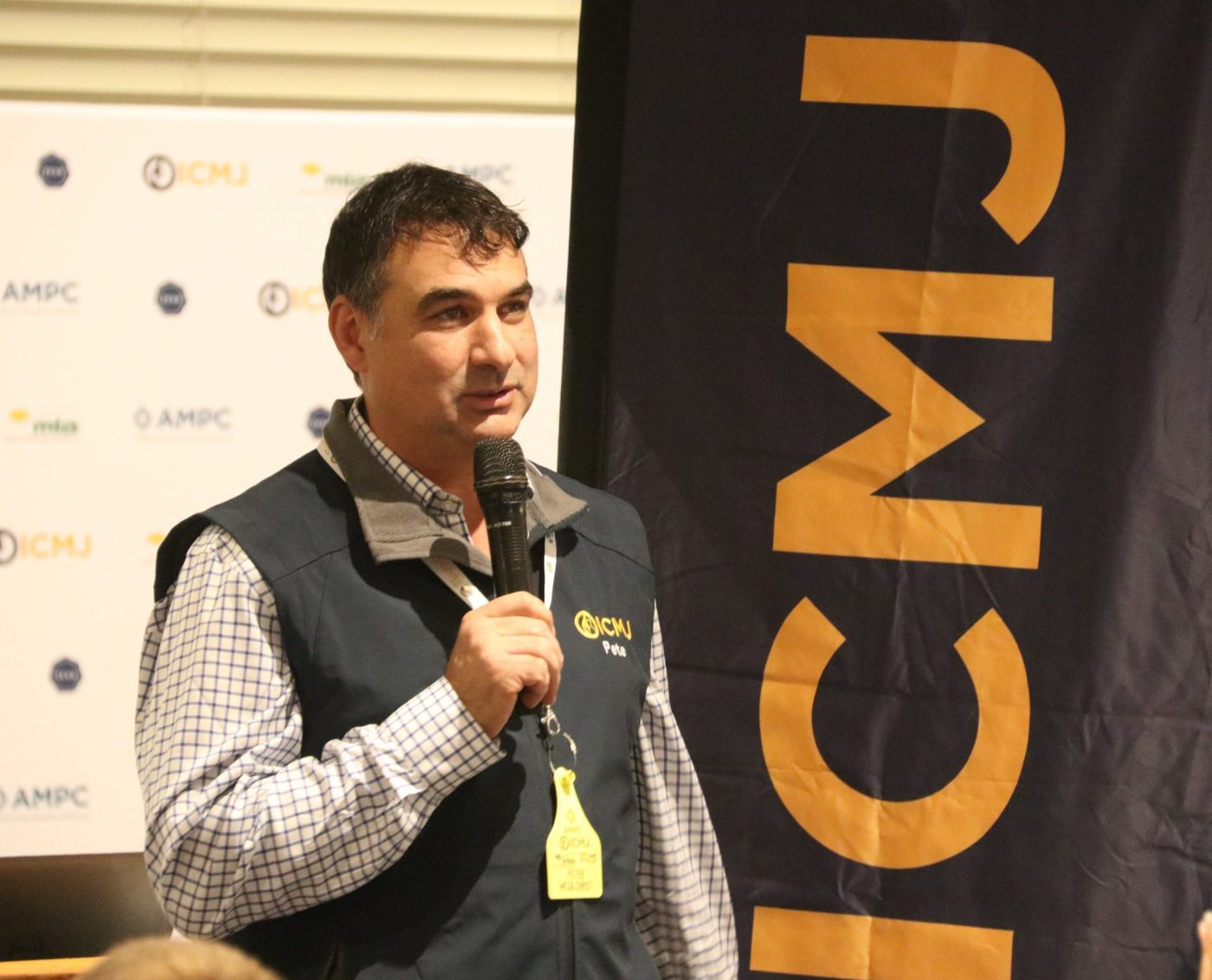
Peter McGilchrist
While more meat is being sold from the carcase and more value is being created, University of New England Professor Peter McGilchrist says retail meat yield is declining – meaning a smaller percentage of the carcase is being sold as red meat or wholesale primals.
Prof McGilchrist said the industry has had almost full focus on eating quality, while taking its eye off yield.
“I guess we haven’t realised this because our carcase weights have been going up and our volume exported out of Australia has increased,” he said.
“But during those 20 years, we have started selling a heap more bones, a heap more body fat and just a higher portion of the carcase goes into a box – that is all in our export numbers.
“A lot of those bones and body fat would have gone to rendering 10-years-ago. We are selling more of the carcase, but a lower proportion of that is red meat.”
Prof McGilchrist said the Angus breed (which accounts for about 53pc of the herd) was a good example of the current situation. He said retail beef yield breeding values have gone down half-a-percent, which makes a big difference at a macro level.
“It is about 7000T of beef we haven’t sold just from the Angus proportion of our industry slipping by half a percent,” he said.
Measurement an important step
Yield has been the topic of a lot of discussion in the beef industry of late, with Meat & Livestock Australia managing director Michael Crowley putting value-based marketing at the centre of his leadership and a recent study by Nuffield Scholar James Carter finding that there would be significant benefits to paying producers on yield.
Asked about the topic on a recent episode of The Week in Beef podcast (pasted below), Prof McGilchrist said he believed just measuring yield would make a big difference to the entire supply chain.
“I really hope we see a measurement of yield, whether it is incentivised or not,” he said.
“When you send a mob of carcases into the boning room and you have a low yield day, there is no ability to say whether that was due to the carcases or the performance of the boning room. If you had a measure to say ‘these animals are high yielding and we are going to get more meat out of the boning room’ then you can see if the boning room performance matches up.”
An array of technologies is currently in development for processors to be able to accurately measure retail meat yield. Computed tomography (CT) if the very accurate ‘gold standard’ used to assess the accuracy of tech to measure lean meat yield. Dual energy X-ray absorptiometry (DEXA), surface imaging cameras and a hand-held microwave system are tech currently being assess for measurement performance. (Beef Central will have a separate story on these technologies)
Reward systems naturally take place
Professor McGilchrist said he was not convinced a payment system was needed to get the industry put more focus on yield.
“I think processors will work out pretty quickly what animals are more valuable for them and producers will also say well ‘that one that’s high yielding actually grew faster, had a higher dressing %, I actually want more of them’,” he said.
“What has happened in quality with the MSA index, people always want to up their index and that is for their own gratitude, to show that they’re making good decisions. Yield will be no different. A measurement of yield will allow producers and processors to apply more selection pressure on what they breed and purchase”
Current habits with the traits producers are selecting for are another demonstration that producers will adopt higher yielding cattle, according to Professor McGilchrist.
“If you look at selection indexes across many breeds, yield is positively weighted somewhere around 22-25pc of most indexes. With that in mind, our retail beef yield should have gone forward but we have gone backwards,” he said.
“What that tells me is that our producers are actually bloody smart, they select for stuff that makes them money – live calves on the ground, fast growth, good marbling and essentially good all round eating quality, because there is premiums around for that.”
Many benefits to increasing yield
Professor McGilchrist said the industry would only need to slightly increase yield to start seeing the many benefits it could provide.
“Yield is quite valuable for producers, a higher yielding animal lays down more muscle and muscle is a lot more energy efficient than fat. So, the net feed efficiency will be higher of cattle that are higher yielding,” he said.
“The dressing percentage when we sell them to the processors is higher, the efficiency of pushing them through the boning room is higher because there will be less trimming.”
Asked whether increasing yield would compromise on eating quality, Prof McGilchrist only at the extremes.
“On yield, we are only talking about shifting the needle a couple of percent higher, we don’t need extremes like Belgium Blues,” he said.
“I reckon with genetics we can definitely have our cake and eat it too. Australia has spent a lot of money over many years measuring carcases for yield and quality and so if we get a few of these technologies in place then we’ll be able to feed more retail beef yield data into BreedPlan or whatever genetic analysis we have.”
He said only a small percentage of animals in BreedPlan had been measured for yield.
“To find these unicorns that have high yield and high quality, you have to measure the actual phenotypes,” he said.
“Because at this point in time, we only have a very small proportion of animals across all the breeds measured for retail beef yield. Compare that to something like carcase weight, which is much higher.”
HAVE YOUR SAY