
THE United States has recorded 56 cases of New World screwworm fly (NWS), following two new detections in New Mexico last week.
As the USDA infection map below illustrates, the flesh-eating insect pest has been bearing down on Texas and New Mexico in the country’s south since June, when a calf was found to be infected near the Mexican border in Texas.
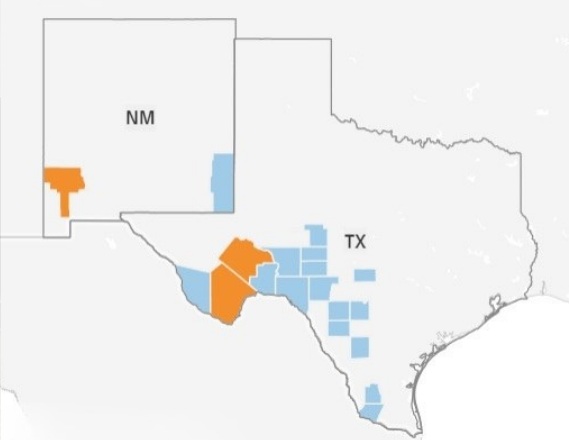
There are currently five active cases in the US – three in Texas and two in New Mexico (orange counties), the blue zones are inactive cases.
Since then, the pest has been detected in horses, cattle, dogs, goats and sheep.
The latest detections in Grant County, New Mexico were found in a horse and a calf, according to an American news outlet, KOAT 7 News.
“State and federal officials said they were expanding surveillance and fly-trapping near affected locations to identify any additional cases. Two infested zones were established around the affected animal’s location in which animals must be inspected and treated as necessary,” KOAT 7 News reported.
The new cases follow the recent reopening of the Santa Teresa cattle crossing (delivering Mexican cattle into the US feedlot industry) at the end of September. The crossing had been closed for nearly two years following the detection of NWS in Mexico. The border previously saw between 3,000 and 3,500 cattle pass through daily.
In comparison to Mexico, were there has been 47,425 cases recorded since 2024, the US outbreak is minor, Australian Global Agri-trends market analyst, Simon Quilty told a gathering of northern producers at a recent AgForce and Cattle Australia event in North-West Queensland.
“Five percent of US production comes from Mexico in the form of feeder steers and at the moment it is a trickle that is coming through,” he said.
“Our expectation is that in 2027 we will be lucky if 2pc of cattle slaughter comes out of Mexico.
“The clear message is that this is not a threat to Australian pricing in North America.”
Screwworm sterile-fly plant protest
Previous outbreaks of NWS in the US have been controlled with the release of sterile flies, a strategy that helped eradicate the pests from the US after an outbreak in Florida Keys in 2016. That outbreak took about a year to control with the release of sterile flies.
The Texan, an American news outlet reported earlier this month over 1.4 billion sterile flies have been released since the first case was found in Texas in June.
Earlier this year, before the outbreak in the US, Beef Central reported on America’s investment in sterile fly production including a new facility in Texas, which was estimated to cost of up to A$140 million.
The USDA also announced in March it would renovate an existing sterile fruit fly facility in Metapa, Mexico, to double Mexico’s sterile fly production capacity.
But last week residents of Metapa took to the streets calling for the facility to be relocated because of its overpowering smell, according to Reuters.
“Protesters said the odor resembled rotting meat and spoiled food and said it caused nausea. Once concentrated around the facility, the smell can now be detected farther away when winds carry it across the town, residents said. It has drifted into schools nearby, disrupting classes,” Reuters reported.
“We don’t care about the investment they made. What we want is for this plant to leave here, because the smell coming over the town is too much,” said Mercedes Becerra de la Cruz, a truck driver.
Residents want the facility shifted away from the town’s core. “It is far too close, right in the middle of the town,” said 49-year-old homemaker Rosalba Merida Herrera.
HAVE YOUR SAY