
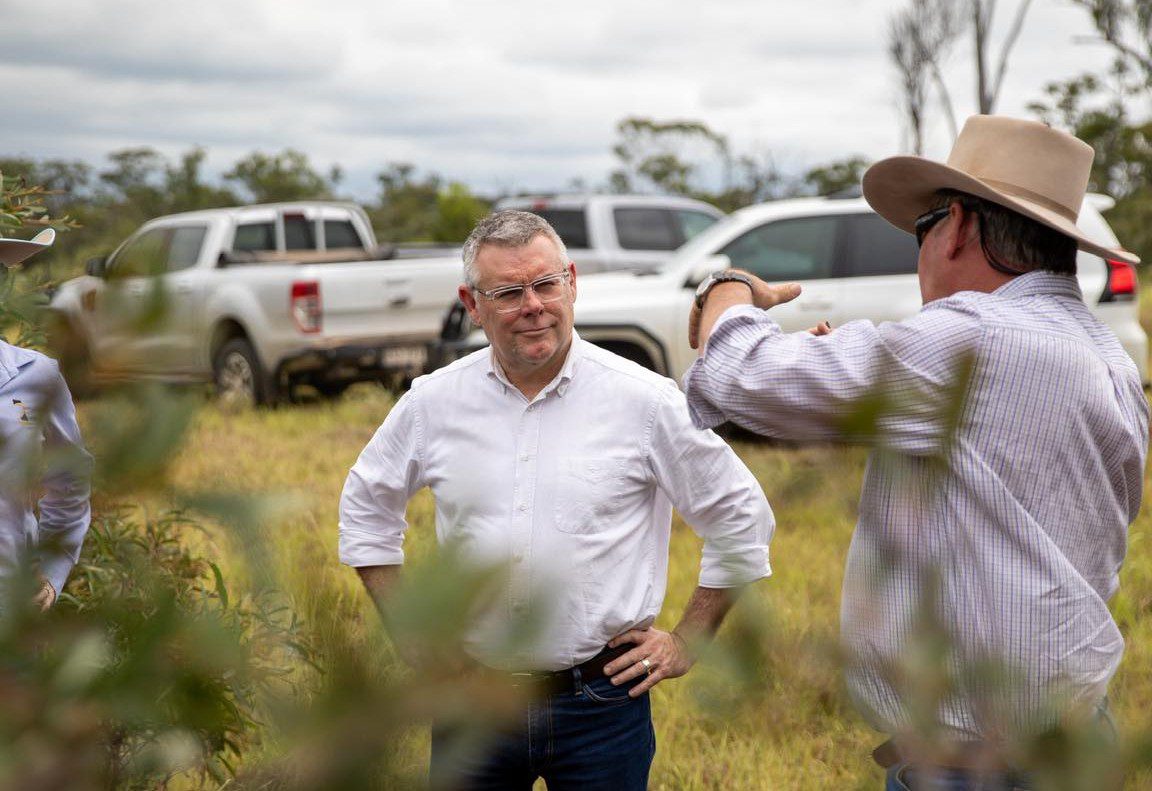
Murray Watt visiting producers in Central Queensland earlier this year. Photo: Murray Watt Facebook
HAS Australian agriculture ever faced more uncertainty from Federal Government policy than it does right now?
It’s a serious question, because everywhere you look there is deep confusion about how major legislative and policy changes introduced by the Albanese Government will play out.
And it’s not simply that the Government is introducing policies that are unpopular in the bush. It is that no one – not least the Government itself – seems able to give affected landholders a clear answer as to what many of those changes will actually mean in practice.
Earlier today, the Albanese Government secured Greens support to progress proposed changes to capital gains tax and negative gearing, prompting concern about what the reforms could mean for farm succession planning and off-farm investment.
At the same time, agriculture is staring down a growing pile of policy uncertainty including sharply rising export cost recovery fee increases, ongoing land-use conflicts tied to renewable energy projects, transmission lines and now data centres, new emissions reporting obligations, the ongoing fallout from the Government enforced loss of an export trade (live sheep), and cuts to feral animal control funding and regional infrastructure projects including the inland rail.
But most pressing on the list of policy developments driving major angst across the cattle sector right now are the reforms to the Environmental Protection and Biodiversity Conservation (EPBC) Act which were rushed through Parliament before Christmas last year following a deal between Labor and the Greens.
 The amendments effectively bring a new layer of Federal legislation over the top of the stringent, long-standing State Government legislation and approval processes landholders must already comply with.
Rural landholders know that if they fall foul of the new Federal restrictions they will face significant penalties.
But the major problem is they still don’t know with confidence what they can and can’t do under the new laws – and whether what has long been regarded as routine property management in the past under State rules could now land them in court facing potentially severe penalties.
The next phase of those laws take effect next week from July 1.
A new report released by AgForce in Canberra today estimates the regulatory cost per farming business for referrals and annual compliance under the new laws could be as high as $139,000 per referral, at a cumulative cost of $3.5 billion per year to Queensland agriculture alone.
The chaotic uncertainty facing landholders has already been highlighted by the case of an 84-year-old southeast Queensland grazier who cleared lantana – a weed of national significance – on his property.
He removed no trees, despite State legislation allowing him to clear trees in the Category X area had he wished. He undertook the work only after receiving approval from both local and State authorities.
Yet he was still subjected to a seven-month Federal investigation during which he was threatened with prosecution for illegal clearing, a charge carrying potential fines of in excess of $1 million if convicted. The case was eventually abandoned by the investigators, but not before he was put through months of undue pressure, worry and legal costs.
It is understood there are now about 30 similar investigations involving producers who believed they were operating within State legislation, but now face Federal scrutiny.
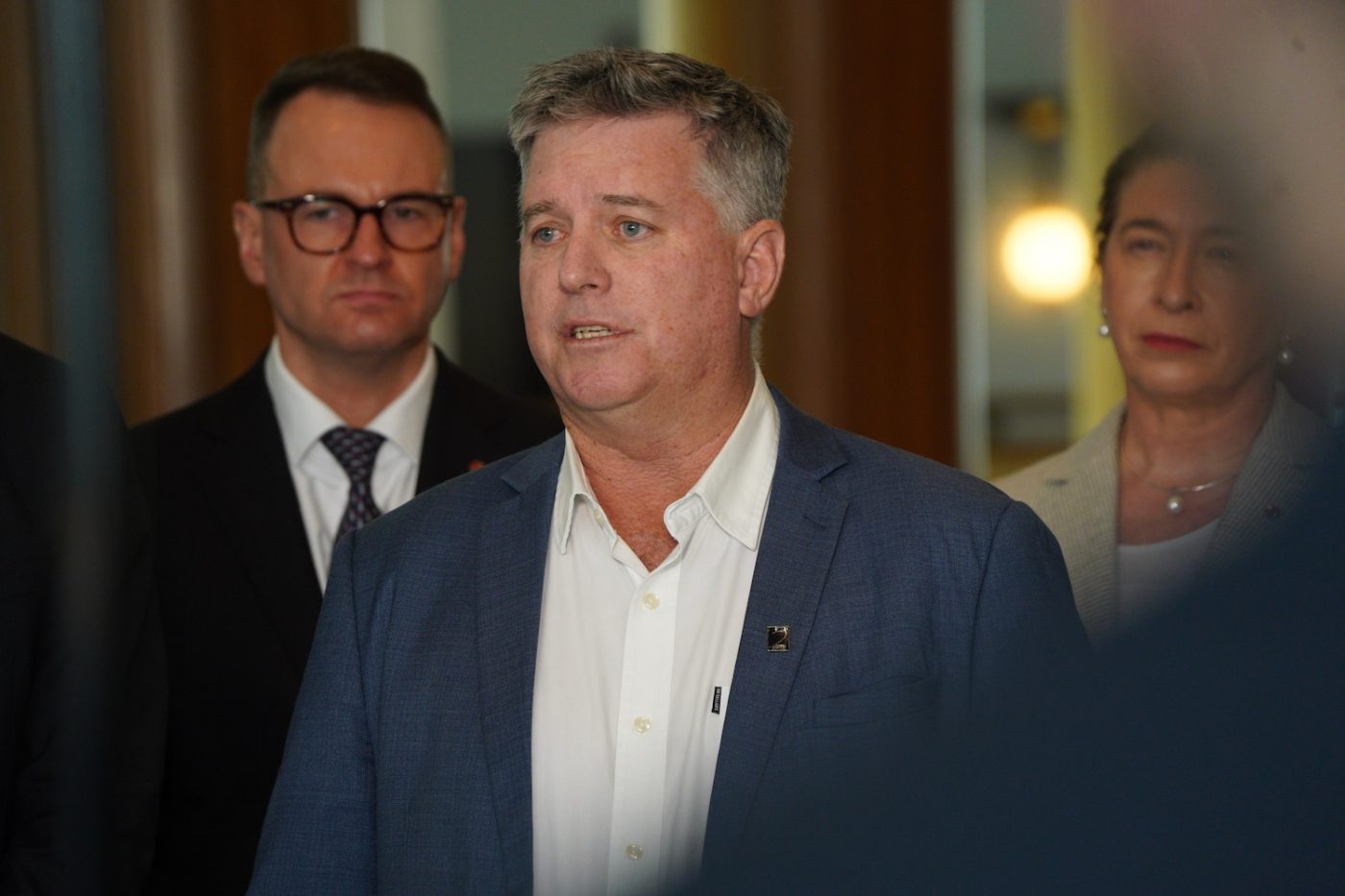
Speaking in Canberra this morning, AgForce Queensland president Shane McCarthy said Australian producers were among the most environmentally responsible in the world and did not want to break laws, “but what they need at the moment is certainty”.
 This is the crux of the issue.
Landholder pleas for greater clarity have so far been met by a Government response that amounts to little more than telling farmers to effectively self-assess and “just trust us” that they won’t be prosecuted if they go ahead.
They are being asked to do that without a clear definition of what constitutes “significant impact”, while facing the risk of later being reported by armies of so-called activist group deployed “citizen scientists” busy monitoring satellite imagery and flooding the Department with referrals of what they think might amount to illegal clearing – referrals the Department says it is obliged to then investigate.
While Federal Agriculture Minister Murray Watt assured landholders during a trip to Central Queensland earlier this year the new laws are not intended to disrupt routine agricultural practices, his public comments to a media conference in Melbourne last week focused heavily on the “dozens of investigations now underway” and the large fines facing landholders for any confirmed breaches.
“If it stacks up that that land clearing is in breach of our laws, then we will take serious action that involves very big fines for people who are breaching that law,” he told the urban media.
AgForce President Shane McCarthy said the situation was “very concerning”.
“I mean, we don’t know what we don’t know, and at the moment there is the new laws are coming in.
“They haven’t been settled. Producers do not know what they can and can’t do, and that’s on a daily basis with simple things, it is like putting fire breaks in, putting fences in, changing water ordering points, so the unintended consequence of not knowing what they can’t do, they might be unintentionally doing something, and then having to pay a large fine, and some of the fines on these activities are exorbitant.”
The new laws are also having a “chilling effect” on development and productivity.
“There is also a cost of not doing something,” Mr McCarthy said.
“So if it’s all too hard for some producers and they lock it up, there is a provision in there that they’re not managing their land properly, and so that is an unintended consequence of not knowing what they can and can’t do.
“We just need certainty on what we can and can’t do.”
Mr McCarthy said AgForce’s analysis showed that four million hectares of farming land is affected by the current changes, with a $5.87 billion in permanent reduction of Queensland farmland value anticipated, due to the changes in the continuous use exemption.
He said farmers are asking the Federal Government to provide a written guarantee that day-to-day activities and routine activities of farming “are not affected by costly self assessments, consultant fees and EPBC referrals on almost a daily basis”.
“Queensland farmers just want some certainty of what we can and can’t do, and I’ll just add that we do it better than just about anybody in the world, are more environmentally friendly, so we want some clarity on the rules that we can and we can’t do on the day to day running of our own farms.”
When you have to navigate many forces outside your control – weather, input costs, price swings, the trials and tribulations of export markets – uncertainty is a fact of life for Australian farmers.
But uncertainty created by policy from your own Government can be the hardest to stomach of all because it should also be the most avoidable.
It speaks volumes about the lack of clarity the Federal Government has provided on this issue that one of Australia’s longest-serving rural advocates believes the only way the ag sector is likely to get meaningful certainty about what can and cannot legally be done on properties under the amended EPBC Act will be when somebody is forced to defend themselves in court.