
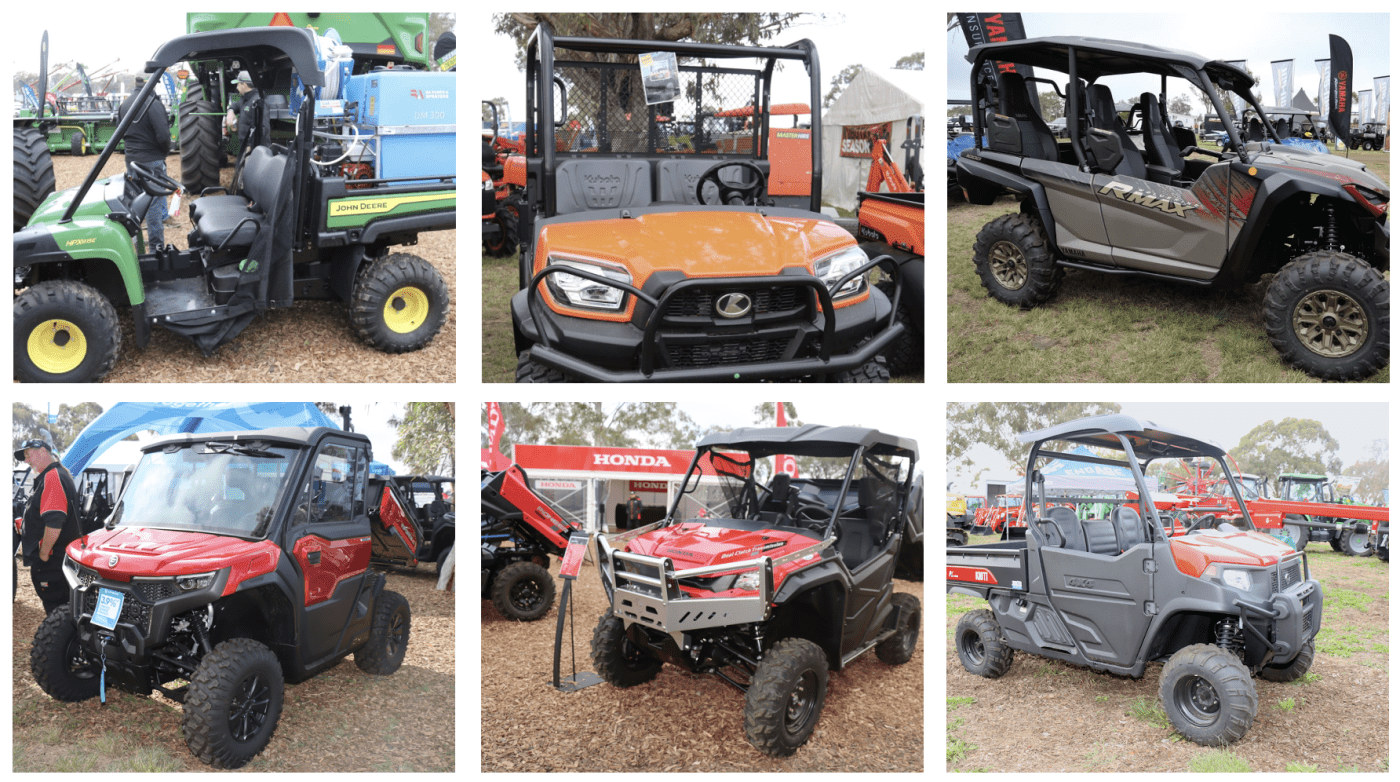
 ALREADY this year four lives have been lost on farms in Australia from quad bike accidents and three from side-by-side vehicles (SSVs), according to the Rural Media Farm Injury Dashboard.
Last year each machine claimed six lives. But in 2024 SSVs overtook quads claiming 14 lives, compared to 10 lost from quad bike accidents.
One Queensland motorcycle dealer and farmer told Beef Central – ‘it’s not the machines, it’s how we are using them’.
“We are seeing similar numbers of deaths caused by SSVs to quads, that is with all the safety features, all the awareness, people are still dying on farms” Stuart Brown from Elite Motorcycles said.
“We need to look at how we are using them and how we are maintaining these vehicles.
“Since the new standards came in and there have been less quad bikes on the market, we have seen a lot of farmers hold onto old quad bikes. But that poses its own risks.”
Mr Brown said he is concerned as a dealer and a cattle producer himself by the number of old quad bikes still operating, and the risks farmers are taking when operating them.
“I know there are a lot of old bikes out there, because we service them and some of them are worn out and unsafe,” he said.
“No tread on tyres, suspension worn out, inadequate brakes – there is a lack of proper maintenance and that has to be contributing to the number of accidents.
“In New South Wales a car over five years old has to have a yearly safety inspection, you wouldn’t send your family to town in an unsafe car, so why do we take the risk with Quads and SSV’s?.”
In 2021 new safety standards for quad bikes were introduced to minimise the risk of death or injury associated with the use of quad bikes.
One of the requirements was all new and second-hand utility quad bikes had to be fitted with a quad bar (or rollbar) or ATV lifeguard or a device ensuring similar protection.
Because a number of leading manufacturers stopped selling quad bikes in Australia, side-by-sides became the alternative vehicle. But are now causing similar numbers of fatalities.
“Historically, quads have been associated with more farm fatalities than SSVs and continue to be a significant source of serious injury and death in Australian agriculture,” Kerri-Lynn Peachey from AgHealth Australia said.
“What we are seeing is a shift in vehicle use, with many farms replacing quads with SSVs for certain tasks, which means exposure to SSV-related risks is also increasing.”
However, Ms Peachey said the link could not be drawn that SSVs were equally as dangerous as quad bikes, despite similar fatality statistics in recent years.
“While every fatality is a tragedy, it is important to remember that annual numbers can fluctuate and should be interpreted cautiously,” she said.
“Ongoing monitoring over a number of years is required to understand longer-term trends and identify emerging risks associated with different vehicle types.”
Side-by-side vehicles are safer if used correctly
Side-by-side vehicles are a safer alternative to quads, Ms Peachey explained because they are designed with important safety features such as rollover protection structures, seatbelts and a more stable vehicle platform.
“However, those safety features can only provide protection when they are used correctly,” she said.
“Many serious incidents involving SSVs continue to occur when seatbelts are not worn, allowing occupants to be ejected during a rollover or collision.”
Mr Brown said SSVs are not practical for every farmer and he regularly sees them being modified to allow easier access like a quad bike.
“Given they have a restricted speed without a seatbelt, many people will click the seatbelt in permanently and sit in front of it. We regularly see doors removed from SSVs,” he said.
“So, all of a sudden you have a vehicle that can travel up to 80km with no seatbelt, no helmet and no door. These vehicles are only safer if we use them correctly.”
Ms Peachey said the evidence is clear that proven safety measures save lives.
“For quads, fitting an Operator Protection Device (OPD) and wearing a helmet are among the most effective actions operators can take to reduce the risk of fatal injury,” she said.
“For SSVs, wearing the seatbelt is critical, as the rollover protection structure can only protect occupants if they remain inside the protective zone of the vehicle during an incident.
“More broadly, farmers and farm workers should ensure vehicles are matched to the task, operators are trained and competent and manufacturers’ safety recommendations are followed.
“Ultimately, preventing fatalities requires a combination of safer vehicles, safer behaviours and a strong commitment to farm safety through training and safe work practices.”
as a farmer and also running a business that sells quads and ssv vehicles the last thing we need is more government overreach. when can we as a society except personal responsibility. it wouldn’t be to hard to look back when everyone used horses and the amount of injuries or deaths that would have occurred would be relative. no death is acceptable but you cant regulate your way out of this and usually all that will happen is it creates a job for a busy body and another cost to our business. the reason our country is where it is is because of to much government interference. cheers Matthew Della Gola
The article is spot on.
We train WHS compliance across the pastoral, agricultural and associated industries – VET Centre (QLD) and have observed this first hand.
The majority of staff across the industry are not trained properly, are not WHS certified and inducted onto the machinery on these properties.
The majority of middle and senior management have the attitude that we don’t need that Training BS – we were fine, it’s about common sense!
Staff need to be trained properly by an Industry Expert Trainer/ Assessor and then issued with certification of competency for that particular piece of machinery.
After the staff member is trained and certified they then need to be Inducted onto that particular piece of machinery on that station or any other station or properties they work on.
Certified Training/ WHS Compliance and Induction are two separate issues.
It is concerning to see that the majority of management on our stations are not for filling their WHS duties under the Legislation. At present some larger companies run quick/ short ‘start of season Inductions’ that give a brief overview and not much else.
Vince Carige
CEO/ Training Director
VET Centre (QLD)
0414-464939
vince@vetcentreqld
http://www.vetcentreqld.com
http://www.facebook.com/vetcentreqld
Since the GOVT legislation as stated we have less choice of quads and i have owned and ridden many and that choice has made the industry MORE dangerous because the stability of the cheaper chinese bikes is less safe than the now removed better brands
some of us buy on quality not price
It was also known in the USA that side by sides were MORE dangerous than quads contributing to higher death percentage than quads also they are totally different purpose
One does NOT replace the other work alongside YES