
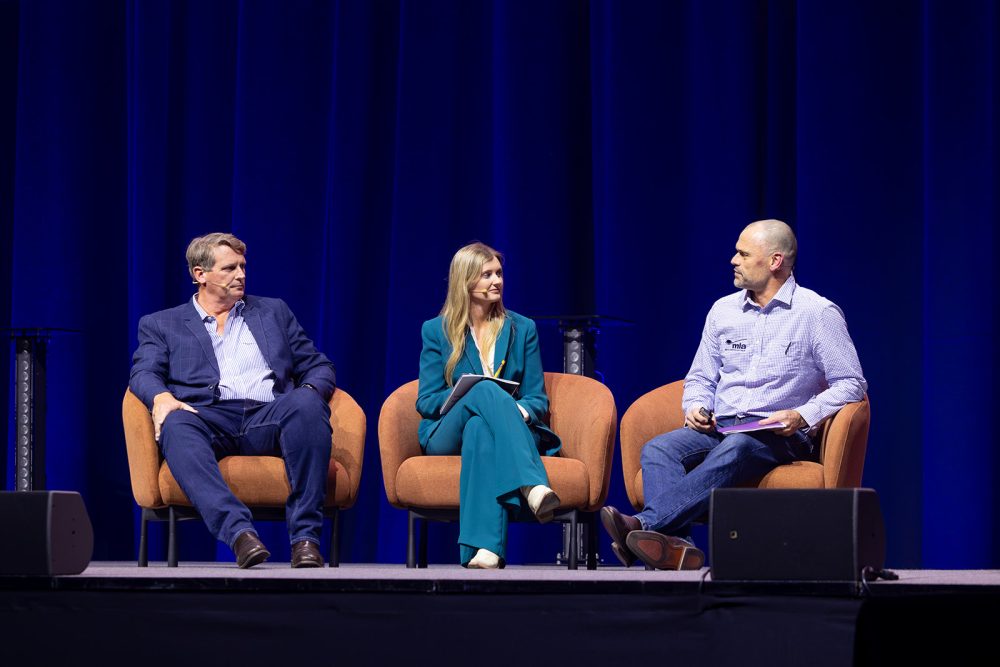
Edwin Cooke, from JBS, Caitlin Herbert from Gundamain Feedlot and MLA’s Dr Tony Battherham at BeefEx 2026. Source: ALFA
PRE-ENTRY vaccination for respiratory diseases has been the biggest mover in cattle health in feedlots and is paying big dividends to lotfeeders, delegates at BeefEx 2026 were told last week.
JBS was the first major company in Australia to mandate a pre-vaccination requirement for cattle entering its NSW feedlots to protect them against Bovine Respiratory Disease.
Five years after first introducing the requirement for cattle entering the company’s three NSW yards, JBS now has 100 percent of Angus cattle in all of its five Queensland and NSW yards pre-vaccinated with Coopers Bovilis MH+IBR. Other large feedlot operators like Teys accept vaccination treatments with both Zoetis Bovishield and Coopers Bovilis MH.
While there is no timeframe set, JBS aims to have all cattle in its feedlots pre-vaccinated at some point.
Earlier this year Beef Central reported as many as 70-80 percent of feeder cattle of susceptible breed types may now be receiving pre-entry vaccination protection against respiratory disease challenges.
At BeefEx 2026, delegates heard about the success two companies have had with pre-vaccination programs, including JBS and Gundamain Feedlot at Eugowra in New South Wales.
Industry has grown, mortalities have reduced
MLA’s Feedlot R&D Program Manager, Dr Tony Batterham explained the reduction in morbidity and mortality from BRD has been achieved at the same time the industry has grown, with 50pc more cattle on feed in the last decade.
“What you would normally expect is the morbidity and mortality to go with the rising number of cattle on feed, but it’s actually gone in the opposite direction,” he said.
“We have seen a 50pc reduction in BRD mortalities, but importantly because they’ve got these optimised immune responses the cattle are also not becoming chronic animals.
 “So, for pen riders there’s less animals presenting for illness, less cattle to pull and treat, less cattle dying from respiratory disease and less cattle leaving the feedlot as rejects.”
Dr Batterham said the vaccine has maintained its efficacy with larger numbers being treated and explained the vaccine works best when all susceptible cattle in a feedlot are vaccinated.
“Programs like what JBS have, where it’s structurally built in for animals to be prepared with a pre-feedlot entry vaccination, means it makes a material difference,” he said.
“If some animals in pens are not vaccinated and some are, there’s less guarantee of the results that JBS has seen.”
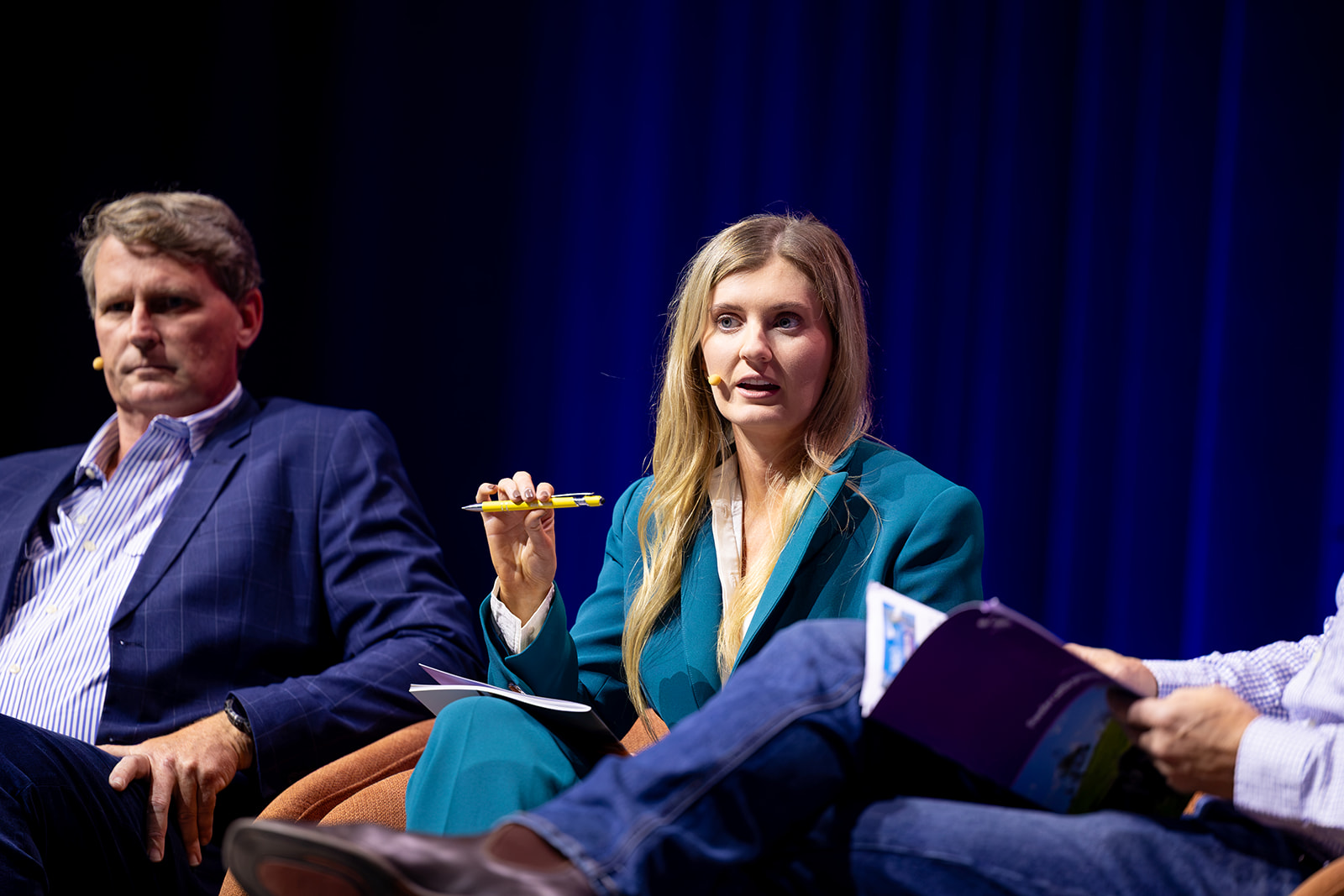
Gundamain Feedlot experimented on when to vaccinate and found the right day
Caitlin Herbert from Gundamain Feedlot shared in a panel discussion at BeefEx 2026, Gundamain does not mandate pre-vaccination but since offering an incentive adoption had improved.
After a lot of trial and error in its backgrounding and lotfeeding programs, Gundamain found the best results were achieved by revaccinating all cattle on day 13 in their feedlot.
“Any cattle that aren’t pre-vaccinated that we receive at Gundamain, everything is re-vaccinated at that day 13, and it has been an absolute game changer for our business,” Miss Herbert said.
“Being a southern yard, we don’t typically buy ‘easy’ cattle, we buy smaller mobs of southern cattle (more susceptible breeds), we buy a lot of saleyard cattle, so mixing mobs is a big part of what we do.
“Because of that we do have a higher BRD risk so for us, revaccination and pre-vaccination is a big part of today’s job at Gundamain.”
Respiratory vaccination has increased efficiency and profit
The reduction in work for pen riders was a major talking point as part of the panel discussion with Edwin Cooke, General Manager Livestock in the JBS Northern Division shared with less cattle presenting with respiratory issues pen riders can focus on other health issues in the feedlot.
“BRD is the most common cause of illness and mortality in feedlots, so the pre-vaccination program has significantly reduced the number of animals being pulled from their pen,” Mr Cooke said.
“When there are health challenges in the yards it creates an enormous amount of pressure and drain on pen riders, livestock teams and infrastructure.”
Miss Herbert shared Gundamain had also benefited from less cattle being pulled out of pens with signs of respiratory diseases which had also helped boost average daily gains.
“The cattle that make you money are the ones that you don’t have to touch,” she said.
“Not having to pull an animal, not having to treat an animal, not having to lose performance on those subclinical animals that weren’t pulled, that’s where the real value of pre-vaccination comes from.”
 Mr Cooke explained the economics of vaccinating for respiratory diseases stacked up.
“We are not dealing with a cheap cost of production system,” he said.
“Cattle prices are at a record high and don’t look to change any time soon, grain prices are reasonably high, labour’s high, everything’s high.
“So, if there’s a program or a vaccine that can give us a competitive advantage in our high-cost production systems, we should be going after it, because I don’t think we’re going to get any relief from any of our other costs.
“Our options are to keep chasing performance, better outcomes, feed conversions, reduce mortalities, better performance, because we’ve got to look for any relief we can get in terms of getting a bit of cost of gain in the feedlots.
“And producers want the best for their cattle so if there is a vaccine that can help animal welfare, I think every producer in the country is more than happy to get behind it, and we felt that when the transition happened in our business.”
Pre-vaccination also helped the industry’s antimicrobial stewardship explained Miss Herbert.
“Why wait until the highest risk point of an animal’s life to vaccinate it, when we can do it before they reach that point,” she said.
“It’s not necessarily about using less antibiotics, it’s just about preparing our cattle better so that we don’t need them in the first place. For us, antimicrobial stewardship is about prevention”.
HAVE YOUR SAY