
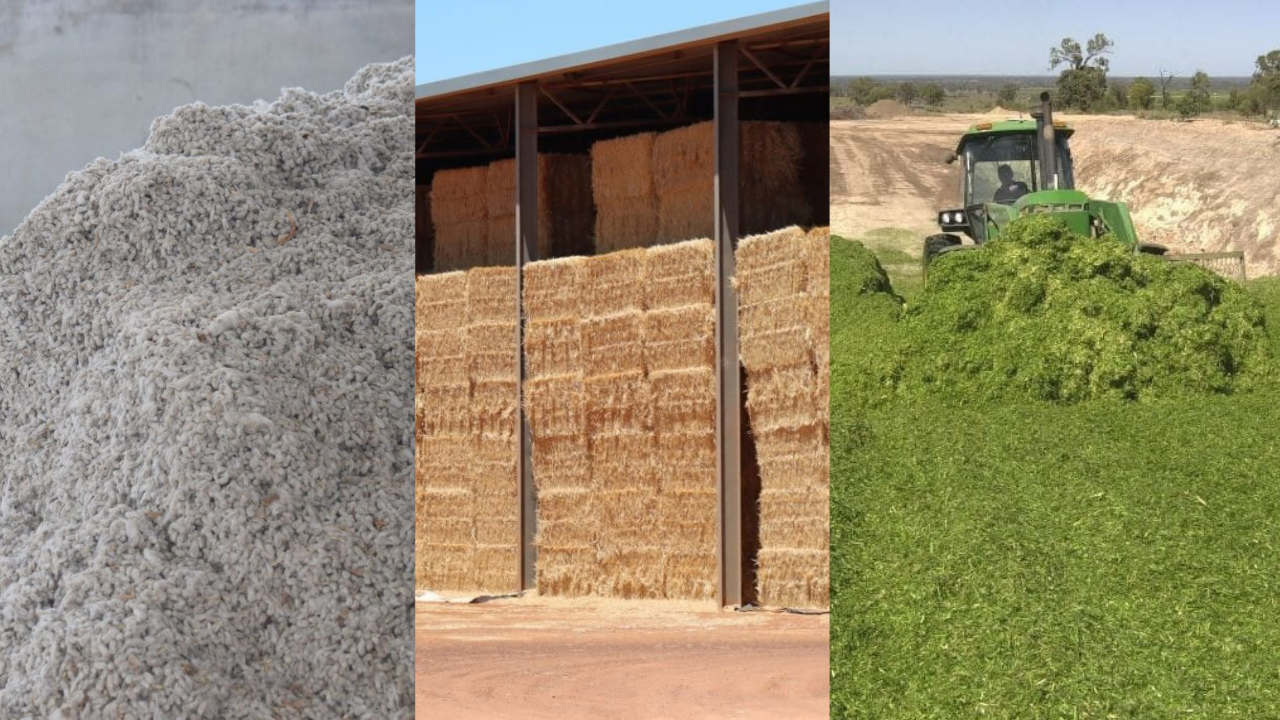
WITH a wide variation in seasons across the Eastern Seaboard and some the country’s biggest consumers of cattle feed in one room, Beef Central decided to tap into this year’s BeefEx confernce to get an idea of how the supply of roughages is shaping up for the months ahead.
The make up of feed rations in the next year was a concern for many in the room, with large crop growing areas in Northern New South Wales and Southern Queensland having a tough season and a not-too-optimistic forecast for the months ahead. While it was playing on minds, Beef Central was told that most lotfeeders are covered until the end of year and are still at least a month away from taking a position on their roughages for the year ahead.
The basic outlook is a tale of two seasons, large hay and grain growing areas in the south are continuing to get good steady rain and dry conditions are persisting further nnorth – with a lot of those areas still needing a good rain to get their crops home.
Good quality hay available, with a freight bill
Toowoomba-based Feed Central managing director Tim Ford said there is going to be a large supply of new season hay coming from areas south of Dubbo – although the freight bill was growing with the price of diesel.
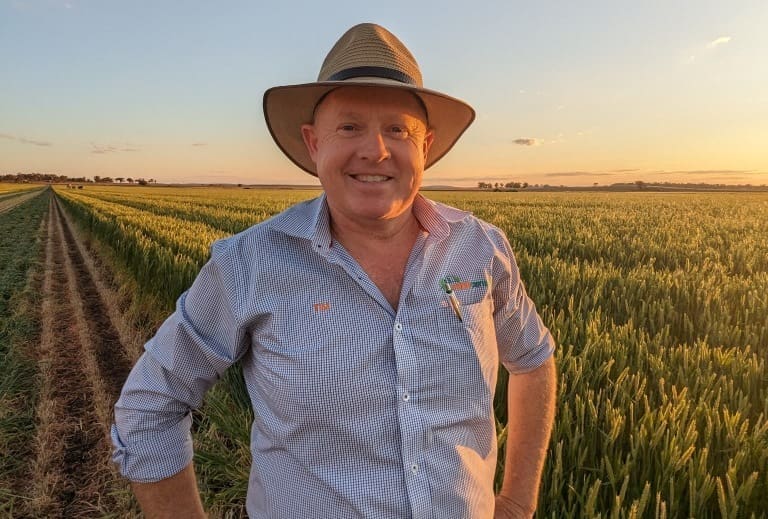
Feed Central managing director Tim Ford.
“We are really quite used to bringing hay long distances onto the Darling Downs, but we haven’t had to do it for a few years,” he said.
“There is no doubt Southern Queensland and Northern New South Wales have had a bad winter and roughage is a bit tight. It will be an issue right through summer until it rains.”
Thankfully some large hay producing areas have received good rain across winter and some crops are starting to be bailed. Mr Ford said while plenty of hay sheds were already full in the area, it was important to recognise the volatility of the season.
“We ran out of hay in Victoria in winter last year, so I think we have to keep it all in perspective,” he said.
“Three months or six months of dry weather in Victoria, then all of those stocks would disappear really quickly.”
Don’t believe the latest Facebook post
Mr Ford said the company was encouraging people to do their research.
“There are growers, for example, wanting to sell it for $500/T off the paddock. It might be a failed wheat crop or failed barley crop, but we can probably deliver it from Northern Victoria for significantly cheaper than that,” he said.
“Even with current diesel prices, you can probably deliver it significantly cheaper than some of the stuff they are selling for.”
Cottonseed expected to be in short supply
Following a dry season in Northern NSW and Southern Qld, cotton seed has become expensive and short in supply. The recent feedlot trading budget said cottonseed was trading at $600/T. In recent weeks it has been around $540/T.
Most feedlot operators say they are covered for cottonseed until the end of the year.
However, one feedlot nutritionist told Beef Central there was a widespread expectation that cottonseed would continue to be short in supply, with many water storages in Southern and Central Qld still low.
The next couple of months will be crucial for the cotton crop, with a dry season on the forecast. However, widespread rain has been forecasted in the next week.
Could some northern crops end up as silage?
With crops that have been planted for grain on the Darling Downs needing at least another shower to get to harvest, Jordan Minniecon and Nathan Lister from Lallemand said turning those crops into silage has become a serious option.
Lallemand sells inoculants for making silage and has made a big push for producers to consider putting away silage for the next drought.
Mr Minniecon said a lot of grain growers on the Darling Downs are now considering hay or silage.
“The phone rings every week at the moment, with a grain grower trying to make the decision about what they do with their crop,” he said.
“At the moment there is not enough moisture to finish the crop and there is definitely an appetite to make it a fibre source rather than try take it through to grain. We also have this looming forecast of a dry year, so there is an opportunity with producers and feedlots wanting silage on hand.
“But it is timely to make that decision now, because if they wait another month they will have to take it through to grain.”
Feedlots increasingly contracting silage
Mr Lister added that with cotton seed and other fibres being short in supply, nutritionists were becoming increasingly supportive of putting hygienic silage in rations for feedlot and backgrounding programs.
“We are definitely seeing a lot of growers working with feedlots as a contract grower, to help from a cashflow perspective,” he said.
“They would be looking at the grain crop, which they would put in a silo, they can contract that to a feedlot and it is bit more reliable. It is similar to what we have seen in the feeder cattle market, feedlots working with good consistent suppliers who can supply high quality forages.”
HAVE YOUR SAY