
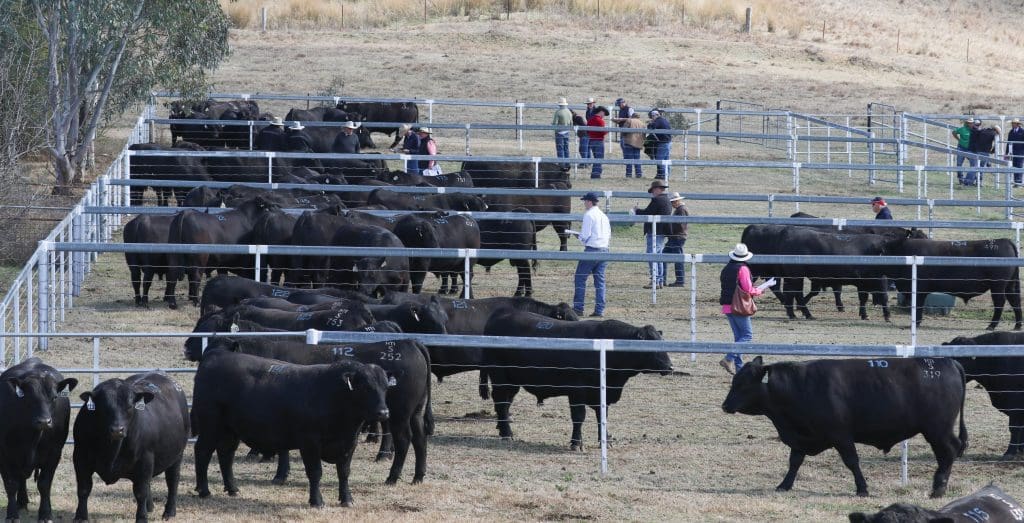
ONE of the key features of the bull selling season is the reporting of sale statistics.
At the close of every sale the averages are generally announced. In turn these are recorded and reported in Beef Central and other industry outlets and go on to form the basis of analysis, comparison and discussion.
These statistics offer a range of insights to producers and to breeders.
However, it is also important to recognise that these statistics have their limitations. At an individual sale level, the average price, clearance and top price reflect what occurred at one sale, on one day.
What they don’t measure is the genetic value that was offered, or the genetic value that may pass from the seedstock breeder to shape the direction of commercial breeding herds.
As an example, consider two seedstock sales that both achieve 100 percent clearance at a very similar average price per head.
From the basic sale report it is easy to take in those topline results. A closer look shows that one program sold 150 bulls and the other sold 35. While this is no reflection on the smaller vendor, there is no avoiding that these are two very different operations.
One program has the potential to influence many more commercial breeding herds simply because more bulls enter commercial use. Yet there is really no way to measure or assess that difference.
Last week’s Beef Central genetics article touched on the need for seedstock operations to have clear breeding objectives and to build a reputation for consistency and reliability.
Reputation matters, because it is earned through the consistency and focus a bull breeder brings to their program over many years. But a reputation built in that way is not the same thing as the genetic merit of the bulls presented at any given sale, and the sale figures can’t separate the two.
This means a well-known stud prefix can clear a catalogue on the strength of its name and its record, while a lesser-known operation offering real genetic merit may still clear at a discount.
To a large extent, commercial cattle breeders are paying for genetic merit. Most producers are selecting sires to better meet market specifications and improve production within their herds. When seedstock breeders no longer present animals that meet these needs, producers do choose to find other sources of genetics.
While this feedback loop does send a signal back to the seedstock sector, the speed of that feedback tends to be fairly slow, and often it is only seen as a measure of buyer satisfaction and loyalty.
It is much harder to determine how much of that satisfaction comes from genuine genetic progress, and how much is due to reputation, service, adaptation or simply returning to a known source.
The fact that buyer demand reflects all those things at once means the sale figures cannot separate one from another.
Additional sale info?
It is tempting to think the gap could be closed a little with an additional sale figure.
Alongside the sale reports that record the physical value of a bull, it would be possible to record the average index of the catalogue, the average index of the bulls sold, and the difference between the two, as a way of putting a number on the genetic value of animals being sold.
An average index across a sale might, on the surface, look like a useful figure. But averaging indexes in this way uses them in a way they were not designed for, and the number presented would still not record what the bull goes on to achieve in a breeding herd.
A sale-day figure can only ever describe the animals as they stand in the catalogue, not the difference they will make once they are working in a commercial herd.
None of this makes the sale statistics worth any less. Those figures describe demand, reflect the reputation of the prefix hosting the sale, and provide some indication of whether a breeder is staying connected to their clients.
However, what sale statistics can’t describe is how much genetic merit is actually reaching commercial herds.
For the commercial buyer, this should be a reminder that the average, clearance rate and the reputation of a prefix are not a substitute for assessing the individual bull against the objective of an individual herd, because that is where its genetic value will finally be decided.
For the seedstock breeder, it is a reminder that a strong clearance and a loyal client base are a slow and partial signal, and that understanding what commercial clients are trying to achieve will always tell more than the sale result on the day.
 Alastair Rayner is the Strategic Account Manager for Southern Australia with Vytelle and Principal of RaynerAg. He has over 30 years’ experience advising beef producers and graziers across Australia. Alastair can be contacted here or through his website: www.raynerag.com.au
HAVE YOUR SAY