
LAST week’s Beef Central column on avoiding common mistakes at bull sales attracted a reader comment worth exploring further.
The reader made the following observation:
“All relevant points, but the big miss is when the data delivered to the buyer doesn’t deliver over the lifetime of the purchase it reflects on the vendors credibility. Doesn’t matter if a false trail was laid by BreedPlan, morphology, DNA or any other form of measurement / calculation. When the after-sale feedback fails, bull buyers quietly fade into the distance and are not present on your sale day.”
There’s an expectation among commercial producers looking at bulls these days that a certain level of information will be provided.
At the very least, a producer will expect to see raw data and pedigree information. Ideally, they’ll have access to data that reflects the genetic merit of the bulls through EBVs, often supported by genomics as well as performance records.
However, it’s important that producers purchasing bulls appreciate what the data being presented is designed to do.
Defining a breeding value
Delivery over a lifetime is not determined by data alone, but by a range of factors. In the first instance, data, particularly EBVs, are an estimate of a bull’s breeding value.
A breeding value is a prediction about outcomes at scale. It was not a receipt for one bull, in one paddock, in one season
A breeding value, by definition, is the expected average difference in an animal’s progeny performance, relative to the population, if that animal were mated at random across the population. It’s a prediction about outcomes at scale. It was never a receipt for one bull in one paddock in one season.
EBVs are calculated using BLUP, which combines the animal’s own performance, its pedigree, progeny records and, for genomically-enhanced EBVs, DNA data, all weighted by heritability and how much information is available. Even a high-accuracy figure is a statement about probability across a lot of matings – not a guarantee about this one.
Mendelian sampling
In genetics, Mendelian sampling – the random way genes are shuffled and passed on at each mating – can result in full brothers with near-identical EBVs still producing different results in the paddock. This variation is greatest when judging only a relatively small number of progeny.
 Environmental effects are also important. Contemporary grouping and linked sires already deal with most environmental noise, comparing animals fairly across herds and seasons. However, these do not overcome genuine genotype-by-environment interaction, where a bull’s genetics simply express differently in a very different production system.
While not common, this can occur when animals are moved into production systems that differ substantially from those in which the genetics were developed, whether that’s nutrition, climate, disease pressure, management or feedbase.
It’s not something that shows up moving genetics between two commercial herds running similar conditions.
Production environment
This doesn’t mean an EBV has no use for a producer buying a bull for their own production environment. The genetic differences still exist, but how strongly they are expressed depends on the production environment.
The EBV is describing the expected average difference in that bull’s progeny performance across scale, and it does that job well regardless of where the bull ends up.
What can have more influence on the outcome in a given paddock, in a given season, is the environment itself, not a shortcoming in the data. The problem is nobody explains that distinction to the buyer standing at the rail.
This distinction also applies to other forms of assessment. Assessing a bull visually may provide initial confidence that a bull is suitable for a program physically, but this is still only a prediction based on a visual assessment combined with experience.
What the bull goes on to achieve in a breeding program is harder to predict.
While a bull may be presented with a significant amount of data, that could also be highly accurate, it’s important to consider the program that has bred that bull.
Data describes the genetic potential. The breeding program provides confidence that those numbers have been generated in cattle performing under commercially relevant conditions. A bull that is the result of clear, defined, consistent breeding is often less likely to underperform than one out of a nucleus operation built around outlier figures.
If the cow herd producing the sale bulls is itself commercially relevant, turning off calves that meet market specs, run at commercial stocking rates, under the same pressures a buyer’s herd faces, then the data is truly a reflection of a well-focussed operation. Consistency in the breeding program gives the data somewhere real to stand.
Doing more than collecting and presenting data
The challenge for seedstock producers is that when a bull fails to perform, buyers generally won’t stop to consider whether it was Mendelian sampling, genotype-by-environment interaction, or something else entirely. They quietly start seeking their new sires elsewhere.
Seedstock producers therefore need to do more than collect and present data in their sale catalogues and websites. Setting the right expectations about what that data describes, and what it doesn’t, matters just as much, backed by a herd that earns the numbers it publishes.
A bull sold on inflated certainty is a bull that eventually costs the breeder trust, even when every number on the page checked out. The credibility hit doesn’t land on BreedPlan or the genomics provider. It lands on the name on the front of the catalogue.
None of this is an argument against using data. It’s an argument for using and presenting data correctly.
Both buyers and seedstock breeders should know what the data is describing and appreciate that a calf only gets half its genetics from the sire.
An EBV describes an expected average difference in a bull’s progeny performance, but that average plays out differently once it meets a variable commercial herd, and differently again once the bull is truly put to work across it.
Breeding programs that consistently select under commercial production conditions are less likely to produce bulls whose performance surprises buyers.
Good data remains one of the most powerful tools available to beef producers. But its value depends just as much on understanding what it predicts, and what it cannot.
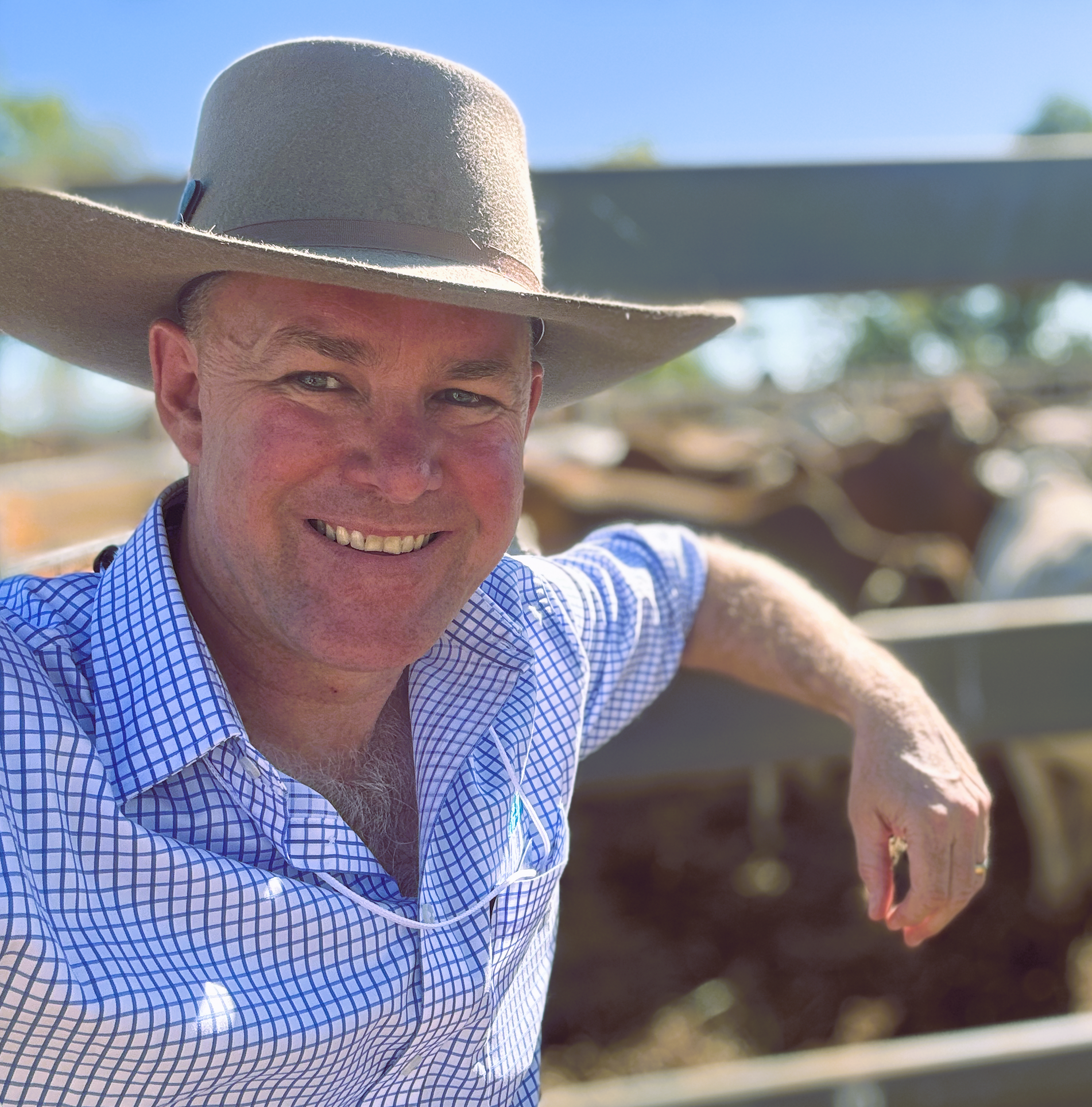 Alastair Rayner is the Strategic Account Manager for Southern Australia with Vytelle and Principal of RaynerAg. He has over 30 years’ experience advising beef producers and graziers across Australia. Alastair can be contacted here or through his website: www.raynerag.com.au