
THE spring bull sale season already feels as if it has been running for a long time.
September is generally when the momentum starts to slow. There are still significant sales to be held over the next few weeks, but there is now enough data to draw some conclusions on a season that has in general been more rewarding than many expected when it opened.
One expectation that has been met is buyer selectivity. Early observations suggested bull buyers (especially those in regions impacted by drought early in the year) wouldn’t need large numbers of replacement bulls this year and would instead be looking for smaller numbers of sires with specific traits to address clear needs in their herds.
The results so far reflect that expectation. To date, across 260 spring sales among the major breeds, there have been 12,369 bulls offered and 11,118 sold, achieving a clearance of 89.9 percent and a weighted average of $11,980 a head.
Many producers talk about the average price, and it’s worth being clear about ‘which average’. A simple average, calculated from the reported average from every sale, results in a sale offering 14 bulls having the same influence on the ‘breed average’ as a sale with 150 bulls.
A weighted average gives each bull sold equal influence, so a sale of 100 bulls counts for more than a sale of five, and it is a better guide to what buyers are actually paying. On that measure the season has been more positive than some observers expected.
Early expectations were that top prices were unlikely to rise much this year, and across the major breeds the typical top price at a sale has hardly moved.
However there have been some notable exceptions. The recent Millah Murrah Angus sale saw Millah Murrah Wyatt W50 set a new Australian record for a beef animal at $420,000, clearing the previous all-breeds bull record of $360,000, and last week at the Moree-based Weebollabolla Shorthorn stud, Weebollabolla Vegas V271 equalled the Shorthorn breed record at $120,000.
Angus have presented the bulk of the season’s numbers, with 6423 bulls catalogued across 115 sales. The graph below shows how the weighted average, clearance and volume compare across the major breeds.
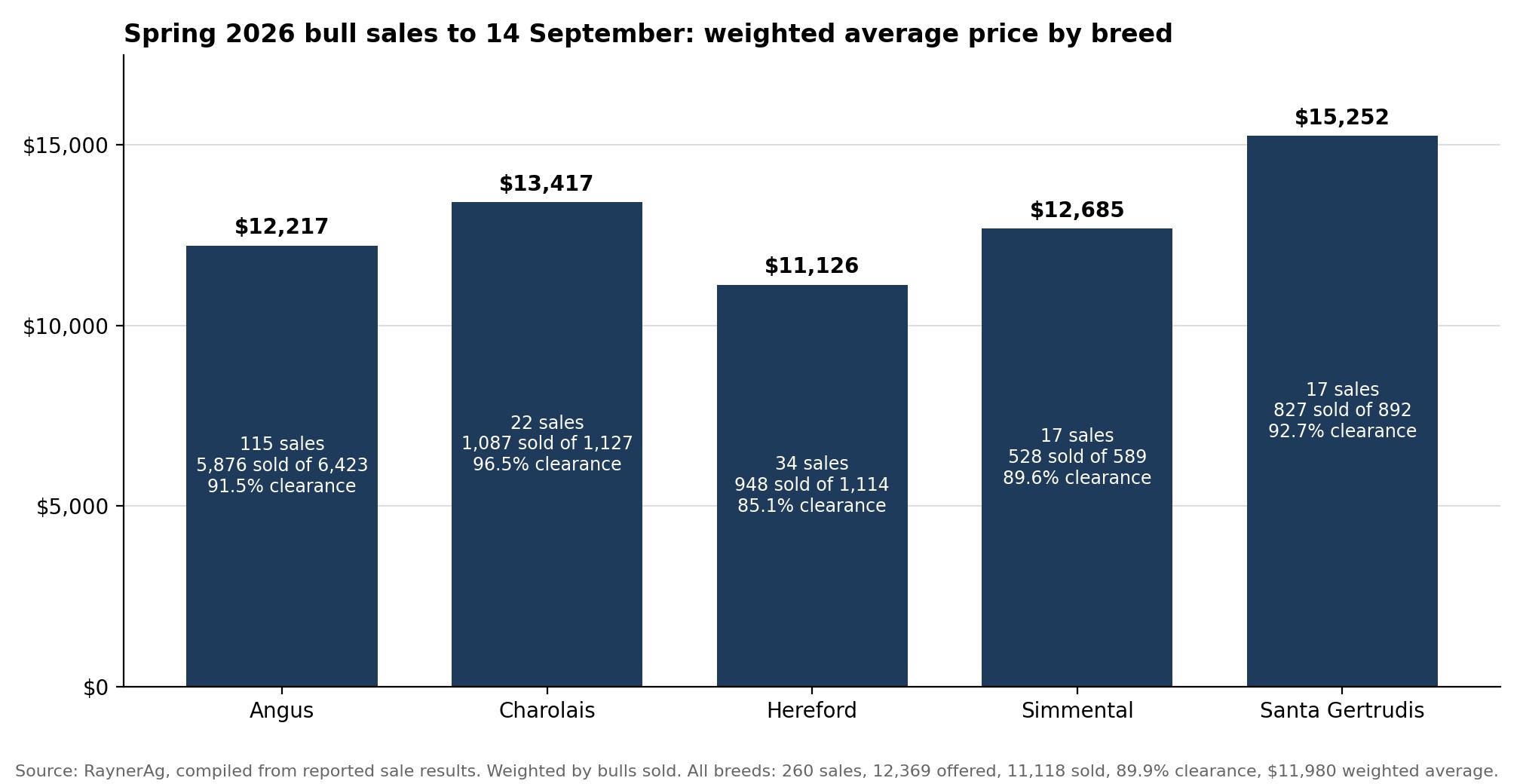
Figure 1: Weighted average price, clearance and volume by breed, spring 2026 to date. Click on graph images for a larger view
Several breeders across the major breeds also took a calculated decision to increase their catalogue numbers this year. At the start of spring, this decision was one that could have easily been questioned.
Comparing those individual sales against their 2025 results, some interesting trends emerged. Across Angus, Hereford, Charolais, Simmental and Santa Gertrudis (some other important breeds are still earlier in the spring cycle, and will be reported on later in the season), there were 56 studs that had increased their catalogue numbers.
Between them they offered 3552 bulls compared with 3057 last year, an extra 495 head or just over 16pc. Although these additional bulls mostly sold, and for slightly better prices, the clearance rate on these sales fell from 96.4pc last year to 94.6pc in 2026.
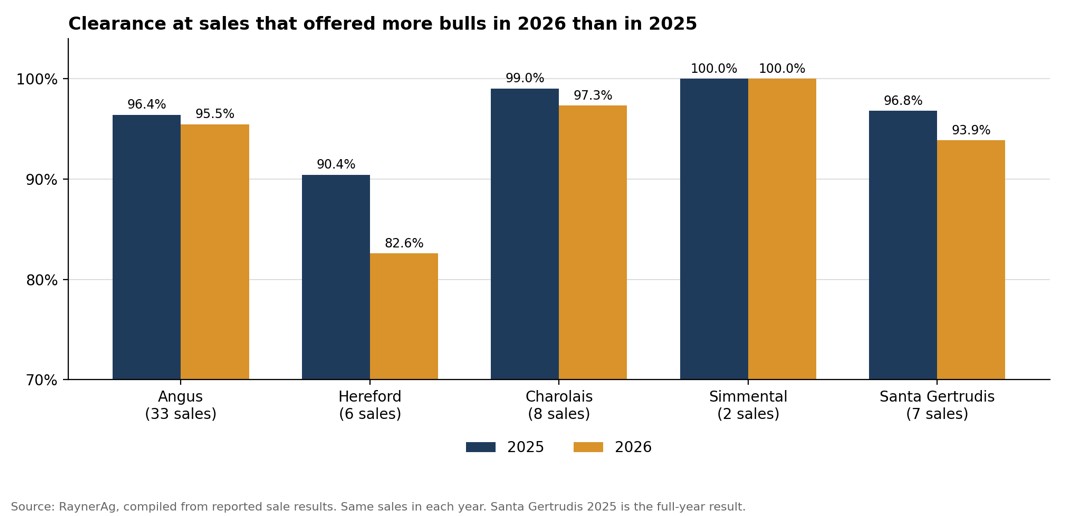
Figure 2: Clearance in 2025 and 2026 at sales that increased catalogue size in 2026.
Figure 2 shows clearance in both years for those sales which had increased their catalogue this year. This is not the breed’s overall clearance for the season. The chart illustrates that for four of the five breeds, the sales which increased their offerings cleared a smaller share of them than they did last year.
Angus eased about one percentage point, Charolais 1.7pc and Santa Gertrudis 2.9pc. Hereford was the standout at 7.8 points, from 90.4pc to 82.6pc. Simmental held 100pc, but that represented only two sales, so not much can be drawn from it.
While this is useful data, it doesn’t prove that the extra bulls caused the lower clearance rate. Season, catalogue quality, reserves, buyer loyalty, sale timing and how well the bulls suit commercial buyers all play a part.
It is worth bearing in mind what averages mean. In practical terms the sale average reflects how strongly buyers competed for the bulls they wanted. The clearance rate reflects how far that competition was spread across the catalogue.
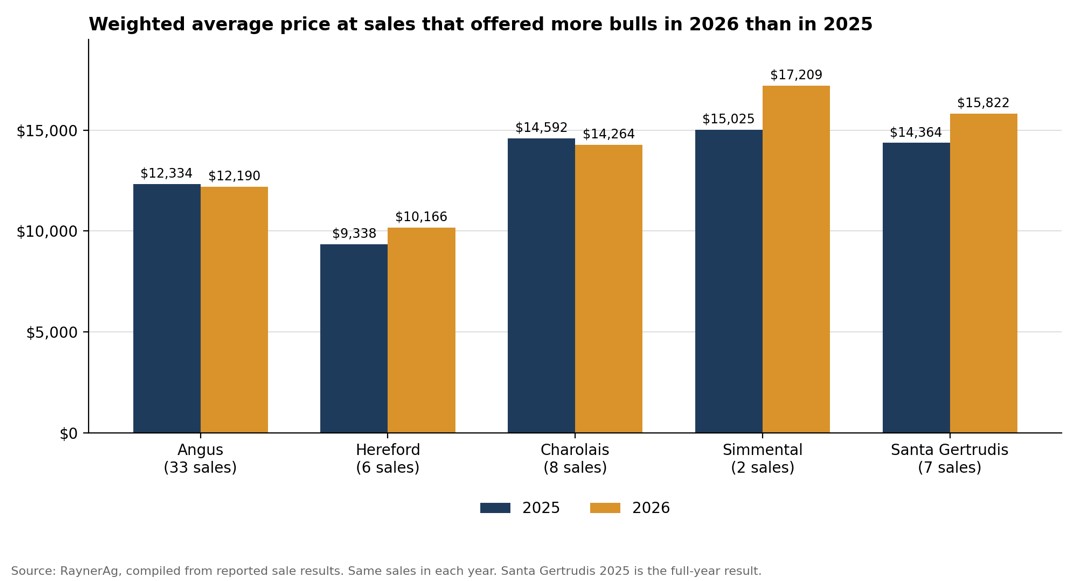
Figure 3: Weighted average price in 2025 and 2026 at sales that increased catalogue size in 2026.
For the vendors who increased their catalogued numbers this year, the additional bulls mostly sold. Across the 56 sales, 413 more bulls found buyers than in 2025. Catalogues grew by 16pc but the number sold grew by 14pc, so clearance dipped a couple of points because supply grew faster than the bulls buyers were prepared to take.
In practice, a vendor who offered 20 more bulls and cleared 94pc instead of 96pc still sold most of those additional bulls.
Clearance Vs prices paid
It would be a mistake to assume that a fall in clearance rates also meant a decline in the average price paid.
A comparison of the weighted average for those sales is shown in Figure 3 for both 2025 and 2026. Within Hereford, Simmental and Santa Gertrudis, the sales that offered more bulls increased their per head average on 2025. Hereford rose about $800, and Simmental and Santa Gertrudis both rose by well over $1000.
While the Angus and Charolais sales were the exceptions, even there the average only eased by a few hundred dollars on a bigger offering. Angus sales sold an additional 300 bulls at almost the same money as last year, but the extra numbers didn’t lift the average either.
There is an interesting trend to emerge from the Hereford results. The six sales that increased numbers had the sharpest fall in clearance of any breed, yet their average per head price increased by about $830. This is perhaps the clearest demonstration of producers paying more for the bulls they wanted and leaving the rest.
The practical message from these results is that offering more bulls didn’t appear to cost vendors money on the bulls they sold.
While it may have meant a few more bulls were passed in, there was a clear message as to which bulls producers were prepared to pay for. Most producers went to sales with a budget and a clear idea of what they wanted, spent it on the bulls that fitted, and weren’t tempted to take a second or third bull just because it was in the catalogue.
The other theme in the data is that the reputation of the seedstock breeder drove demand. Larger offerings did well where buyers respected the program behind them. Even so, bulls that did not meet the requirement were overlooked, whoever bred them.
While some might suggest that thinking about sales in 2027 is premature, there are some valuable insights for seedstock producers. A consistent catalogue matters, as do realistic reserves and enough information for producers to judge quickly whether a bull suits their program.
And with plenty of sales in 2026 still to run, producers need to recognise that while a softer clearance later in a sale can be an opportunity, it doesn’t mean the better bulls will become any cheaper.
- Beef Central’s comprehensive end-of-year summaries on national bull sales performance for 2026 will appear in late November. The data on the ten largest breeds has been compiled since 2013.
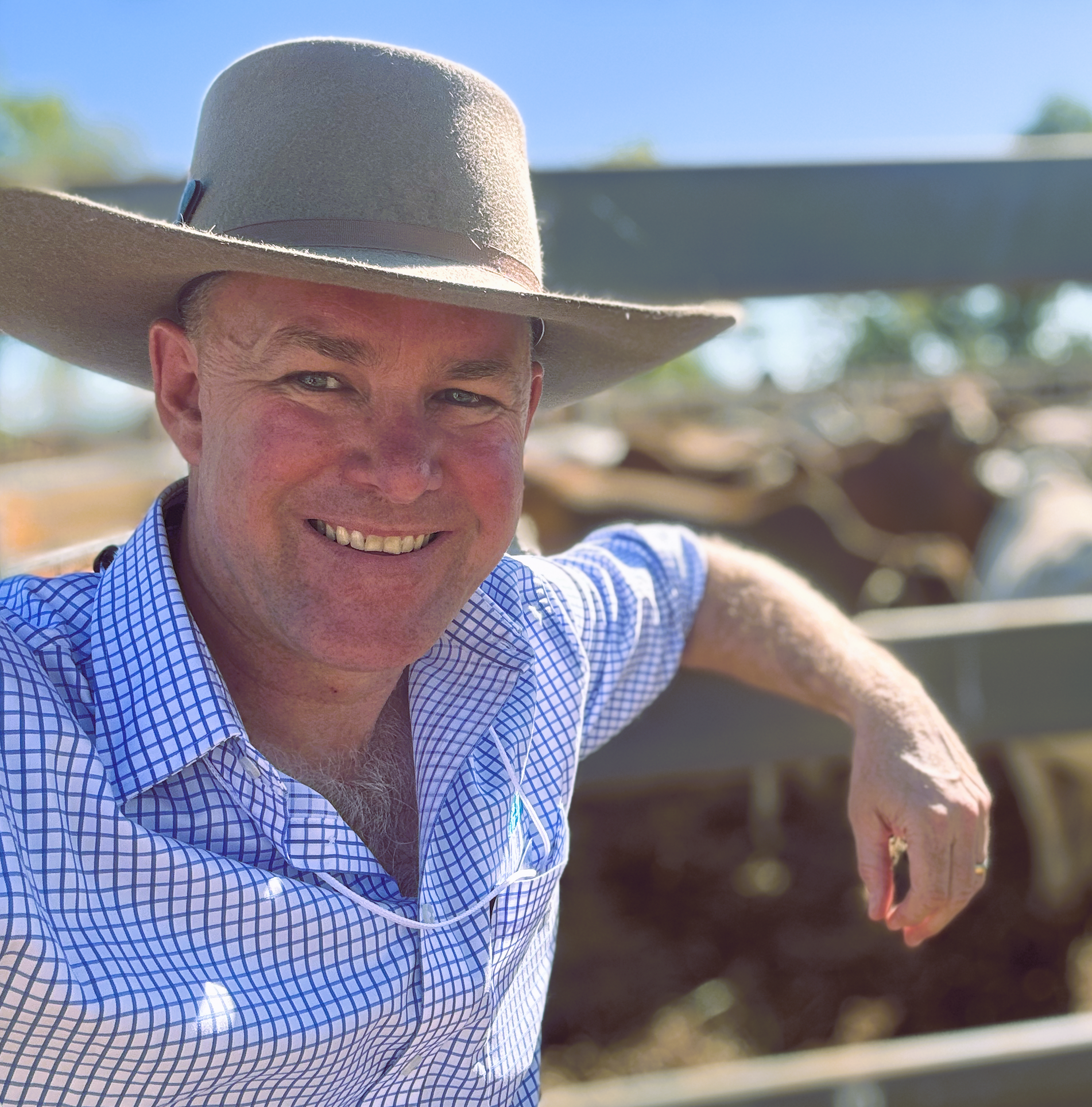 Alastair Rayner is the Strategic Account Manager for Southern Australia with Vytelle and Principal of RaynerAg. He has over 30 years’ experience advising beef producers and graziers across Australia. Alastair can be contacted here or through his website: www.raynerag.com.au
HAVE YOUR SAY