

Nguni cross calves bred at Murdoch University in Perth.
AS South Africa battles one of the most significant Foot and Mouth Disease (FMD) outbreaks in its history, a centuries-old indigenous cattle breed is gaining attention for the resilience it is showing to the devastating disease.
According to a recent online report from South Africa’s Farmers Weekly, producers are observing that Nguni cattle are being less affected by foot and mouth than European-origin breeds during the current outbreak.
The Nguni breed has evolved in Africa over thousands of years in environments where cattle have long co-existed alongside wildlife reservoirs of disease, particularly African buffalo, which are known carriers of FMD.
In the article published by Farmers Weekly, Nguni Cattle Breeders’ Society president Dr Oswald Jannasch said producers had not reported mortalities among Nguni cattle during the current outbreak.
“The animals that did suffer from the disease were far less affected than other breeds and recuperated quite rapidly after the disease had run its course,” Dr Jannasch said.
“That has led to a marked increase in interest in the breed, and we have seen a notable upswing in demand for Nguni cattle over the past six months.”
The observations come as South Africa continues a massive national campaign to regain FMD-free status after outbreaks spread across almost the entire country following the loss of its internationally recognised FMD-free status in 2019.
Earlier this year, South Africa’s Agriculture Minister John Steenhuisen outlined a 10-year strategy to combat the disease, including widespread vaccination and strict movement controls, after outbreaks affected major feedlots and extensive grazing regions.
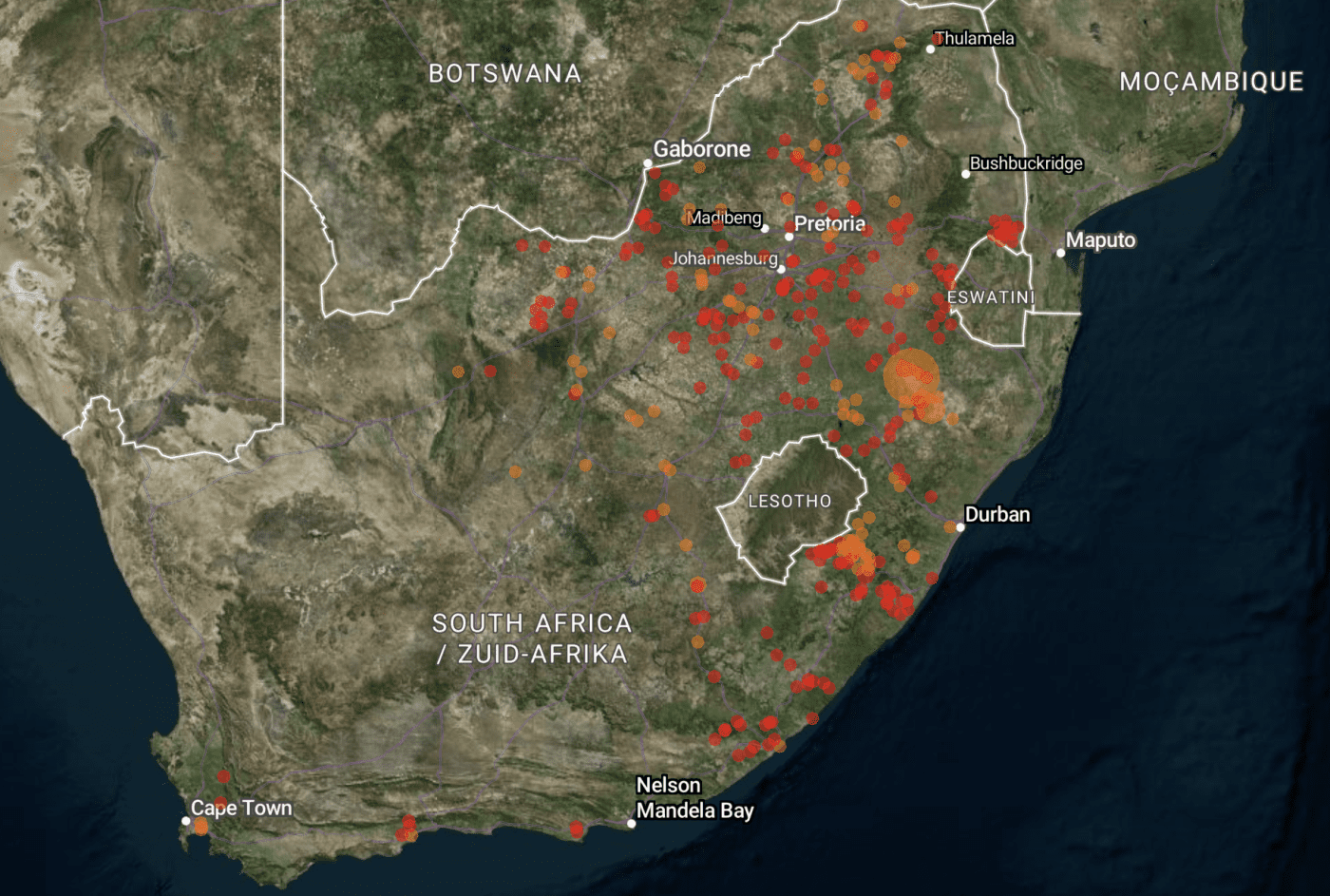
This map displays current reported FMD cases in South Africa, as of Thursday 21 May 2026. The red is confirmed cases, while orange is suspected cases.
Cases of cattle becoming infected after vaccination
Further compounding the challenges facing South African cattle producers have been recent confirmed reports that some vaccinated cattle have become infected with Foot and Mouth Disease.
Experts have attributed the infection of vaccinated cattle to waning immunity, wildlife reservoirs and cross-contamination, uncoordinated vaccination rollout windows and incomplete geographic coverage which allows the virus to continuously spread.
“Chalk and cheese” compared with Australia
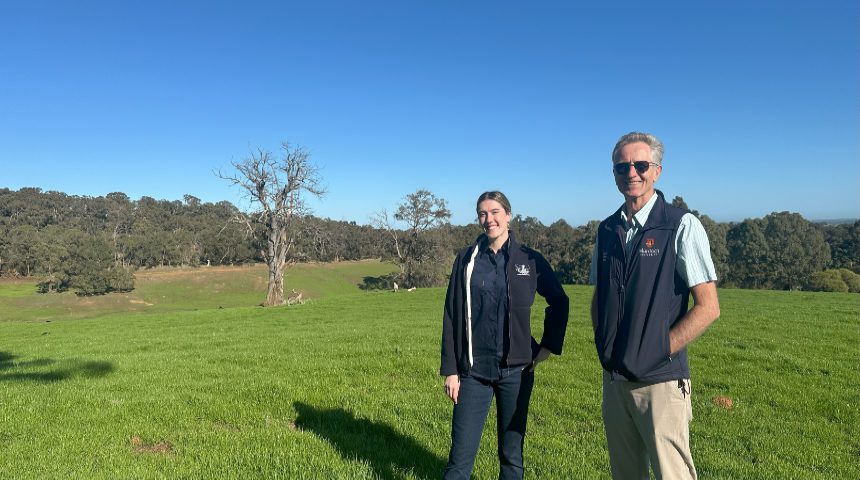
Veterinary Medicine Student Caitlin Cooper with Associate Professor Pete Irons at Whitby Falls Farm.
Murdoch University Professor Pete Irons, a South African veterinarian now working in Australia has recently helped to bring Nguni genetics into Western Australia through a cross breeding program at Murdoch.
He told Beef Central the African situation was vastly different to Australia’s disease-free environment.
 “The situation with FMD in Africa and Australia are like chalk and cheese, you just about can’t compare them,” Prof Irons said.
“In Africa the disease has always been around, it is just part of the ecosystem.”
He said in regions where cattle regularly interact with buffalo and other wildlife carrying the virus, natural selection over centuries had favoured animals able to tolerate exposure to foot and mouth.
“Animals that don’t are just weeded out of the population over time,” he said.
However, cattle in South Africa had not regularly come into contact with foot and mouth, and, like cattle in Australia, were completely naïve to the disease.
“So when they come into contact they are completely susceptible, they pick up the disease and they show signs of it and it is bad.”
However, he said it had been noticed in past decades that indigenous breeds such as Ngunis did show “some innate resistance” to diseases such as foot and mouth.
Resilience does not mean immunity
Prof Irons stressed that resilience did not mean immunity.
“They do pick up the virus, they do transmit the virus to other animals,” he said.
“It means that they either don’t show any symptoms at all or they show very mild symptoms and they recover quickly.
“You can’t say they are the answer to an outbreak. They would still propagate it in the cattle population.”
Prof Irons said Nguni cattle have attracted interest globally not only for possible disease resilience traits, but also for adaptation to harsh environments.
The breed was known for tick tolerance, heat resistance, fertility and ability to maintain production on poor-quality grazing land with a high component of roughage.
He said similar adaptive traits likely exist in many indigenous African and Bos indicus-derived cattle breeds originating from regions where FMD and other livestock diseases are endemic.
“I think the same thing goes for pretty much any breed that had its origins in an area where FMD is endemic,” he said.
“Bos indicus type cattle that evolved in India where foot and mouth is endemic would also have a degree of resistance.”
Breed resurgence in South Africa
Prof Irons said Nguni cattle had been heavily crossbred and diluted in South Africa in past decades as producers pursued larger European breeds with higher growth rates and carcase weights.
“There was a lot of cross breeding so the pure bred and fullblood Ngunis became quite scarce at that time.
“And then slowly but surely, the research just validated the fact that these animals have got really valuable characteristics.
“They are tick resistant, have high fertility, amazing feed efficiency and ability to convert really poor quality grazing into growth while still maintaining breeding, and their ability to just survive and thrive in really harsh environments compared to European sourced cattle.”
The breed is smaller framed with a mature adult cow weight of around 400kg, well below that of the larger European-based breeds, but also produced a much lower methane output than bigger breeds, which was another attribute in their favour.
He said the South African Government started investing in preserving and propagating Ngunis and as a result the breed has had “an amazing come back in South Africa” he said.
“And then there were these far-sighted people who brought genetics over here (Australia), and it is finding a place over here as well.”
According to estimates published by the Rare Breeds Trust of Australia there are about 11 Nguni breeders in Australia with an estimated collective herd of about 650 cows, as of 2025.
Breed selected by Murdoch specifically for suitabaility to research and testing
Prof Irons said Murdoch University has been one of the newer entrants to Nguni cattle breeding in Australia, with a crossbred herd in the process of being bred to larger numbers.
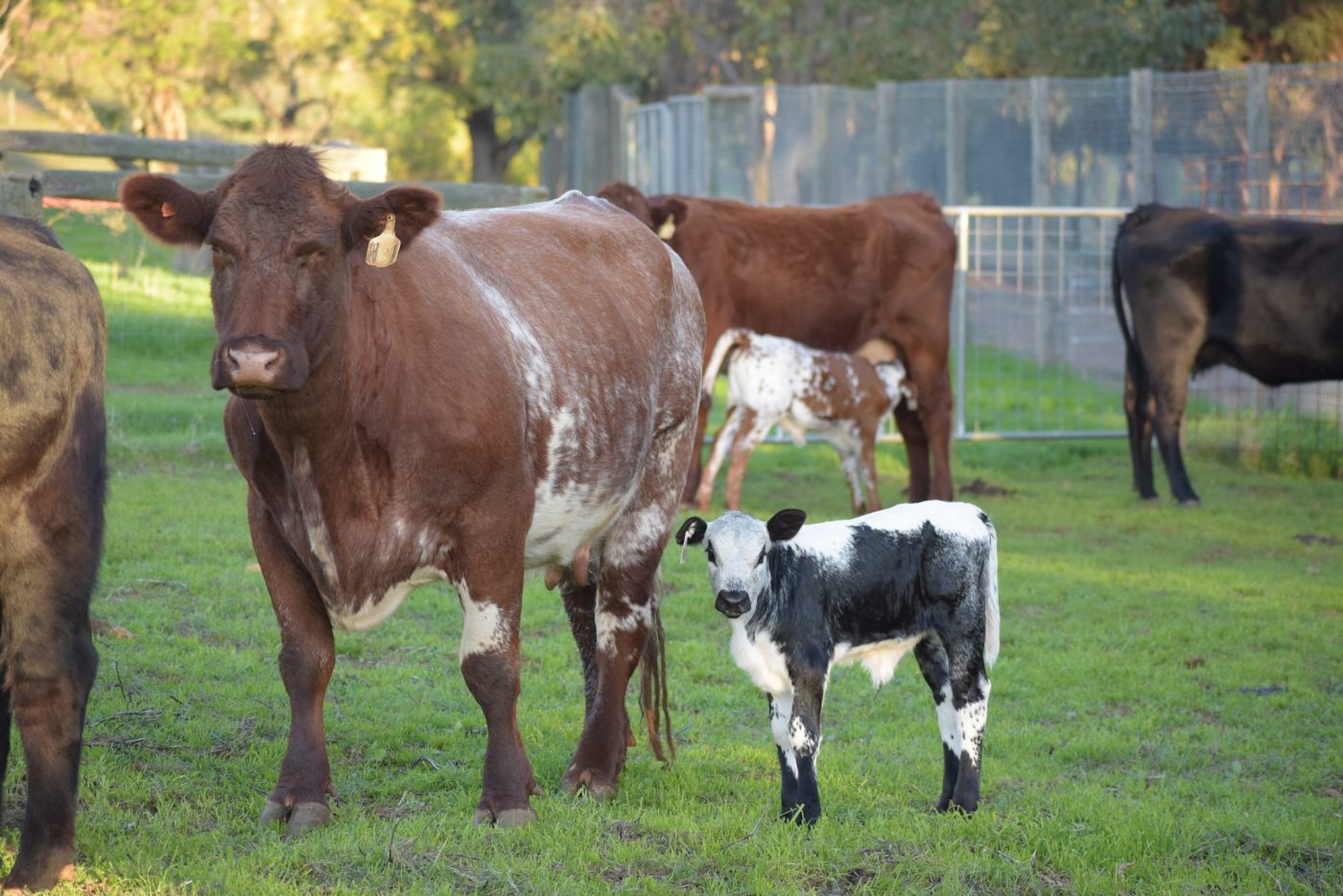
First-generation crossbreds out of Angus, Murray Grey and Shorthorn mothers, alongside European type herdmates in the Murdoch program.
He said the Perth-based university had selected the breed specifically for its suitability to research and teaching programs.
“Teaching and research is our core business, and essentially the ideal animal for teaching and research is something that is small, cheap to feed and maintain and docile and a very good temperament.
“We can keep more Ngunis per hectare and per farm than we can the European types so it just made a lot of sense from what our needs are.”
Murdoch University last year welcomed 32 Nguni cross calves in its breeding and research program, which marked the introduction of the Nguni cattle breed to Western Australia (most existing herds in Australia are based in Eastern States – see Nguni Australia’s website for more information).
Prof Irons said the cattle at Murdoch are being used for veterinary teaching purposes and as part of a special research project undertaken by Doctor of Veterinary Medicine students to determine the suitability of the Southern African breed for Western Australian farming.
He said the initiative had been made possible by generous donations from Garlone Moulin, Henry Townsend and Gawie Roux of the Australian Nguni breeding community.
I personally observed in Zimbabwe where a dairy herd production dropped 80% in a week that their Brahman cattle had virtually not been affected.
Similarly in Brasil where Nellore herds were not affected.
Anecdotes from Venezuela were similar.
Crossbred bos Taurus and other flat back types were very susceptible to FMD or Aftosa in local language.
I’m in South Africa …North West province…are we in danger ?
This is tge kind if a breed that I had long fallen in love with. big up
when i was a kid in the Netherlands (60 years ago) the older dairyfarmers always told me that cows with a black tong never got foot and mouth disease.
We have that breed of Bull hear at our property post code 4753 Cross over with a very mix heard of Cows I am very impressed with the calves on second drop with their Bone structure And the colours and pattern of the calves as in your picture are very much the same Seems a nice nature Bull
All those attributes associated with the Nguni cattle are prevalent in pure Nguni. The crossbred calves may have some of those genes but they have been diluted through crossbreeding.
Surely it would have been better to start the programme with pure Nguni
I’m veterinary practitioner from uganda, I wish to applause the innovative and technical team for working hard in finding the breed that is hardy in challenging diseases like FMD , I would like this breed to be reached to uganda for resilience.
Amazing what Mother Nature can create with natural selection!
I have the largest stud herd of Nguni cattle in Kwa Zulu Natal, Souyh Africa and have been breading quality Nguni for over 20 years.
i can fully endours the coments about the charactoristics of the bread.
the obsesion with feedlot animals and comercial breads needs to be reevaluated based on more sustai able charactoridtics.
Where in KZN are you based Chris?
Where in KZN are you?
it is good to be informed about the status of the types of the proper/correct breed. im interested in breeding with Ngunis and based in the lower region of Limpopo Province, South Africa.
one other point is whether breeding in different types of categories of cattle is it good or not.
what is the status of Boran and Bosmara breed in terms Diseases such as Foot and Mouth as we as tick resistance..
What do you recommend.? Please advise.
I am a farmer of Ankole long horn cattle in Uganda. iam interested in partnering with Siuth African farmers to invest together in farming/ranching in Uganda. The costs of investing and doing cattle farming in Uganda are far lower than in South Africa. And foreign investors do repatriate money out of Uganda easily. There can you please link me up with farmers/ Investors to partner with me do ranching in Uganda?
Please contact me via e-mail.
I am upcoming farmer in the lower region of Limpopo Province, South Africa. I breed in Nguni cattle. The challenges facing in this area is acquiring the land/farm. I need assistance in finding my own place of farming. I’m currently in the communal area of grazing with no boundaries, which is high risky and venerable to stock theft which is proficient in this area. A proposed acquisition of about 20 hectares as a start will be an opportunity to be successful. I don’t have an idea how to approach the government institution in the area of farming.
Your assistance in this process will be greatly appreciated.
Bravo….what’s old becomes new. Don t lose the genetics.
Indeed Don. The need for adapted cattle is important in planning for the future.