
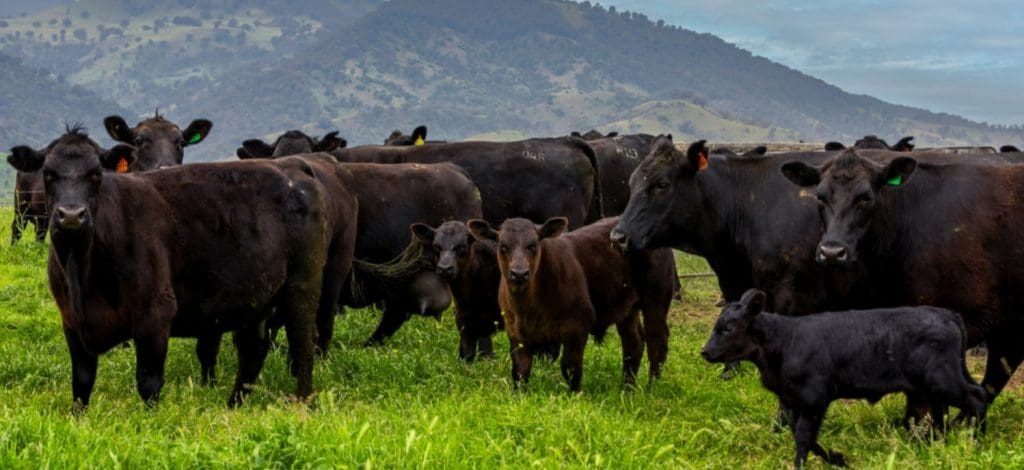
DIVERGENT views are emerging over the question of adoption of multi-breed genetic evaluation in the Australian beef industry.
The topic has surfaced several times in recent months, and was the subject of exchanges and hallway chatter within the beef genetics community at the recent North Australian Beef Research Conference in Brisbane.
Angus Australia is this week seeking feedback from members and the broader Angus supply chain on what it sees as a significant strategic issue relating to the future of genetic evaluation in Australia.
The survey has been developed in response to Meat & Livestock Australia’s Strategic Plan 2030, which outlines an ambition to establish a national multi-breed genetic evaluation and livestock credentials platform.

Scott Wright
Angus Australia chief executive officer Scott Wright said the survey was designed to ensure the Angus Australia board had a clear understanding of member views before considering any future direction.
“Angus Australia has been approached by MLA regarding our potential participation in the development of a proposed national multi-breed genetic evaluation,” Mr Wright said.
“Before the board considers any future direction, it is important that we understand the views of the people we represent, our members, and those throughout the Angus industry who rely on the strength of the Angus breed every day.”
Mr Wright acknowledged the significant support MLA has provided to Angus Australia over many years, including through collaborative investment in projects such as the Angus Sire Benchmarking Program and other phenotype collection initiatives.
“Those investments have contributed to improving the quality of data available for genetic evaluation and have benefited both Angus breeders and the wider Australian beef industry,” he said.
“For decades, Angus Australia has been recognised as a leader in beef cattle genetic improvement. Historically, this has been delivered through BreedPlan, licensed through ABRI, which has provided Angus breeders with one of the most respected single-breed genetic evaluation systems in the world.”
Today, Angus Australia members benefit from multiple sources of genetic technology and expertise, including the TransTasman Angus Cattle Evaluation, Angus GenetiQ, and collaborations with the American Angus Association, Angus New Zealand and CSIRO.
Mr Wright said both TACE and Angus GenetiQ were single-breed genetic evaluations specifically designed to maximise genetic improvement within the Angus breed.
“The purpose of this survey is simple,” he said.
“Angus Australia wants to understand whether Angus breeders and participants throughout the Angus supply chain believe that a national multi-breed genetic evaluation should be a strategic priority for Angus Australia, and for the Australian beef industry.
 “Alternatively, we want to understand whether members believe there are other priorities that would deliver greater value to Angus producers and commercial cattle businesses.”
Current industry estimates suggest Angus genetics influence about 52 percent of Australia’s beef herd. Mr Wright said this meant any significant change to the way Angus genetics are evaluated had implications well beyond registered seedstock breeders.
“It has the potential to affect commercial producers, backgrounders, feedlots, processors, retailers and ultimately consumers who value Angus beef,” Mr Wright said.
“As a board, we believe it is essential that any decisions made on behalf of the membership are informed by the membership.”
Mr Wright said there remained important questions requiring further discussion and clarification, including:
- How any future multi-breed evaluation would be governed
- How it would be commercialised
- Who would own and manage the resulting intellectual property, and
- What implications it may have for existing breed societies and their genetic evaluation systems.
“These are questions that deserve careful consideration,” he said.
“A multi-breed evaluation may offer opportunities. Equally, there may be risks that require appropriate management. Our responsibility as a board and management team is to ensure that any future decisions are made with a clear understanding of both.”
We have a responsibility to carefully consider any proposal that may influence the future ownership, governance and delivery of genetic evaluation for Angus members
Mr Wright said the strength of the Angus industry had been built on decades of disciplined genetic improvement and a cooperative supply chain model where value flowed from registered seedstock breeders through to commercial producers, backgrounders, lotfeeders, processors, branded beef programs, retailers, restaurants and consumers.
“Every participant benefits from the strength of the Angus brand and the confidence generated by decades of disciplined genetic improvement,” he said.
“Angus Australia has now served Australian breeders independently for 106 years. We remain a member-owned organisation, funded primarily through the services we provide to members and the value we create for the Angus industry.
“As custodians of that legacy, we have a responsibility to carefully consider any proposal that may influence the future ownership, governance and delivery of genetic evaluation for Angus members.”
Members and other stakeholders are encouraged to complete the survey, which will provide valuable guidance to the Angus Australia board as it continues discussions with MLA and determines the appropriate strategic position for the organisation.
“Your participation will help ensure that any decisions made by Angus Australia reflect the views of the members we exist to serve,” Mr Wright said.
- The survey (click here to access) is open to both Angus Australia members, and other supply chain stakeholders with a connection with Angus.
HAVE YOUR SAY