
WITH the local abattoir planning to reopen next year, growing access to supplementary feed and more markets emerging, there is plenty of excitement in the Western Australian cattle industry.
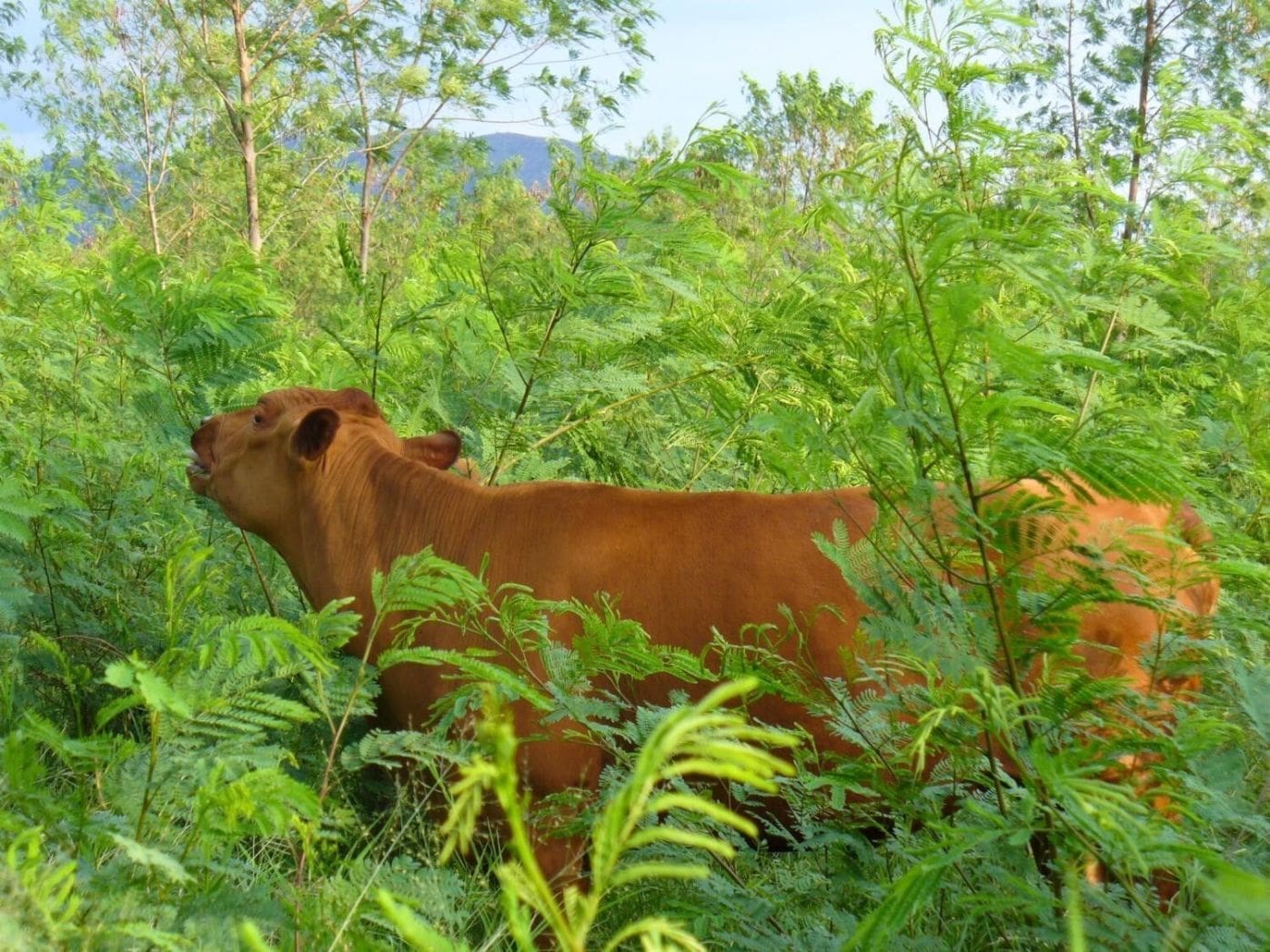
But according to Kimberley Pilbara Cattlemen’s Association chief executive officer Bron Christensen, the development of leucaena could add a missing piece to the puzzle.
Having previously worked for the Leucaena Network, Ms Christensen has a deep knowledge of the work that has already been done and where it has been successful.
“It has the potential to meet that protein drought that we are just not getting out of native pastures and the limited improved pastures that we can plant,” she said.
“Leucaena would be an absolute game changer. Obviously, it needs to be very well managed, but I feel it has the opportunity to absolutely revolutionise the northern beef industry.”
In a recent interview with The Week in Beef podcast, Ms Christensen spoke about the work producers are doing in the northern half of Western Australia to improve meat quality and fit into the growing range of opportunities.
One of those opportunities is the slated opening of the Kimberley Meat Company abattoir in Broome next year.
“KMC will probably take about 25 per cent of our herd that currently aren’t suitable for either transport or live export,” Mrs Christensen said.
“But they are also going to be focusing on the good quality meat that comes from the Kimberley and the upper Pilbara as producers have put a huge effort into improving genetics.
“We are seeing much more managed herds here, no matter whether there are 5,000 breeders or 20,000 breeders.
“We’re also seeing a lot more of our Kimberley and Pilbara cattle go further south into feedlots and backgrounding operations for the domestic and live export market.”
 With those market opportunities emerging, gaining the ability to feed cattle through the protein droughts in the dry season is becoming more important. Supplementary feeding and improved pastures are two of those options.
“We do have a few stations with centre pivots, the likes of Harvest Road, Pardoo and Yougawalla. They allow for improved pasture feeding and they put those to good use to get weight on cattle,” she said.
“The cottonseed access is somewhat limited to location. We have a feed producer in Kununurra, Red Range Stock Supplements, who are using the cottonseed for their meal.
“But to actually make it viable with transport costs, you are more looking at some of the feedlots on the west coast with access to water.”
Limited supply of alternative pastures
One of the major hurdles for producers in the region is WA’s regulatory limitations on introduced pastures, including leucaena, which ultimately limits options for fattening cattle.
“You can plant leucaena on freehold but freehold land is only four percent of WA,” she said.
“A lot of trial work is required to determine if something is non-invasive, if it will suit the environment but also if it will put weight on cattle, so we are somewhat limited in the options for alternative pastures for cattle.”
Looking to the east coast for advice
With plenty of interest from WA producers and others involved in the industry, the KPCA last year took a delegation over to Queensland to see where it had been successful.
The trip included visits to the Landsdowne and Walkamin research facilities, along with three properties where it been successfully planted.
“That gave the pastoralists involved in it a lot of information,” she said.
Leucaena trials underway
Ms Christensen said the trials can be conducted under a permit system and at least one property was currently undertaking a leucaena trial (all funded by the pastoralists themselves).
“They are telling me that it will take $5m over five years to get that trial up and running, that includes centre pivots, water, clearing and everything else as part of it,” she said.
“We have had one plant and whenever leucaena is planted somewhere new it brings up issues. This time it was planted on sandy soils over a centre pivot, but with the winds the sand actually sheared it off.
“That was a new one for the Leucaena Network, so you can add that to box of issues.
“On those soils now, it will be planted into a mulched cover crop to give it more protection. No trial is without merit.”
Ms Christensen said sterile Leucaena has also been trialled by the Department of Primary Industries in Perth, who had taken it through to propagation, but the funding had dried up before they could commercialise it.
“I think they are at the stage where they will be looking for extra funding to take it to commercialisation. It is a shame because sterile leucaena has the opportunity to change all of Australia’s grazing systems, because the biggest concern for everyone is the potential for it to get out of control.”
Commercialisation options being explored
A spokesperson for WA’s Department of Primary Industries and Regional Development (DPIRD) said it is investigating opportunities to move ahead with commercialisation of five varieties.
“DPIRD WA together with MLA has undertaken research to develop a leucaena variety without seeds (sterile) to reduce the weed risk to the environment,” DPIRD’s written statement said.
“The sterile varieties were produced with a conventional breeding strategy that created hybrids between different leucaena species and they have remained seedless in trials over several years.
“Since the initial research was completed, DPIRD has continued supporting the development of a commercially scalable method for producing seedlings of these varieties, based on tissue culture (micro-propagation).
“Opportunities to engage collaborators (including MLA) in field evaluation trials across northern Australia for five selected varieties, ahead of commercialisation, are currently being explored.”
More snapshots of WA
Here are some more Beef Central articles on the advancement of the beef industry in WA.
State of play in WA: The team effort to smooth out fluctuations in cattle supply
State of play in WA: The story behind the sheds at Ucarty feedlot