
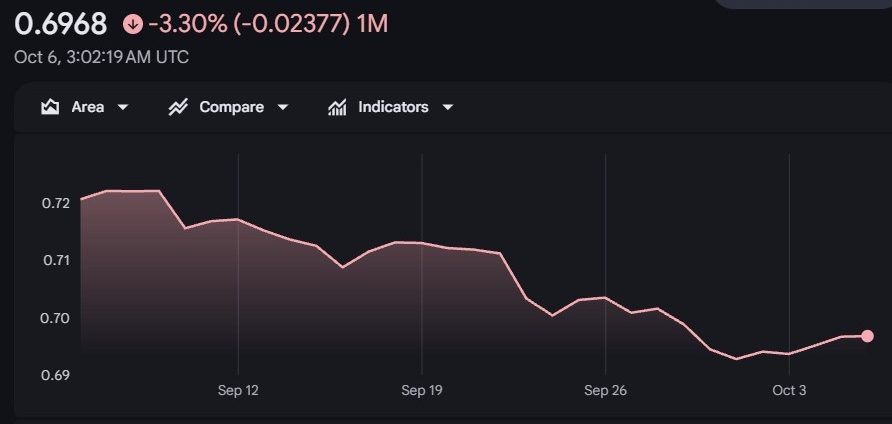
THE Aussie dollar has dipped sharply since the closing stages of September, dropping below US70c for most of the past week.
During 2025 the A$ rose reasonably steadily through the year, starting at around US62c and finishing December at US67c. Since early February this year, the currency has spent most of its time above US70c, peaking in mid-May around US72.5c. It was still above US72c as recently as September 10, before beginning its current slide.
Around Noon today, the currency was trading at US69.68c, down around US2.4c or 3.3pc in the past three weeks. It reached its current cycle low-point of US69.28c on 1 October.
A$/US$ – past month
A lower currency makes Australian red meat export trade more attractive, as much international beef trade is conducted in US dollars. An exporter receiving US$100,000 in payment for a beef consignment would convert it into about A$143,000 at a currency value of US70c, or A$154,000 at US65c.
Last week, the US Dollar Index, which gauges the US currency’s value against six other major currencies, traded at its highest level seen in 17 months. At the same time the A$ is retracing against all major foreign exchange benchmarks, though the degree to which it is softening varies widely, analysts said.
Australia’s latest currency movement is due in part to strengthening in the US$ value, following the release of softer-than-expected US inflation data. The US Personal Consumption Expenditures Price Index showed that annual headline inflation remained unchanged at 3.4pc in August, below the 3.7pc expected by markets. The softer inflation figures initially triggered selling pressure on the US$, however the move quickly faded as investors also digested stronger US employment and economic growth figures, currency analysts said last week.
Adding to the momentum, US private-sector employment increased by 90,000 jobs in September, accelerating sharply from the revised 36,000 increase recorded in August. US economic growth also delivered an upside surprise, with annualised Gross Domestic Product growth for the second quarter revised higher to 2.2pc, from the previous estimate of 1.5pc.
StoneX Trading said the A$ fell after the Reserve Bank interest rate hike to 4.6pc last week, because the move was already priced in by the market, while the US dollar stayed firm. The RBA’s interest rate hike put Australian inflation data in focus.
HAVE YOUR SAY