
The Strategy of presenting sale bulls with “No Grain – Not Ever” is not just a slogan, it’s the way of doing things at Marellan Shorthorns. Lincoln & Lisa Job, principals of Marellan Shorthorns at Emerald in Central Queensland, are definitely taking the road less travelled….
IT is in the hard times that people reveal their character. The same is true when it comes to cattle. “The good seasons, with plentiful high-quality feed, shade and minimal parasites don’t really show who is elite. It’s the hard times when cattle truly prove their worth,” Marellan Shorthorns principal Lincoln Job explains. “And this only compounds over generations of selections.”
Breeding Shorthorn cattle in the heat and ticks of Central Queensland automatically sets the Marellan herd apart. But for the Jobs, this location is just the beginning of their breeding program.
“I know why there aren’t many British-bred bull breeding operations in the ticks and heat. Lots of people want to sell bulls here, but not many want to breed them in this environment.”
But for those like Lincoln and Lisa, challenging conditions are simply an invitation to do better and try harder. It’s their philosophy that the way to maximise genetic progress is through adversity, not prosperity. And this is where Lincoln believes bull breeding herds should differ from commercial herds.
“In a commercial setting you want your weaners on the best tucker, so the steers can be sold as Bullocks or feeders as soon as possible. Maximising prosperity [of the herd] is the goal of most commercial operations; get them out the door, sooner, heavier and better.”
Maximising Prosperity
Maximising Prosperity simply means to give an animal (often bulls) the best circumstances, as often as possible, even if that means intervening with grain to make a bull heavier and more impressive than he otherwise would be.
Let’s just pause for a moment and consider what the long-term genetic trajectory would be if a bull breeding herd seeks to maximise prosperity at every available opportunity.
Constitution is just one of the traits that can be hard to assess – as the grain bin has a pretty good ability to make a bad doer look fat and easy doing.
If a replacement female has never been forced to forage or go without shade or exposed parasites, there is no way of knowing if they have ability to handle such things.
What’s good for the commercial operation isn’t necessarily what’s good for the bull breeding operation. Bulls that are produced with ‘maximised prosperity’ in soft country, when moved to areas where the environment is much harsher, suddenly face a whole new round of challenges.
According to Lincoln, “Cows are like people: they become lazy if you give them the opportunity. Welfare that is unnecessary harms people … unnecessary ‘cow welfare’ can do the same in a bull breeding herd. The real downside of maximising prosperity as a breeding technique in a stud herd is that the problem compounds over generations. When the wrong animals are retained and used in the breeding program, either as sires, dams of sires or as donor females, then the addiction to (false) prosperity continues and increases.”
Genetic Gain through Adversity
In the Marellan herd, Lincoln and Lisa believe that adversity helps sort out who can bring about genetic gain and who is the equivalent of a fair-weather friend.
“Chuck ‘em all in at the deep and see who can swim… and then breed from the good swimmers.” As a bull breeding operation, they see their job as working hand-in-hand with the environment to sort out genetics: get rid of the second-rate genetics and present the superior ones to their clients. In the Marellan Breeding program, they use this adversity to drive genetic progress in numerous ways.
Ticks, Heat & Buffalo Fly
Ticks, Heat and Buffalo fly are part of the Central Queensland environment, meaning they are part of the environmental selection pressure that is applied in the Marellan herd.
From a commercial perspective, avoiding ticks though paddock management would be a key goal. But Lincoln insists “we want ticks at strategic times, we want to see who the ‘tick magnets’ are and remove them from our breeding program.
“Without exposure to ticks there is no knowledge, and without knowledge breeding decisions become guesswork.” The aim is to continually select cattle with a lower tick burden. The same goes for Buffalo Fly.”
Years ago, Lincoln bought a one-hundred pack of fly tags – “but there’s still 95 in the pack” he jokingly confirms. According to Lincoln, Shorthorns have a competitive advantage when it comes to buffalo fly, when compared to black-hided and Bos Indicus cattle. But this doesn’t lessen the importance of identifying weak genetics and culling accordingly.
Heat tolerance is another trait selected for in the herd. Strategic periods of shade restriction and the Central Queensland environment bring the adversity that helps inform their selection choices. This combines well with the favorable heat-reflective coat colour in Shorthorn cattle.
No Grain – Not Ever
Shorthorn bulls sold from Marellan never receive any supplementary grain; their slogan remains No Grain – Not Ever. Sometimes bull preparation explanations look like they are written by politicians, but at Marellan it couldn’t be simpler: No Grain – Not Ever. Lincoln explains that this isn’t just a marketing phrase, but the breeding philosophy they have built their herd around.
“At the end of the day feeding grain to a sale bull so that he looks better for one day of his life is not our business model. Our business model is to bring about genetic gain in our client’s herds. Having an extra 150kg on a bull on sale day makes sense for that day only. But the long game – genetic progress in our clients’ herds – is the only game that counts for us.”
This strategy fits in with their larger philosophy around Adversity. Marellan bulls are also given long exposures to low-quality dry feed and long periods with no animal health treatments. The bulls don’t get weaned into a feedlot or put on the best feed available on the farm. They spend months on deteriorating, dry grass, before being given the opportunity to finish on grazing crop in the immediate lead up to the sale.
While this inevitably means the bulls are sold below their maximum weight potential, they are healthy and ready to work. Lincoln insists that “a lighter bull that is more agile is most likely to have more longevity and provide great value to his new owners. Lighter should not be confused with lower performance. Adversity and resulting selection pressure is at the core of the Marellan breeding program. Our herd exists for the genetic gain of Northern beef producers’ herds – if we don’t have more selection pressure than our clients, how can they expect genetic gain?”
Genetics for the Environment – doing bulls differently
According to Lincoln, the first scientific principle of breeding cattle is how the genetics of an animal interacts with the environment.
He says, “I am always amazed to meet people (not from Central Queensland) who believe that the same animals will be the best in all different environments. We have countless data to show that often cattle will re-rank when going from cold/temperate environment to sub-tropical/tropical environments. From our experience, Genetics by Environment (& Genetics for the Environment) play the greatest role in shaping what genetic lines prosper and are propagated in our herd.
The irony of the Prosperity Versus Adversity debate is that in the long run, real prosperity comes when adversity is used as part of a breeding program. The success of Marellan bulls is evidence of that. Of the last 500 bulls the stud has sold, 99pc stayed in the ticks or went into hot arid environments. And nearly all are used over females with different levels of Bos Indicus blood.
According to the Jobs, their reason for doing bull breeding differently is to benefit their clients’ herds.
More Weight
At Marellan, Lincoln and Lisa believe that bulls with high-quality Shorthorn genetics alongside environmental relevance, joined to Bos Indicus females, gives the opportunity for more weight and heavier progeny at younger ages.
Lincoln’s saying is that elite genetics (from both sire & dam) + Hybrid Vigour = More Weight. Proof of this was once again put on display at the 2026 Clermont Show Fat Cattle section. With 609 cattle exhibited from 37 exhibitors, Marellan Shorthorns took out the award for Most Successful Exhibitor for under 15 head (25 Exhibitors).
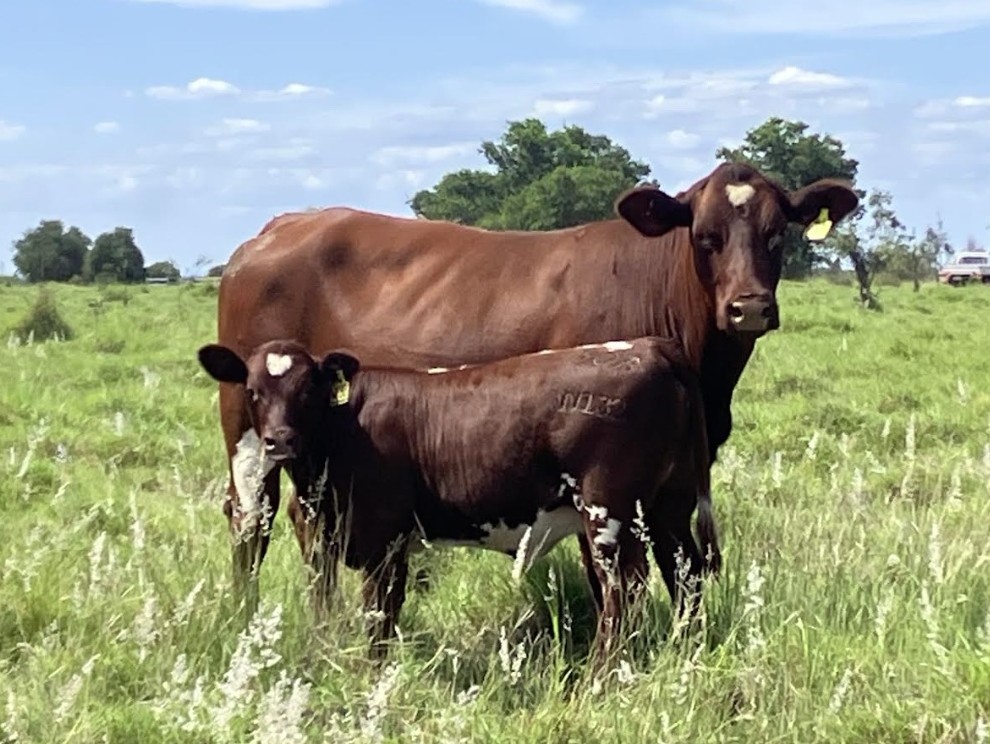
Pictured below is Champion Grain Fed Animal – Marellan Shorthorn x Brahman F1 bullock 815kg, 2 tooth Bullock. Also pictured is his 810kg 2 tooth mate. Additionally pictured is the F2 female (1/4 Brahman, ¾ Shorthorn), 2 tooth, 745kg.
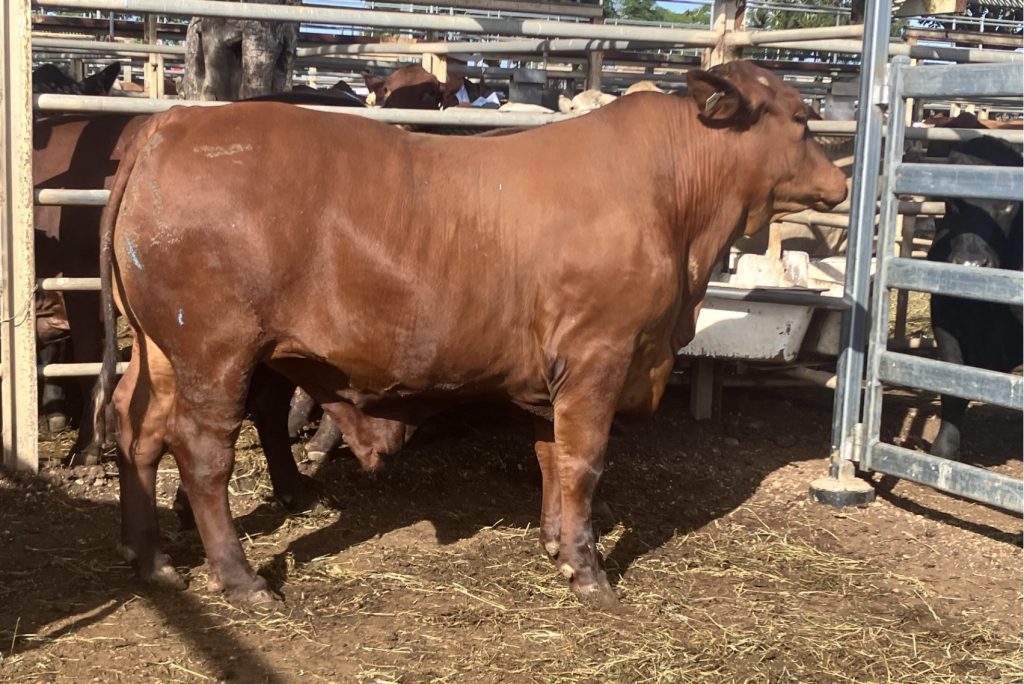
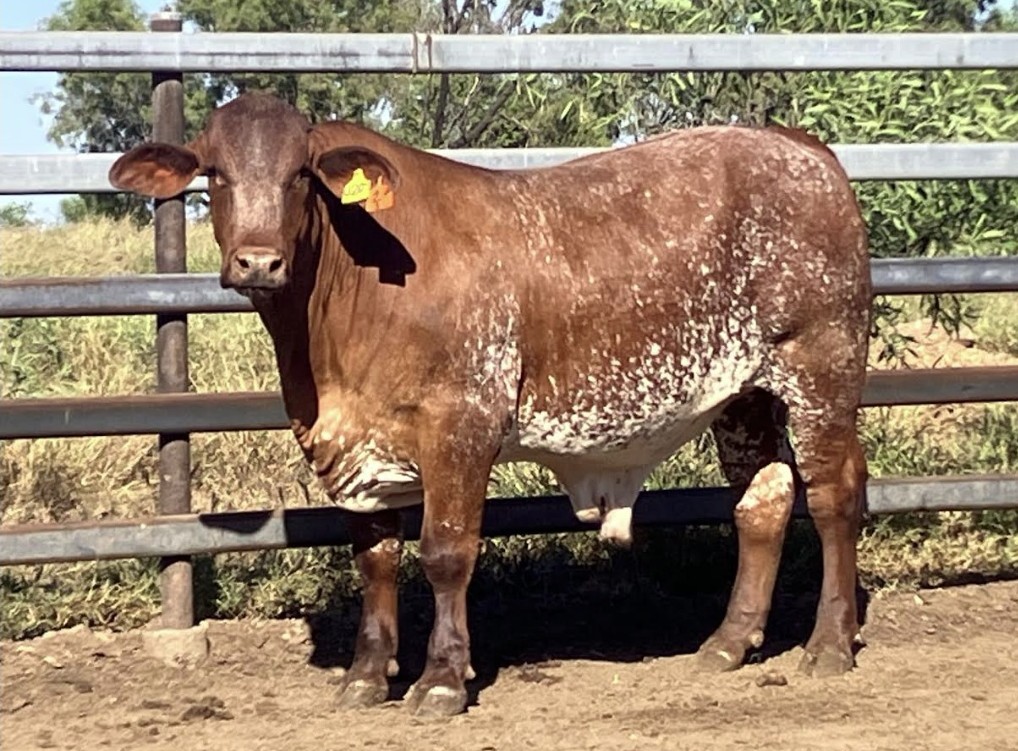
The success at Clermont 2026 follows on from the 2025 Callide Dawson Beef Carcase Competition. In class 5, the pen of grain fed steers, the Marellan Shorthorn X Kaiuroo Brahmans females took out the weight gain section. With 2 steers equal topping the weight gain section, gaining a mammoth 3.72kg per day. The Marellan team averaged 3.48kg compared to the peer average of 2.45kg. No other entries had a higher weight gain than the Marellan Average.
Lincoln insists the credit must be shared, “we were fortunate to purchase some very good quality Kaiuroo Brahman females a few years ago. Our bulls are only ever half the story – our clients’ Bos Indicus cows are the other half.”
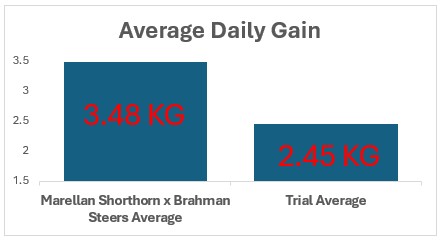
Figure 1. Callide Dawson Beef Carcase competition, class 5, Average Daily Gain.
It wasn’t just in the weight gain section that the Marellan Shorthorn X Brahman steers excelled. They received well above average for Marbling points. What made this particularly impressive is that there were no entries with more Brahman Content.
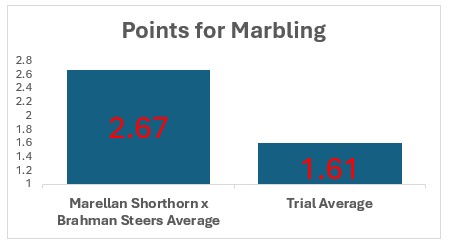
Figure 2. Callide Dawson Beef Carcase competition, class 5, points for Marbling.
These success followed on from Clermont Show’s 2024 Cattlemen’s Challenge: a 365 day trial, which provided a great opportunity to benchmark the performance of the Marellan Shorthorn cattle.
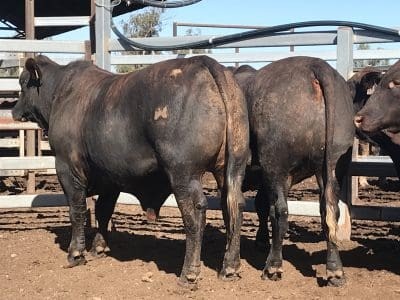
Shorthorn X Brahman F1 Milk Tooth Bullocks. Part of the Marellan team in the 2024 Clermont Cattlemen’s Challenge.
The results were outstanding, showing top-end performance. Paringa Gold, long term clients of Marellan Shorthorns, had F1 Marellan Shorthorn X Braford Steers, whilst Marellan had F1 Shorthorn X Brahman Steers. The Paringa Gold steers placed first for weight gain on grass and third for Overall weight gain.
The Marellan steers placed second for weight gain on grass and second for overall weight gain.
Combined, the teams had an extra 25pc gain on grass as compared to the trial average (See Figure 3 below).
The grass phase was divided into two sections, roughly equating to a 171-day ‘dry’ phase and a 77-day ‘green’ phase. During the ‘dry phase’ the Paringa steers gained a whopping 42pc above trial average, and the Marellan steers were 25pc above trial average. During the ‘green phase’ the two teams combined gained 20pc above the trial average.
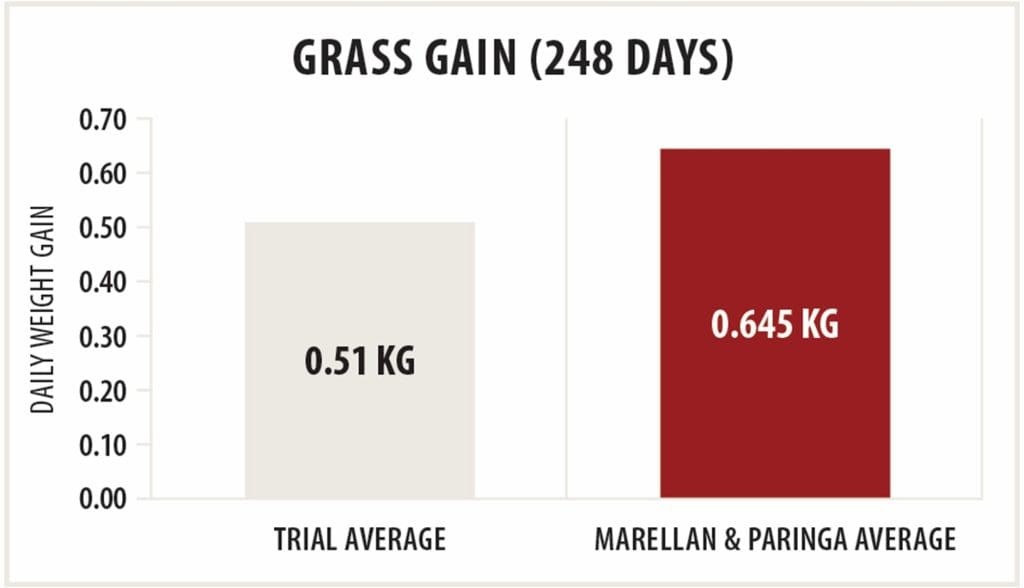
Figure 3
A similar result was seen in the feedlot phase. Overall, Marellan and Paringa gained an additional 11pc daily weight to the trial average (Figure 4), a particularly impressive achievement given that these two teams had less scope for compensatory gain due to their additional 25pc gain during the grass phase.
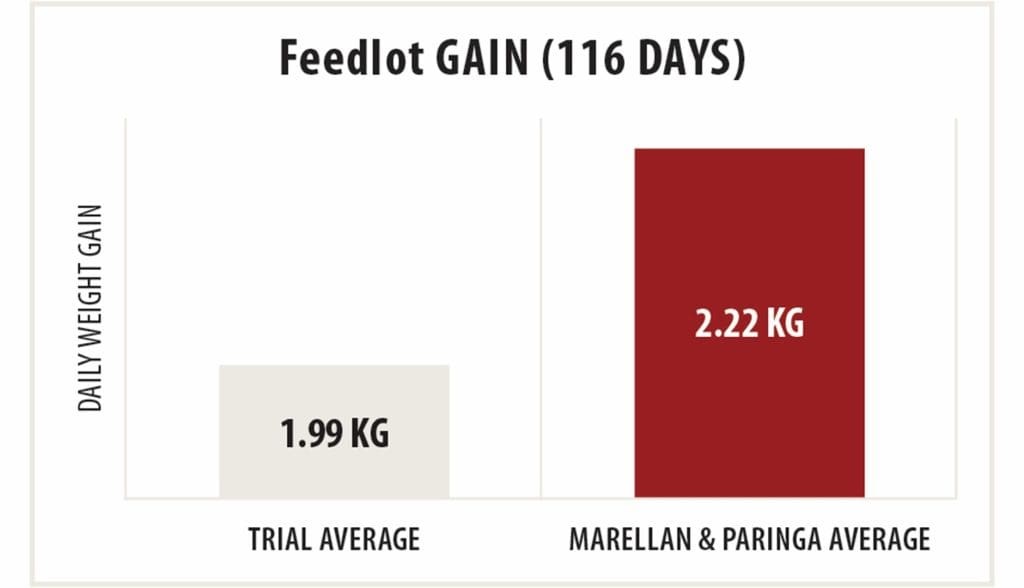
Figure 4
The overall weight gain of the 365-day trial shows the environmental and performance gain of combining Marellan Shorthorn bulls with Bos Indicus cows. The slaughtered Marellan steer dressed at 365kg, milk tooth at 20-21 months. Of the steers that were sold at auction, the Marellan steers were equal top priced of the day.
More Maternal
As good as hybrid vigour is in an F1 bullock, to ensure genetic gains are passed on year after year, the best gains from hybrid vigour come through maternal F1s and maternal F2s. According to Lincoln, “the combination of the Shorthorn and the Brahman has been the backbone of the Northern Cow herd for over 50 years. Crossing with Marellan Shorthorn bulls gives more fertility, more growth and more longevity.”
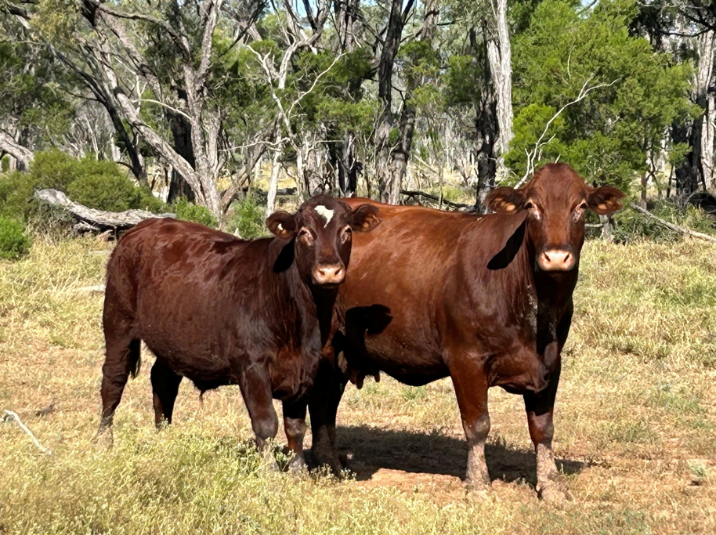
Pictured above is F2 Shorthorn cow alongside her F3 calf at Appleton Cattle Co’s “Craven”, Alpha. The calf weighed in at 390kg – now that’s tropical performance! Both cow and calf are sired by Marellan Shorthorn Bulls.
More $$
The performance gains through elite genetics, Hybrid vigour, meat quality and market options for Shorthorn genetics, has allowed clients of Marellan Shorthorns to make more $. A recent example from client, Dugald Maloney, illustrates this perfectly. His Marellan Shorthorn X Droughtmaster weaner heifers sold for an 80c premium at CQLX. Client feedback indicates that Marellan Shorthorn bulls are producing progeny that top markets and satisfy requirements of premium markets.
Bulls Done Differently
The Marellan Shorthorns – bred for Bos Indicus Cows Bull sale will be held on property, “Emerald Downs” Emerald on Tuesday 29 September.
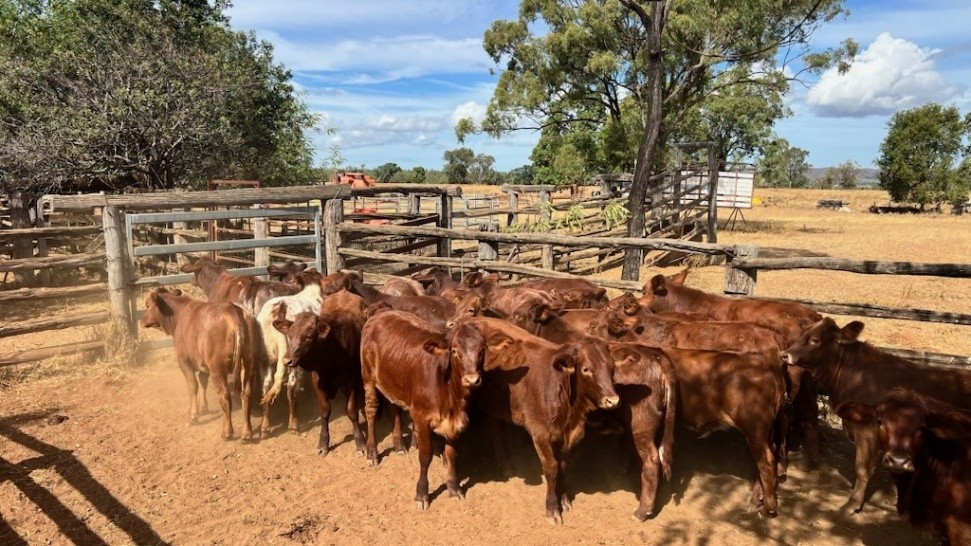
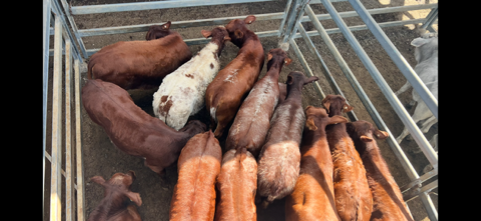
Lincoln says he is extremely excited for this year’s sale. “Marellan Bulls get finished on grazing crop, but are presented in their working clothes. Prospective purchases are encouraged to Lower sale day expectations, but increase your expectations of what Marellan Bulls can do when blended with your Bos Indicus cows. Our Bulls are bred to give prosperity, but forged from adversity.”
Contact:
Lincoln & Lisa Job
M: 0404 083 438
E: lincolnandlisa@marellan.com.au
Website: Click here.
HAVE YOUR SAY