
THE rural property market is entering a period of consolidation, with uncertainty around policy settings, interest rates and input costs prompting buyers to become more selective.
While the urgency of the boom years has eased, leading marketing agents say demand remains for well-presented, productive assets with scale, water security and clear strategic value.
Col Medway, LAWD
With high-priced rural assets appearing to linger on the market as buyer inquiry thins, LAWD senior director Col Medway said vendors are recalibrating their expectations as global instability continues to weigh on confidence.
“The slowdown is not confined to one region or property type, with inquiry across many rural holdings now limited and noticeably weaker since the Middle East crisis and since the federal budget was announced.”
“Markets don’t like uncertainty and people don’t need much of an excuse to sit on their hands,” he said.

Col Medway
Mr Medway said the red meat sector remains the shining light, with grazing assets still supported by stronger livestock fundamentals.
“There are certainly people keen to do transactions however, the broader market lacks the depth of buyer demand seen during the boom years.”
“Corporate interest has been more resilient, with larger institutional buyers less affected than some private purchasers. Even so, the wider tone of the market has shifted from urgency to caution,” Mr Medway said.
A growing number of assets have been sitting on the market for some time prompting agents to have more direct conversations with vendors about price expectations.
He said the issue is not simply that vendors are unrealistic, but the market has moved.
“It is just the market’s dynamic. What might have been a reasonable price some time ago may not be now. That’s not to say it won’t return. It just comes down to your time frame and when you feel pressured to transact.”
That recalibration is consistent with a broader shift described by market analysts, who say buyers are now looking more closely at production capacity, water security, carrying capacity, operating costs and reliable returns rather than chasing land at almost any price.
Asked whether market conditions were likely to improve through the remainder of the year, Mr Medway said it was difficult to forecast with confidence.
“I don’t want to sound too negative, but everything is slow including finances and lawyers. There is not a lot of urgency.”
Despite that, he said vendors are beginning to respond to the changed conditions, and some may choose to act counter-cyclically rather than wait for stronger competition to return.
“There are still transactions happening and deals getting done, but as a general rule, it is pretty quiet.”
Mr Medway said the spring selling season was likely to bring activity, with LAWD seeing a healthy pipeline of campaigns.
“There is plenty to do, there’s no doubt about that.”
For now, however, the mood is one of caution rather than retreat. Quality assets, particularly in the red meat supply chain and regions with secure production fundamentals, remain attractive, but buyers are taking longer to commit and vendors are being forced to meet the market as it is, not as it was.
Mark Barber, Elders
Mark Barber is the general manager of farmland agency and agribusiness investments at Elders.
He said the rural property market had moved into a more measured phase, with buyers still active but far more selective than they were during the peak of the cycle.

Mark Barber
“Higher borrowing costs, elevated input prices and uncertain seasonal conditions are feeding into a more cautious approach. However, that caution is not the same as a lack of confidence.”
He said the market had largely worked through the immediate shock of fertiliser and fuel volatility.
“Australia didn’t run out of fertiliser and it didn’t run out of fuel. While margins are still under pressure, a silver lining is appearing.”
Mr Barber said buyers were doing more homework and are less willing to chase assets at any price.
“Where a property has strategic value for a family or corporate buyer, there is still strong engagement. We saw that with Durrandella, which sold at auction for $22.5 million with a 2355AE capacity.”
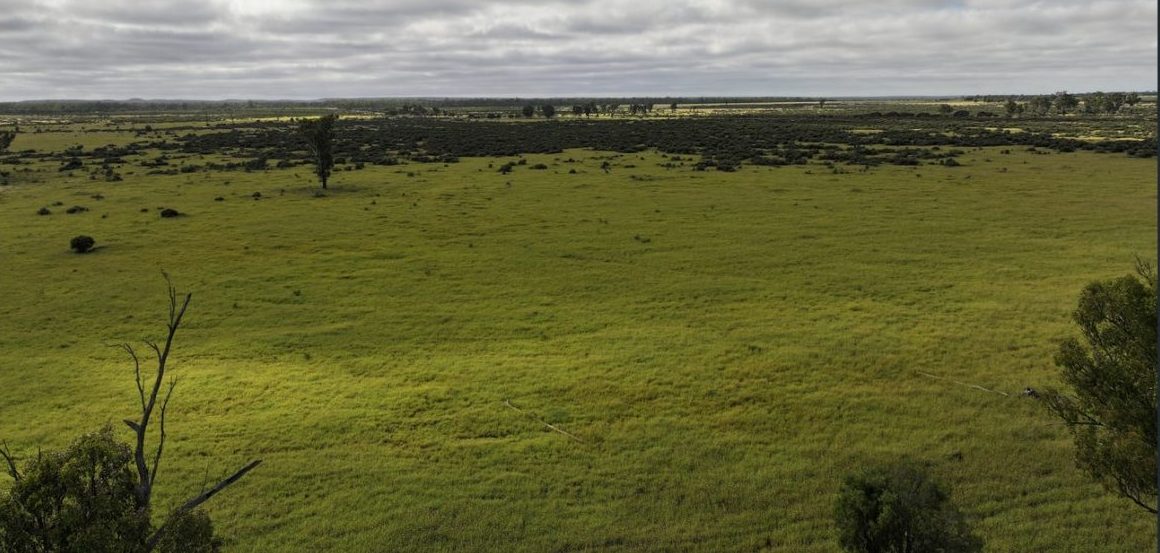
Open country on Durrandella
Mr Barber said quality assets with scale, water security, productive capacity or a clear fit with an existing operation continued to command attention.
“In terms of price, the Durrandella sale sat right in the sweet spot. It was within reach of larger family farm operators with strong balance sheets and a long-term view.”
He said in the beef sector, in particular, confidence has been supported by firmer livestock prices.
“Inquiry is still coming from a broad mix of buyers, from local operators to corporates, but the market is no longer being driven by fear of missing out. Buyers are looking closely at productivity, carrying capacity, infrastructure, water, location and how an acquisition fits their existing business.”
Mr Barber reported interest in grain properties, although the cropping market remains more timing sensitive.
“At this point in the season, many growers have only recently put the crop in, so listings are typically quieter until late winter or early spring, with settlements often structured around harvest.”
While input costs remained elevated, there was plenty of confidence in the Australian grain industry, he said.
“Seasonal conditions have improved and global grain supplies are keeping pressure on prices, particularly on the back of dry conditions in North America. Talk about the development of a biodiesel industry in Australia will reduce farmers’ exposure to oil price volatility and potential supply disruptions in the future.”
“Good quality farming country with reliable rainfall, strong soils and operational efficiencies will still attract interest, particularly where buyers can see long-term productivity gains,” he said.
Mr Barber noted that government policy and macroeconomic uncertainty were also part of the conversation.
“Interest rate settings, commodity price volatility and the recent federal government budget measures all influence confidence, particularly when buyers are weighing large capital decisions.”
He said markets can adapt to change, but they respond best when the settings are clear, transparent and predictable.
“Overall, the market is best described as cautiously confident. Values are no longer rising at the pace seen through the boom years, and some regions have softened, but demand for well presented, productive rural assets remains resilient.”
“The buyers are still there. They are simply being more disciplined about what they buy, what they pay and how each property performs,” Mr Barber said.
Rawdon Briggs, Colliers Agribusiness
Colliers head of agribusiness and transaction services Rawdon Briggs said the past three months had been largely written off as uncertainty surrounding proposed government taxation laws weighed heavily on market confidence.

Rawdon Briggs
As a result, he said around 75 percent of buyers and vendors put their purchasing and selling intentions on hold.
The Federal Government had backed-down on provisions affecting jointly owned investment properties, ensuring couples will not lose grandfathered capital gains tax (CGT) and negative gearing exemptions in the event of divorce or the death of a joint owner.
The concession forms part of a broader series of backdowns designed to secure passage of the government’s signature investor tax legislation.
Mr Briggs said resolving those concerns would help free-up the property market.
“Between 85 percent and 90 percent of farmland transactions are led by private buyers, while corporates account for the remaining 10-15 percent of the market, often at significant scale.”
He expects several high-priced assets to transact now that there is greater clarity around the tax settings.
“During that period of inactivity, corporates had time to consider what properties were on offer. However, for some, their investment window is now closing. Some are in a position to contract, and some vendors will be willing to execute,” Mr Briggs said.
He said the current property market was like the period in 2015 and 2016 when cattle prices took off.
“While there was offshore interest at the time, banking conditions were difficult post-GFC and private markets were slower, but there was still corporate activity. Those who participated were glad they did because the market was solid by the time 2018 came around.”
Apart from horticulture, Mr Briggs said most commodity prices remained stable following a small correction in non-protein assets last year.
“Cropping assets continue to face pressure from high production and machinery costs, as well as fertiliser availability and these inputs are likely to continue to weigh heavily on producers for the remainder of the year.”
Mr Briggs said while farmers have efficiencies of scale and the right equipment, they are being careful around costs and planting accordingly.
“In Western Australia, for instance, there has been a strong swing to canola because farmers do not need to rely as heavily on urea.”
He said if tensions in the Middle East eased and Australia can navigate the next 60 days, a more stable environment should result and those input costs should become less prohibitive, with gross margins on cropping assets likely to become more attractive again in 2027.
HAVE YOUR SAY