
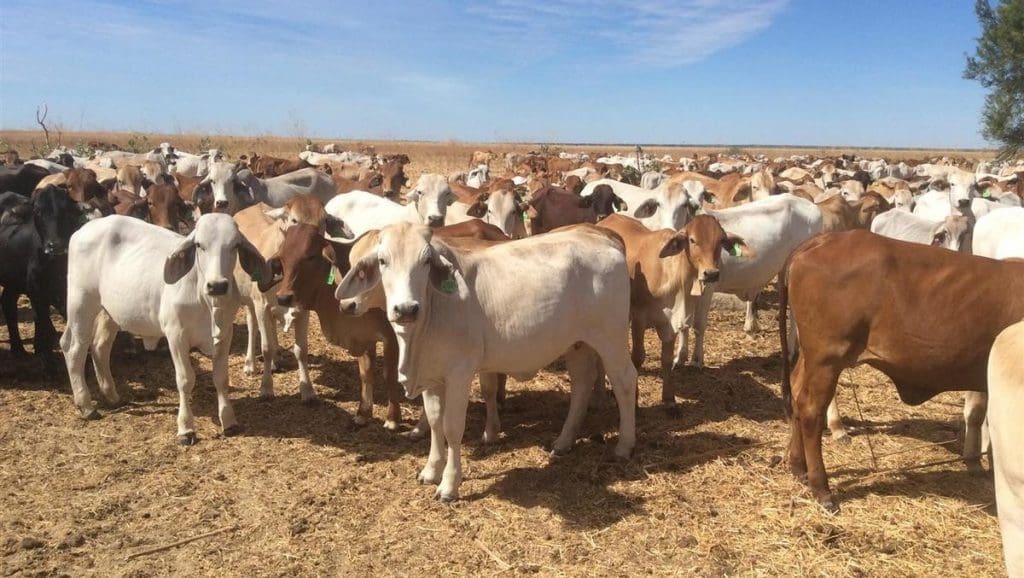
Murranji Station, a 447,500ha cattle breeding operation bordering the Buchanan Highway, 370km south of Katherine was offered last year with 12,000 Brahman and Brahman cross cattle.
AS another Northern Territory Cattlemen’s Association conference concludes, we’ve focussed this week’s property review on the NT, with rural sales specialists sharing their market insights and a separate article discussing recent NT listings and sales.
Over the past 12 months, more than two million hectares of pastoral land has changed hands in the Northern Territory, a sharp increase on the previous year when just two leases, totalling 624,200ha, were sold.
A further 1.5 million hectares currently remains available for sale.
Veteran Darwin-based property agent Andy Gray from Andrew Gray Land & Livestock said the NT property market has remained firmly bullish over the past 12 months, with no sign of values easing.

Andy Gray
Pointing to a series of major sales as clear evidence of the market’s strength, including Beetaloo, Murranji, Hodgson River, Aroona and Dorisvale, he said prices have held and, in some cases, strengthened.
“The properties that have sold are achieving strong beast-area values, with no sign of retreat, so there has been no price correction at all,” Mr Gray said.
After closely observing the market over the past year, he is confident the fundamentals remain sound.
“Demand continues, values have held and quality assets are either selling well or attracting genuine interest – particularly from eastern states buyers who continue to recognise the value on offer in the NT.”
While some properties are taking longer to transact than others, Mr Gray said the broader picture remained one of resilience and confidence.
“Buyer interest is being driven largely by interstate purchasers who see the Territory as offering genuine value, particularly when compared with sharp price growth across much of the country over the past five or six years.”
Recent rain across Queensland has prompted questions about whether buyer interest might ease, but Mr Gray believes the opposite is true.
“The improved seasonal conditions provide reassurance, lifting confidence and enhancing the appeal of well-grassed country. While wet weather can delay inspections, it ultimately reinforces long-term value.”
Olivia Thompson, LAWD
According to LAWD’s Olivia Thompson, optimism around cattle prices continues to support demand for large‑scale pastoral assets, with buyers particularly drawn to Northern Territory breeding country.

Olivia Thompson
“On a national and global scale, the NT remains highly affordable with prices typically ranging from $2500/AE to $3000/AE, depending on whether properties are located in the Top End or Central Australia,” she said.
“By comparison, lower rainfall areas of Queensland are changing hands for $9000/AE to $10,000/AE, while more tightly held regions are achieving between $12,000/AE and $17,000/AE.”
Ms Thompson said buyer interest is strong and coming from a diverse mix of corporate groups and large family operators seeking to expand their existing holdings, with both continuing to pursue scale and strategic growth opportunities.
“Cross Pacific Investments are astute, globally focused investors, and their continued expansion in the Northern Territory highlights a deep level of research and confidence in the region.”
Aroona purchase
The Argentinian-based Buratovich family’s recent acquisition of Aroona Station marked their fourth Northern Territory cattle station acquisition, and reinforced their long-term commitment to building their portfolio here, she said.
Ms Thompson said the recent withdrawal of Victoria Downs from the market was another sign of confidence.
 “The vendors will continue developing the property into an established fodder production operation, a move they believe will further enhance its appeal to future buyers.”
Ms Thompson said Kingfisher Station was generating solid inquiry from southern buyers, with most of the interest coming from farmers based in Victoria and New South Wales seeking development or diversification opportunities.
“The Northern Territory’s scale, relative value and secure water allocations are particularly attractive, especially when compared to the high cost of holding water licences in southern states.”
She said the phenomenal wet season across the Northern Territory should strengthen confidence in the year ahead.
“With properties likely to present at their peak and with abundant feed, pastoralists are under far less pressure to transact, allowing them to be more considered in their decision-making.”
“At the same time, it is often these favourable conditions that create a rare window where some of the very best properties are brought to market,” Ms Thompson said.
Frank Peacocke, HTW
Herron Todd White valuer Frank Peacocke says the Northern Territory pastoral market has slowed, but values are firm.
“With limited data available, prices are holding, but not expected to rise,” he said.
“The sale of Aroona showed prices are steady. At $44 million bare, it sits in line with the other sales over the last 18 months.”

Frank Peacocke HTW
According to Mr Peacocke, reasonably priced pastoral leases that sit within established market value should continue to attract buyers.
“There is always good demand for blue chip assets. However, secondary holdings (lower quality properties) need to be more realistic on price.”
He said buyer interest was largely coming from local Territorians seeking well-priced properties, but supply remained tight.
“These can be difficult to source because there are only a few properties ever on the market,” Mr Peacocke said.
He said while some described last year’s sale of Murranji Station as ‘over the top’, it was not unrealistic and reflected a broader trend at the upper end of the market.
The December sale of Beetaloo Station to the neighbouring CPC was also a strong result.
Mr Peacocke said it was the first sale of a fully developed, large scale pastoral lease in the Northern Territory.
While some industry observers have questioned Beetaloo’s quoted carrying capacity of 90,000 head, Mr Peacocke said the sale price reflected the vendor’s estimates, as well as strategic value to the buyer.
“CPC owned neighbouring country (Newcastle Waters lies to the southwest) and would have paid a premium to secure Beetaloo. If the estimates were inflated, then yes, it was a high-value sale – but when you look at the water map, it is covered from head to toe with water points.”
He said analysis of large stations needed to distinguish between developed, watered country and undeveloped land that may add area but not carrying capacity.
“In most stations there is always a big chunk of undeveloped land that is worth something but doesn’t actually carry stock.”
“That value is reflected in the overall beast area, which can make properties like Murranji appear expensive if you divide the price by current carrying capacity,” Mr Peacocke said.
Murranji currently carries around 9000 to 10,000 head but he believes it has potential to carry significantly more with further development.
“It offers real development upside in its unwatered country. While there’s a risk water won’t be found, pipelines can be run and there is a lot of country that could be brought into production.”
He said future market performance will be shaped by how developments such as irrigated agriculture and rainfall dependent ventures perform, pointing to properties such as King River and Edith Springs as indicators to watch.
NTCA delegate
A delegate attending the NTCA conference in Darwin who asked not to be named told Beef Central that while Queensland investors often viewed the NT as a cheap breeding country, local operators are less convinced, believing not all pastoral leases are attractively priced.
“Several properties with extensive infrastructure investment have recently come to market. Is the reason due to rising operational costs and weaker returns on investment?” he asked.
“Larger corporate operators, like CPC, Viv Oldfield and the Langenhoven and Buratovich families, are better placed to absorb these pressures, given they generate income from diversified operations beyond cattle.”
The delegate said producers must carefully assess how to improve profitability from their cattle enterprises, potentially through diversification and productivity gains.
“Some producers report cotton has failed to deliver expected returns, largely due to highly variable wet-season conditions. This year’s season, in particular, has been exceptionally wet with limited sunshine, affecting yields.”
The delegate indicated there was plenty of available capital for future acquisitions but questioned whether institutional investors, corporate agriculture, superannuation funds or international stakeholders would step in.
“While the cattle market and the country look good, Australian agriculture is a long-term investment. Will that be enough to entice investors to park their money here?”
The delegate revealed carbon-driven investment had largely dried up, with reported offers on Moroak (on the Roper River road east of Katherine) and Goondooloo ultimately falling through.
“Well-capitalised producers with strong equity positions may still be able to expand by acquiring additional country. However, those without balance-sheet strength need to carefully consider their capacity to service debt, particularly given high prices for cattle operations and escalating input costs, which are eroding returns.”
Despite these challenges, he believes the market may slow but prices are likely to hold.
“Properties currently on the market are expected to sell eventually, provided vendors are prepared to wait. Beetaloo and Aroona took time to transact, but met vendor expectations, or exceeded them, in the long run.”
The delegate doesn’t believe anyone is being forced to sell, saying properties will stay on the market until they achieve the price vendors are prepared to accept.
“While high diesel prices are currently placing pressure on operating costs, cattle prices are expected to remain resilient. In the meantime, patience will be key for vendors navigating the current market conditions.”