
IN this week’s property review, we explore how farmland values in Western Australia have held firm, as mixed holdings outshine grains, and carbon-linked station asset sales have stalled.
According to Elders Western Australia general manager Ben Tiller, rural land values in the west have remained resilient.
“Prices are holding and good quality properties continue to sell,” he said.
“Well-managed properties that offer genuine scale continue to attract strong interest, with neighbouring family farm operators looking for expansion country remaining a driving force in the market,” Mr Tiller said.
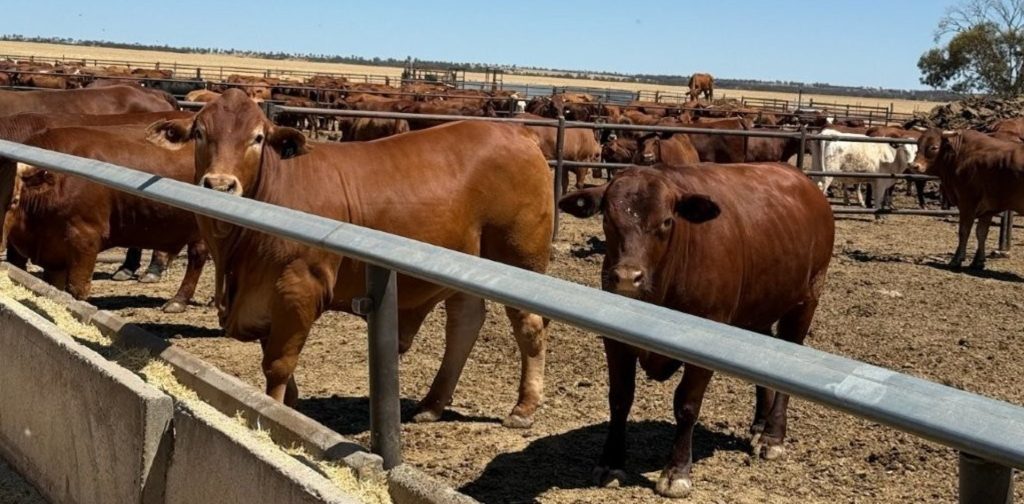
Strong east-west price differentials had seen Western Australian producers trucking stock east, injecting fresh confidence into the cattle market.
For the sheep industry, however, the path back from the live export decision is proving to be a much slower burn.

Ben Tiller
“Following a marked reduction in the state’s flock size, record prices for prime lambs have buoyed the confidence of producers who stayed in the sector, sparking early talk of a rebuild,” Mr Tiller said.
However he warned that a flock recovery would be incremental at best, and it has not yet translated into higher demand or price growth for dedicated sheep properties.
“Building the flock back from here is a long process. Many mixed farming enterprises have completely removed their sheep infrastructure – pulling down shearing sheds, internal fencing, and yards – and they simply won’t return to running sheep.”
“There is no illusion the WA flock will ever return to its historical numbers, or even recent levels,” Mr Tiller said.
For now, Mr Tiller said the market is largely rewarding committed sheep producers who have weathered the downturn, while the broader WA property market continues to be anchored by quality, scale and long-term productivity.
Elders, Greg Smith
According to Elders’ WA pastoral real estate specialist Greg Smith, WA’s pastoral property market is in a ‘wait-and-see’ phase, with buyers showing little urgency amid mixed seasonal conditions, rising fuel costs and complex due diligence around carbon farming projects.
Greg Smith, Elders
Mr Smith said properties carrying Human-Induced Regeneration (HIR) carbon projects were proving particularly slow to move.
“Many existing projects are currently undergoing mandatory five-year audits alongside technical reassessments of their sequestration potential, transitioning from FullCAM modelling to LiDAR measurement systems.”
“Any buyers in that space are wanting to see what the re-stratification figures are,” Mr Smith said.
While he noted the level of due diligence required was understandable, it had created significant friction in the sales process.
“If you are paying a couple of million dollars extra because you think you are going to get another $500,000 a year, you want to be pretty sure you are going to get it,” he.
The carbon valuation divide
Mr Smith, who currently has several carbon-linked stations on the market, said the dual-income nature of these holdings had complicated traditional pastoral valuations.
 “While carbon credits sit over the top of a station’s agricultural value and push asking prices well above standard grazing rates, prospective cattle producers remain wary of policy risk.”
“With carbon project properties, the income is beyond the control of the landowner – the stroke of a pen from the government can change things,” he said.
Mr Smith said buyers wanting a station to ‘just run cattle’ were saying: “That is all well and good, but if we stop getting the carbon income, what is the underlying value without a carbon project?”
He compared it to buying an electric car and saying, “What is it going to be worth once the battery is buggered?”
“Selling a station purely on its livestock carrying capacity would be far simpler in the current climate, although vendors with active carbon projects remain anchored to higher valuations.”
Seasonal extremes and input costs
Across the broader WA rural property market, Mr Smith said a stark divide in weather conditions was keeping buyers on the sidelines, as the industry waits for Top End wet season rains to arrive.
Properties such as the Wongawol–Carnegie Aggregation in the Northern Goldfields region (situated north of Carnegie-Boulder) had been hit with excessive rainfall, leaving country inaccessible for inspections and operations. Elders has the one million hectare asset, carrying about 9000 cattle, listed for sale with offers above $18 million.
By contrast, Mr Smith noted the Gascoyne region remains severely dry following three consecutive dry summers.
Despite strengthening cattle prices and renewed optimism in the livestock market, he said station operators remained cautious due to high operating expenses, with the cost of diesel continuing to be one of the largest financial pressures on remote properties.
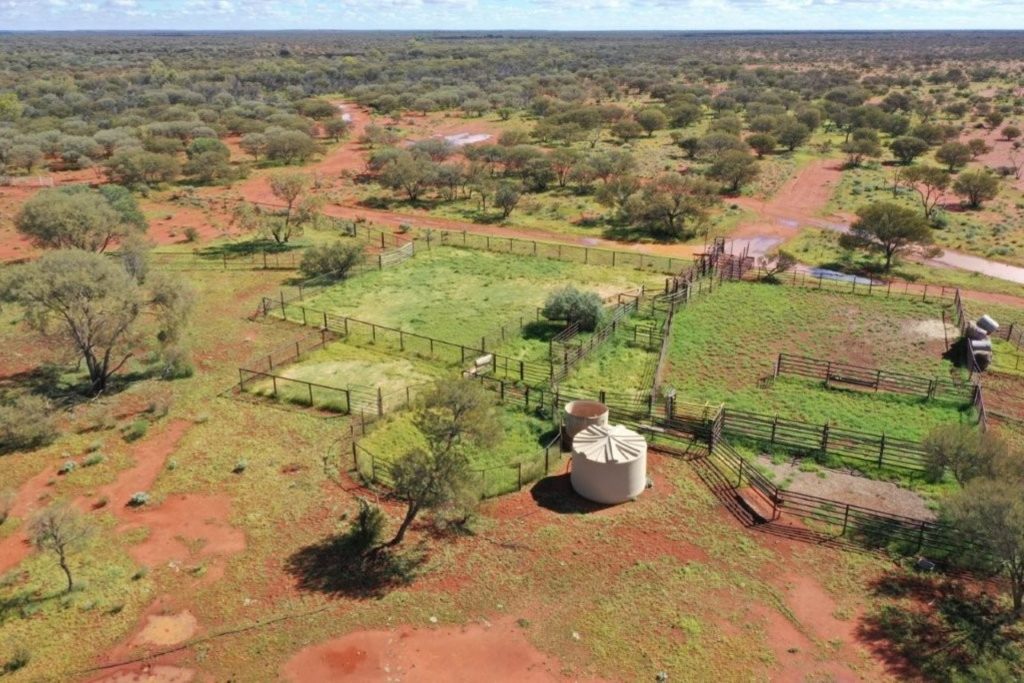
Elders has the one million hectare Wongawol–Carnegie Aggregation, carrying about 9000 cattle, listed for sale with offers above $18 million
LAWD, Simon Wilkinson
According to LAWD WA rural property specialist Simon Wilkinson, mixed farming enterprises are emerging as the standout performers in the state’s rural property market, buoyed by a bullish two-year outlook for beef, sheep, and wool that is helping offset softer sentiment in the grains sector.

Simon Wilkinson
“Land values across the state are holding firm, but the market has tightened noticeably as buyers take a much more cautious, numbers-driven approach to acquisitions.”
Mr Wilkinson said while high-quality cropping country continues to attract solid buyer interest, properties offering a balance of grazing and cropping are proving particularly attractive.
The renewed enthusiasm for mixed operations follows strong industry projections delivered earlier this month at the Australian Association of Agricultural Consultants WA (AAACWA) annual outlook conference in Perth.
Hundreds of consultants, analysts, and industry leaders gathered to assess market trends, hearing a distinctly bullish two-year forecast for beef, sheep, and wool from analyst Simon Quilty – contrasting with a softer, more bearish outlook for coarse grains.
Having attended the conference, Mr Wilkinson said as a result, mixed farming enterprises are more attractive.
“One could argue livestock gross margins will exceed coarse grains (wheat, barley and oats) this particular year, while canola will be lineball or favourably better than current livestock.”
Despite shifting commodity margins, Mr Wilkinson has not seen WA rural property values drop.
“Instead, properties are spending longer on the market as buyers conduct far more rigorous due diligence than they did one, two, or five years ago.”
He observed a tight market, saying confidence levels are not as strong as they had been in the past.
“Buyers are weighing up a complex web of external pressures, including Reserve Bank of Australia interest rate settings, shifting state and federal government policies and global volatility surrounding critical farm inputs, like diesel and fertiliser.”
Mr Wilkinson said as a result, strong balance sheets alone are no longer enough to get deals across the line.
“People need more time to make sure numbers stack up, financially, around the serviceability of the debt.”
“It is fair to say equity is very good in most properties. Farmers who bought five, ten or twenty five years ago have built up strong equity – but equity means nothing anymore, it is all about serviceability,” he said.
HAVE YOUR SAY