
THIS week’s property review includes this wrap-up of interesting recent listings across New South Wales, and two separate articles on listings in other parts of the country, and recent sales of note.
- Leading wool broker lists Molong’s Mullungeen
- Liverpool Plains property tipped to attract good interest
- Coolah’s Kapsch Farms remains for sale
- $20m price tag for Western Lands Lease
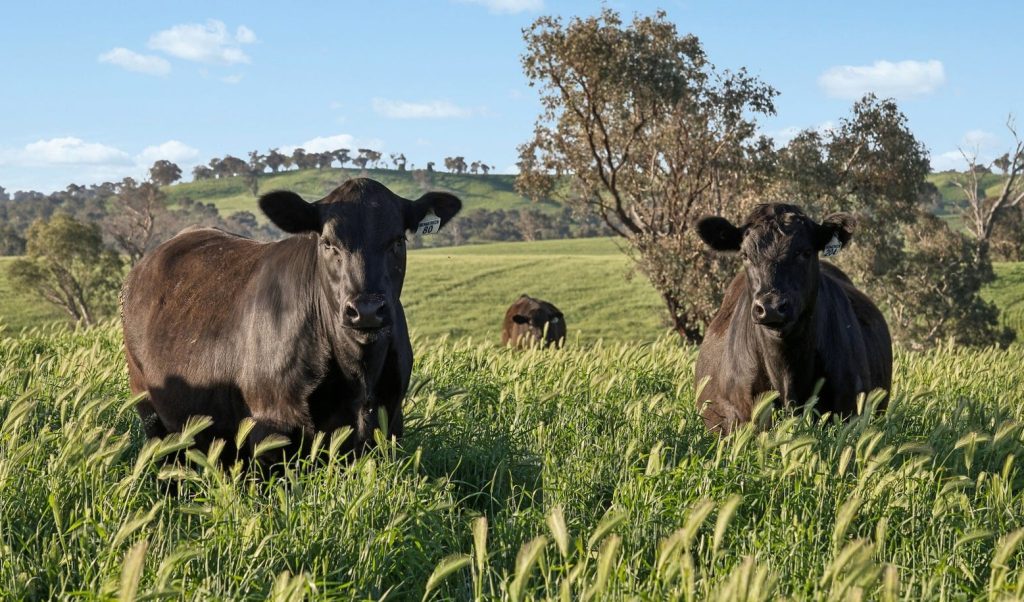
Mullungeen, near Molong, typically runs 6000 sheep and 100 breeder cows.
Leading wool broker lists Molong’s Mullungeen
Leading New South Wales wool broker Don Macdonald will auction his mixed farming and grazing property in the state’s central west on December 10.
The 1196ha Mullungeen is 29km from Molong and 38km from Wellington.
Mr Macdonald owns Macdonald & Co Woolbrokers and has served six years on the board of Australian Wool Innovation.
After 15 years at Mullungeen, he and his wife Kerrie have decided to downsize to their cattle and sheep property near Tumut in the Eastern Riverina.
“Mullungeen is a lovely place and we have enjoyed living here but due to my date of birth, we have decided to cut back to one farm. We are seeking an easier lifestyle and the Tumut property is grazing only which means there is less time needed to run the place,” Mr Macdonald said
The campaign is still in its early stages, but agents have received strong interest from local and Queensland buyers.
“Mullungeen is reasonably well-known because it fronts the Mitchell Highway. It has good all-weather access and ticks a lot of boxes in terms of location. It is 45 minutes north of Orange and an hour south of Dubbo,” Mr Macdonald said.
“The Central Tablelands is considered a safe region due its slightly higher rainfall and cooler climate.”
A strong winter and spring have resulted in abundant feed.
The livestock finishing operation runs at 8000DSE, or 6.69 DSE/ha, with stocking levels varying according to seasonal conditions and stock condition.
The sheep enterprise has centred on about 2500 to 3000 Merino ewes, with 70 percent joined to Merinos and 30pc to Border Leicesters. Lamb marking rates have consistently ranged from 115 to 130pc.
All lambs have been finished on the property and sold at average weights of 48kg to 60kg. About 5500 sheep have been shorn annually, producing an average of 120 bales of 18.5-micron wool.
Mr Macdonald typically runs 6000 sheep and 100 breeder cows.
A cattle-only operation could carry up to 400 cows and followers, while a sheep-only enterprise could support 3000 ewes and lambs.
His 2000 Merino sheep flock was dispersed in June but Mr McDonald has recently taken on 800 head of weaner (agistment) cattle to finish.
Mullungeen’s cropping program focuses on forage and fodder for hay and grazing.
In addition to grazing crops, the property typically produces about 300 tonnes of grain and 300 to 400 big square bales each year.
Crops include barley, oats, canola, lupins and brassica, with Japanese millet occasionally grown in summer.
McGrath Central West agent Scott Petersen described Mullungeen as a landmark rural holding.
“There are properties that stand apart and then there are holdings that define the very best of rural New South Wales. This exceptional holding represents a rare combination of scale, natural beauty, outstanding productivity and infrastructure of the highest calibre,” Mr Petersen said.
The holding is divided into 42 paddocks serviced by 46 troughs, with excellent fencing and laneway systems designed for efficient management.
Water is supplied by extensive Bell River frontage, Two Mile and Stables Creeks, and a bore.
Infrastructure includes a four-bedroom home, a three-bedroom manager’s residence and a three-bedroom cottage, along with cattle and sheep yards, a six-stand shearing shed, numerous sheds and 265 tonnes of silo storage.
Liverpool Plains property tipped to attract good interest
A highly developed grazing and farming enterprise in New South Wales’ renowned Liverpool Plains is expected to attract interest from corporate and institutional buyers, high-net-worth farming families and local producers.
The 925ha Werris Creek Station is situated at the foothills of the Melville Ranges near Werris Creek, 24km north of Quirindi and 48km south-west of Tamworth.
The property has been owned for the past 15 years by John McDowell, who is now retiring.
Earlier this year, Elders agent Ben Green sold the smaller but comparable 756ha Warragundi West, near Currabubula, for about $10 million or $13,215/ha.
Although Mr Green was unable to provide a price guide for Werris Creek, he expects it to achieve between $13,500/ha ($5,500/ac) and $15,000/ha ($6,500/ac).
The holding currently supports sheep, cattle and cropping enterprises.
Its carrying capacity and enterprise mix are adjusted to seasonal conditions, rotational grazing programs and the area devoted to dryland cropping and forage production.
Historically, the property has run 1500 Merino ewes alongside 600 to 800 crossbred ewes, with lambs typically finished on forage and fodder crops.
The cattle enterprise has traditionally comprised up to 200 breeding cows, with progeny grown out and sold as yearling steers and heifers at feeder weights.
Under this mixed-enterprise model, 300ha to 400ha is used for cereal grain and hay production.
Under a dedicated grazing operation, Werris Creek is estimated to carry up to 8000 DSE or 550 breeding cows, subject to seasonal conditions and management practices.
The landscape ranges from alluvial creek flats and fertile black self-mulching plains to gently undulating grazing country and rising basalt hills.
Deep to very deep fertile soils include rich black self-mulching clays, widely regarded as among the Liverpool Plains’ most productive soils, as well as chocolate-brown loams and basalt-derived red soils.
Water is supplied by 12 bores, 3km of single and double frontage to the permanent Werris Creek, 4km of double frontage to Duffs Gully, and a 172ML water licence for irrigating the productive creek flats.
Infrastructure includes a five-bedroom Federation homestead dating to around 1900, staff accommodation, equine facilities, a 10-stand shearing shed, sheep and cattle yards, numerous sheds, 485 tonnes of silo storage and a grain bunker.
Expressions of interest for Werris Creek Station close on December 4.
Coolah’s Kapsch Farms remains for sale
One of the Coolah district’s largest mixed farming enterprises remains on the market after an expressions of interest campaign, with negotiations continuing with two parties.
The 5438ha Kapsch Farms, a sheep, wool, beef and cropping operation, is 28km from Coolah and 150km from Dubbo in central New South Wales.
The portfolio comprises the 2355ha Derrawee, rated at 17,000DSE, and the 3083ha Neible, rated at 21,000DSE. The properties are about 8km apart.
Initial price expectations of more than $40 million will not be realised, with the vendors now seeking offers below that level.
Meares and Associates agent Sam Meares said the recent tender process generated solid interest in the aggregation as a whole, as well as in Derrawee and Neible individually.
“While negotiations are continuing, the portfolio remains unsold. At this stage, the standing crops (wheat, canola and chickpeas) could be included in the sale.”
The aggregation is being offered after 15 years of ownership by Vienna-based Kapsch Holdings, which is withdrawing from Australian agriculture as part of its succession planning.
Managed by Growth Farms, Kapsch Farms has been developed and operated as a single large-scale livestock and cropping enterprise with a carrying capacity of 38,000DSE.
The operation runs more than 6300 crossbred ewes producing prime lambs and 700 breeding cows, with progeny finished or backgrounded on the property.
Around half the aggregation, or 2700ha, is suited to dryland cultivation, including 1500ha currently sown to fodder and cash crops.
Soils include 750ha of rich black alluvial flats and 1100ha of soft red basalt country, with the balance consisting mostly of sandy loams.
Outside the cropping country, 610ha is established to improved pastures and the remaining 1670ha supports native pastures.
Kapsch Farms receives average annual rainfall of 664mm and is watered by nine equipped bores and 74 dams.
Infrastructure includes a four-bedroom home on Derrawee, a manager’s residence, four staff cottages, a four-stand shearing shed, three sheep yards, three steel cattle yards, hay sheds and more than 600 tonnes of grain storage.
$20m price tag for Western Lands Lease
A large-scale mixed farming enterprise with Bokhara River frontage in north-western New South Wales has been listed for $20 million ($990/ha or $400/ac) after failing to sell by expressions of interest.
The 20,188ha Inverella, Carinya and Mindaribba Aggregation, held under Western Lands Lease, is located 60km north of Brewarrina.
Vendors Max and Marlene Swain are offering the portfolio for sale as they seek to purchase farming country closer to their home base near Gunnedah.
It comprises three adjoining holdings – 6623ha Inverella, 5840ha Carinya and 7761ha Mindaribba.
Nutrien Ag Solutions Clemson Hiscox & Co agent Chris Clemson said the tightly held aggregation offers a strong blend of livestock breeding and finishing, wool growing and cropping country.
“Significant recent capital investment has delivered extensive water infrastructure and upgraded fencing, including around 70 percent of the boundary and internal network, or about 80km.”
“Together, the properties provide scale, balance and functionality for immediate operation, as well as long-term development potential,” Mr Clemson said.
The country comprises open Mitchell grass plains, productive floodplain country and lighter grazing areas, with soil types including cracking black clays, chocolate soils, red loams, red clay country and claypans.
About 2630ha is arable, including 700ha of treeless long runs currently planted to chickpeas and 404ha sown to barley.
The aggregation has been conservatively managed and is presenting with a strong body of feed.
Suited to cattle breeding and finishing, sheep breeding and wool production, the holding is rated to run 1DSE/1.42ha.
Water is supplied by five bores, including an open bore and a shared bore, dual frontage to the Bokhara River (Carinya and Mindaribba), as well as numerous tanks and troughs, in a district that receives an average annual rainfall of 408mm.
Infrastructure
Inverella has a five-bedroom home, shearers’ quarters, a five-stand shearing shed, sheep yards, steel cattle yards, numerous sheds and two silos with 260 tonnes of grain storage capacity.
Carinya features a two-bedroom home, two sets of steel cattle yards and formed-up pad bunkers for grain storage.
Mindaribba includes shearers’ quarters, a four-stand shearing shed and steel cattle yards.
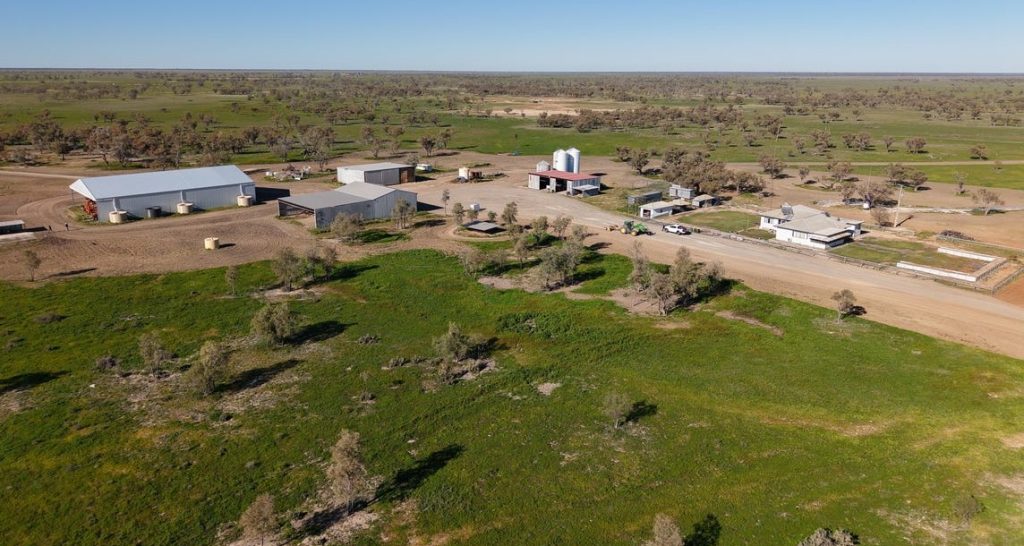
The 20,188ha Inverella, Carinya and Mindaribba Aggregation, held under Western Lands Lease, is located 60km north of Brewarrina.
HAVE YOUR SAY