
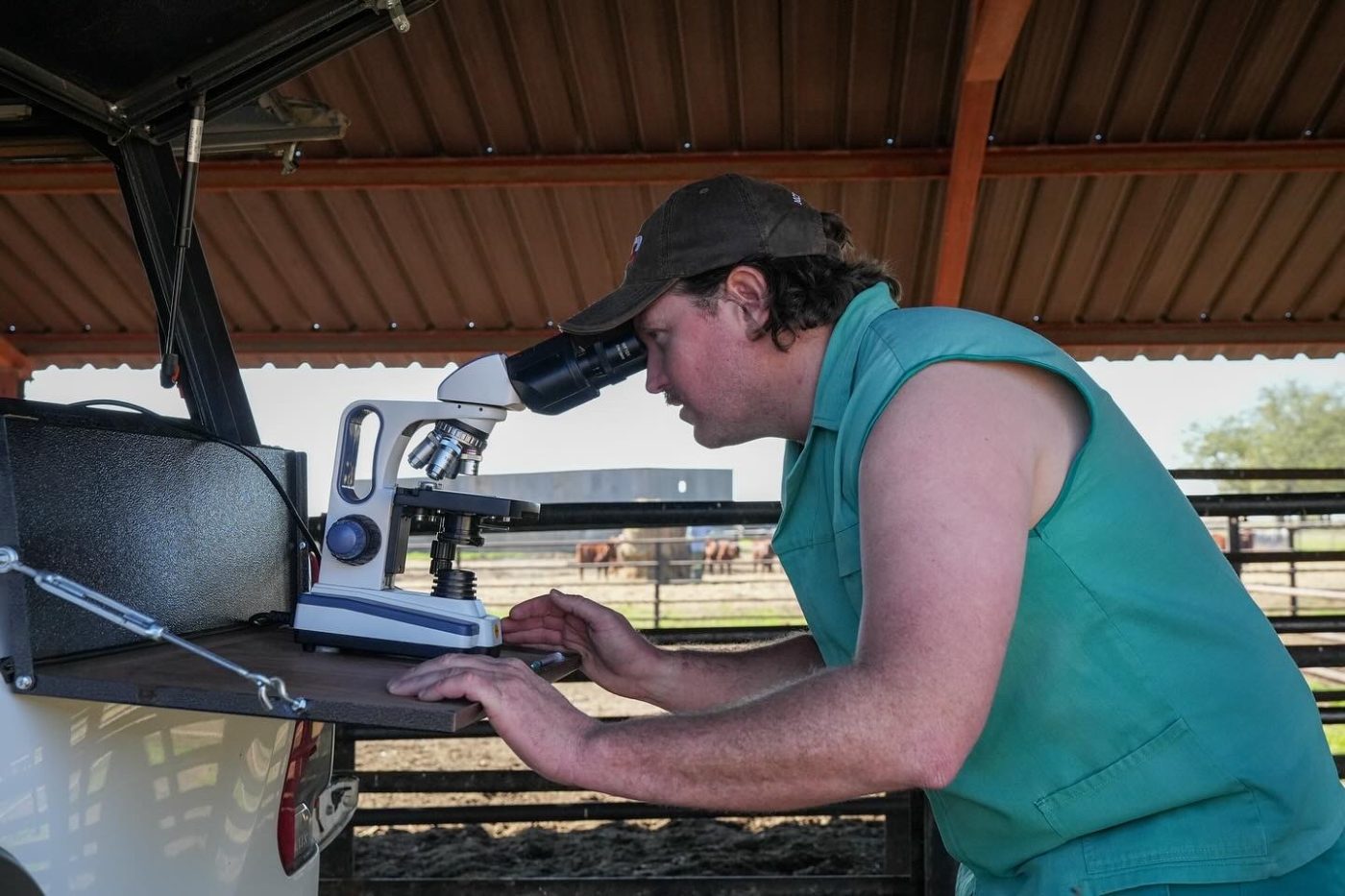
Dr Campbell Costello is the founder of Bush Labs, an infield PCR test for Bovine Trichomoniasis.
A MOBILE Trichomoniasis test has been developed to allow beef producers to know in real-time if their bulls carry the disease which can devastate herd fertility.
Pilot testing projects have been run in Africa and Australia whilst collaborating closely with the Wyoming Livestock Board which developed the world’s first aggressive Trichomoniasis eradication program.
Trichomoniasis (Trich) is endemic in northern Australia and is estimated to cost the cattle industry up to a $100 million a year as it causes early embryonic loss and abortions in cows.
“Trich is a silent productivity killer as often there are no visible signs it is in the herd,” Dr Campbell Costello, a veterinarian said.
“Infected bulls can slash branding and conception rates by 10–40 per cent.”
Dr Costello is the founder of Bush Labs, an infield PCR test for Bovine Trich.
The PCR uses a prepuce sample to test for trich, so the test can be done in the crush.
 “After samples are collected one of our platforms can test 46 bulls in under 1.5 hours,” Dr Costello said.
“We were able to do approximately 360 bulls over two days and were able to give the results to the station manager before sunset which meant they could draft infected bulls off in the daylight before bushing the rest of the mob.”
Dr Costello said a vet or lab technician can do the testing and reporting for about $100 a bull.
“From a practical perspective, this technology allows veterinarians to obtain results on the same day a sample is collected, rather than collecting samples, shipping them to a central laboratory, and waiting several days for results to return,” Dr Costello said.
“This is especially valuable in regional and remote Australia, where transport delays can further extend turnaround times.
“Producers don’t need to hold animals in yards or holding paddocks for days, since results are returned rapidly, often same-day, helping producers make informed, timely decisions and ultimately improve fertility and the number of calves on the ground.”
Testing can be used for FMD, LSD and other diseases
Dr Costello said the platform also supports dozens of other disease diagnostics such on-farm Pestivirus diagnostics, allowing producers to identify if it is present, if vaccination is needed or allow infected animals to be removed.
“PCR technology is remarkably versatile. The hardware remains the same, but by changing the reagents and assay chemistry, the platform can be adapted to detect different diseases,” Dr Costello said.
“We are currently developing assays for diseases including leptospirosis, rabies, foot-and-mouth disease (FMD), lumpy skin disease (LSD), peste des petits ruminants (PPR), African trypanosomiasis (sleeping sickness), feline immunodeficiency virus (FIV), and feline leukaemia virus (FeLV).
“This flexibility has the potential to transform both veterinary diagnostics and biosecurity.
“In principle, any pathogen with a detectable DNA or RNA signature can be targeted using PCR.
“Campylobacter fetus subsp. venerealis (vibriosis) remains a particular challenge, as the organism is notoriously difficult to detect consistently and can produce both false-negative and false-positive results.
“When more reliable molecular targets are established, we hope to incorporate a combined Trichomoniasis and Vibriosis panel into our diagnostic menu.”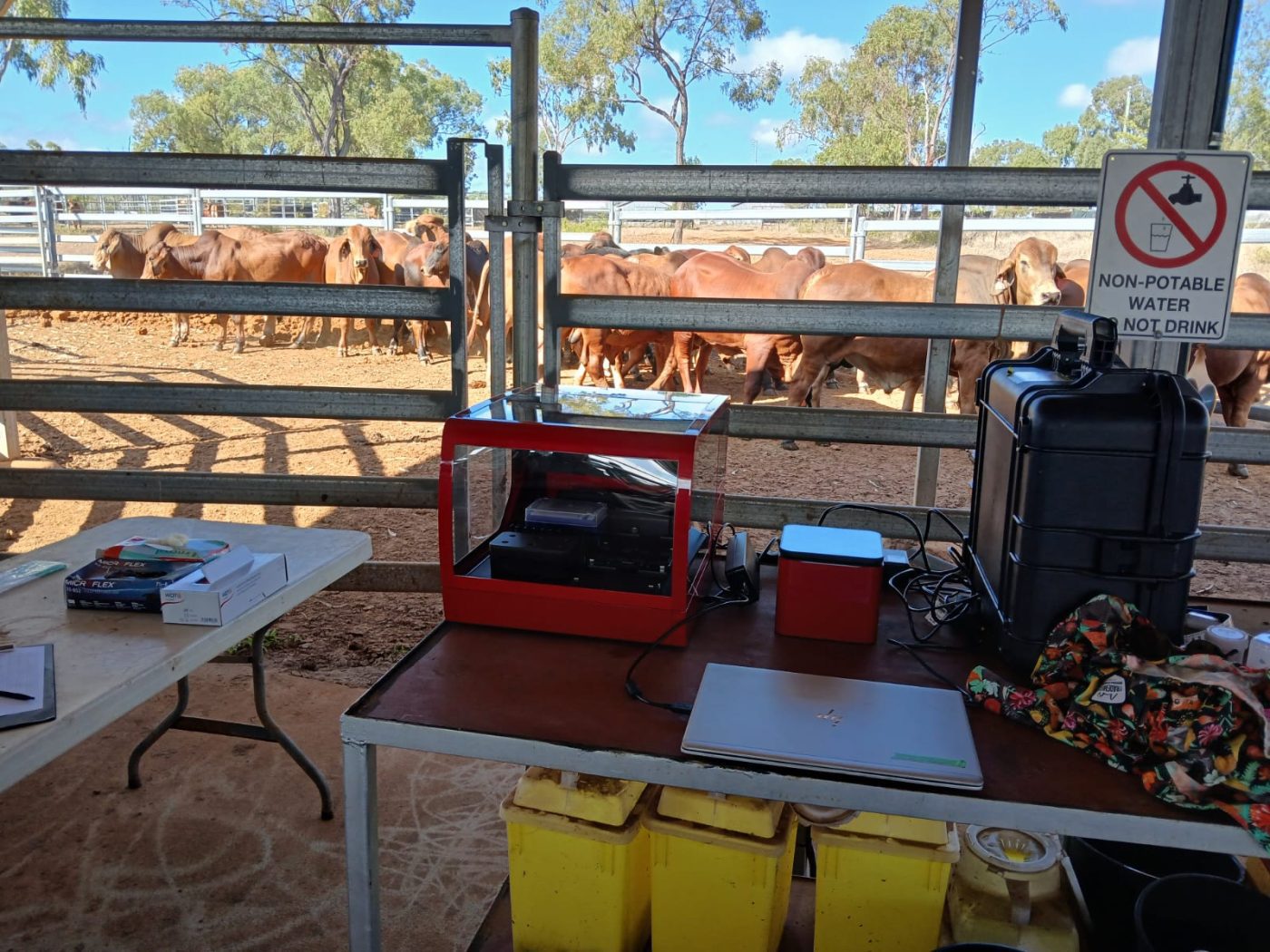
Portable testing strengthens biosecurity
Despite using many of the same technologies and laboratory supplies as human healthcare, veterinary medicine receives no government support, Dr Costello explained.
“Since the days of the Brucellosis and Tuberculosis Eradication Campaign (BTEC), there has been little direct investment in frontline veterinary clinics or diagnostic infrastructure,” he said.
“As a result, veterinarians operate as private enterprises and must absorb rising costs for staff, equipment, diagnostics, and consumables while trying to remain affordable to clients.
“However, portable molecular diagnostics offer an opportunity to change that equation.
“By bringing laboratory-quality testing directly to farms, clinics, wildlife projects, and remote communities, veterinarians can vertically integrate the entire diagnostic process, from sample collection to result interpretation and treatment recommendations, often from the back of a vehicle or a mobile field laboratory.
“This not only improves efficiency and turnaround times but also creates additional value for clients while strengthening Australia’s biosecurity preparedness.”
World-first trich treatment developed
Dr Costello has also helped develop a world-first, patented treatment protocol for Trich positive bulls that was developed and tested in African bull herds.
“Until now, culling was the only path forward which is costly and disruptive, especially for high-value genetics,” he said.
“While culling remains the gold standard, this new option gives producers a chance to salvage bulls under controlled conditions with veterinary oversight.”
Dr Costello is a recipient of the 2026 Kenneth Myer Innovation Fellowship and over the next 12 months will be working to develop, validate, and scale portable diagnostic platforms across Australia and internationally.
“The goal is simple: make rapid, reliable disease detection available wherever animals live, rather than wherever a laboratory happens to be located,” Dr Costello said.
HAVE YOUR SAY