
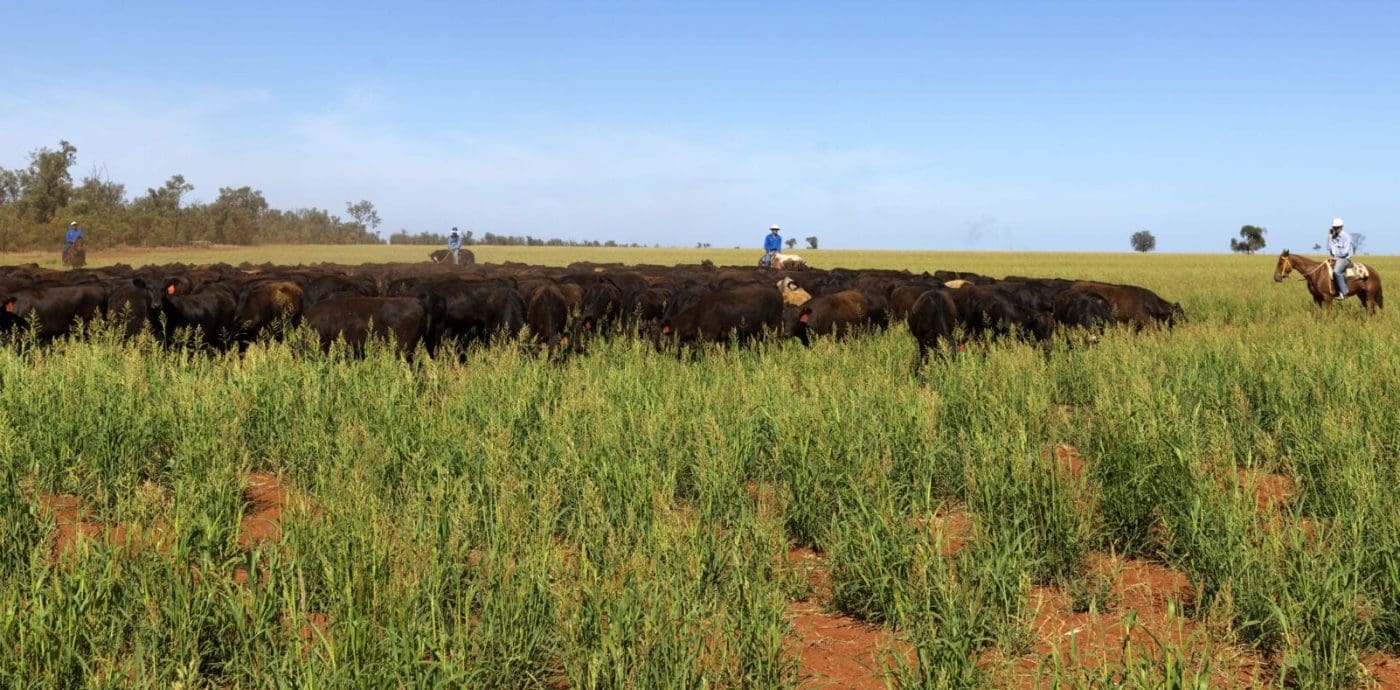
AUSTRALIA’S largest cattle company has invested in the development of a biodegradable pregnancy prevention implant for female cattle as an alternative to spaying.
The implant, which is placed under the skin of the ear, releases a peptide that if delivered continuously in female cattle over 12 months will block the ovary from functioning
This is an alternative technology that allows the cattle to resume reproductive function once the implant is removed.
Australian Agricultural Co managing director David Harris told Beef Central this morning the company’s investment in Sorensis was extremely exciting because it had the potential to improve both animal welfare and increase productivity.
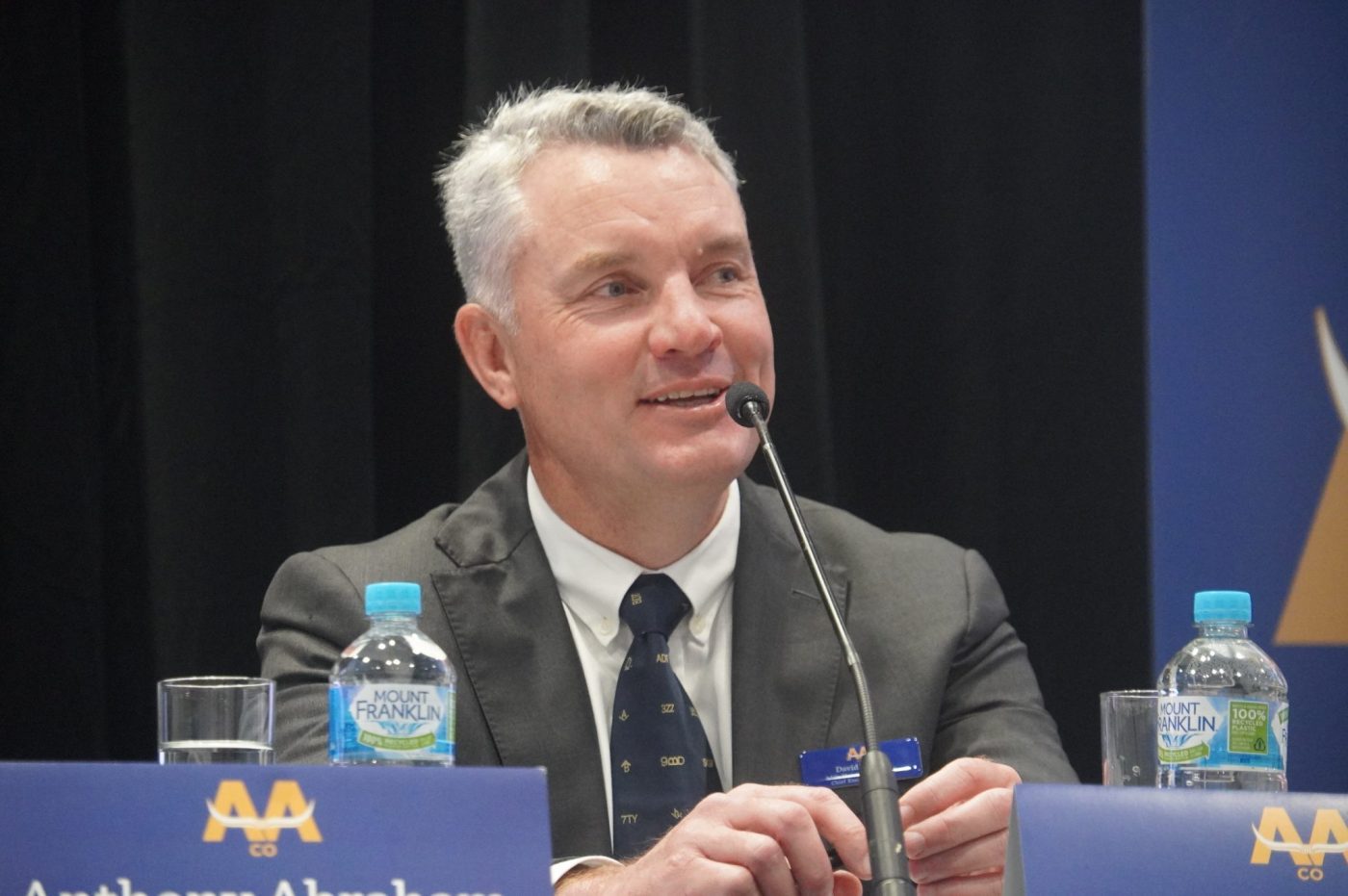
CEO David Harris addresses this morning’s AA Co AGM in Brisbane
“I think anyone who’s operated in the north knows that pregnancy control, whether it be in young heifers or even cull cows is a challenge,” he said.
“For 20 to 30 years we were chasing fertility but now our herds are almost too fertile. “With the introduction of Wagyu and better fertility metrics like EBVs in our bulls, we are in a situation where we actually want to hold pregnancies back for young females.”
Mr Harris said the Sorensis implant would allow AA Co to better manage its mating according to the seasons.
“We could potentially treat a heifer at branding to buy ourselves a certain amount of time to then line her up to another season.
“Also, at the back end of a cow’s productive life, we could use it to stop her getting in calf next year so she can put that energy into weight gain, and we can move her out the following year.”
While chemical alternatives to spaying have existed for decades, one of the major problems has been the need for reoccurring injections to maintain infertility, making it difficult for large operations to adopt.
“We really only handle animals in the north once, maybe twice a year, so you need to be able to get what you need done in that opportunity, because getting them back in just for the fun of it is an expensive exercise,” Mr Harris said.
AA Co to start trials this year
Sorensis Founder and CEO Dr Kim Agnew said field trials of the implant will begin later this year at the Katherine Research Station.
“Our goal is to deliver a single‑dose technology capable of providing 12 months of continuous ovarian suppression,” Dr Agnew said.
“Achieving this duration from one administration is a substantial technical challenge, and it explains why previous attempts have not succeeded.
 “As a different and more advanced approach, Sorensis is developing novel polymer‑based technology to maximise long‑term release of peptide which blocks hormone signals from the brain to the ovaries and suppresses the normal function of the ovaries.
“Early development results show strong potential for achieving the required duration of action.”
Dr Agnew said the technology will give producers flexible, on‑demand control over reproductive status on their properties, without causing permanent sterilisation.
“Practical applications include treating older cull cows once the culling decision is made, preventing smaller heifers from becoming pregnant before they reach a safe mating weight, and ensuring surplus heifers destined for live export or feedlots remain empty,” he said.
Industry has been searching for spaying alternatives for decades
Spaying was a practice largely used on cattle in northern Australia where segregation from bulls was more difficult but is now being used more widely for heifers that are destined for feedlots at it is the only guaranteed method of contraception.
While there have been different types of spaying, the most common form is the Willis spaying method or Dropped Ovary Technique (DOT) where the ovaries are removed using surgical tools that are inserted into the animal.
Webbing is a surgical alternative to spaying and is recognised as a simpler and less invasive procedure, whereby the fallopian tubes are cut.
Bryan Hall has been spaying and running specialised training courses in spaying and webbing for 50 years in Australia and said it had grown in popularity.
“Feedlots want a guarantee that the heifers they are buying are empty and spaying or webbing is the only way to guarantee that,” he said.
The Australian Veterinary Association states on its website it strongly supports research into non-invasive means of controlling oestrus and conception in cattle management systems with a view to remove the need for surgical spaying.
How much will it cost?
Dr Agnew said it was too early to provide realistic pricing for producers.
“We know our pricing must balance commercial needs with industry realities, so our intent is to remain competitive with the current costs of contraceptive solutions used by producers,” he said.
“At the same time, because we are leveraging next-generation polymer technology, it is possible that the final product will offer performance superior to existing alternatives.”
He explained early discussions with the Australian Pesticides and Veterinary Medicines Authority (APVMA) indicate that the product will need to be supplied through veterinarians, however it is expected that producers will be able to administer the product.
Impact on eating quality
One industry participant raised the question – could this hormonal contraception impact eating quality as Hormone Growth Promotants (HGPs) do on MSA grading?
“The active ingredient class used in this product is fundamentally different from the hormones found in HGPs,” Dr Agnew said.
“Rather than delivering exogenous anabolic hormones that act directly on tissues such as muscle, our product works by suppressing the release of anabolic hormones that regulate the cow’s reproductive cycles. So hormone suppression rather than anabolic stimulation of target tissues.
“Registered products containing the same active ingredient class are widely used in cow oestrus synchronisation programs globally.
“These products are approved in all major markets with a nil meat withholding period.”
Dr Agnew said it was too early in the project to conduct studies on eating quality impact but they will likely consider it later in the development of the technology.
Male castration alternative could be explored in the future
Sorensis recognises the significant need for a non-surgical sterilisation alternative to castration for male cattle, according to Dr Agnew.
“We have a globally recognised reproductive endocrinology expert in Professor Michael D’Occhio on the Sorensis Expert Advisory Group, so we know we have the expertise to design a male focused technology,” he said.
“However we need funding to make this a research focus.”
Does ‘chemical’ spaying affect markets that do not like hormones added to the muscle/meat?