
THE clear trend evident last week with export beef processors winding back production as the industry nears the end of the 2026 season has continued this week.
With barely four weeks remaining before Christmas holiday shut-downs, processors across eastern Australia are electing to kill less cattle rather than try to maintain higher rates of production at a time that slaughter cows and other descriptions are hitting record levels after more recent rain.
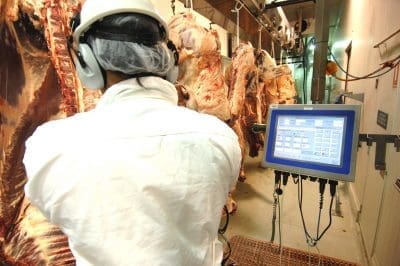 Numerous operators from Central Queensland all the way to southern NSW are dropping shifts again this week, with some plants operating as few as three days, and other reducing daily tallies by 30-40pc.
Many operators have spaces available on kill rosters as early next week, if producers are interested – but with cash flow not really a problem at present for many, and green feed in the paddock, appetite is low.
The NLRS processor cow indictor hit a new record high of 412c/kg liveweight on 9 November, easing only slightly to 409c yesterday.
Heavy weights ahead
One regular cattle buyer contact said the reluctance among producers to sell cattle this side of Christmas suggested weights in slaughter cattle during the first quarter next year will be very strong.
Further useful rain across large parts of Southern and Central Queensland, the Gulf region and the top half of the Northern Territory over the past week has seen many producers put the cue in the rack for the year, preferring to hold cattle for deliveries at heavier weights during the opening stages of 2027 (see today’s separate weekly rainfall wrap).
Those cows and steers could easily be 30-50kg heavier by the time they come forward in February or March, one large Queensland operator said this morning.
Grids mostly unchanged
Reflecting the typical processor strategy of riding-out the rest of the 2026 slaughter season, rather than chasing what look like expensive cattle with higher prices, most direct consignment grids across Eastern Australia are unchanged this week – just as they were a week earlier – but are still 40-50c better than rates seen four or five weeks ago, around the time when rain started to fall.
 Best offers for good slaughter cows in southern Queensland this week remain at 770c/kg, and four-tooth grass ox 850c (860c available on some grids for HGP-free).
Central Queensland plants are typically 10-20c/kg behind those rates. Bookings remain ‘very current,’ with spaces available as early as next week, for those wishing to supply.
Further south, some over-the-hooks grids have softened 10c/kg as late spring supply of finished cattle grows after a solid season. This followed some 20c/kg rises in eastern regions of South Australia as recently as two or three weeks ago.
Offers in eastern parts of South Australia this week are showing 885c/kg on four-tooth grass ox (no HGP) and 810c/kg on good heavy cows. Plants in southern NSW were mostly 10c above those rates, with one operator describing supply as ‘still a struggle’. Some SA plants have quality MSA cows on 810c, and 910c on yearling MSA steer. One large Victorian processor has MSA, farm assured grassfed YGS on 920c/kg, up from 900c a month ago.
Softer Aussie dollar aids exporters
A US3c fall in the value of the Aussie dollar since the start of November has added competitiveness to Australian beef exports being traded internationally – mostly sold in US$. A softer currency makes our exports look a little more attractively priced against competitors, and the currency this morning was trading around US67.3c, down from 70.3c back on 2 November.
There was no seven day national slaughter statistics available by the time this item was published. Results will be added here when they arrive.
Processors struggle with profitability
Processors on both sides of the Pacific are clearly struggling with profitability during the back half of this year. In the US, beef and chicken processing giant Tyson has just reported fourth quarter adjusted sales for its beef division to US$4.91 billion, from $5.489b in the prior-year quarter. Adjusted volumes fell 12.7pc, while adjusted average selling prices increased 0.4pc.
Tyson’s beef division recorded an adjusted operating loss of US$171 million compared with a loss of $52 million a year earlier. Higher cattle costs and constrained cattle availability continued to pressure profitability, the company said. Strong results in chicken helped offset some of the losses.
Meanwhile in Australia, two southern beef processors have had flat results for the year, as slaughter cattle prices have risen at the same time that export demand has been flat.
The two companies (Beef Central has chosen not to name them, as they are privately held and are not obliged to report financials), suffered nearly $95 million in combined profit drops despite posting record-high revenues.
One of the two reported a $4.4 million net loss for 2025–26, marking a sharp reversal from a profit of $35.5m the previous year, even as revenue jumped 38pc to $1.52 billion. The other saw profit fall 44pc (down from $122m a year earlier), despite revenue climbing nearly 43pc.
Under an unusual Australian Federal law struck decades ago, privately held companies with annual turnover above A$1 billion must disclose their financials. At the time the law was written, nobody could conceive that any private Australian business could have annual turnover that high. Today, there are at least five beef processors that breach the $1 billion a year barrier.
HAVE YOUR SAY