
RAPIDLY elevating fuel prices are now having a significant effect on slaughter cattle buying patterns, with the sharply rising transport cost keeping some southern Australian buyers out of the Queensland market.
Diesel in some parts of the country has gone past $3 a litre this week, as the Middle East conflict spirals back to record levels.
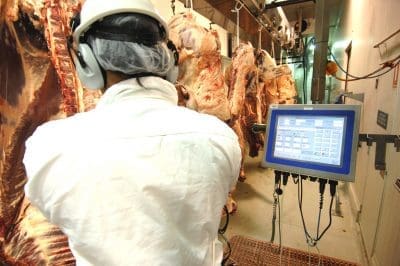 Meatworks buyers out of Southern NSW, Victoria and eastern parts of South Australia have been a more or less constant presence in the Queensland slaughter cattle market over the past two years, in order to keep their rosters full. In fact recent MLA statistics suggest combined Southern Australia now kills more cattle than Queensland, on a regular basis.
However latest fuel price shocks will be a ‘massive deterrent’ for southern processors trying to maintain high rates of kill with the support of northern cattle, one southern cattle buyer contact suggested this morning.
“It’s going to have a big impact over the slaughter cattle job over the next few months, if nothing changes,” he said.
He suggested freight rates had risen about 20 percent per load, over rate seen a month ago, potentially adding $37-$40 a head to a 2000km run from northern parts of Queensland back to western Victoria or South Australia.
“A typical B-double load is now $1/km more expensive, adding $2000 to the 2000km trip home. Divide that by 54 head, and it works out at an extra $37-$40 a head in the past four weeks – on what was already an expensive trip.”
“It works out at about 13c/kg, and the northern operators are smart enough to figure out where they need to be to buy the same cattle, without the freight burden.”
Dry weather across large parts of Queensland and into NSW, and no sign of relief on the horizon, is noticeably pushing more cattle through the saleyards system as September draws to a close, with most large selling centres reporting yardings this week well up on the week before.
That is putting pressure on price, especially for store cattle, but also some slaughter types.
Southern processors have clearly helped put a floor into the market in centres like Dalby and Roma in recent months, and their Queensland competitors will inevitably be savouring the thought of less competition along the rail.
“We’ve had offers for cattle this week out of Cloncurry and Longreach, but we just can’t play in that space at present – the freight burden is too great,” one southern operator told Beef Central this morning.
Holidays will slow throughput
Southern buying out of Queensland selling centres has also slowed over the past week, but part of that may be due to Victorian processors facing a public holiday break on Friday, as the state takes the day off to watch the Brisbane Lions win their third straight AFL grand final.
That will moderate Victorian demand for northern cattle a little, and a similar pattern will be seen in Queensland NSW and SA the following week, as those states break for the King’s Birthday or Labour Day holiday.
Southern buying out of Queensland has also moderated in part because as each week goes past, cattle located closer to home are closer to slaughter readiness. Most southern operators now appear to be back to five-day rosters, having lightened off during the late winter months in many cases, with four-day weeks common.
“There might be the odd consignment still seen out of Queensland to help fill some gaps, but at current freight rates, northern procurement is not going to be as vigorous as it was earlier,” one southern processor contact said.
Grainfed production providing a foundation
As the industry moves towards the December quarter, what’s also clearly evident is the substantial ‘basis’ of grainfed cattle that many Eastern Australian processors now have on hand in their weekly kill rosters, somewhat limiting availability for grass cattle when conditions get dry like they currently are.
Qld grids steady, southern states softer trend
In Queensland, there’s been little evidence of substantial changes in direct consignment grid offers this week – although some large operator contacts have been hard to reach this morning.
Quotes seen for southern Queensland for kills in coming weeks show 720c/kg on heavy cows and four-tooth grass bullock, 800c/kg (810c available on some grids for no HGP). Central Queensland rates are 20c behind those figures.
Worth noting, however, a number of operators in the northern region are seeking to remain quite current with bookings (in one case, only two weeks forward), for fear of being left with cattle on the books that might look expensive in a week or two, given seasonal pressures.
“Cattle prices are still far overheated compared with the export meat job,” one large multi-site operator said this morning.
In southern NSW, we’ve seen some grids back 20-30c/kg on last week, to 760c for cows and 830c on four-tooth ox. A similar trend is being seen in eastern parts of SA.
MSA-type cow offers in eastern parts of South Australia have declined from 810c to 780c/kg, with others in southern NSW have fallen from 820-800c.
MSA steer 0-4 teeth in Victoria are showing 900c/kg this week, down from 920c last week, with good MSA cows 780-800c/kg.
Saleyards channel
Through the saleyards channel, cows have come under considerable pressure early this week, with cows at Wodonga today and Wagga yesterday down 30-35c/kg liveweight in places.
Wodonga yarded 1400 this morning, up another 400 on last week. Competition and price for feeder types was notably weaker, with feeder steers in the medium weight category making from 468-490c/kg. Heavy steers and bullocks sold to solid demand but at lower price levels. Heavy steers and Bullocks made from 418-510c/kg, while heavy cows eased 17c making from 375c to 420c/kg.
HAVE YOUR SAY