
A FEW weeks ago Beef Central drew attention to several practical ways artificial intelligence is emerging in cattle production and industry research. But what about further along the chain?

Dr Cameron Ralph
When it comes to the future of red meat processing, Dr Cameron Ralph, General Manager Research, Development and Adoption at the Australian Meat Processor Corporation (AMPC), believes that in coming years almost every aspect will be improved by implementing artificial intelligence of some kind.
“There is a lot of scope for AI to create benefits in just about every aspect of processing, from Animal Welfare assessment, to lean meat yield, to optimisation of spray chilling, to waste water treatment and waste valorisation,” he said.
Here are three areas that AMPC is actively working to develop:
Animal welfare assessment and monitoring
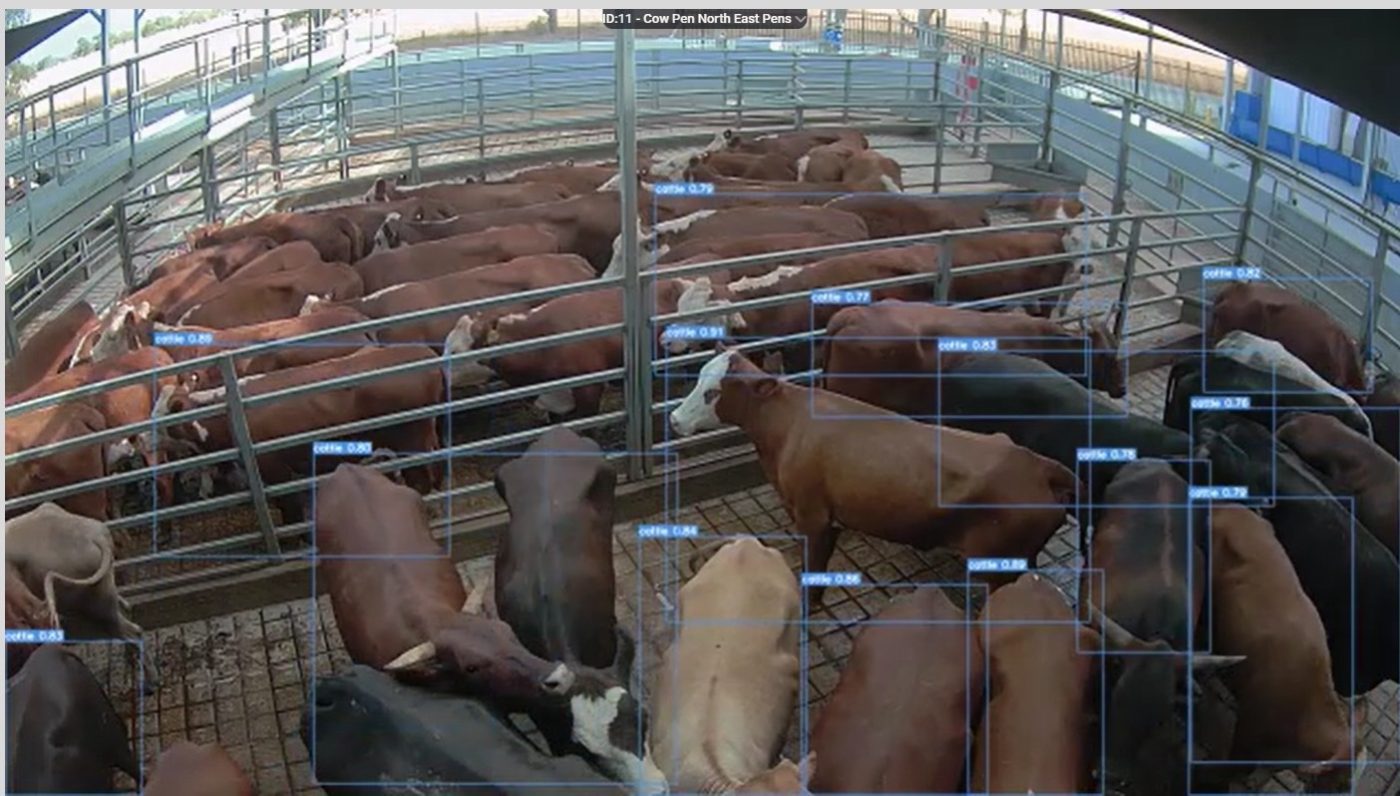
A project funded by AMPC deployed an AI-enabled monitoring system with CCTV and sensor devices at a commercial multi-species abattoir.
The system was installed, trained, and integrated across calves, sheep and goats.
Measurable welfare indicators were captured through a combination of computer vision, sensor integration, manual event logging and structured review processes.
The project demonstrated that AI-enabled monitoring systems are capable of providing continuous visibility of defined animal welfare indicators, supporting compliance activities and strengthening the traceability of corrective actions.
Integration of electrical stunning data and other sensor device inputs improved insight beyond what visual monitoring from CCTV alone could provide.
The development and implementation of training tools for staff further reinforced operational competency and contributed to measurable improvements in performance.
Shadow robotics
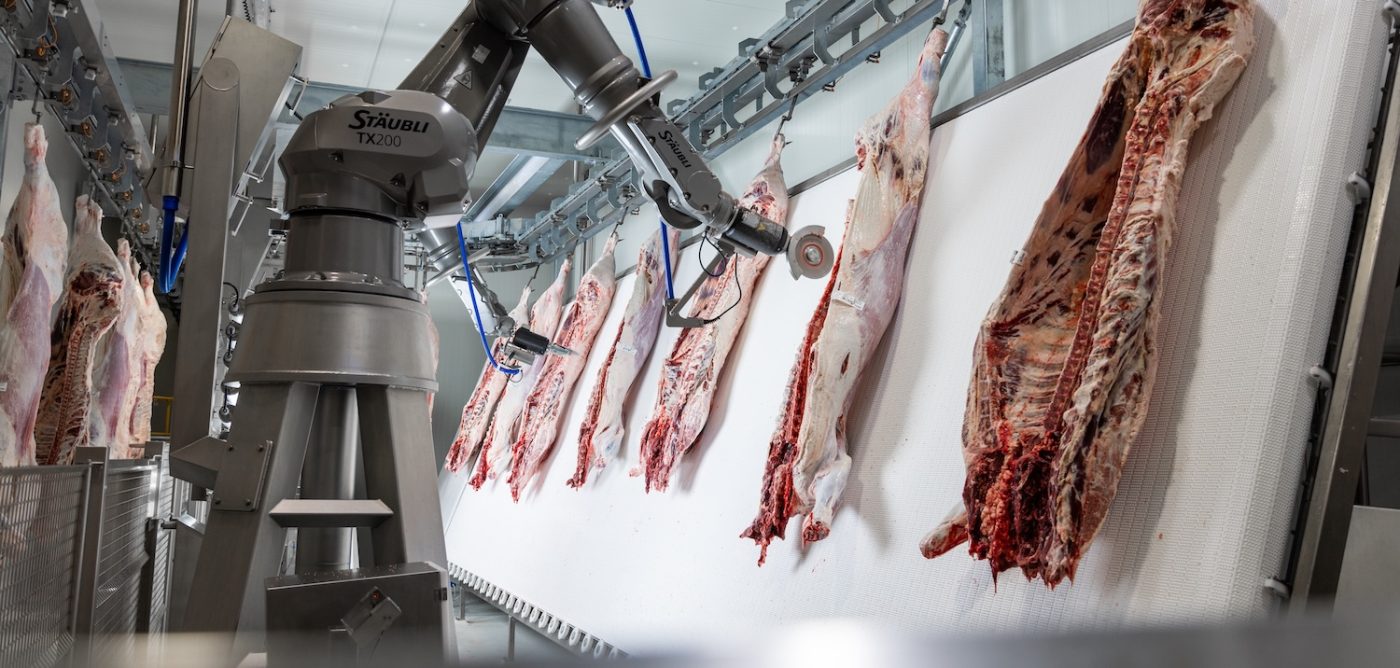
Dr Ralph also pointed to AMPC’s investment in several projects in the area of shadow robotics, work which remains ongoing.
In simple terms shadow robotics act by augmenting a human’s actions or activity on the processing floor. This could cover anything from deboning to picking and packing primals.
The robots don’t operate fully autonomously but with input from the human, hence “shadowing” the human operator.
AMPC partnered with Intelligent Robotics (IR) to determine the viability of shadow robot technology.
 “We demonstrated the use of a haptic controller to control a robot system,” Dr Ralph explained.
(What is a haptic controller? Think of a vibrating controller or joystick used with a video game console such as a Play Station or Xbox. A haptic controller is a device that simulates the sense of touch by using vibrations, motions, or forces to provide tactile feedback to the user, bridging the gap between digital actions and physical sensation.)
“The haptic controller could be used for tasks requiring grasping of a knife or tool,” Dr Ralph said.
The AMPC looked at beef hindquarter deboning, meat inspection, fat trimming and scribe line marking as potential processing-use case tasks to demonstrate and trial the shadow robotic concept.
It was determined that “tele-remote operated robots” are a viable technology for the red meat processing industry in Australia.
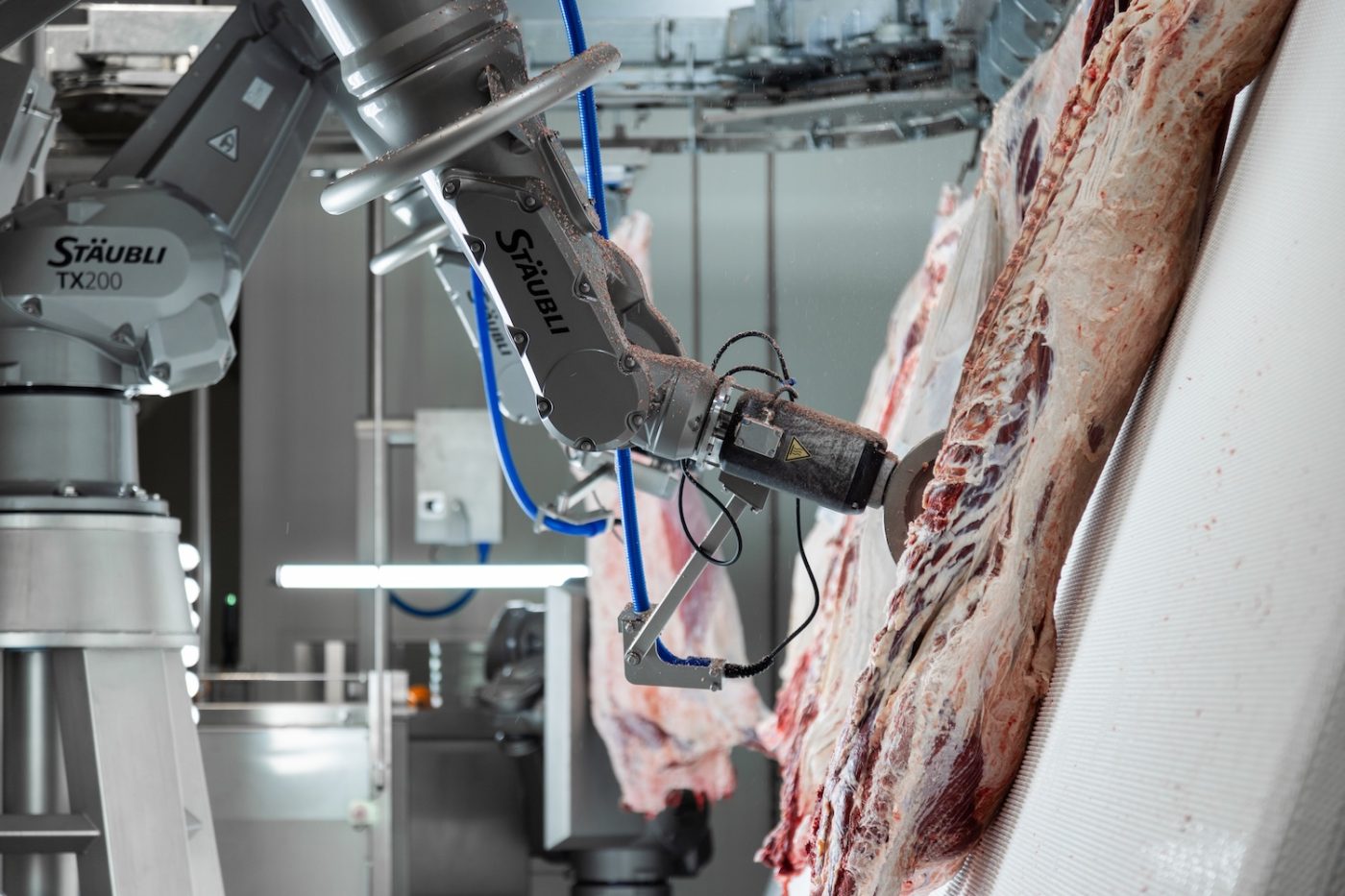
In another project, AMPC collaborated with a company called Mimeo Industrial to develop a proof-of-concept shadow robotic system using bandsaw meat cutting as a use scenario, where the robot is controlled by a remote operator.
Mimeo developed the concept utilising an industrial robot with a bespoke vision-tracking control system to guide robot movements simulating bandsaw cutting operations.
3D-control of the robot was implemented using fiducial markers and demonstrated full 3D motion capability allowing complex angular cuts to be made and enabling concepts for further processing tasks utilising shadow robotics to be investigated.
AMPC, in collaboration with JBS, has also tested a robot system that is capable of picking and packing primal cuts.
In the foreseeable future, it is envisaged that plants will have the potential to automate the picking and packing of around 70 per cent of primal cuts using similar technologies, leaving 30 per cent to humans, achieving automation whilst maintaining a degree of flexibility.
STEM program and MEAT Tech futures
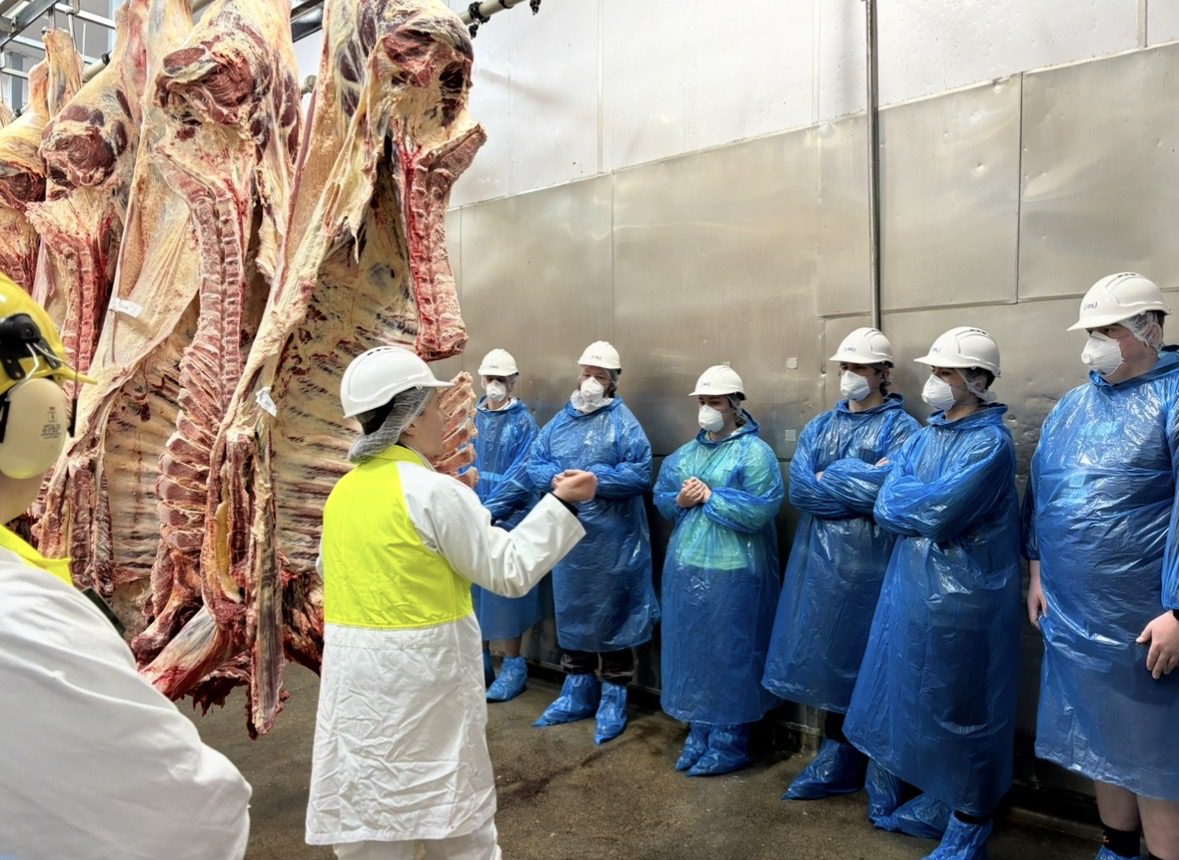
“Another thing that is happening as well with AI and development of technology in red meat processing is our ability to attract different types of people to our industry,” Dr Ralph said.
With a broad array of scientific disciplines involved in modern red meat processing, AMPC is developing targeted programs to attract and retain students from engineering, science, robotics and mechatronics, software and other tech backgrounds.
“By exposing students at high school and tertiary level to red meat processing we are shifting the perception of these students such that they see red meat processing as a high tech futuristic industry with great career opportunities for tech minded students.
“The high school program and the number and type of students that are attending has been really, really impressive.
“Certainly those young people are leaving with a very different impression and understanding of what red meat processing actually involves, and they’re going away thinking, ‘this is a really high-tech, technology driven industry’.”