
Australia is taking responsibility for increased warming it is not causing, and the consequences stretch far beyond the farm gate.
That is the central premise of an extensive paper and website Improve Climate Reporting recently launched to highlight concerns about the way livestock methane is currently measured in Australia and why it is an issue that affects more than livestock producers.
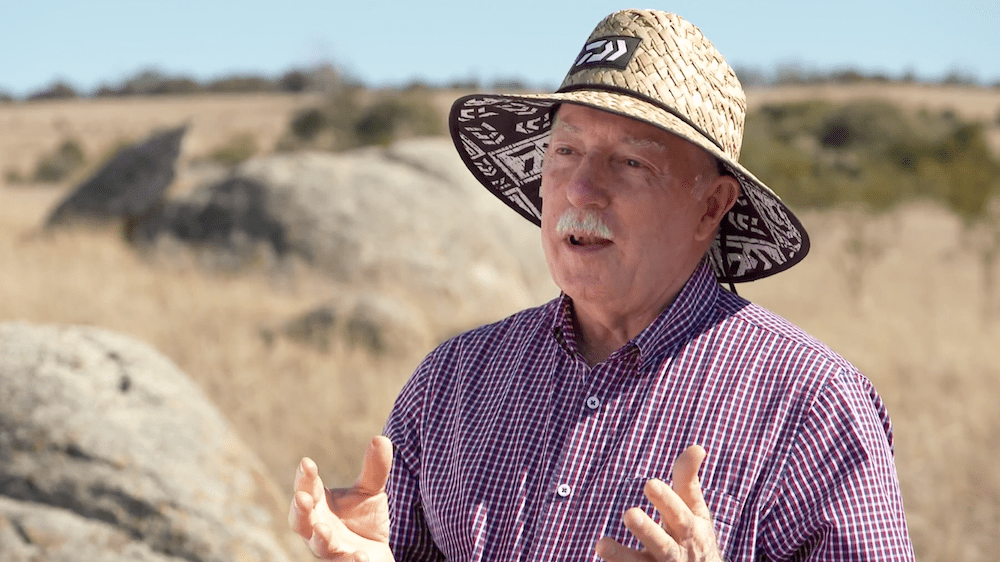 The paper, authored by methane researcher Alan Lauder, says the way governments measure livestock methane is overstating its warming impact, reinforcing a public perception that cattle are a major climate problem when the scientific reality is far more nuanced.
Mr Lauder provides a more detailed explaination below.
“Don’t blame us say cows”
The Australian Government is reporting that methane from Australian cattle and sheep is warming the climate on a yearly basis, which is not true.
Simple explanation of how methane behaves
Methane produced by cattle and sheep does not accumulate in the atmosphere, the way CO2 does. It breaks down in the atmosphere in about 12 years. Methane is a short-lasting gas.
Australian cattle and sheep numbers have not increased since the mid 1970’s, so yearly methane emissions have been stable for a long time.
Now this is the critical point.
The methane released today is just replacing the methane released 12 years ago, that has just broken down.
Because the methane is breaking down at the same rate it is being produced, the level of methane in the atmosphere is not increasing.
Which begs the question, how can it be producing further warming? However, the Australian Government reports that these emissions are 13% of Australia’s emissions.
Chris Bowen knows about this reporting issue but chooses to ignore it.
What is behind the reporting problem
At the centre of the argument is the use of CO2-equivalent (CO2e) reporting and the global warming potential metric known as GWP100, the standard method used by governments worldwide to convert methane into carbon dioxide equivalents.
The carbon dioxide equivalent (CO2e) approach pretends methane is a kind of CO2. The reality is that methane behaves very differently to CO2.
What is not common knowledge, is that policy people were warned against using GWP100, but didn’t listen.
The paper argues that while GWP100 works well for long-lived gases like carbon dioxide, it distorts the warming effect of short-lived gases like methane.
“Methane is not a stock gas like CO2 – it is a flow gas,” the paper states.
 Methane is called a flow gas because it breaks down quickly, CO2 is called a stock gas because it accumulates.
Australia currently reports livestock methane using GWP100, which treats methane as though it behaves like an accumulating gas, when it doesn’t accumulate.
This creates a misleading impression that livestock are driving additional warming every year.
Unlike carbon dioxide, which can remain in the atmosphere for centuries and continues to accumulate, methane breaks down after about 12 years.
That distinction is critical.
If methane emissions remain stable over time – as he says Australian cattle emissions broadly have since the mid-1970s due to a largely stable national herd – then new methane entering the atmosphere is effectively replacing old methane breaking down.
That means atmospheric methane concentrations from that source are not increasing.
The issue has become increasingly important as agriculture faces growing pressure from supply chains, financiers and policymakers to align with net-zero emissions frameworks.
GWP100 says that a reduction in ongoing stable methane emissions from Australian cattle will still result in temperature rise, when this action actually produces global cooling.
Even the IPCC acknowledges there is a problem
He points to the Intergovernmental Panel on Climate Change (IPCC) itself, which acknowledges that when emissions of short-term gases like methane are stable, the GWP100 metric overestimates warming by a factor of 300 – 400 percent – IPCC 6th Assessment Report, 2021, Chapter 7.
That recognition led to the development of a newer metric, GWP* (GWP star), designed to better reflect the warming behaviour of short-lived gases.
GWP* addresses the anomalies of GWP100 in relation to short term gases like methane, but policy people are pushing back against GWP*. When the Paris Agreement was signed in 2015, GWP* did not exist.
A lesser-known metric, The Radiative Forcing Footprint was also developed to address the anomalies of GWP100.
GWP* is recognised by the IPCC as scientifically valid, but Australia chooses not to supplementary report using GWP*, despite United Nations rules allowing countries to do so.
Mr Lauder argues that matters because emissions reporting now has consequences far beyond government inventories.
Banks, for example, are increasingly assessing their loan books against net-zero commitments, using GWP100-based accounting. Most Australian banks are members of the UN-convened Net Zero Banking Alliance (NZBA).
That could make finance harder to access for livestock producers, he warns, even where their actual warming contribution may be stable or neutral.
The implications could extend beyond farmgate finance.
If herd numbers are forced lower because of policy or investment decisions based on what he describes as flawed methane accounting, the consequences could include lower export income, falling rural land values, reduced regional employment and lower government revenues.
That would ultimately affect the broader Australian economy and standard of living, he argues.
Supermarkets need better direction than GWP100, when deciding what is responsible to put on the shelves.
The paper also points to CSIRO’s 2021 Red Meat Greenhouse Gas Emissions Update, which concluded Australia’s red meat sector was effectively “climate neutral” — meaning it was not adding incrementally to atmospheric greenhouse gas concentrations. Climate neutral aligns with the stabilisation goal of the Paris Agreement.
Importantly, the paper does not argue methane should be ignored.
Rather, it says reducing methane emissions from livestock would still deliver climate benefits — but through a different mechanism than is commonly understood.
If emissions from a stable herd are reduced, atmospheric methane concentrations would fall, creating what the paper describes as global cooling.
That is one reason the cattle industry continues to invest heavily in methane reduction technologies and management systems.
The debate over methane accounting is becoming increasingly important as supply chain emissions targets, Scope 3 reporting obligations and sustainable finance frameworks continue to expand.
For many outside agriculture, methane is often viewed simply as “bad”.
But papers like this argue the science, and the policy implications, are more complicated than that.
And as pressure builds on the livestock sector, the way methane is measured may prove almost as important as the methane itself.
For most industries in Australia, CO2 is the predominant greenhouse gas produced. However, in the case of the red meat industry, methane is by far the main greenhouse gas produced. Which is why getting methane warming correct is so important.
GWP100 seriously overestimates the warming effect of stable and falling methane emissions, however, it also seriously underestimates the warming effect of rising methane emissions. GWP100 gets it wrong on all three counts.
CO2 is the true driver of long-term temperature as IPCC states: “Because the effects of the SLCFs (e.g. methane) decay rapidly over the first few decades after emission, the net long-term temperature effect from a single year’s worth of current emissions is predominantly determined by CO2”.
Australia is allowed to supplementary report
“Australia chooses not to supplementary report and only uses GWP100, which reinforces the perception that Australian cattle are seriously damaging the climate,” the paper says.
UNFCCC rules allow supplementary reports to be produced using another metric, that can be used in conjunction with GWP100. However, Chris Bowen refuses to supplementary report.
Read full paper and supporting science at https://improveclimatereporting.au/