The Indonesian live cattle feedlot business commenced in 1991 when the government opened the trade up to imports of feeder cattle from Australia in response to a declining domestic cattle herd.
During the 36 years since, a large number of players have commenced lotfeeding businesses, but very few of the originals remain.
Here is the story of one of the most successful survivors presenting an example of how to continue to evolve and survive in an extremely challenging business environment.
The new feedlot businesses that developed in the early 1990s were built on three key elements:-
- The landed cost of feeder cattle from Australia was relatively low, certainly lower than local cattle prices
- A wide range of agricultural waste products were available at low cost to fatten cattle efficiently resulting in significant value adding
- The Indonesian economy was growing strongly with consumer disposable income on the rise.
One of the earliest facilities to be established was the Bekri feedlot in Lampung, Sumatra, built in 1995 by PT Santosa Agrindo (Santori), a subsidiary of Japfa, in partnership with Australian entrepreneur Edgar Collins.
Business went well until mid 1997 when the sudden arrival of the Asian Financial Crisis resulted in the closure of all cattle importing businesses for a period of about two years. Many feedlots never opened their doors again.
After this long period of zero imports, economic conditions began to improve with the irresistible logic of the live export/import business bringing the feedlot sector slowly back to life.
While actual costs and prices were much higher, all the original elements that made this industry work gradually fell back into place. As one of the superior performers, Santori started again and thrived for the next decade purchasing the Tipperary Indonesia (Tippindo) feedlot in Lampung in 2005.
The Santori group was never satisfied with the status quo and were constantly looking for new ways to innovate and improve the business.
Santori established a western style abattoir and meat processing and distribution facility outside Jakarta in 2010 producing high quality chilled beef from northern Australian feeder cattle under the Santori brand.
In conjunction with parent company Japfa, Indonesia’s largest feed-miller, Santori exported cattle pellets on empty live export ships returning to Australia.
In 2007, Santori initiated their first Wagyu breeding and fattening trial through imports of Wagyu cows which proved themselves to be hardy and able to adapt to local tropical conditions.
‘Breedlot’
To expand this initiative, the company established a large cattle breeding operation at the former Tippindo feedlot outside Lampung.
This ‘breedlot’ quickly expanded over the next six years from the original Bos indicus base female herd to Fullblood Wagyu through artificial insemination using world-class Wagyu genetics.
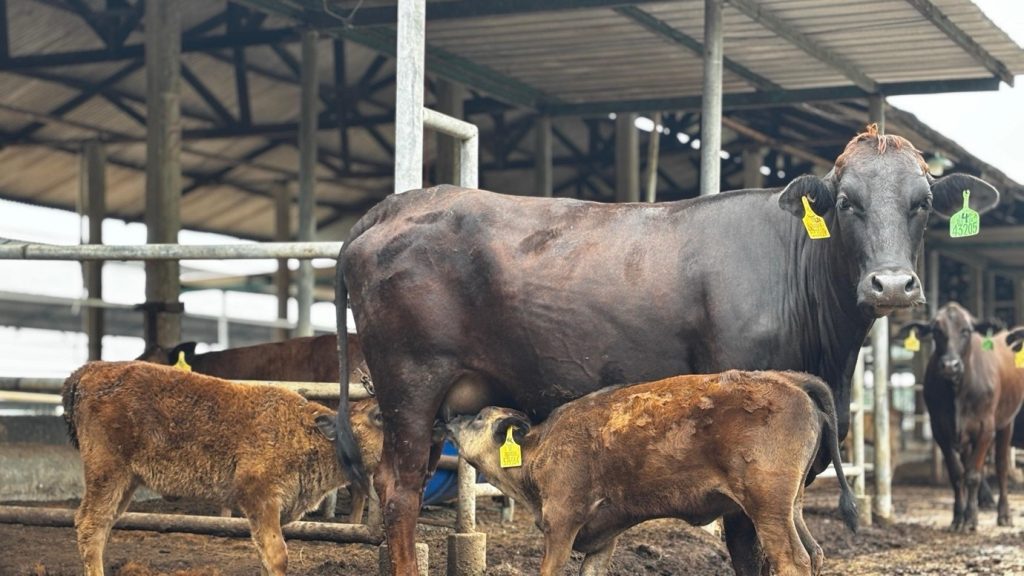
Photo from Santori: Wagyu breeding at the former Tippindo breedlot facility in Lampung. Semen was sources from foundation sires including Michifuku, Haruki, Goshu, Yasufuku and Sanjirou.
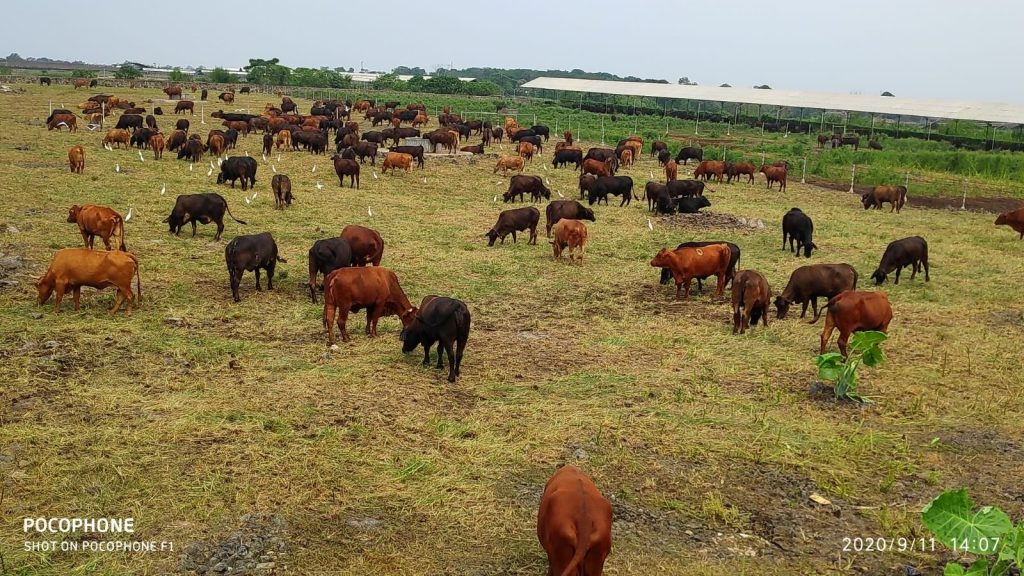
Photo from Santori : by 2015, 100pc of Wagyu feeders were produced at the former Tippindo breedlot in Lampung.
The Tokusen Wagyu beef brand was launched in 2009 as Santori’s premium F1 Wagyu beef capturing the niche premium chilled beef market in Jakarta and Bali. Tokusen means “special selection” in Japanese.
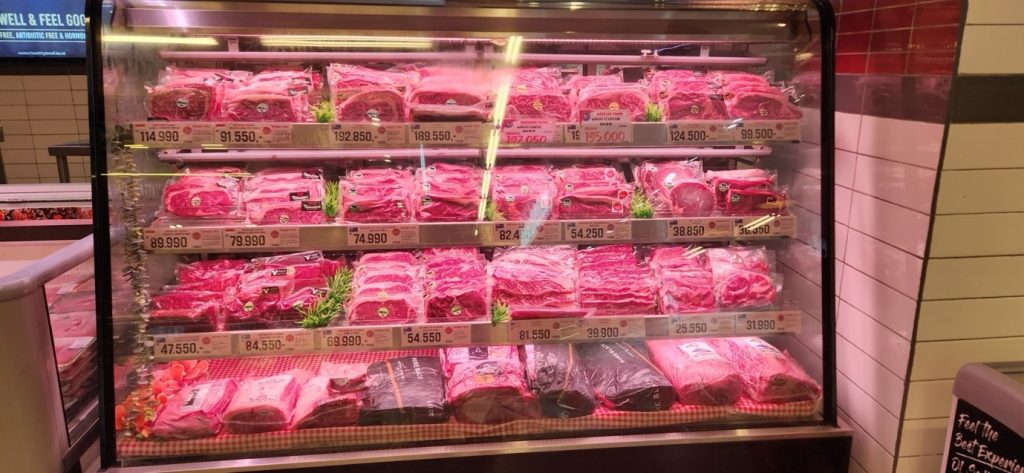
Photo from Santori : Tokusen Wagyu product can be found in almost every high end supermarket in Jakarta and Bali.
In 2016 all 32 live cattle importers were collectively fined AUD $10 million following accusations of price fixing.
In the same year, the Indonesian government allowed the importation of Indian buffalo meat which immediately captured half of the market for fresh beef for the production of manufactured products including bakso balls, a hugely popular inexpensive beef dumpling dish eaten across Indonesia.
Government pressure on beef prices continues to this day through the establishment and strict enforcement of maximum prices for fresh beef sold in the wet markets.
At the same time, improved extraction technologies and increased demand from other livestock industries has reduced supply and increased the price of the agricultural by-products essential for efficient feeder cattle rations.
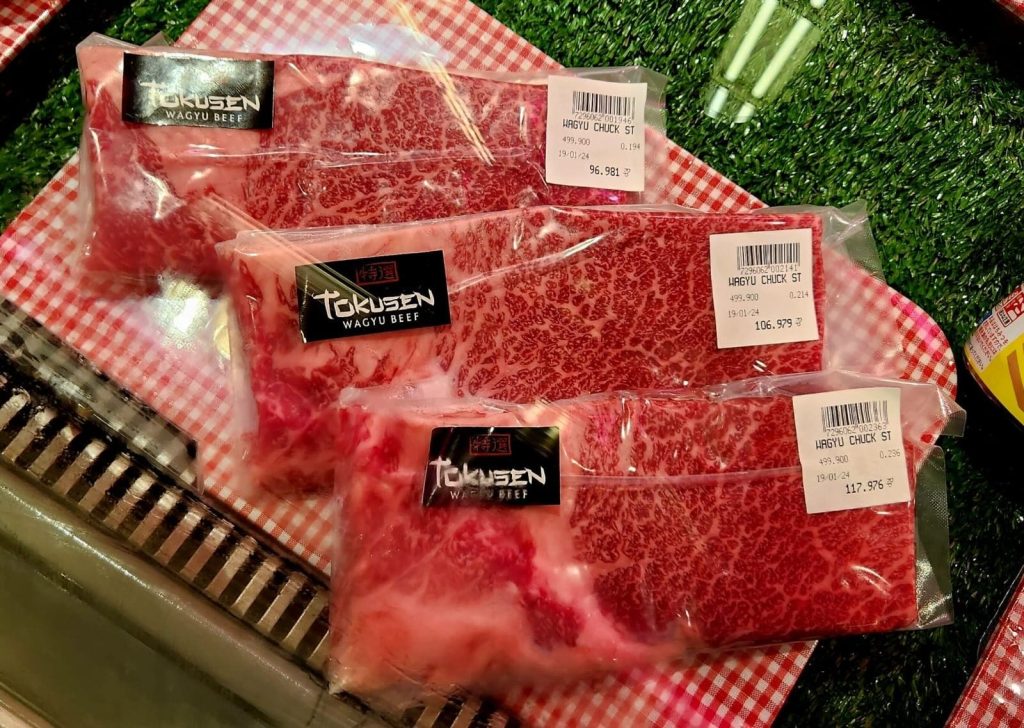
Photo from Santori : Tokusen Chuck selling for Rp499,900 per kg or AUD$40 per kg. Supermarket product prices are not restricted by government policies. In the wet market, fresh beef prices are fixed at a maximum of Rp140,000 per kg.
At a time when the rest of the industry has been looking to trim margins and cut costs to meet the increasingly difficult market conditions, Santori has continued to modify its business model to remain relevant and profitable.
The rapidly increasing numbers of high quality F1 Wagyu now available from northern Australia (see this earlier Beef Central report) has allowed Santori to reduce the scale of its expensive Wagyu breeding program significantly, without sacrificing the quality of their feeders.
Their current annual imports of about 8000 Australian-bred F1s are supplied by AAM, Pardoo, Austrex and the Hughes Pastoral group, fattened at the Bekri feedlot, processed at the Santori abattoir and distributed to outlets in Jakarta, Bali and other major cities in Java and Sumatra.
These products attract strong prices at the premium end of the domestic food service and supermarket sector where the government’s fixed price policies don’t apply.
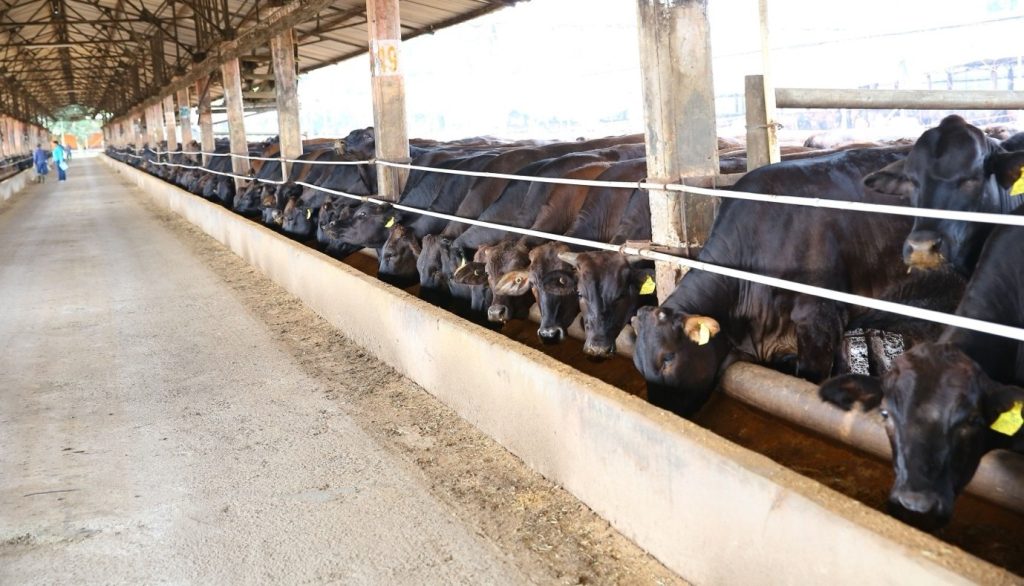
Photo from Santori : Waygu feeders at the Bekri feedlot in Lampung
Considering today’s destructive mix of spiralling prices for energy and feedlot commodities in Indonesia, deteriorating exchange rates, increasing cost of feeder cattle combining with government price fixing, Santori’s 31 years of constant innovation and reinvention of the way they do business demonstrates that it is not only possible to survive, but to thrive under extremely difficult market conditions.
Well done Samuel Wibisono and Santori team