
IT’S yet to show up in official trade records, but there’s strong evidence this week that United States-produced beef has now re-entered, or is about to re-enter the Australian market for the first time since a food-safety related ban was imposed 22 years ago.
While trade occurred only occasionally in the distant past, US beef was suspended from importation to Australia in 2003, following the discovery of BSE in the US beef herd.
After a lengthy process, the Federal Government formally announced the renewed trade access back on 25 July – for both US and Canadian beef.
Since then, there’s been wide speculation about when the first shipments might occur.
But before any breathless city media reports emerge about prospects of Australia being flooded with US beef, let’s put it into context.
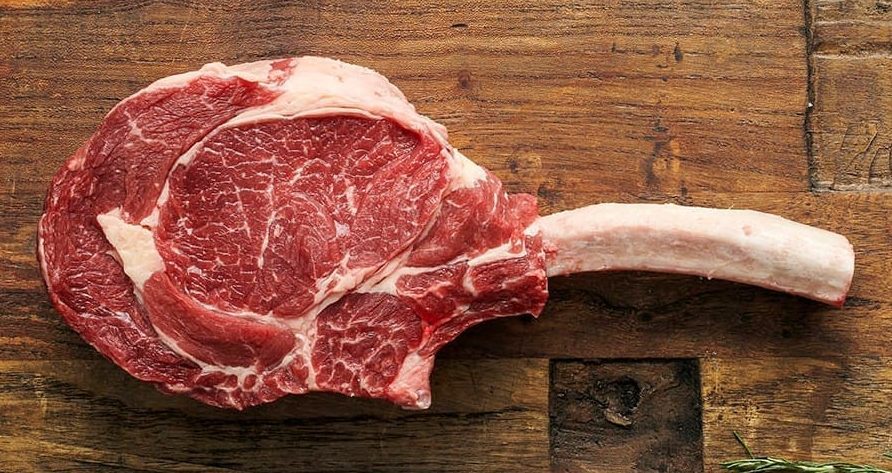
The first consignment to be completed since the lifting of the 22-year long suspension is a handful of cartons of chilled USDA Prime and Choice grade steak cuts, at most.
Beef Central understands the special one-off shipment has been organised by the US Embassy and Agricultural Attache in Canberra, to be used for ceremonial reasons at a hosted event in the national capital or Sydney in mid-October, marking the beef export re-entry.
 Australia has some of the highest biosecurity and phytosanitary standards in the world, and for this reason achieving access to this market for US has added significance in global export trade.
We’ve put in a request for background to the shipment from the US Embassy and Consul General Jeremy Cornforth, but due to the lapse in US Government Congressional Appropriations made effective today, the Embassy was unable to provide a reply.
Today, being only 1 October, means import trade data for September is still being finalised by ABS/DAF, meaning it may be difficult to get formal confirmation today that the importation has in fact taken place. We’ve asked DAF to examine September import data for fresh beef imports from the US and will add any response here.
Alternatively, the consignment may be yet to clear Australian Customs, and may not appear until October records are compiled.
In the meantime DAFF has provided a background statement, saying any details relating to an approved permit are commercial-in-confidence.
“Australia has a world leading biosecurity system. The department will not compromise on biosecurity, and our enviable biosecurity status is not up for negotiation,” DAFF said.
“In July this year, the department completed a ten-year, rigorous science and risk based import assessment and evaluation to ensure Australia’s biosecurity requirements were met for the importation of fresh and chilled US beef. Since that time, importers have been able to apply for permits to import beef from the US.”
“Any beef imports from the US will be subject to robust control measures to meet Australia’s strict biosecurity requirements.”
False start
There was something of a ‘false start’ in the US beef import re-activation issue last month when ABS and ABARES incorrectly reported that fresh (chilled or frozen) beef imports from the US had already started.
The confusion arose when ABARES extracted incorrect data from ABS import statistical records, but failed to pick up the mistake in the compilation of its September Outlook report. The most likely explanation was that the 269 tonnes of beef referenced in the ABS import trade report was in fact Australian in origin, originally destined for the US market, only to be rejected and returned for some reason. Both ABS and ABARES have since amended their September reports.
Will Australia see a flood of US beef?
So is it likely that there will be a flood of US product arriving on Australian shores, now that beef trade appears to be officially starting?
Extremely remote was the conclusion arrived at in this earlier Beef Central article published a month ago.
The US beef herd is presently at 70-year lows following drought, and is only now showing early signs of herd rebuild. That’s forced local US livestock and meat prices to blistering record highs, and pulled Australian exports of both trimmings and muscle meat to near-record levels.
Beef Central las month did a like-for-like price comparison between a USDA Certified Angus steak and an equivalent Australian midfed Angus product, based on a landed price in A$, showing a price disadvantage to the US of 71pc on rumps and 53pc on striploins (slightly lower on other selected cuts).
A second comparison between USDA Prime Grade beef and equivalent Australian marbling score 4+ product produced a price advantage to Australian beef cuts of 65pc on rumps and 55pc on striploins. Click here to read that earlier report.
If anything, the price disparity has only widened in the four weeks since that report was published.
Novelty value
It means that any import of US beef into Australia is likely to be mostly for novelty reasons, rather than making any commercial sense.
A few Sydney or Melbourne steak restaurant proprietors may show some interest in being able to offer patrons an ‘Omaha steak’ for the first time in a generation.
But once the novelty component wears off and price again becomes a key factor in procurement, its unlikely that incoming US beef trade will get beyond niche level, at best.