
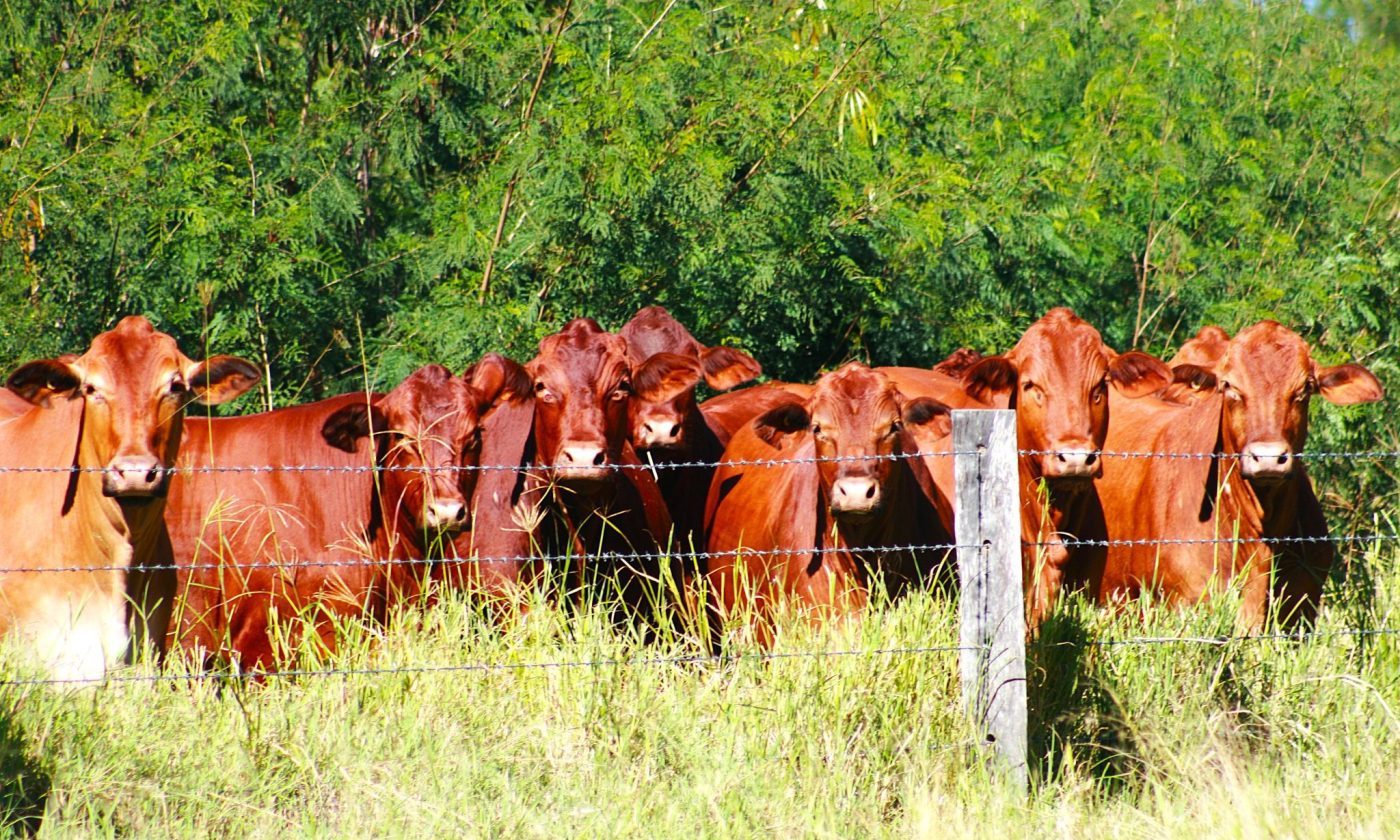
Gastrointestinal parasites are a persistent and economically significant challenge for cattle production in northern Australia. Warm temperatures, high humidity and summer-dominant rainfall favour year-round parasite survival and transmission, resulting in ongoing production losses that are often underestimated.
Across northern Australia, internal parasites are estimated to cost the cattle industry approximately $19.7 million annually through lost productivity and control expenses.
Major GI Parasites in Northern Australia are barber’s pole worm, small intestine worms, nodule worm, and hook worm.
Most parasite impacts are indirect and cumulative, including reduced growth rates and feed efficiency, lower milk production and calf weaning weights, and impaired reproductive performance.
Role of leucaena in integrated control of GI
Multiple research articles show that Leucaena, already well known as a highly productive forage legume, can also play an important role in reducing worm burdens and pasture contamination when used as part of an integrated parasite management program.
Research studies consistently demonstrate that Leucaena possesses significant anthelmintic activity.
This summary of 13 international research articles, conducted across a range of livestock species, parasite genera, plant tissues, and extraction methods, indicate that Leucaena can reduce parasite egg production, inhibit egg hatching and larval development, impair worm activity, and lower overall parasite burdens. While its efficacy generally does not equal that of modern synthetic anthelmintics, the evidence suggests that Leucaena can play an important role in reducing reliance on chemical treatments and helping manage anthelmintic resistance.
Effects when fed as a forage
The strongest practical evidence comes from studies where Leucaena was fed directly to animals. In goats experimentally infected with Haemonchus contortus, diets containing pelleted Leucaena reduced faecal egg counts by approximately 58% compared with an alfalfa control and dramatically reduced larval development from 24% to 3.5%. These benefits were most evident when Leucaena comprised around 50% of dietary dry matter. Importantly, animals maintained acceptable feed intake, digestion, and growth, and no signs of toxicity were observed, confirming that Leucaena can function simultaneously as a nutritious forage and a parasite-control nutraceutical.
This dual role is particularly valuable because parasite control is achieved through normal feeding practices rather than additional treatments.
Evidence from extract-based studies
Numerous investigations have demonstrated direct anthelmintic activity of Leucaena extracts. In vitro studies using leaf extracts of the cultivar Tarramba showed strong inhibition of gastrointestinal nematode egg hatching, with a 1% extract concentration performing similarly to commercial anthelmintics. When administered to young cattle, the extract reduced parasite prevalence by approximately 60% over eight weeks, compared with an 80% reduction achieved by a conventional dewormer.
Similarly, administration of Leucaena leaf extract to lambs over 63 days reduced faecal egg and worm counts by 54%, confirming that the plant can substantially suppress gastrointestinal parasite populations under field conditions.
The overall evidence indicates that activity varies considerably depending on plant part, extraction method, concentration, and target parasite species.
Activity against different parasite life stages
Research consistently shows that Leucaena affects multiple stages of nematode development, although eggs appear particularly susceptible. Several studies demonstrated strong inhibition of egg hatching.
In contrast, effects against infective larvae and adult worms are generally less pronounced and more variable. Some studies found little or no direct larvicidal activity, whereas others reported significant reductions in larval survival, larval development, or adult worm activity. This suggests that Leucaena may exert its greatest impact by interrupting parasite reproduction and transmission rather than by directly killing established adult worms.
The anthelmintic properties of Leucaena appear to arise from a complex mixture of secondary plant compounds and bioactive proteins.
The collective evidence indicates that no single compound is solely responsible. Rather, Leucaena‘s anthelmintic effect likely results from synergistic interactions among several groups of compounds including condensed tannins, flavonoids and phenolic compounds, protein-based compounds, and the non-protein compound mimosine.
Overall assessment
Collectively, the studies provide strong evidence that Leucaena leucocephala has genuine anthelmintic properties against important gastrointestinal nematodes. The most consistent effects are reductions in egg production, inhibition of egg hatching, and suppression of larval development, which contribute to lowering pasture contamination and parasite transmission.
While Leucaena generally does not match the efficacy of commercial anthelmintics when used alone, it consistently reduces parasite burdens by approximately 50-60% under practical conditions and shows potent activity in laboratory assays. Its nutritional value, safety when properly managed, and multiple bioactive compounds make it a promising component of integrated parasite control programs. The evidence therefore supports Leucaena as a valuable forage-based nutraceutical that can help reduce dependence on conventional dewormers and contribute to more sustainable livestock production systems.

Max Shelton
Dr Max Shelton enjoyed a 40-year career at The University of Queensland. He is the author / editor of multiple research papers and books on all aspects of the establishment and management of leucaena for beef production in Australia. With colleague Dr Scott Dalzell, he conducted approximately 30 courses on leucaena production for over 600 graziers, research & extension workers, pastoral companies & consultants. In 2022, he was awarded the AW Howard Award for contribution to pasture research and development in Australia and overseas.
Great! parasite is problem in ruminants. for sheep what quantity of leucaena is suitable on daily basis.
regards
It is not possible to give a precise answer to this question as the active organic anthelmintic compounds present in leucaena will vary with plant part, age of material and environment in which it is grown. In general, the more that is fed the better the result. It should not be expected to achieve the effectiveness of commercial dewormers. Please also read my response to the question below regarding concerns about mimosine toxicity.
This is interesting literature on leucaena. It would be great to share the paper trail; The research papers used to collate this article.
thank you.
yes..Studies on leuceane leucocephala shows that too much consumption of it can result into ruminal tympany but yet we see its benefits as a nutritious forage and antihelminthetic potented plant.
what should be the quantitative feeding/grazing per day avoid the effect about and also archiving those benefits as the article eraborate d.
It is well known that leucaena contains the non-protein amino acid mimosine and that cattle, naïve to leucaena, can be affected initially by mimosine toxicity showing symptoms of hair loss, salivation and loss of appetite. However, these symptoms are rarely observed by livestock raisers in Australia, or internationally, and when observed, the symptoms are short-lived, with animals recovering quickly and showing excellent productivity.
While the official recommendation in Australia is that graziers with cattle on leucaena should inoculate cattle with Synergistes jonesii (as protection against toxicity), there is now good evidence that inoculation is unnecessary as ruminants have an alternative mechanism for neutralising the toxicity of mimosine. Many northern Australian graziers no longer inoculate their cattle even when there is frequent turnover.
We developed this understanding from our work in Eastern Indonesia where the practice of feeding diets up to 100% leucaena to the Bali breed of cattle, is decades old. These animals were never inoculated, show no signs of toxicity, and are highly productive.
What we found was that mimosine, and its breakdown product DHP, were being conjugated with compounds produced naturally by the liver which neutralised and solubilised the toxins for excretion in urine. We showed that this was the major detoxification pathway, and not S. jonesii, although it was naturally present, but at low populations in the rumen insufficient to degrade mimosine in a high leucaena diet. For those interested, this work in described in the paper by Shelton, Kerven and Dalzell (2019) in the Journal Tropical Grasslands – Forrajes Tropicales volume 7, issue 2, pages 146-153.
No country apart from Australia has access to a laboratory-fermented source of S. jonesii, but farmers in multiple tropical countries feed high leucaena diets to their ruminants without experiencing toxicity. Our findings described above, if widely applicable, have the potential to remove a major world-wide barrier to adoption of leucaena for feeding ruminants.
During the 40 odd years that Max was the leading researcher on Leucaena, the studies focused on Condensed Tannins , their properties and potential benefits. I n this work Scott Dalzell undertook his PhD studies of complex organic natural compounds.
While mimosine is mentioned, this and hydroxypyridines, breakdown products lead to severe toxic effects on cattle. Significant world wide studies lead to an understanding of these compounds and how to deal with it while still getting the beneficial nutritional effects of feeding Leucaena.
Science at its best.