
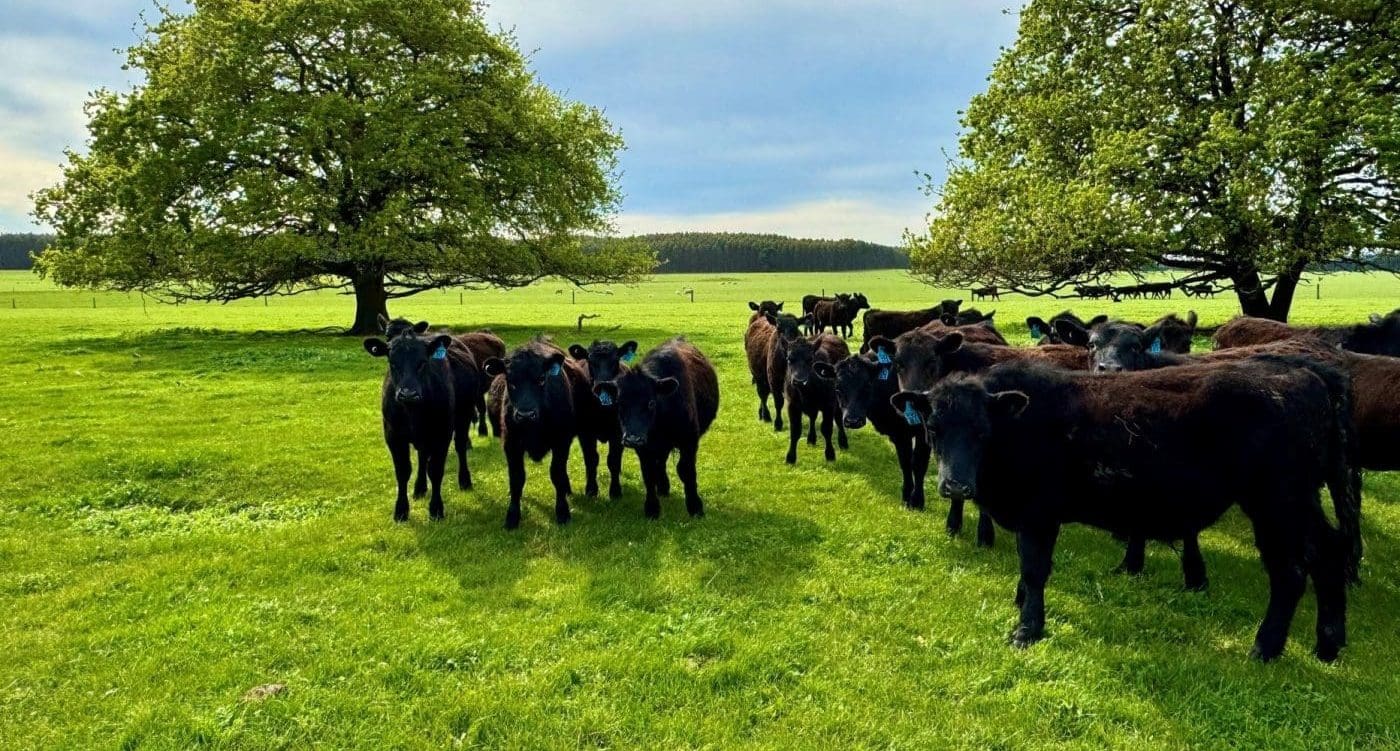
“CARBON tunnel vision” that over emphasises greenhouse gas emissions as the primary metric evaluating environmental impacts risks compromising reasonable pathways to reducing livestock emissions, a new scientific paper warns.
While stating that reducing emissions from livestock production remains “a legitimate priority”, the paper highlights how an overly narrow focus on greenhouse gas emissions ignores wider nutritional, ecological and economic consequences.
The review challenges often-proposed ‘hard interventions’ such as meat taxes, herd reduction policies and efforts to drive widespread vegan or vegetarian diets, which it says are based on oversimplified views, hyperbolic narratives and misguided policies that risk worsening other environmental impacts while “scapegoating livestock as destructive GHG emitters”.
Published in Food Science of Animal Resources, the review says such policies overlook regional differences in livestock production, underestimate opportunities to reduce emissions through improved management and fail to account for broader environmental and nutritional contexts.
The paper was authored by an international team of researchers from Europe, North America and Australia comprising Frédéric Leroy, Ty Beal, Frank R. Dunshea, Peer Ederer, Michael R. F. Lee, Manzano Pablo, Frank M. Mitloehner, Sara E. Place, Agustin del Prado, Giuseppe Pulina, Brad Ridoutt and Jason E. Rowntree.
It outlines the need for a more nuanced approach to reducing livestock emissions which targets meaningful reductions while acknowledging the multiple roles livestock play in food systems.
The review says greenhouse gas emissions have become the dominant measure by which livestock sustainability is judged, despite representing only one part of a much broader picture and often making important regional differences.
 While livestock is estimated to account for about 12 percent of global anthropogenic greenhouse gas emissions, livestock production across Europe, North America, Australia and New Zealand contributes an estimated 2.6 percent of global emissions, according to FAO estimates cited in the paper.
The paper states that policy debates frequently overlook these regional differences, along with significant differences in production efficiency between countries.
The review points to the scope that exists to reduce emissions through improved genetics, feed efficiency, animal health, manure management, renewable energy, grazing management, crop-livestock integration and soil carbon improvements, rather than relying primarily on reducing livestock numbers.
Advocates for removing livestock from food systems often overstate the climate benefits for doing so because they ignore the “compensatory effects” of a higher production of plant foods and additional fertiliser needs to fill proceeding nutrient gaps which also generate missions and can result in soil carbon losses from agricultural soils.
The paper also cites modelling which suggests that moving to more restrictive diets would typically reduce an individual Western citizen’s total annual carbon footprint by around 1-6pc. By comparison they note that housing, transport, consumer goods and aviation generally contribute a much larger share of personal emissions.
The paper also points to studies suggesting more than half of people who adopt vegetarian or vegan diets revert to eating animal products within a year, arguing that the lack of durability of dietary change also undermines theoretical claims against meat consumption.
“Moreover, massive economic and cultural intervention efforts would be needed to enable a radical shift from animal-sourced foods to pulses, which currently provide only a small minority of bioavailable protein in the West,” the paper sates.
“This would need to unrealistically overrule dietary preferences and eating habits, with potential implications for digestive comfort and overall nutrient status.”
The authors argue animal-sourced foods provide important vitamins and minerals that can become more difficult to obtain in diets that sharply reduce meat, dairy and eggs, particularly for vulnerable groups including pregnant women and young children.
They also note that livestock systems produce many valuable co-products beyond meat, including hides, wool, manure, pharmaceutical products and edible offal, which should be accounted for when assessing environmental impacts.
The review also devotes substantial attention to the way livestock emissions are measured.
It argues current accounting frameworks often fail to adequately recognise soil carbon sequestration from well-managed grazing systems and the different warming behaviour of biogenic methane compared fossil fuel sources.
The authors recommend that metrics such as GWP100 and GWP*, which provide different information, should be reported side-by-side to better reflect methane’s different atmospheric behaviour, instead of usurping or replacing one another.
Natural baseline comparison
Discussions surrounding the GHG emissions by livestock sometimes refer to the concept of “carbon opportunity costs”, which include the foregone potential for carbon sequestration that could be achieved through ecosystem restoration to “natural” vegetation, through rewilding or the large-scale afforestation of agricultural land.
But the authors argue this is naïve about real-world land-use conversion and undervalues the carbon storage capacity of managed grasslands by assuming that all pastureland can be converted to high-carbon forests without considering local ecological constraints. It also overlooks the fact that rewilding and afforestation can have their own perverse effects and that silvopasture based systems often offer both food production as well as carbon storage potential.
Focus on improving systems
Rather than advocating for maintaining the status quo, the review argues emissions reductions should be pursued through continual improvement of livestock systems.
“Mitigation of global herd emissions is achievable without compromising meat availability, by prioritizing efficiency gains at the production level,” the paper concludes.
“When policies start emphasizing blanket reductions in animal-sourced foods intake, only modest global emission cuts are to be expected, while overlooking nutritional trade-offs.
“Any policy promoting modest emission reductions at the expense of human health is unacceptable.
“Transitioning towards lower-emission diets is to be recommended, but must not neglect nutrient security and avoid unintended consequences, especially for vulnerable groups.
“Instead, policies should target ecosystem restoration and use balanced metrics incorporating evidence-based ecological targets alongside emissions goals. Improved integration of agroecological principles, such as crop-livestock integration, legume-based rotations, silvopastoralism, agroforestry, and adaptive multi-paddock grazing, will help to create multiple beneficial outcomes while closing nutrient cycles and minimizing external inputs.”
See full paper here