
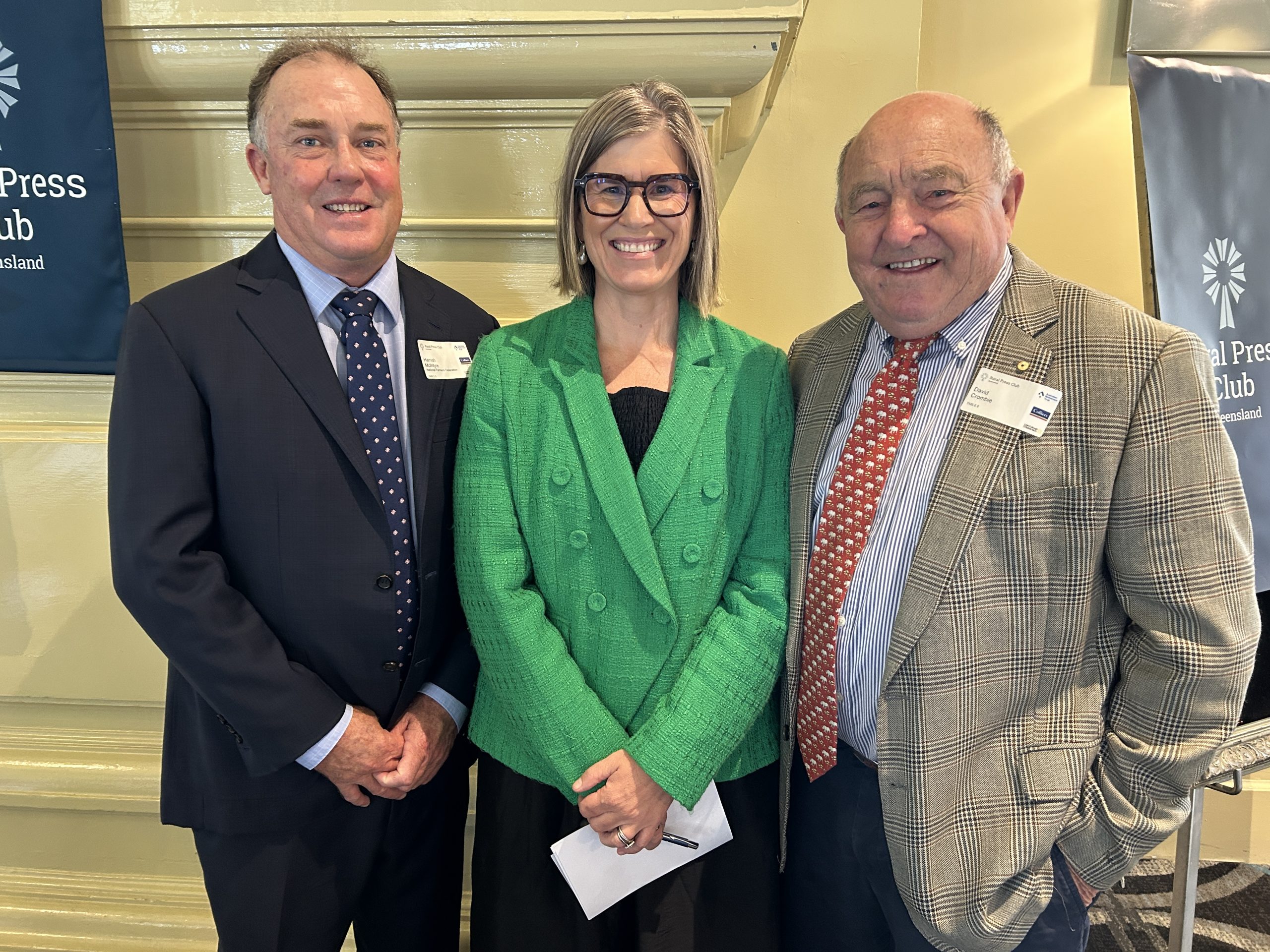
NFF president Hamish McIntyre with RPC president Arlie Felton-Taylor and former NFF president (and Hamish’s father in law) David Crombie.
AUSTRALIA’S beef feedlots are a ‘no-brainer’ to boost production, but need to match other intensive protein providers for conversion efficiency, according to the head of Australia’s peak farming organisation.
Addressing the National Agriculture Day lunch in Brisbane, NFF president Hamish McIntyre said: “If you look at the footprint and the way we convert grain more quickly and are able to turn those animals over … it’s an absolute no-brainer for affordable livestock to provide affordable growth.
“We see the same in our chicken business, with a conversion there of 1.5:1. But when we think about beef cattle in feedlots it’s 3 to 5:1, so there’s a lot of room for improvement there to catch up with other protein producers,” he said.
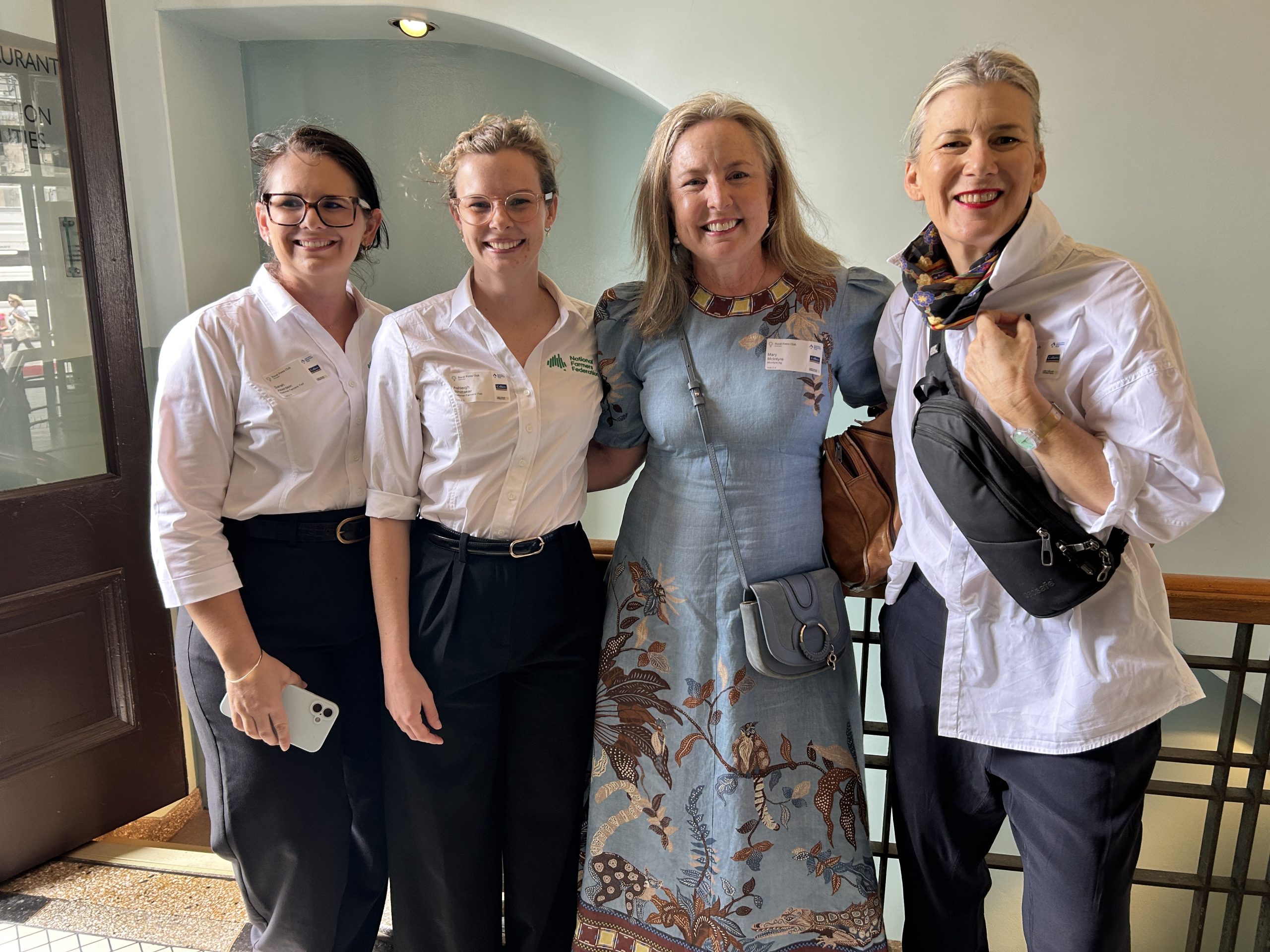
NFF’s Sarah Aberdein and Ashleigh Whittaker with Mary McIntyre and Georgina Lucas.
He praised feedlot infrastructure improvements such as shading and shedding and improved animal welfare, such as temperature-measuring technology.
More research is the key, he added. “We can develop these feedlots but really need to sell industry improvements. And research, R&D is key to it,” he said, endorsing a ‘good portion’ of the cattle levy should be spent on the sector.
Appointed to the post in October 2025, Mr McIntyre was celebrating his birthday on the day that NFF has championed for agriculture since 2017.
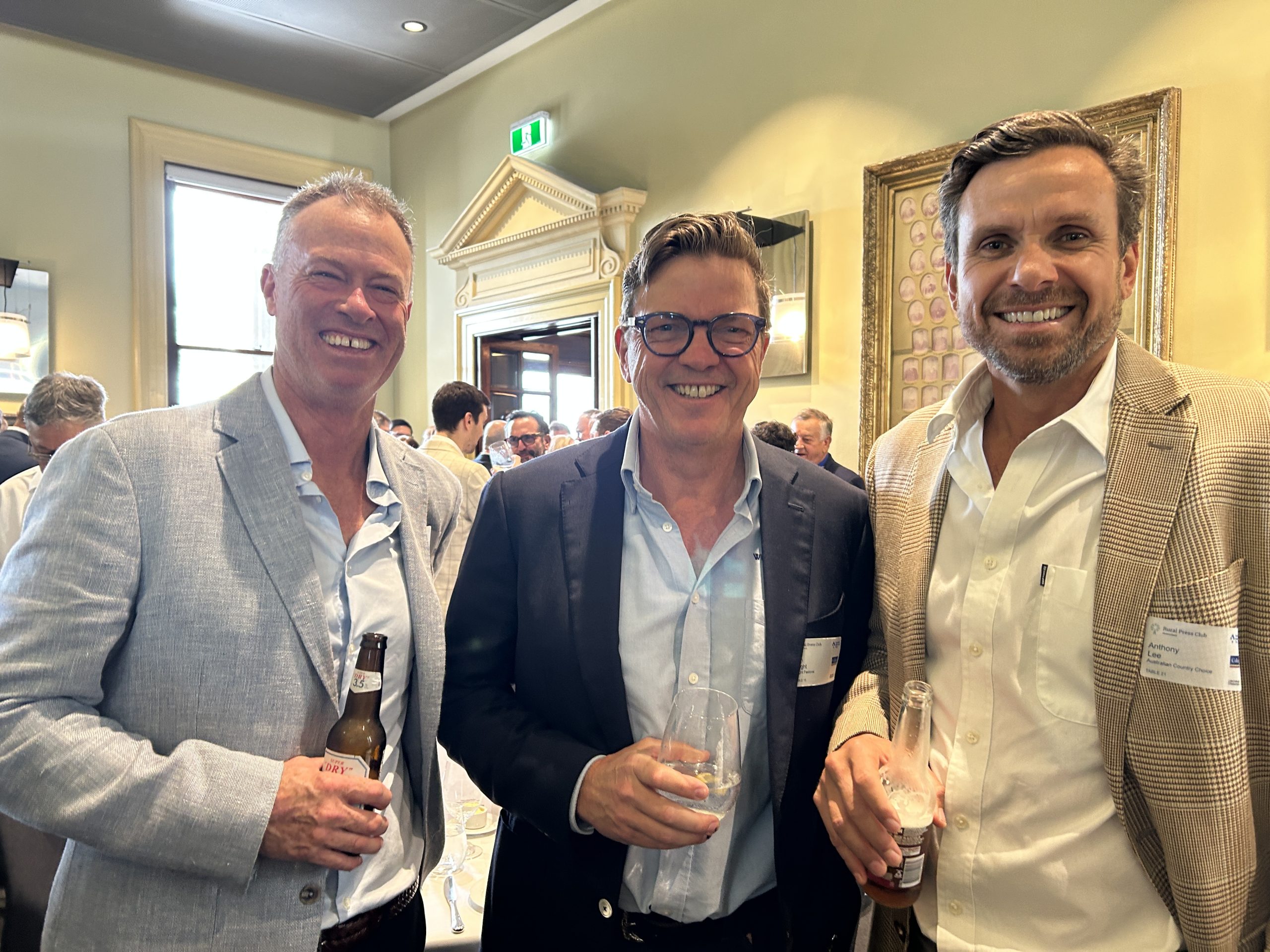
Grant Veivers, Glen Wright and Anthony Lee.
He runs a family-owned, irrigated and dryland farming, cattle breeding, beef feedlot and broiler chicken meat business with his wife, Mary and three sons, Stirling, Finlay and Campbell.
While he had received many invitations to appear at National Ag Day celebrations, he had specifically chosen the Queensland Rural Press club event, and found himself addressing the sell-out audience of 217 people dining on chicken breast and lamb rump at Brisbane’s historic riverside Customs House.
He described the day’s ‘Our Farms, Our Future’, as “a simple message and a powerful one”.
Australian agriculture provided the nation with “food for our tables and $100bn for our economy,” he said.
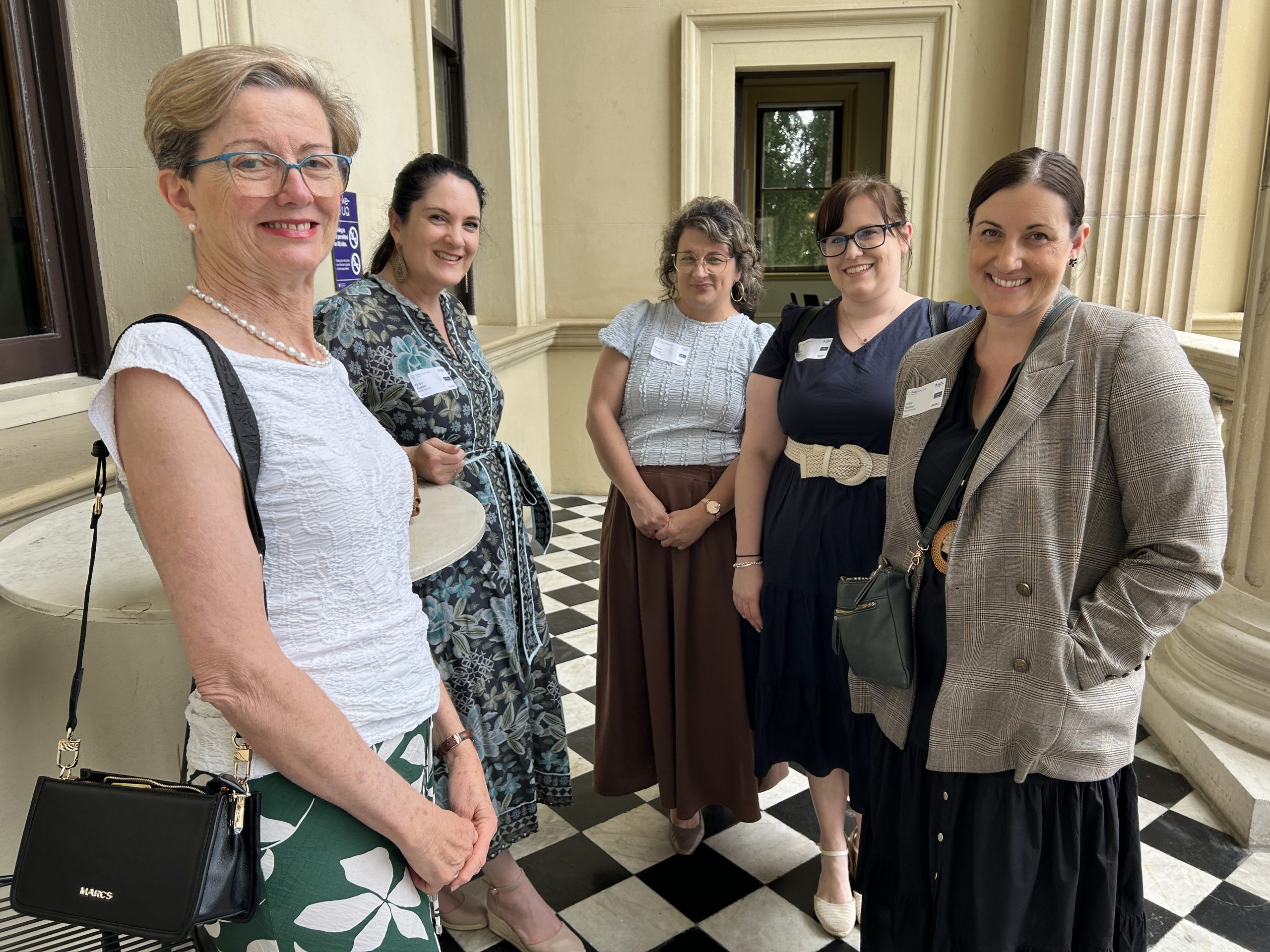
The design team behind the new RPCQ logo, with friends (L to R) Shona Fisher, Kristy Fielder, Amelia Pappas, Laura Costin and Anna Heaton.
He detailed the recent performance of Australian agriculture and its future growth prospects. “The opportunity is still ahead in Australia,” he said. “We have so much to do in northern Australia with land use changes there. We have so much to do with the government, making sure that regulation doesn’t hinder that. We want to grow this sector.
“We’re setting up an election platform that we will put out very soon. It’s going to be a very interesting election, we know. Australia’s at a crossroads; it’s been a very difficult 12 months.
Anticipating the Federal Treasurer’s Budget review he said one of the big-ticket items for the NFF was to see a halt to water buy-backs that were driving up water costs, particularly in the Murray Darling Basin.
“These sort of crazy policies – the things they chase are so much more transactional at the expense of agriculture and food production, it’s so frustrating,” he said.
He described how the NFF tackles difficult subjects. “The EPBC Act is just a classic of that,” he said. “It’s a regulatory burden that is frustrating. We support adjusting regulation but when it’s transactional … governments get other things done to suit their agenda and we in regional Australia are the fall guys.”
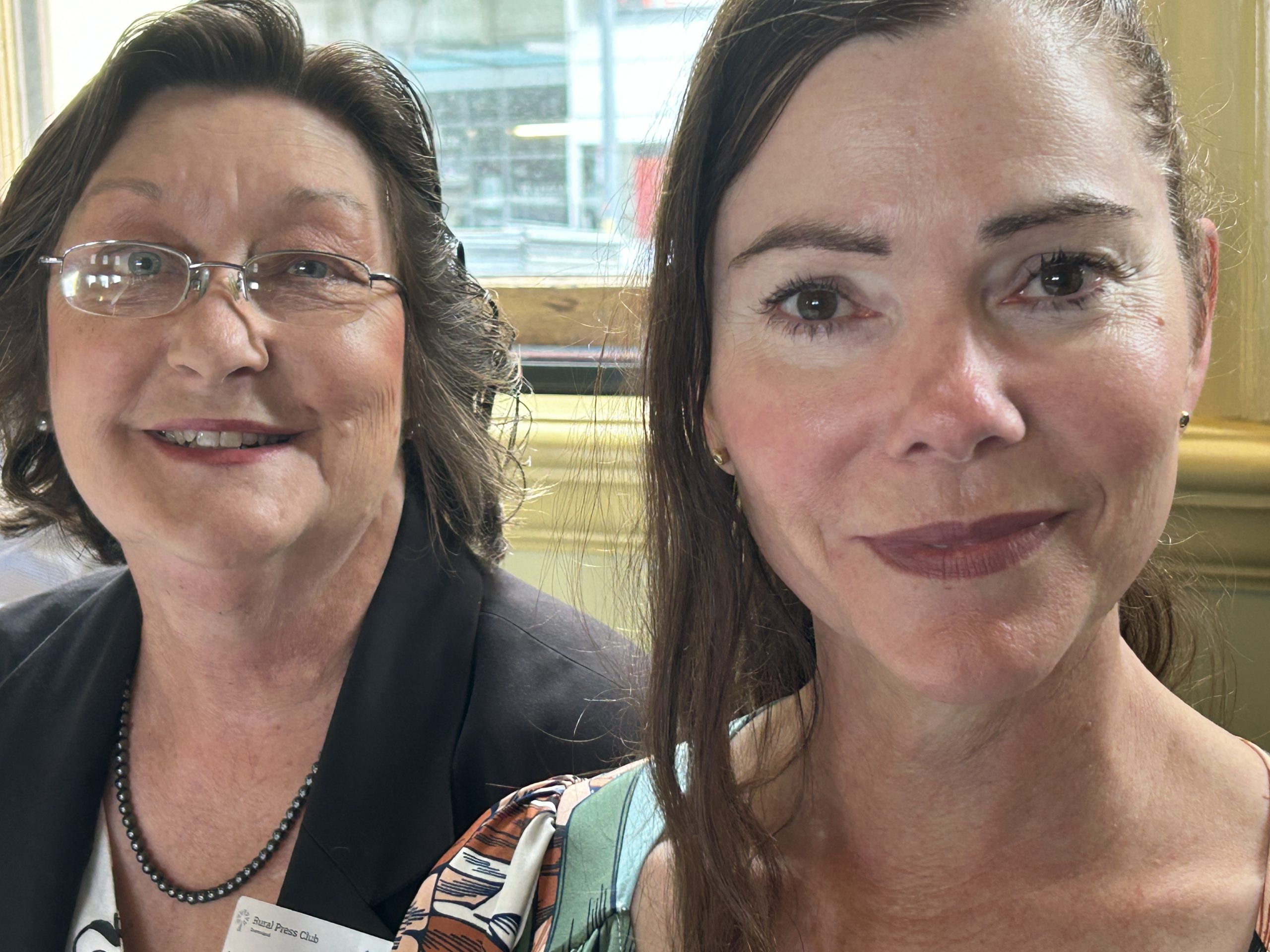
First-time visitors, (R to L) Leila Fisher, Balaclava Station and journalist Amanda Gearing.
The NFF is seeking segmentation of the proposed EU free trade agreement, with minerals and horticulture handled separately to Australia’s heavily-impacted dairy and pork industries. “Europe’s in a very volatile state, we all see that all the time on TV and it’s interesting talking to processors and traders and all sorts that, despite the EU agreement they’ve set very low access amounts for us,” he said.
Questions and discussion were wide-ranging. Among Mr McIntyre’s responses were:
Extended backpackers’ regional working visas: He warned that the lottery selection system could see couples leaving if only one partner secured the extension. “If one passes the ballot and the other one doesn’t, then you lose both,” he said.
He said that backpackers should be considered apart from any migration debate, particularly for rural Australia. “We don’t have the pressures that are in our big cities around the number of people and where they are. Our backpackers aren’t competing in the housing market, are they? It’s wholly ridiculous. We need regional Australia to be treated separately from the issues that are in metropolitan Australia,” he said.
Attracting labour: Mr McIntyre floated the ideas of tax breaks for people moving to regional areas and reduced HECS fees for students who chose to work in regional Australia.
Discussing the need to incentivise Australians to move to the country he said: “We’re chasing skilled, semi- and unskilled people all the time. So, it’s the across the board.”
Nominating skills such as vets and agronomists he said: “We are trying to do more with the government so we retain more of our university leaders in that space too. We’re looking at if maybe they can have a reduction in their HECS fees or something, so we can get the vets to stay in regional Australia, and doctors – the same thing.”
Questioned by ACC’s CEO Anthony Lee about ag education Mr McIntyre said: “30 percent of Australians were not born in Australia, so we have a lot to do to bridge that divide. It’s not just in our schools, I believe, it’s in our universities. The people teaching the children too that we really want to influence.”
Ag tech: “It’s one of the opportunities women too have in agriculture these days. It’s a completely level playing field and there’s no excuse in any workplace where women can’t achieve and take the same jobs generally that we men do.”
HAVE YOUR SAY