
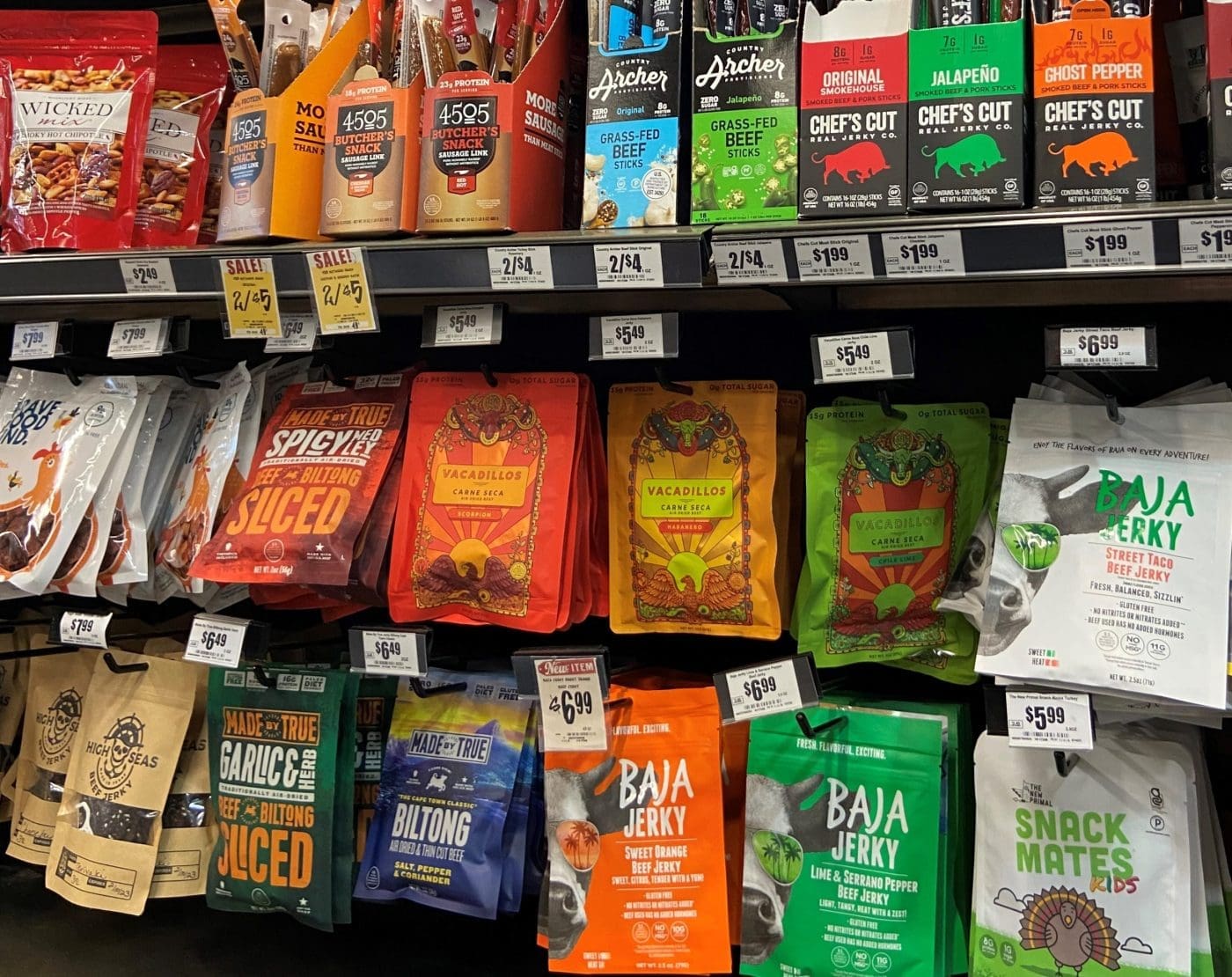
An array of jerky products on display at a highway roadhouse in the US.
SALES of meat snacks in the United States have surged by more than 45 percent in the past four years, and now represent a $4.4 billion annual market, according to a new report.
While Australian market data is harder to quantify, a similar trend is gaining traction domestically, according to Toowoomba-based family business Jim’s Jerky.
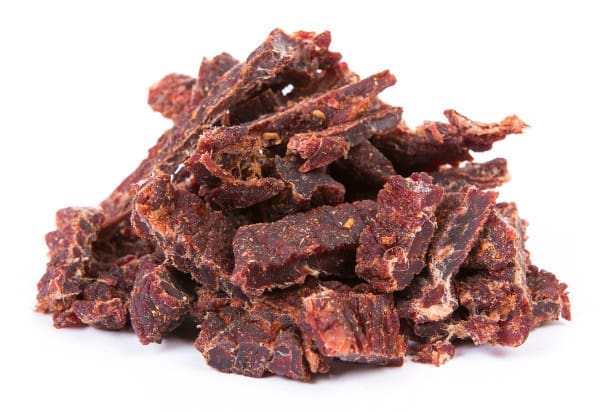 A recent report by US agribusiness lender CoBank says consumers are increasingly gravitating towards foods that are minimally processed, high in protein, nutritious, convenient and affordable.
The report says those attributes helped drive a 45pc jump in US meat snack sales over the past four years.
The category remains dominated by beef-derived products such as jerky and snack sticks, but CoBank noted pork, poultry and exotic meat snack products are also gaining market presence, particularly with the supply of beef constrained by the shrinking US cattle herd.
CoBank said the category’s growth was being largely driven by demand for high-protein foods, nutrient density, cleaner labels, reduced processing and simpler ingredient lists.
“Shoppers are seeking products that are fresh, healthy and contain fewer additives, with meat snacks often offering single-serving portions, low calories, high protein, negligible sugar and reduced salt – qualities that have driven their popularity over the past year.
“Meeting these preferences is crucial in today’s food landscape. During 2025, sales of products that claimed protein fortification or a clean label soared over $100 billion, a retail mega-milestone according to recent Ingredion research.”
The report also points to the so-called “Ozempic Effect”, identifying users of GLP-1 weight-loss drugs as a growing consumer group for meat snacks as protein-rich meal replacements.
GLP-1 users often lose 20pc to 25pc of their body weight, prompting greater demand for protein-rich foods to help maintain muscle mass while reducing calorie intake.
CoBank said meat snacks fit that need by offering high protein, simple ingredients and portion-controlled convenience.
The report noted that parents are also increasingly turning to meat snacks for children.
‘Category definitely building momentum here’
Jim’s Jerky chief executive Emily Pullen said Australia was seeing similar growth trends, although the local market is much smaller and less mature than the US.
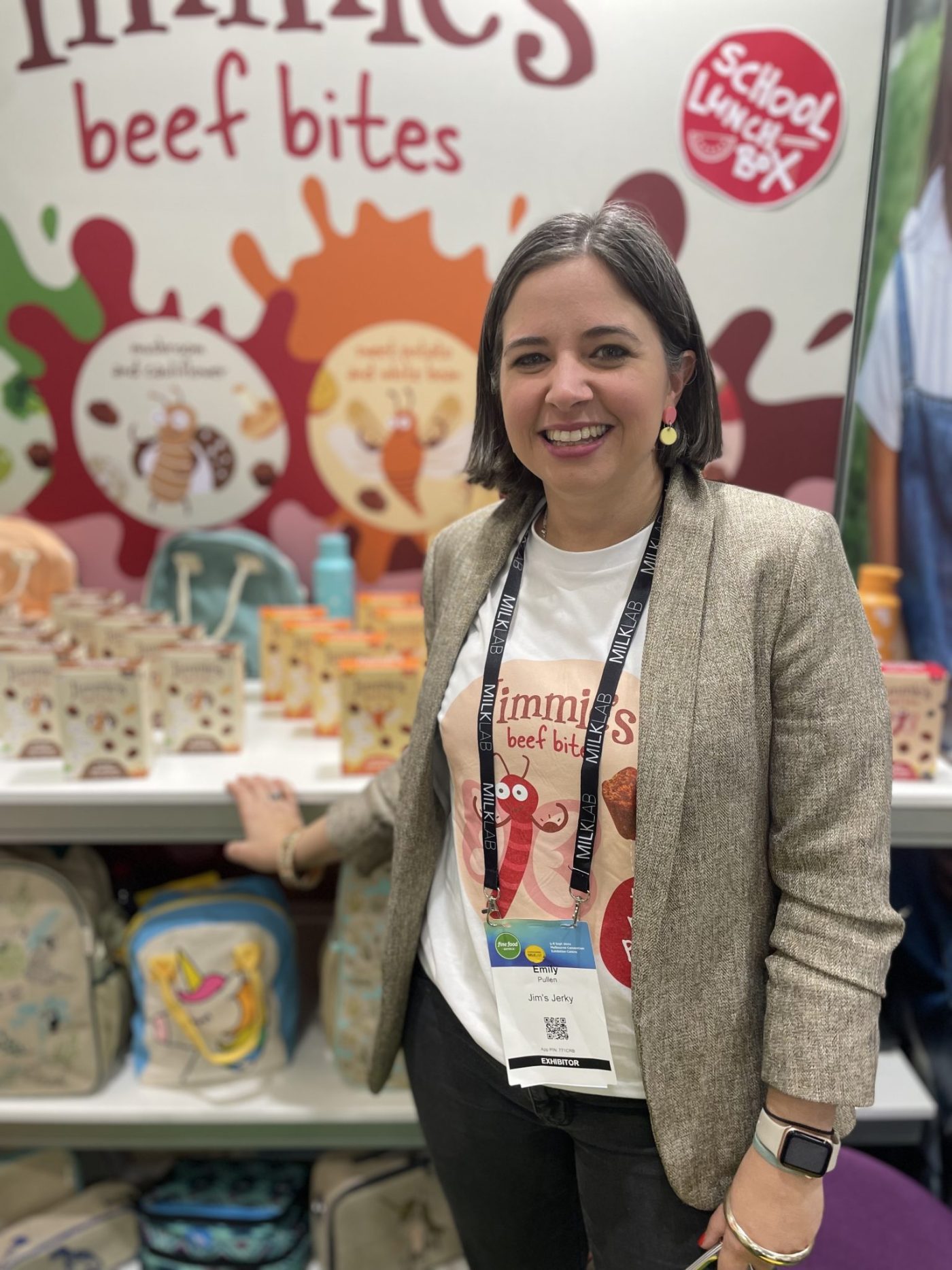
Jim’s Jerky CEO Emily Pullen
The 45pc growth reported by CoBank equated to roughly 9.7pc annual compound growth, she noted. By comparison, Emily said some Australian estimates suggest the local market is expanding at around 5pc to 6pc CAGR, equating to cumulative growth of 25pc to 27pc over four years.
“So we are probably not seeing the same level of total market growth as the US yet, but the direction of travel is very similar. The category is definitely building momentum here,” she said.
Emily said Jim’s Jerky was also seeing stronger signals from customers.
“We are also seeing stronger signals from customers. Anecdotally, one of our major supermarket customers has told us they are seeing around 40 percent year-on-year category growth in meat snacks.
“That is not our own published data, but it is a reliable customer signal and it aligns with what we are seeing on the ground – more products, more formats, more shelf presence and more consumer interest than even a few years ago.”
She said the category had evolved significantly since Jim’s Jerky was established in 2004, with far more jerky products and a wider range of meat snack formats now appearing on Australian retail shelves.
That growth has also shaped the company’s own expansion plans.
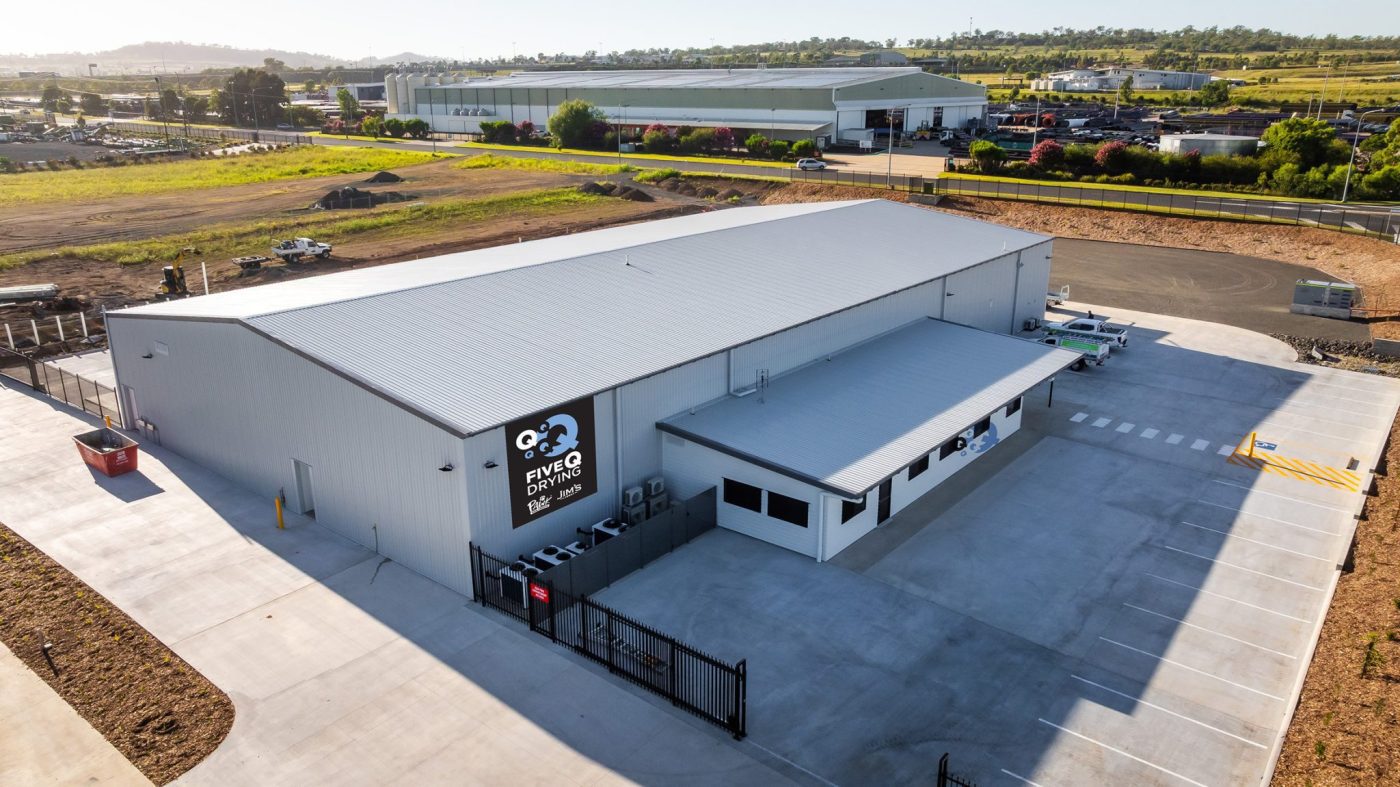 Emily said Jim’s Jerky was preparing to move into a new purpose-built dehydration facility in partnership with SunPork (left), significantly increasing its production capacity for premium dehydrated protein products.
“That investment is not just about making more traditional jerky.
“It is about building the capability to produce a broader range of shelf-stable protein products for different customers, channels and occasions.
“The category is becoming more sophisticated, and that requires investment in food safety, shelf-life validation, packaging, product development, quality systems and production capacity.”
While jerky was still very much the company’s ‘hero product’, Ms Pullen said it is also seeing good growth with products such as biltong and beef sticks.
“We think that reflects the way the category is broadening,” she said.
“Traditional jerky consumers are still very important, but more people are now looking for protein snacks that suit different tastes, textures and eating occasions.
“Beef sticks, for example, are very convenient and approachable. They work well for lunchboxes, travel, sport, outdoor activities and everyday snacking.
“Biltong appeals to consumers looking for a softer eating experience and a different flavour and texture profile.
“Global trends are pointing in the same direction, with meat snacks diversifying beyond traditional jerky into different formats, textures and occasions.
“So the category is no longer just one style of jerky for one type of consumer. It is becoming a broader protein snacking category.”
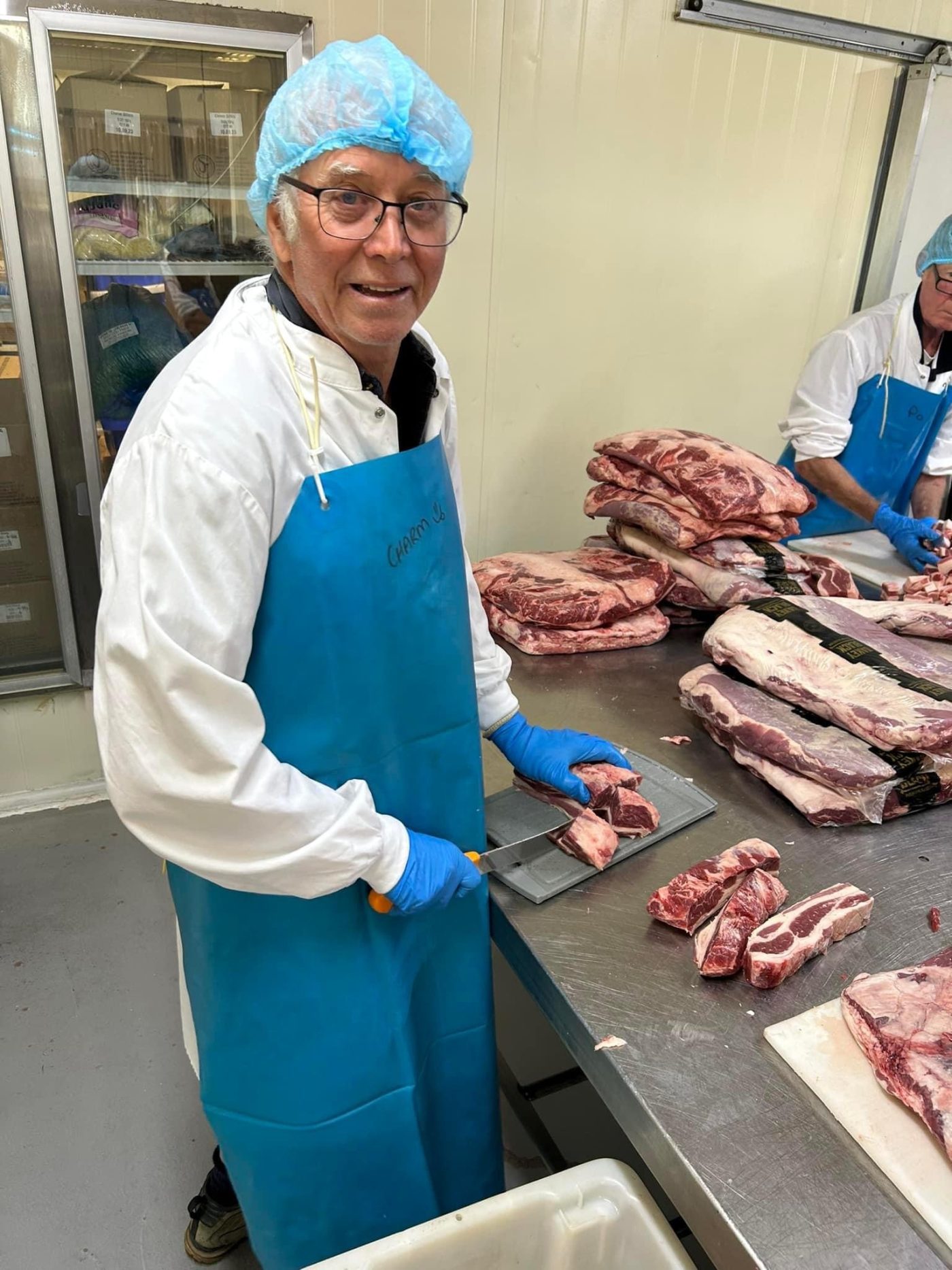
Jim’s Jerky co-founder Jim Tanner
Asked what were the main drivers on the trend in her view, Emily said a number of factors were playing a role in purchasing decisions.
Taste and eating experience were always the starting point for their products, she said, but health and functionality were also now playing a bigger role.
She said another big change they have seen is more women picking up protein snacking.
“That is showing up for us through both our ecommerce channel and our jerky cellar door, and it is a real shift from the more traditional perception of jerky as a male-skewed category.
“We are also seeing global data pointing to increased meat consumption among younger consumers, which is interesting because it suggests the category is not just relying on traditional jerky buyers.
“Locally, we are seeing consumers looking for snacks that feel more substantial than confectionery or carbohydrate-based snacks.
“People want something that keeps them fuller for longer, fits into busy days, and delivers a clear nutritional benefit. That is where meat snacks have a strong role to play.”
Looking ahead, Emily said there was still significant room for innovation in the Australian meat snack sector.
 “We think there is a lot more room for the Australian meat snack category to develop.
“That includes new formats, different textures, cleaner ingredient decks, and products designed for more specific occasions such as lunchboxes, outdoor activities, travel, sport and everyday snacking.”
She said Jim’s Jerky was also exploring products combining Australian meat with functional ingredients such as fruit, vegetables and collagen.
“We are also actively working on the broader opportunity to combine high-quality Australian meat with other functional ingredients – including fruit, vegetables and collagen – while still keeping products simple, convenient and enjoyable to eat.”
Export markets also remained an emerging opportunity for Australian-made meat snacks, she said.
“Overall, we see meat snacks as a really interesting value-adding opportunity for Australian red meat.
“It is a way to take high-quality Australian beef and turn it into a branded, shelf-stable product with strong domestic and export potential – we’re pretty excited to be a part of it!”
HAVE YOUR SAY