ON Monday a headline on Beef Central read “Cattle industry too big to rely on too few volunteers”. Yesterday, those words, which summarised an address from Cattle Australia chair Garry Edwards, took on added resonance as events unfolded at the Woolworths annual general meeting in Sydney.
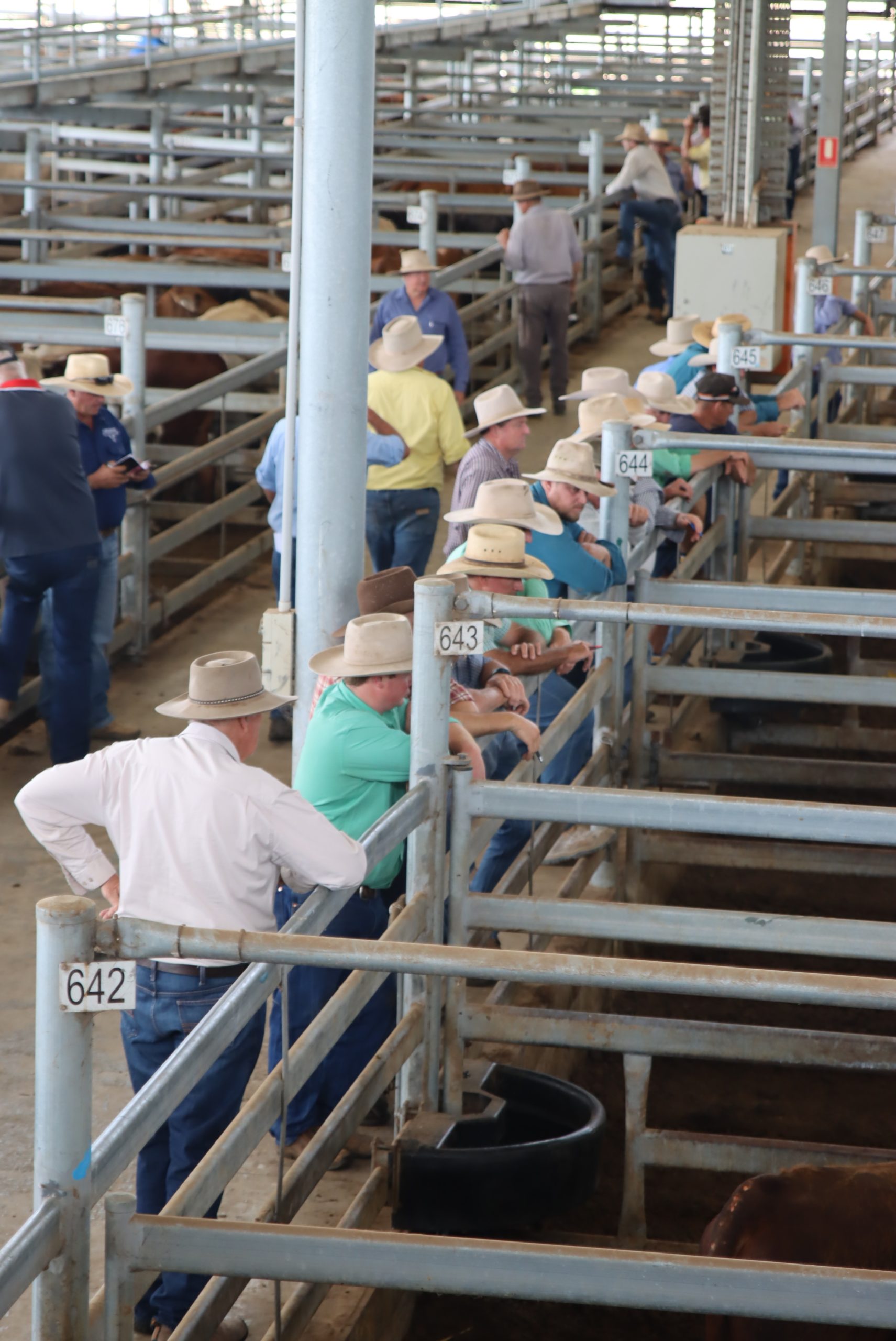
During the shareholder question and answer session of the AGM, environmental activists queued at the microphone, taking turns one after another at portraying Australia’s beef industry as environmentally reckless and destructive.
It continued a growing trend in recent years of environmental campaigners using corporate AGMs to pressure major companies over what they describe as “illegal deforestation” associated with beef production.
But in an unusual turn of events something happened at yesterday’ s Woolworths AGM that meant the voice of activists was not the only one that was heard at the Sydney based event.
Central Queensland cattle producer and Cattle Australia deputy chair Adam Coffey also rose to the microphone to thank Woolworths for working constructively with the industry, explain the care farming families take in managing their land, and highlight the important distinction between what activists describe as deforestation and the routine vegetation management necessary to maintain productive agricultural land.
To do that, he had to leave his Central Queensland property, travel to Sydney and spend time away from his family farming business to represent the interests of other producers.
It was a demonstration of the commitment many industry representatives make, often at considerable personal cost, to ensure cattle producers across Australia have a voice in decisions affecting their businesses and livelihoods.
 Australia’s grassfed cattle industry is a major contributor to the national economy, generating $25 billion in production annually, supporting tens of thousands of farming businesses, underpinning many regional communities and urban jobs and supplying a healthy and nutritious source of food for people not only around the country but across the world.
Yet its national representative body, Cattle Australia, operates on an annual budget of around $2.5 million.
Compare that to just three of the environmental groups that were among those who spoke against the beef industry at the AGM of one of the biggest retail distributors of Australian beef in Sydney yesterday.
Greenpeace Australia Pacific, the Australian Conservation Foundation, and The Wilderness Society have reported annual operating budgets in recent years of $30 million, $18 million and $11 million respectively according to online financial disclosures.
Each are also registered charities in Australia which exempts them from paying major taxes.
In the mining sector, the Minerals Council of Australia reports an annual operating budget of about $30 million.
These are not necessarily like-for-like comparisons but they raise legitimate questions about whether Australia’s cattle industry is equipping its national representative body with the resources to match what is expected of it.
Producers already contribute a $5/head transaction levy on all cattle sales, which is used primarily for marketing and research and development on behalf of the industry, and some producers have said they believe that contribution is enough.
The existence of a substantial collective levy does not in and of itself mean the industry’s national representative body is adequately funded.
The current cattle transaction levy review is providing an opportunity for producers to consider how their collective funding arrangements should operate into the future.
Adam Coffey ensured the cattle industry’s voice was heard at Woolworths yesterday.
But can the industry rely on individual producers being able to leave their businesses every time its interests need defending?
In opening last Friday’s CattleConnect conference CA chair Garry Edwards noted that while ‘volunteerism’ had built the industry, today it was also a point of vulnerability for the industry.
“When you’ve got a grassfed sector that’s exceeding $22 billion, when you’ve got a whole red meat industry that is approaching $75 billion dollars in economic output, and we rely on so few people to volunteer their time, it’s about time we took this seriously and valued it seriously, and we actually attracted the people and compensated them appropriately for their expertise that they bring to it, because it is genuine expertise.
“It’s not amateur hour in this industry anymore.”
I commend the efforts of Cattle Australia CA and Adam Coffey. I agree that $2.5m for our peak body is not enough.
Is there a guarantee that CA will get some funding from an increase in the levy? Many have assumed and assured that it will, but I want to see commitment from those who actually control the levy.
Having said that, I believe that MLA has been let of the hook with respect to NGO misinformation, too lightly.
Is it really advocacy to point out that what the NGOs call “deforestation” does not accurately fit within any accepted definition of deforestation? The NGOs cherry pick which bits they like to use and ignore the others. Correcting that is just correcting a myth and it should have been done long ago.
When it comes to accusations of “illegality” which Australian Conservation Foundation have been making for years, it is a statement of fact, not advocacy, that it was not. It was passed in parliament that the government under the EPBC Act on 28th November, 2025 that “continuation of use” would no longer be recognised as an exemption from referral after 15 years for clearing of regrowth. “Continuation of use” is an exemption under every accepted definition of deforestation. Our industry was effectively scuttled by definition and assumption.
That may be open to legal challenge but previous to that accusations of “illegal deforestation” were nothing but misinformation and designed to discredit the industry. They were indeed an unwarranted attack on industry.
Would any reasonable person believe that our organisation which is funded for research could not have directed some of that funding to correct clear misinformation?
We have all accepted the explanations around advocacy too readily without applying enough scrutiny.
While we are on the subject of what organisations can and cannot do with their funding, any of those NGOs with charitable status, which give them tax deductable status, are also not supposed to engage in advocacy, a rule they break very often.
An excellent article by James Nason, highlighting an issue our industry can no longer afford to ignore.
We have a grassfed cattle industry worth more than $25 billion annually, yet our national Peak Industry Council, Cattle Australia, operates on a budget of approximately $2.5 million.
Meanwhile, organisations campaigning against our industry have access to many millions of dollars and employ professional people to advance their agendas.
We cannot continue to expect a handful of dedicated producers to volunteer their time, leave their businesses and families, and carry the responsibility of representing and defending an industry of this size.
Adam Coffey’s efforts at the Woolworths AGM are a perfect example of why strong industry representation is so important.
Our industry needs a professional, well-structured and properly funded Peak Industry Council capable of representing our interests on every front.
As Garry Edwards rightly said, it’s not amateur hour anymore!
It is bad business for the cattle industry to only allocate $2.5 million to fund its voice.
Alan Lauder
James, this reference to under funding of grass fed advocacy is a continuance of the cracked record that has been ongoing for a long time, from Cattle Council to now Cattle Australia. MLA is seemingly well funded by compulsory levies to represent industry (albeit not advocacy). RMAC advocates on behalf of whole of industry. ALFA is likewise to CA, represented by volunteers that impressively advocate on behalf of its members. Cattle Australia already draws funds from MLA, already has had ALFA people on its board, yet still cannot convince its industry (my industry) to separately fund it. Endeavouring to extract a portion of the compulsory levy is not on, particularly given it is already doing so by gift of MLA. With the industry as robust as it has ever been CA must surely innovate within itself to convince industry to get on board.
Sandy, Cattle Australia got rid of the CN30 commitment, when every ag organisation in Australia had it in the too hard basket. CN30 meant that cattle methane had to be zero or offset come 2030. The reality is that methane produced by Australian cattle is not further increasing warming. This is because methane breaks down in about 12 years, and given methane emissions are stable, methane emissions this year are just replacing the methane emissions of 12 years ago, that has just broken down.
Back in July 2023, Cattle Australia organised for Professor Myles Allen of Oxford University, one of the world’s top climate scientists, to give a presentation in Canberra, where he explained that the warming of stable methane emissions was being incorrectly reported. This presentation opened the debate, and Cattle Australia kept it going until the CN30 commitment was dropped.
Given its unique understanding of the science, Cattle Australia is best positioned to open the debate in the broader community. The average person is not aware that Australian cattle are not actually increasing warming. Plus, Chris Bowen needs to be challenged over refusing to supplementary report with a correct metric, which he is allowed to do under UN rules.
The cattle industry needs to support Cattle Australia, so that they can address the issue that cattle methane is reported as 13 percent of Australia’s emissions, which is not true.
Allan you make very good point as do the others commenting. im happy to increase funding where we will get a sensible return. i still struggle to understand why we keep breaking our representative groups into smaller ones? the fact that the isc is set to become its own entity is concerning. division or separation generally creates confusion. why with more funding to we need to keep increasing compliance and regulation? our industry may be worth billions but at what cost? its all well and good to sprout we’ve grossed a 1billion but if it costs you $999,999,999 to get there whats the point. cheers Matthew Della Gola