
Former head of the North Australian Pastoral Co, Allan Cooney, shares his thoughts on cattle markets and what drives them, and what signals to base assumptions on….
WHEN I’m thinking about cattle markets, I start in the saleyards, because that’s where the market is set and clears first. Five years at TopX and looking through the rail at the setting of the market.
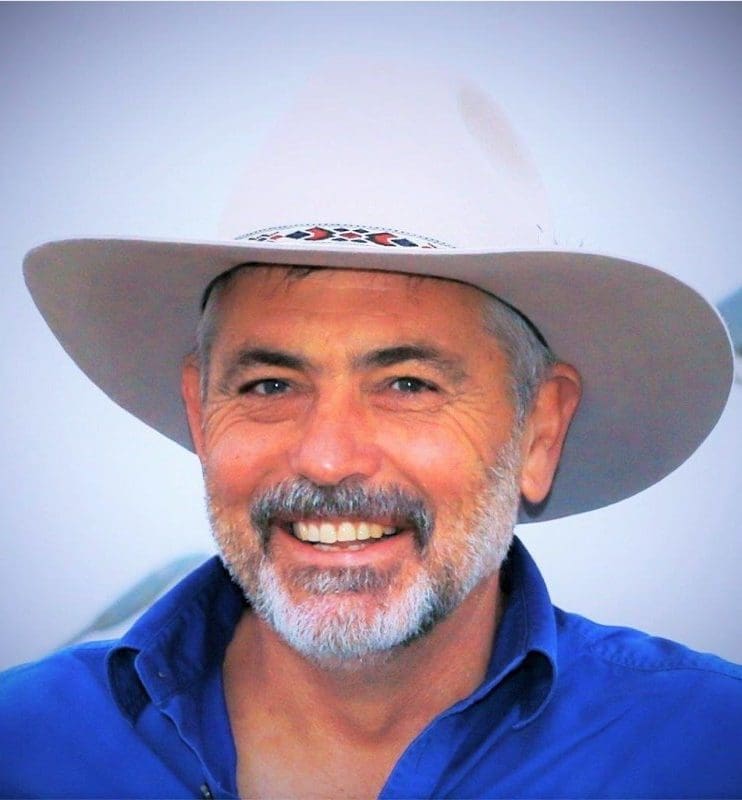
Allan Cooney
Without wanting to have a deep discussion about this, Roma sets the price for the week in eastern Australia. It links the north and the south, it gives you a read on the season, it gives you the sentiment of the day, and it sees the world and factors it in.
Wildly big claims I know, but real just the same. Actually I would go so far as to say it influences the global market, or at least reads it. Happy to have a discussion over a good Barossa red and a great steak. And it is a frustrating thing. Five years at the helm of a cattle company that rarely sold cattle through the saleyards and still our product price was set in Roma on any Tuesday. That’s the cattle industry.
The headline number is the last thing I look at. Big yardings tell you cattle moved. They don’t tell you why — and the why is everything. The headlines: Roma yarded 11,255 head a fortnight ago, Dalby went over 8,000, and the young cattle indicator had dropped 90c in a month. Read from a city desk, that’s the north hitting the panic button ahead of a dry spring. Not necessarily.
Here’s the sequence I run instead.
First: where are the cattle coming from, and in what condition? The flush north is turning off well-finished cattle on or slightly ahead of schedule after the seventh-wettest wet season on record. The cooler, drier south of Queensland is lightening off early because the feed isn’t there. Same yards, two different stories.
Second: Now let me challenge the conventional thinking here. What’s the herd doing underneath? Female slaughter has run above 50pc for two years — the textbook herd liquidation signal — and 2026 was always shaping as the biggest turnoff year since 1978, El Niño or no El Niño. The national herd and the northern herd have finite limits.
Let me add something from my perspective about that female number, because it’s an old signal and the herd underneath it has changed. Across the industry, weaning rates have climbed enormously.
Improvement in weaning rates
In my time at NAPCo we lifted weaned calves from ~67pc to better than 80pc, and we’re not alone — Troy Setter tells the same story at CPC, from around 50pc when he started to the 80s today. This is not confined to two cattle operations; it is happening across the industry, especially in northern Australia, where investment in infrastructure and management systems — on the back of better prices and optimism for the future — means more weaned calves, and more weaned calves means more surplus females to sell every year at a steady herd size.
The benchmark everyone uses to indicate a herd selloff hasn’t been revised since 1989. A herd that breeds more females sells more females. That’s productivity, not panic — and it’s one more reason to be careful reading fear into the yardings.
The NAPCo business has more cattle than ever and sells more than ever, including surplus females. I suspect that is, or is becoming, the norm. Has anyone run this analysis across the US herd, which we hear is in terminal decline? It may well be, but I’ll have a wager they are also producing more calves per cow than ever. There is good operators in the land of big buckles and top boots.
Third: what’s demand doing? China put a 55pc tariff on Brazilian beef above quota and the ricochet landed on our export grids.
Fourth: – and this is the one I watch closest — what do sellers do when the price moves? When the market corrected a fortnight ago, yardings fell by a third the next week. People who pull back when the money softens are making decisions, not fleeing. I hold that lightly; one week’s yarding is a noisy gauge, and we’ll learn more from whether they return at these prices.
Now the memory that sits under all of it. In 2023, a strong El Niño was declared, producers sold down hard ahead of a drought that never arrived, and the market crashed. Expensive lesson, and I believe as an industry a valuable lesson was learned. I’ll bet there was some introspection over at BoM. Not to react to a single-point signal. My caveat — with the herd cycle, the frost and the tariff all pushing cattle through the yards anyway, nobody can fully separate learned calm from good risk management.
But I suspect that the commentary is still reading 2026 through a 2023 lens, filing big yardings under nerves and missing that the behaviour changed underneath them. Big numbers through the yards used to mean one thing. Now I think it can mean other things as well.
And one thought I keep separate on purpose: when I’m thinking about all that northern grass, I’m thinking about fire.
I was learning to fly at Swan Hill in the summer of ’85, and most days there was no horizon. The smoke was off the NSW western division, where three and a half million hectares burned that season — grass that had grown tall in the wet season after the drought broke, cured, and went up from lightning, more than a hundred fires on Christmas Day alone.
The lesson I’ve carried since: the fire that takes your horizon isn’t always the drought’s fire. It’s the good season’s fire, arriving a year later.
North Queensland has just grown its biggest body of feed in years, and no amount of cattle will eat that risk away. The risk sits where the feed is, not where the yardings are.
Watch the AFAC spring outlook, due about 1 September. If it adds Queensland, believe it.
- This item first appeared on Mr Cooney’s LinkedIn page, where he has been sharing his thoughts on some key industry issues in his last week at one of Australia’s largest companies.
I agree with Allan Cooney about Roma setting the price for the week. Remember last year in June/July, when the processors in Victoria and SA ran out of cows to fill their orders for export, due to drought in the south.
They arrived up to Roma and lifted the market for cows by 40 cents in one week and that level continued on for some months.
Don’t think l have read anything quite so preposterous in my time in the industry. Queensland is the cattle state l acknowledge, but Roma determining trends north and south followed by the world! Maybe north and south Queensland l get, but as for anything south of Dubbo there is no correlation at all, least of all the world. Sorry, good intent and well done on calving percentages but spare us the rest.
A very interesting and informative read, based on experience, not statistics.