
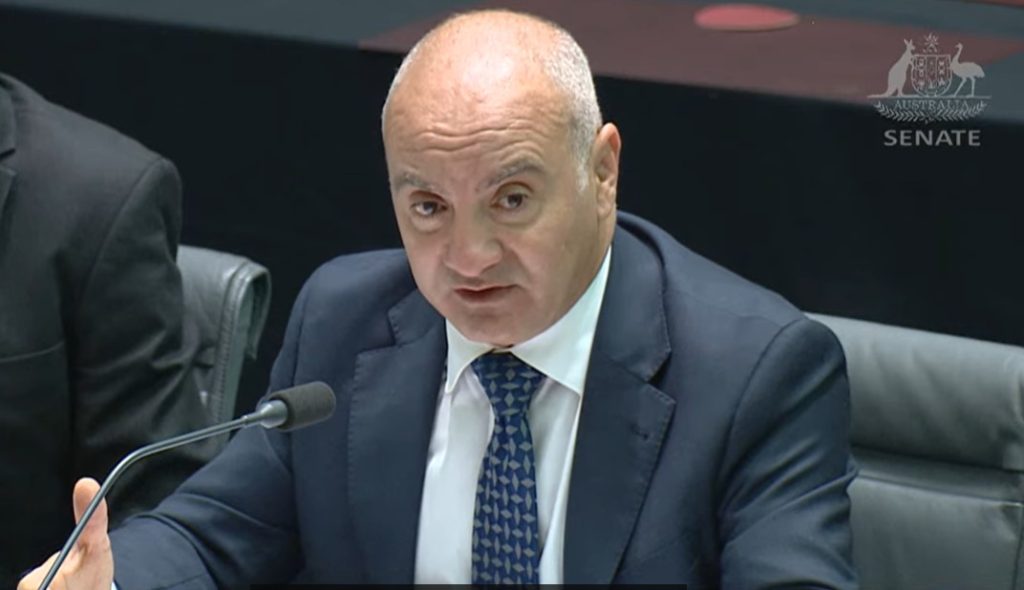
Department of Foreign Affairs and Trade deputy secretary, trade and investment group George Mina
THE Trump administration has not identified any forced labour issues in Australia’s red meat supply chains justifying the latest 12.5 percent tariff proposals, the Department of Foreign Affairs and Trade confirmed today.
Australian lamb, mutton and goat meat imports into the United States could attract a new 12.5pc tariff proposed by the US Trade Representative later this year, when the current 10pc tariffs are expected to expire.
The US Trade Representative Jamieson Greer has determined that 54 countries have “failed to impose and/or effectively enforce a forced labour import prohibition” — including Australia, New Zealand and China – to justify the new tariff regime.
In Senate Estimates in Canberra today, Department of Foreign Affairs and Trade deputy secretary, trade and investment group George Mina confirmed the Australian Government did not believe Australia’s beef, sheep meat and goat meat supplies chains had any forced labour issues, nor had the USTR identified any such issues.
Mr Mina also confirmed that it is the department’s understanding that the latest tariff proposals would not apply to the existing exemptions, which include beef, but would apply to lamb and goat meat.
“In other words, existing exemptions would continue and they do include beef into the US consumer market.”
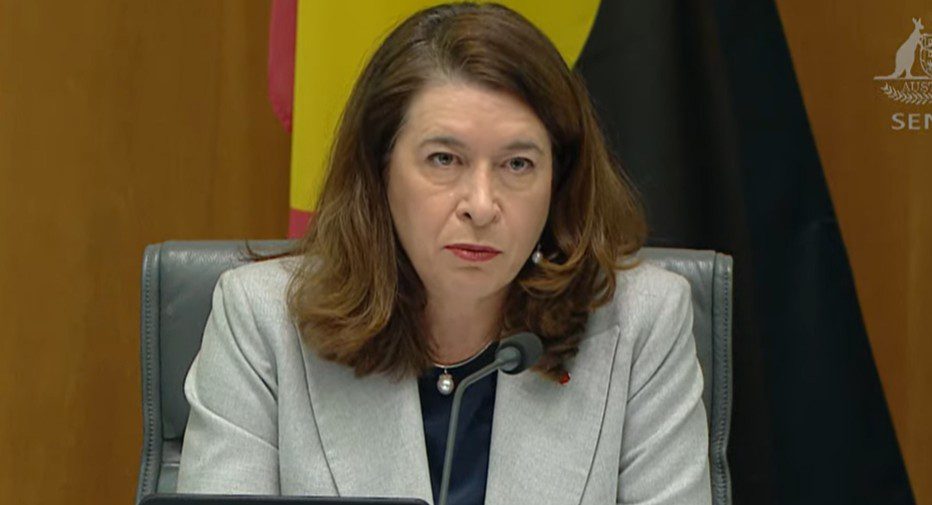
Senator Susan McDonald in Senate Estimates today.
Nationals Senator Susan McDonald also asked if the Australian Government believed that forced labour has been used in lamb and goat meat production in Australia, and if the US Government has identified any forced labour components in any of Australia’s red meat supply chains.
“No, we don’t and no, they have not, so on that point that’s very clear.
“What the US Government is proposing after investigations into forced labour in supply chains, to make determinations about a generalised tariff rate across the economy of its trading partner.
“So were countries to fall afoul of this investigation the United States would then propose to put a tariff of a generalised nature across the exports of the country concerned,” he said.
“They’re not specifically saying every sector includes forced labour but they’re saying a failure to deal with forced labour in the general will result in a tariff applied in the general.
“As I said earlier in response to the senator’s question, it’s quite clearly and has been signalled by the United States administration from the outset, it’s quite clearly led by an impulse to replace existing legal authorities that had expired after the Supreme Court’s decision earlier this year.”
Government requesting the free trade agreement be respected
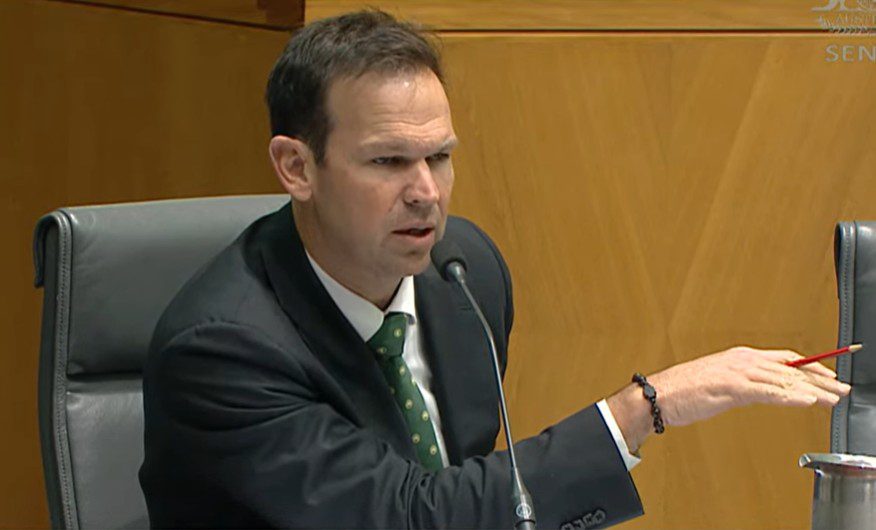
Senator Matt Canavan in Senate Estimates today.
When asked by Senator Matt Canavan if the government had requested any further exclusions from the proposed tariffs, Mr Mina said Australia is requesting that its free trade agreement with the United States be requested “which requires of course, zero tariffs.”
“We’re not picking and choosing because our agreement is a comprehensive one.”
 Mr Mina would not be drawn on Senator Canavan’s question on whether the government believed the first Liberation Day tariffs or the proposals were in breach of the US-Australia Free Trade Agreement.
“What we will say senator is that we expect the FTA to be respected; that has been the consistent message from the highest levels of the Australian Government as recently as today and the Prime Minister yesterday.
“We expect that free trade agreement to be respected.”
Mr Mina said there are a range of options available under the trade agreement for trading partners to make protests, lodge disputes and make representations over breaches, but the “real prospect” of enforceability of any international law action needed to be appreciated.
“The US has taken a very different view on trade, the minister has been clear about that, they’ve been clear about their posture for some time, and it’s one with which we disagree.”
WTO action on tariffs theoretically possible
Mr Mina said Australia could theoretically could take the US to the World Trade Organisation over the latest tariff proposals.
“They have a dispute settlement process at the WTO that is half-working.”
The department’s chief trade law officer Patricia Holmes said there is a WTO dispute settlement mechanism available, separate from the free trade agreement, and there is a binding dispute process under the FTA.
Ms Holmes said the WTO dispute settlement system has consultation and panel process stages, leading to an appeal to the WTO appellant body.
“And it’s the appellant body that hasn’t been operating since 2019 because appellant boy members have not been appointed because the US blocked the appointment.
“But I would say that the consultation and panel process still continue to operate and also countries, I think we are up to 44 WTO members including Australia, have established what is called an ‘excuse for title’ multi-party interim arbitration appeal agreement (MPIA) which is essentially a replacement for the appellant body, which means even if a panel report is appealed it goes to that body and then it is a binding outcome .. and it is true that the US has not agreed to the MPIA.”
Ms Holmes said the department had provided legal advice to the government on the range of US tariffs.
Earlier in the estimates hearing, Mr Mina said the Australian Government was aware that the United States had been preparing and signalling its preparedness to move to alternative legal authorities (for tariffs) for some time, including before the US Supreme Court ruled on 20 February this year that tariffs introduced under the International Emergency Economic Powers Act were illegal and unconstitutional.
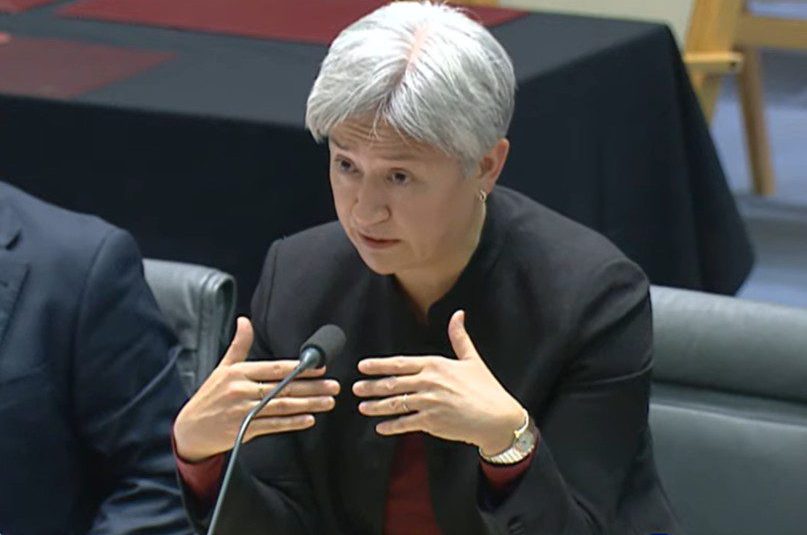
Foreign Minister Penny Wong makes a point in Senate Estimates today.
When Senator Canavan asked if the US’s investigation into forced labour practices was bona fide, “or simply a fig leaf to provide a legal justification for a policy that they want to implement” Foreign Minister Penny Wong intervened.
“It’s up to the United States to articulate its position,” she said.
Senator Wong said Australian Government’s position is that the tariffs are unwarranted and unjustified, because Australia had a robust framework to count slavery domestically and in the work done internationally.”
Senator Wong also deflected Senator Canavan’s attempts to take the government to task on its allowance of continued solar panel imports from supply chains within China’s Xinjiang province that have been scrutinised over the use of forced labour.
Australian Meat Industry Council chief executive officer Tim Ryan told Sheep Central today AMIC considers any of the proposed Section 301 tariffs wholly unjustified and unwarranted on any Australian export to the US, including sheep and goat meat.
HAVE YOUR SAY