
A newly published scientific paper is challenging the way livestock are treated in the global net-zero debate, arguing that applying rigid emissions frameworks to biological systems like cattle production oversimplifies the highly variable nature of ecosystem carbon cycling.
Published in the latest edition of Animal Frontiers, the paper argues climate policy should focus less on static annual emissions framing and more on long-term carbon budgets, emissions intensity and whole-of-system outcomes.
 The paper, Rethinking net-zero targets for livestock systems: biological realities and policy implications for agricultural sustainability, was authored by University of Sydney researcher Professor Alex V Chaves.
The Professor of Animal Nutrition at the School of Life and Environmental Sciences, The University of Sydney, is originally from Brazil, and through an academic career focused on improving the sustainability and efficiency of livestock production that that has taken him New Zealand, France, Canada, Germany, and Australia, he has authored more than 120 peer-reviewed scientific publications.
His latest paper argues that livestock methane should not automatically be treated in the same way as fossil fuel emissions from sectors such as energy, transport and industry, because biological systems like livestock production “do not behave like continuously balanced industrial accounting systems”.
“Applying rigid net-zero frameworks to biological systems may oversimplify the dynamic nature of ecosystem carbon cycling and the influence of disturbance-recovery processes on long-term carbon balance,” Dr Chaves writes.
The paper says interpreting the contribution of individual sectors to greenhouse gas inventories requires broader consideration of ecosystem carbon dynamics, rather than focusing narrowly on single emission sources like enteric methane.
A striking example used in the paper is Australia’s 2019-20 Black Summer bushfires, which satellite analysis estimated released about 715 teragrams of CO₂ into the atmosphere – “several times larger” than the annual emissions attributed to the entire Australian agriculture sector.
Dr Chaves said such comparisons illustrated how major natural disturbances could temporarily overwhelm annual sectoral emissions and complicate short-term carbon accounting.
‘Natural ecosystems rarely maintain constant carbon neutrality’
The paper argues natural ecosystems rarely maintain constant carbon neutrality.
Instead, forests, grasslands and grazing systems continually shift between periods of carbon sequestration and carbon release depending on seasonal conditions, rainfall, temperature, drought and disturbance.
“Managed grazing systems that combine plant growth, soil processes, animal respiration and enteric methane should not be expected to conform neatly to a static equilibrium concept,” the paper states.
“A more scientifically robust framework is to evaluate long-term carbon budgets… rather than assuming that biological systems behave like continuously balanced industrial accounting systems.”
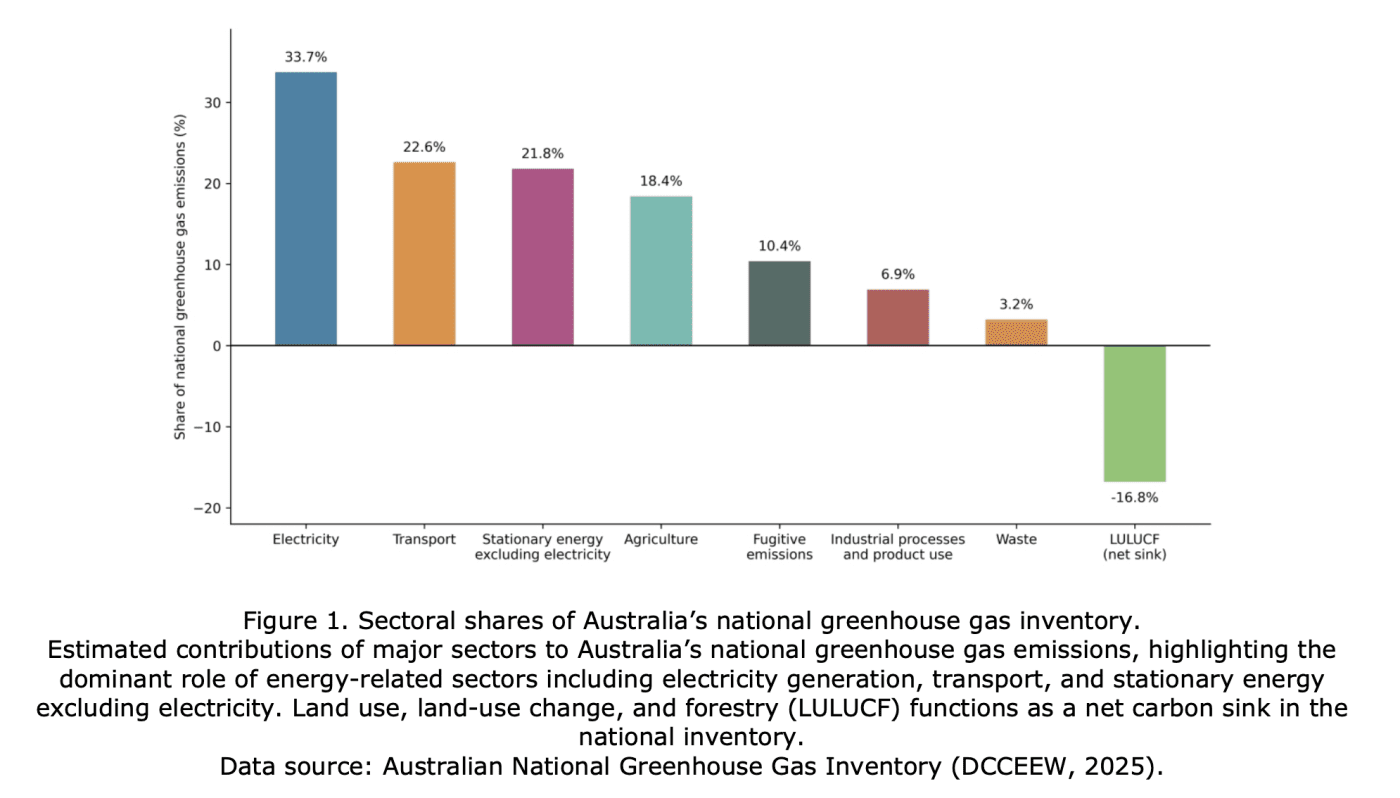
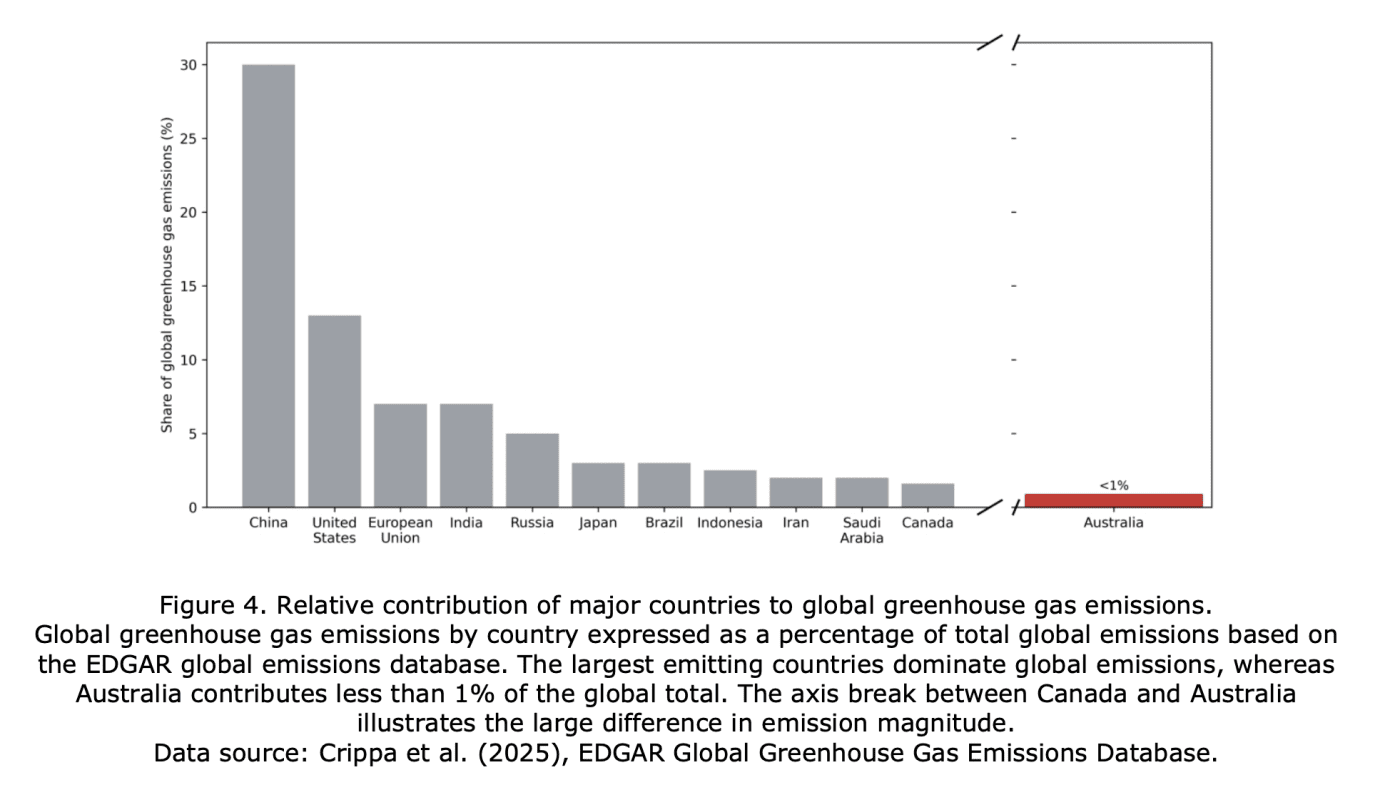
The paper notes livestock production is often portrayed as a major greenhouse gas contributor, yet agriculture makes up a comparatively smaller proportion of emissions in developed economies than electricity generation, transport and industrial activity.
In Australia, the national greenhouse gas inventory continues to show energy-related sectors as the dominant source of emissions, while land use and forestry currently function as a net carbon sink.
Importantly for the cattle sector, the paper also questions whether some livestock methane estimates may be overstated under current inventory methodologies.
Current method overpredicts Australian feedlot methane emissions by 144pc
It points to recent Australian research showing the equation currently used in the National Inventory for feedlot cattle overpredicted methane emissions by 115 grams per day, equivalent to a 144 percent mean bias, in cattle fed barley and wheat-based rations.
“These findings highlight the importance of periodically refining inventory methods as new experimental data become available,” Dr Chaves said.
The paper reviews a range of methane mitigation tools including 3-NOP (Bovaer), dietary oils, brassica forages, early-life rumen programming, genetic selection and vaccines, but stresses that reducing methane alone is not enough.
To be effective in commercial systems, mitigation strategies must also remain practical, affordable, safe for animals and consumers, and avoid unintended environmental trade-offs.
Paper supports ’emssions intensity’ approach
The paper supports an ’emissions intensity’ approach, focusing on methane per kilogram of beef or milk produced, rather than absolute livestock emissions.
That approach aligns increasingly closely with the direction of discussion in Australia’s beef industry, where producers, lotfeeders and supply chain stakeholders are placing greater emphasis on productivity, feed efficiency and fertility as part of the emissions solution. MLA managing director Michael Crowley discussed the industry’s emissions intensity approach in a recent Senate Estimates hearing.
The paper adds scientific weight to growing arguments that methane policy needs greater nuance, particularly as Scope 3 reporting requirements, carbon accounting frameworks and supply chain emissions targets loom.
To read the paper, published in Animal Frontiers on Wednesday, June 24, 2026 click here
HAVE YOUR SAY